12 Best Next.js Blog Templates 2026 (Free + Premium)
Looking for a Next.js blog template that ships with MDX, RSS, syntax highlighting, and SEO baked in — not just a styled markdown reader? These 12 picks span the full Next.js blogging ecosystem: free open-source starters with 13.8k stars (Nextra), 10.5k stars (Tailwind Next.js Starter Blog), and 7.6k stars (Lee Robinson next-blog-mdx), plus premium publishing platforms like NextBlog ($69-599) with paywall support, Stripe billing, and Sanity CMS. Every repository and demo is re-checked before we republish this page.
A 2026-grade Next.js blog template handles eight load-bearing surfaces: an MDX or markdown content pipeline with Server Components for SEO, server-side syntax highlighting with line numbers, RSS feed generation, sitemap.xml output, tag and category taxonomy, comments (Giscus, Utterances, Disqus), analytics integration (Plausible, Umami, GA4), and dark mode with system preference detection. Build all of that from scratch is two weeks of plumbing — start from a battle-tested template and you’re publishing your first post in under an hour.
We’ve grouped the 12 picks below into premium Next.js blog / publishing platforms (NextBlog, Stablo Pro) and free / open-source blog starters (Nextra, Tailwind Next.js Starter Blog, Lee Robinson next-blog-mdx, Stablo free, Sanity Personal Website, Bookworm Light, Nextplate, Bigspring Light, Vercel blog-starter, Magic UI Portfolio). Both writer-first templates (just MDX + design) and platform-first templates (CMS, multi-author, monetization) included.
Related reading: Next.js portfolio templates (many portfolios double as blogs), React portfolio templates, Next.js landing page templates, our Next.js starter kits, Hexo themes and Eleventy themes roundups.
Quick Picks
- Best free overall: Tailwind Next.js Starter Blog — 10.5k stars, the canonical Next.js + MDX blogging starter with everything wired in
- Best premium publishing platform: NextBlog — $69-599 lifetime, Next.js 16 + Sanity + paywall + Stripe for Medium / Substack alternative
- Best for docs + blog: Nextra — 13.8k stars, by the Vercel team, MDX-powered with built-in docs theme
- Best Vercel-grade reference: Lee Robinson next-blog-mdx — 7.6k stars, minimalist Next.js + MDX template by Vercel’s former head of DevRel
- Best Sanity CMS-backed free: Stablo — 589 stars, JAMStack blog with Sanity CMS, dark mode, pagination, on-demand revalidation
- Best official Sanity starter: Sanity Next.js Personal Website — 293 stars, official Sanity template with real-time collaborative editing
- Best multi-author free: Bookworm Light (Themefisher) — 228 stars, 13+ pages with author profiles, taxonomy, search, 95+ PageSpeed
- Best Stablo upgrade: Stablo Pro — $49, premium tier adding pagination, categories, search, author pages
- Best multilingual: Nextplate (Zeon Studio) — 510 stars, Next.js 16 + Tailwind 4 + i18n + 15+ pages with MDX blog
- Best agency / marketing blog: Bigspring Light (Themefisher) — 271 stars, agency-focused with 9+ pre-designed pages
- Best official Vercel starter: Vercel blog-starter example — official Next.js example with Markdown + remark + gray-matter
- Best portfolio + blog combo: Magic UI Portfolio — 1.4k stars, single-config setup combining portfolio and MDX blog
1. Tailwind Next.js Starter Blog (timlrx)
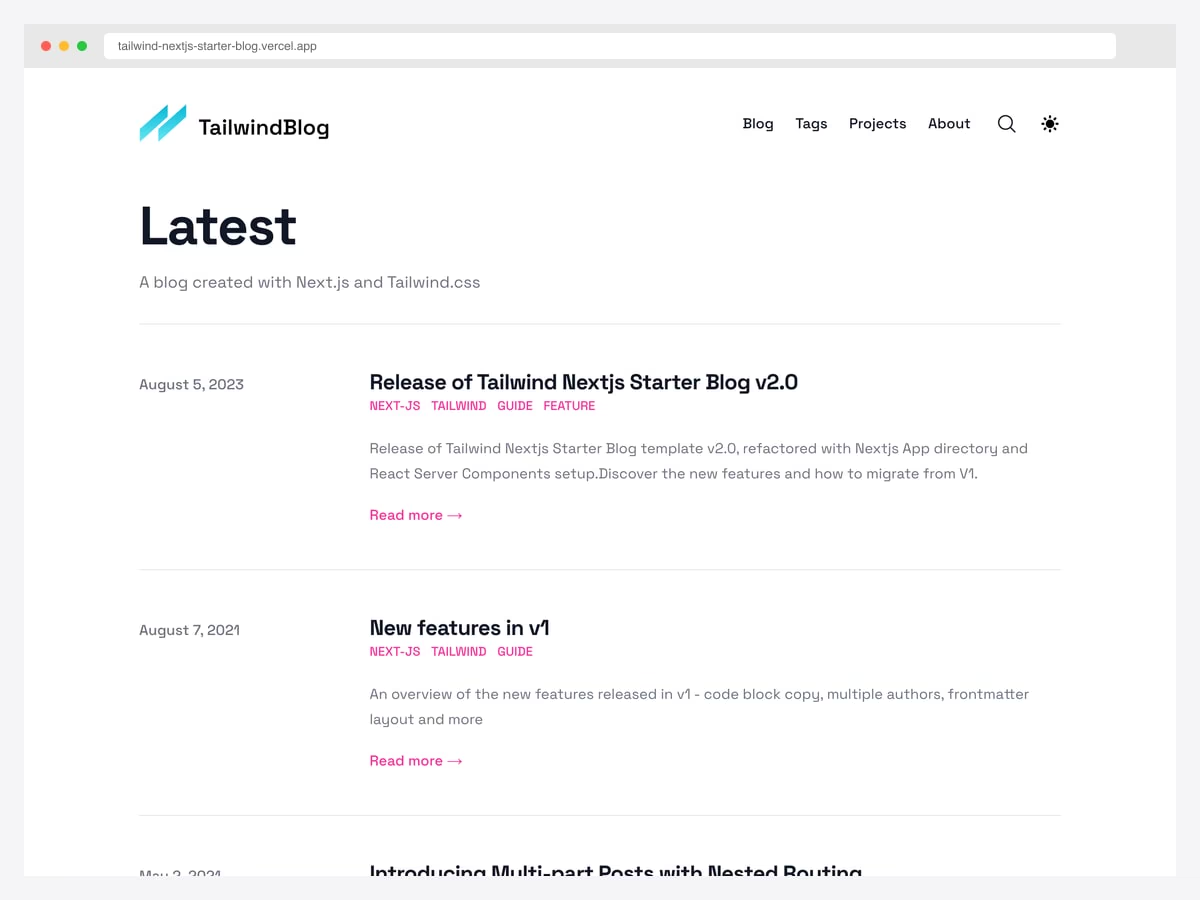
Why we like it: The most popular personal-site / blog template in the Next.js ecosystem. v2 is built on App Directory with React Server Components and Contentlayer for content management. Ships with MDX blog, syntax highlighting via Prism with line numbers, RSS, sitemaps, KaTeX math, Pliny for SEO and analytics, newsletter integration, multiple layout options, and three optional comment systems (Giscus, Utterances, Disqus).
Caveat worth highlighting: the v2 Contentlayer dependency has been less actively maintained recently. The community fork contentlayer2 is the production path, or you can swap to next-mdx-remote for full control. Best when you want depth of features over architectural minimalism.
2. NextBlog (Next.js Templates)
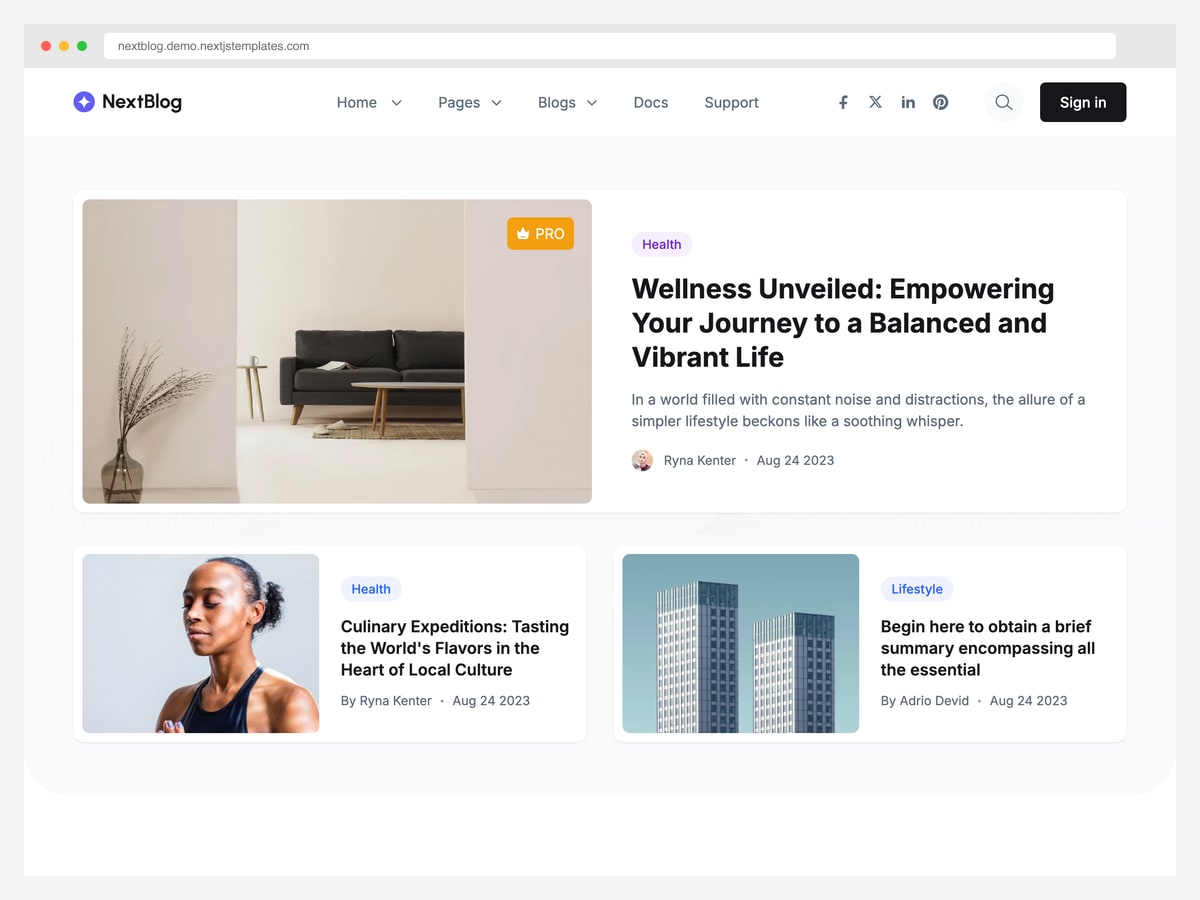
Why we like it: The cheapest path to a self-hosted Medium / Substack alternative built on Next.js. Multiple homepage and blog page variations, ready-to-use paywall system for monetization through member-only content, Sanity CMS integration for visual content management, NextAuth authentication, PostgreSQL for subscriber data, and Stripe payment processing. SEO and performance optimization aligned with Google best practices.
The $179 Business tier (4 commercial projects) is the smart pick for agencies building branded publications for multiple clients. Extended ($599, unlimited) makes sense only for high-volume agencies or product studios.
3. Nextra
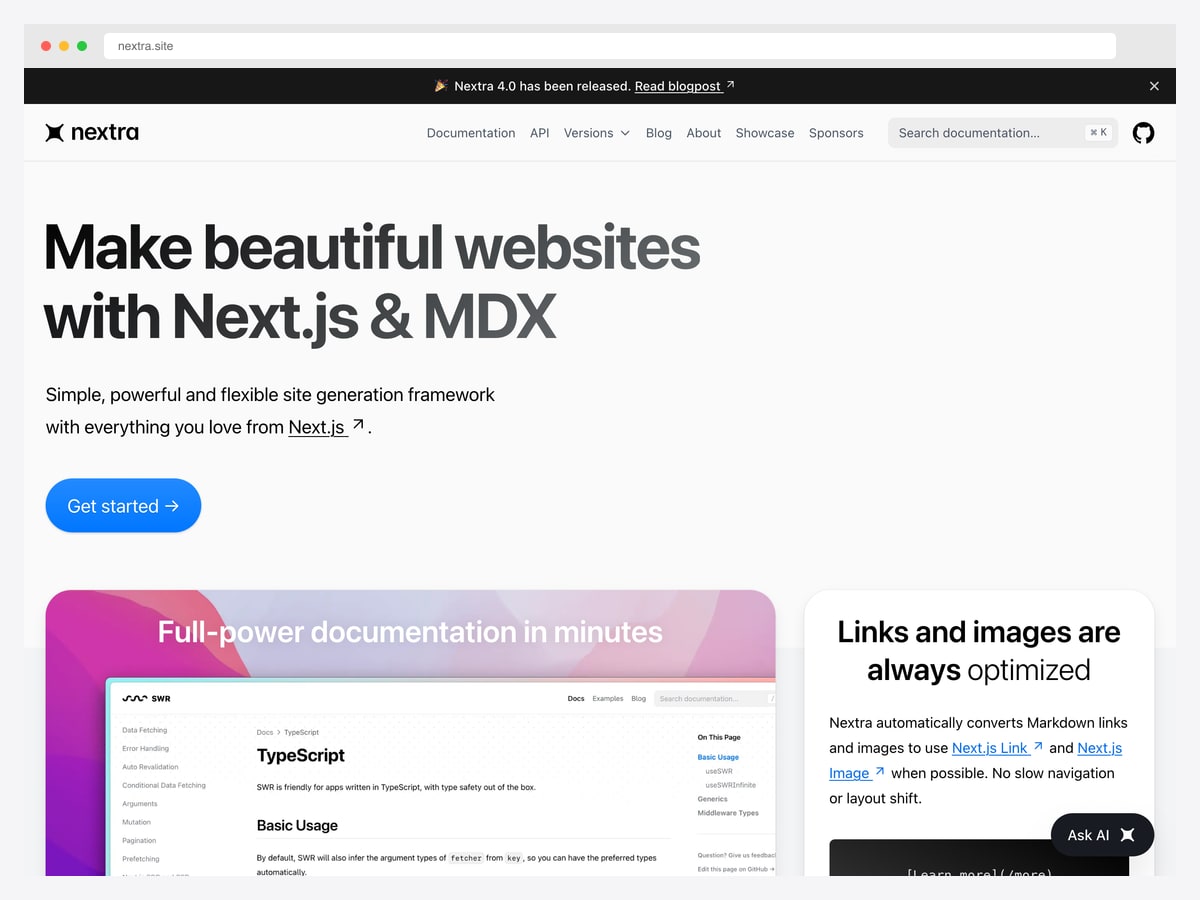
Why we like it: “Simple, powerful and flexible site generation framework with everything you love from Next.js.” Built on Next.js by the Vercel team. MDX-first content authoring, nextra-theme-docs for documentation sites that doubles as a blog theme, watch mode for development. Powers official docs for SWR, Turborepo, GraphQL Yoga, and many other major React projects.
Officially positioned as a docs framework rather than a blog template — but the docs theme handles blog content well, and the “blog theme” (separate package) is purpose-built for blogging. Best when your content sits between blog and documentation (technical writing, API docs, tutorial series, changelogs). The closest thing to “Next.js’s official blog framework” maintained under the Vercel umbrella.
4. Lee Robinson next-blog-mdx
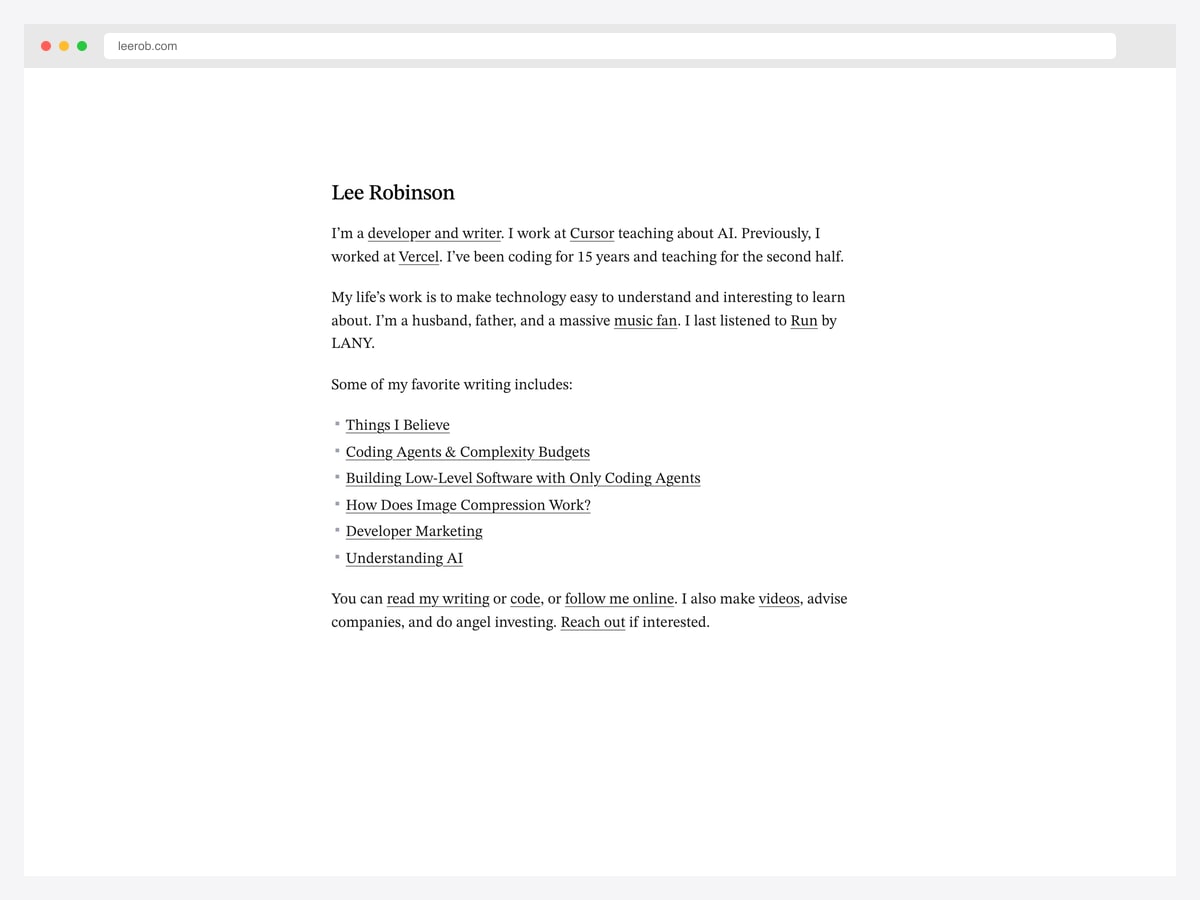
Why we like it: The personal site and template source from Lee Robinson — former head of DevRel at Vercel, now at Cursor. Next.js + MDX blog, Tailwind CSS, TypeScript, Vercel Analytics built in, optional Postgres for managing redirects. Minimalist typography-first aesthetic that lets the writing do the talking. The closest thing to “how Lee himself would set up a Next.js blog today” in public form.
1.4k+ forks because it’s the cleanest minimalist Next.js + MDX reference available. Fork it, swap in your content, deploy in 10 minutes. Best when you want a sub-1,000-LOC codebase you can read end-to-end rather than a feature-rich template like Tailwind Next.js Starter Blog.
5. Stablo (web3templates)
Check the commit history before adopting: the repository has had no new commits since mid-2025. It still installs and the demo is live, but it is no longer keeping pace with Next.js releases.
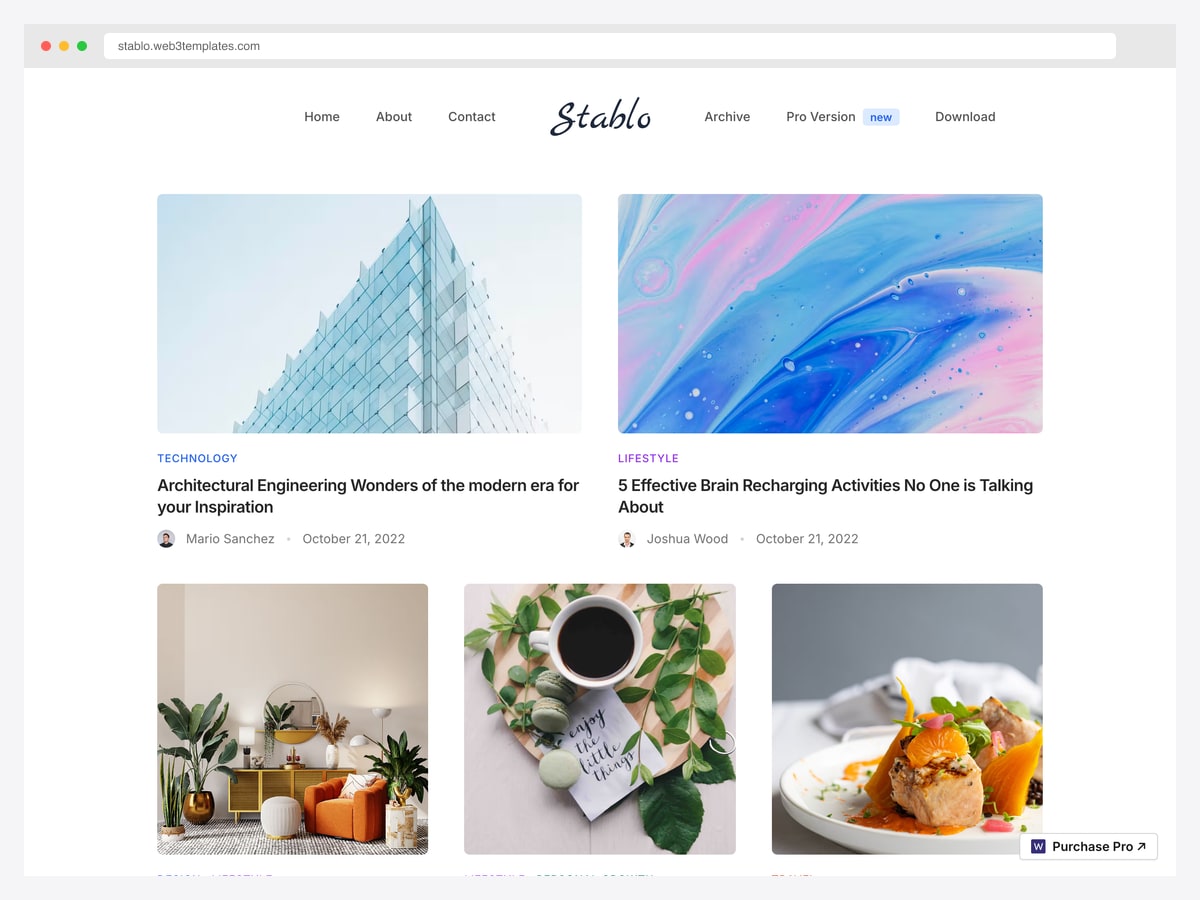
Why we like it: “A minimal JAMStack blog website template built with Next.js, TailwindCSS & Sanity CMS.” Mobile responsive design, dark and light mode, working contact page, archive with pagination, on-demand content revalidation when you publish in Sanity Studio. Free version covers everything most personal / company blogs need.
The Sanity CMS integration is the standout — your content editors get a real CMS UI (rather than editing JSON or MDX files in Git) while you keep full code control over the storefront. Compare against Stablo Pro (below) for the paid upgrade. GPL-2.0 license: free for personal and commercial projects, but commercial closed-source forks aren’t allowed.
6. Sanity Next.js Personal Website Starter
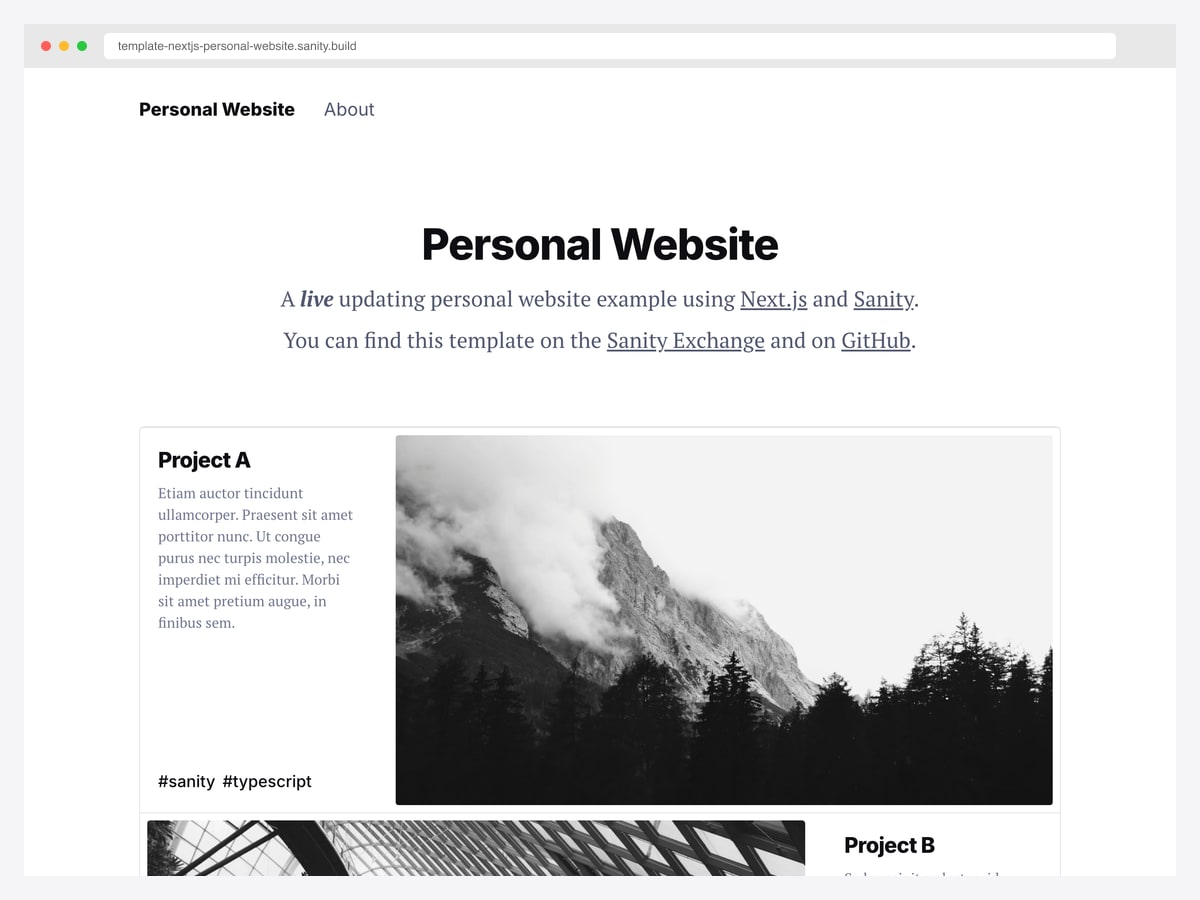
Why we like it: Sanity’s official Next.js personal website + blog template. Statically generated content with editable projects, native Sanity Studio accessible at /studio route, real-time and collaborative content editing with fine-grained revision history, live preview across the entire site, block content support, and Sanity Live Revalidation for instant publishing. Free Sanity tier covers most personal blog needs.
Best path to a fully managed Sanity CMS + Next.js stack — the integration is officially maintained by Sanity, so updates land here first. One-line install: npm create sanity@latest -- --template sanity-io/template-nextjs-personal-website. Pick this over Stablo when you want the official Sanity DX (block content, live preview, collaborative editing) rather than a community wrapper around the Sanity API.
7. Bookworm Light (Themefisher)
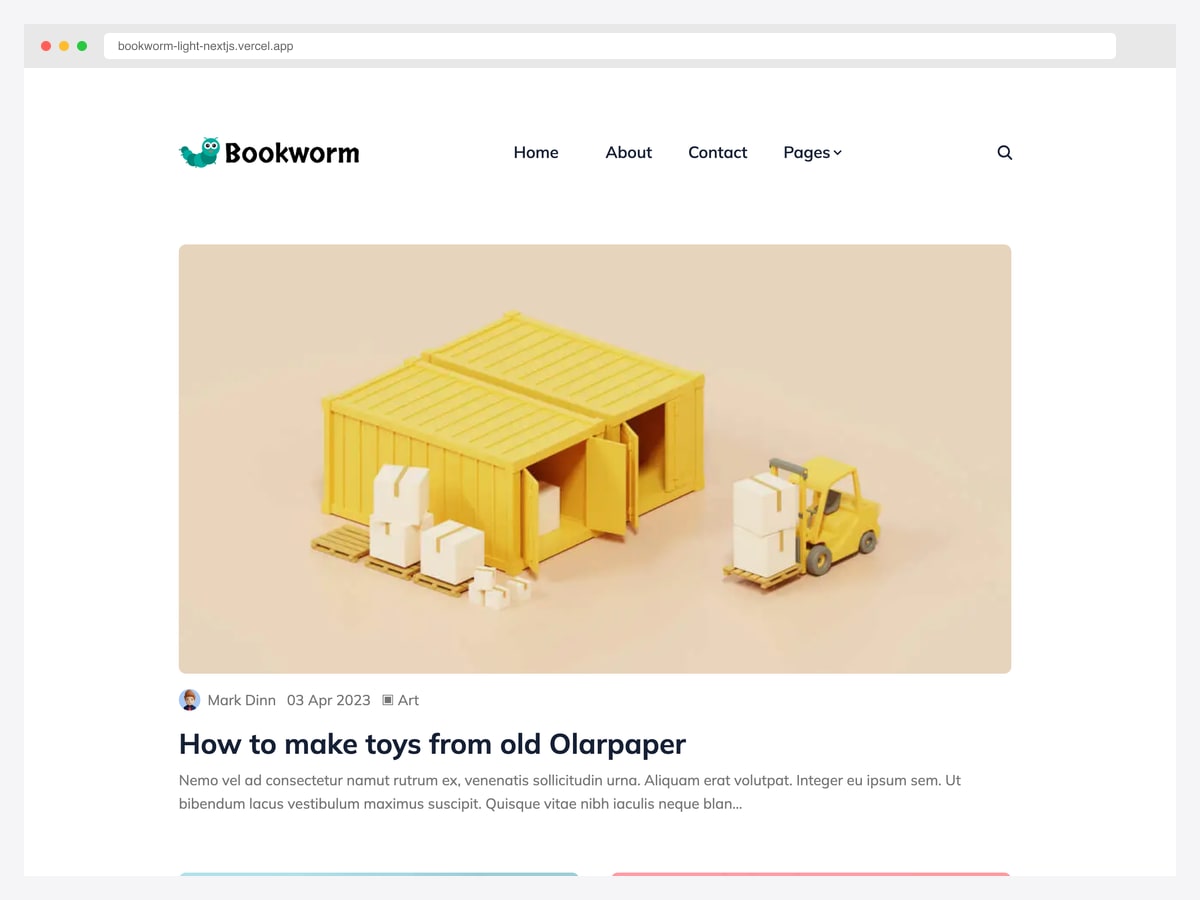
Why we like it: Minimal multi-author free Next.js blog template by Themefisher. 13+ pre-designed pages — home, blog, author profiles, categories, tags. Built-in search functionality, contact form integration, semantic HTML structure, and image optimization via next/image. 95+ Google PageSpeed score on desktop out of the box.
Best free pick when you need multi-author support — most free templates ship single-author and force you to extend the data model yourself. Bookworm Light handles author profiles, attribution, and per-author archive pages from day one. Ideal for food, recipes, beauty, lifestyle, photography, travel, health, fitness blogs.
8. Stablo Pro
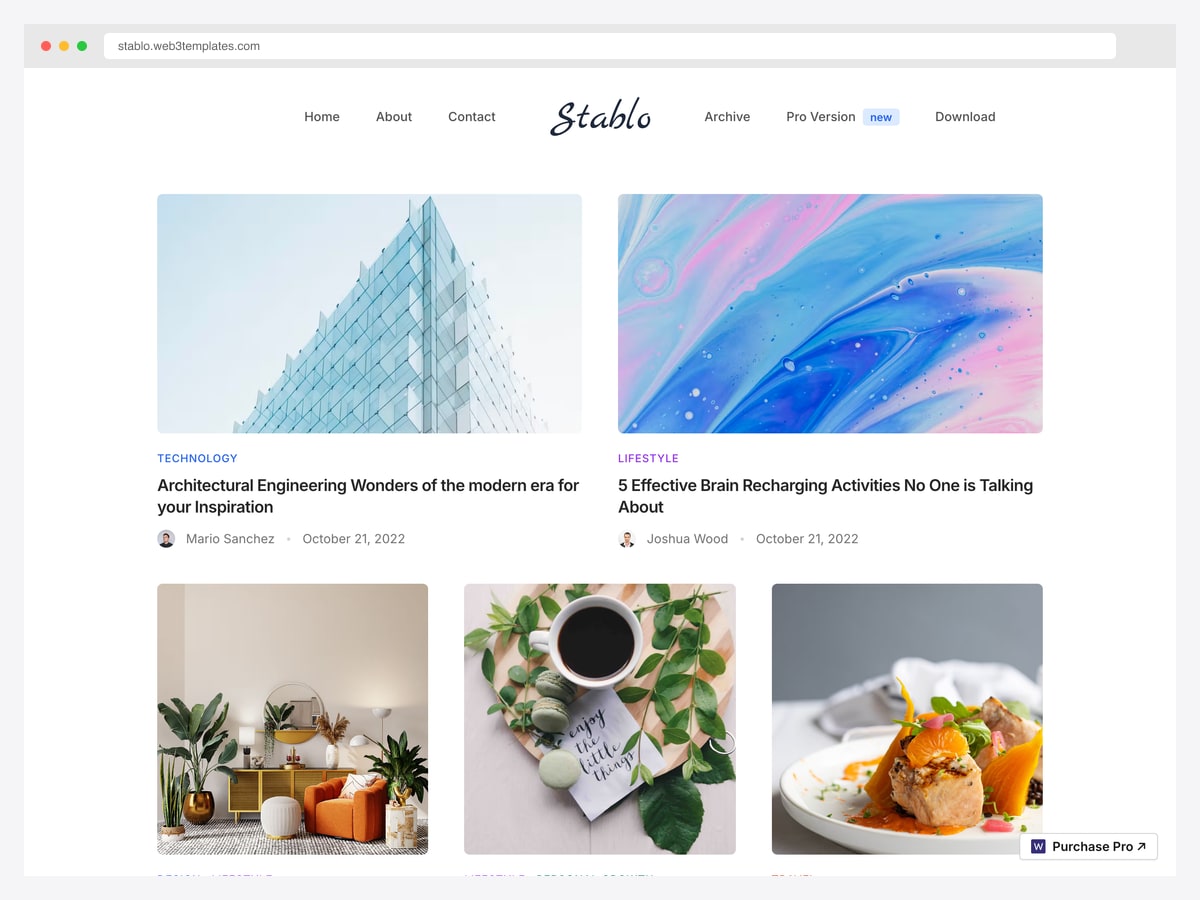
Why we like it: The premium upgrade of the free Stablo template — adds category pages, author pages, multiple homepage layouts, advanced post templates, pagination, and search functionality. $49 one-time with 6 months of support included. Best when the free Stablo is 80% of what you need and you want to skip the implementation work on the last 20%.
At $49 it’s the cheapest premium Next.js blog template that ships with Sanity CMS pre-integrated. Pick this over NextBlog (above) when you don’t need the paywall / monetization layer and just want the polished blog template. The 6-month support window is unusually generous at this price point.
9. Nextplate (Zeon Studio)
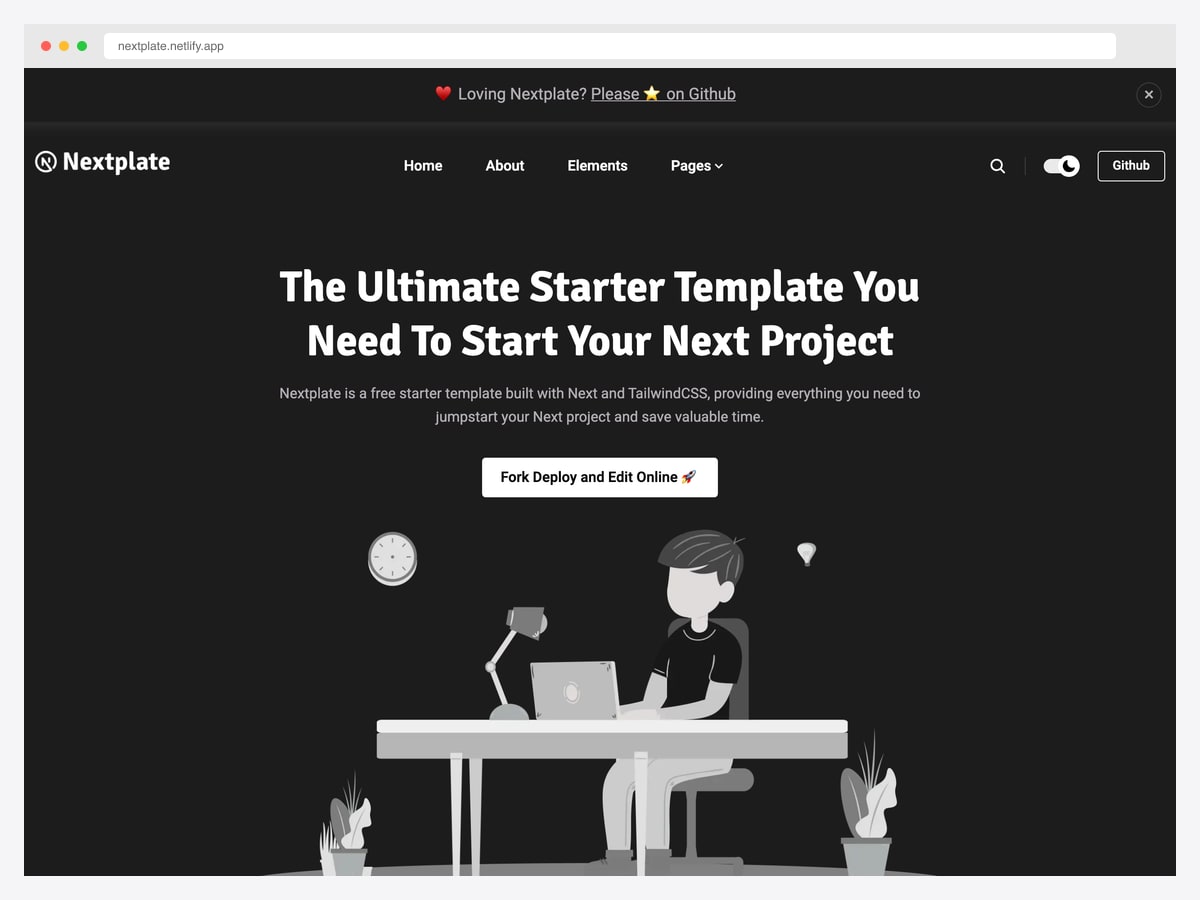
Why we like it: 15+ pre-designed pages including blog functionality with multi-author support, search, dark mode, contact forms, and a custom 404. Multilingual (i18n) support is built in — rare among free blog templates. Pre-configured Netlify deployment, Docker support, Disqus comments integration, syntax highlighting, and “LLM-ready docs generation” for creating searchable content indexes.
Best free pick when you need a blog targeting international markets in multiple languages. The Sitepins Git-based headless CMS integration means non-technical collaborators can edit content via a visual UI without touching code. 100% Google PageSpeed score baseline.
10. Bigspring Light (Themefisher)
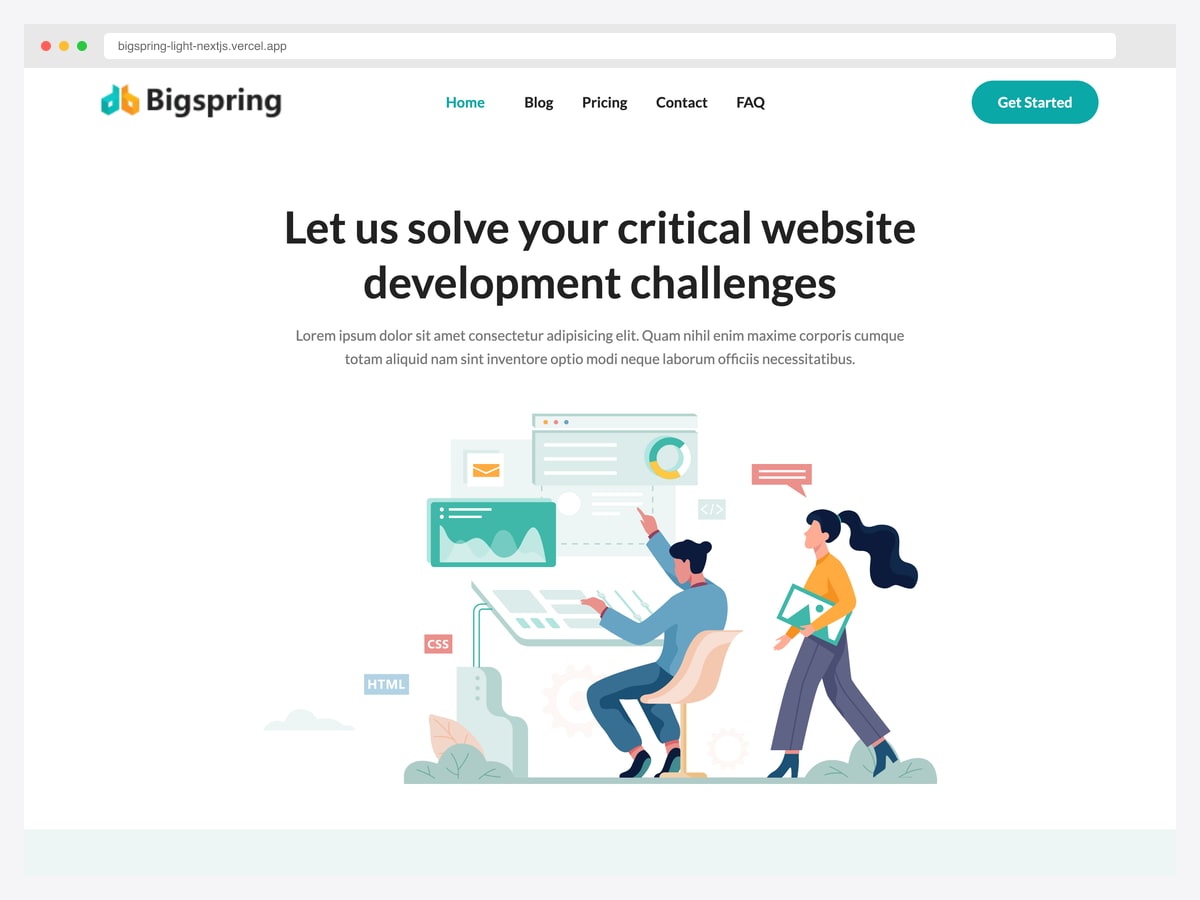
Why we like it: 9+ pre-designed pages covering home, blog, contact, pricing, and policy — purpose-built for creative agencies, marketing agencies, design studios, digital marketing firms, and business service websites that publish content alongside their services. 100 Google PageSpeed score (desktop), fully responsive, SEO-friendly with Google Analytics integration, and a working contact form.
Themefisher’s free entry — they also sell a Bigspring Pro version with more pages and integrations. Best when your blog is part of an agency or services site rather than a standalone publication. The agency framing (services + pricing + blog + contact) is unusual among “blog templates” which usually assume a personal or single-product context.
11. Vercel Next.js blog-starter Example
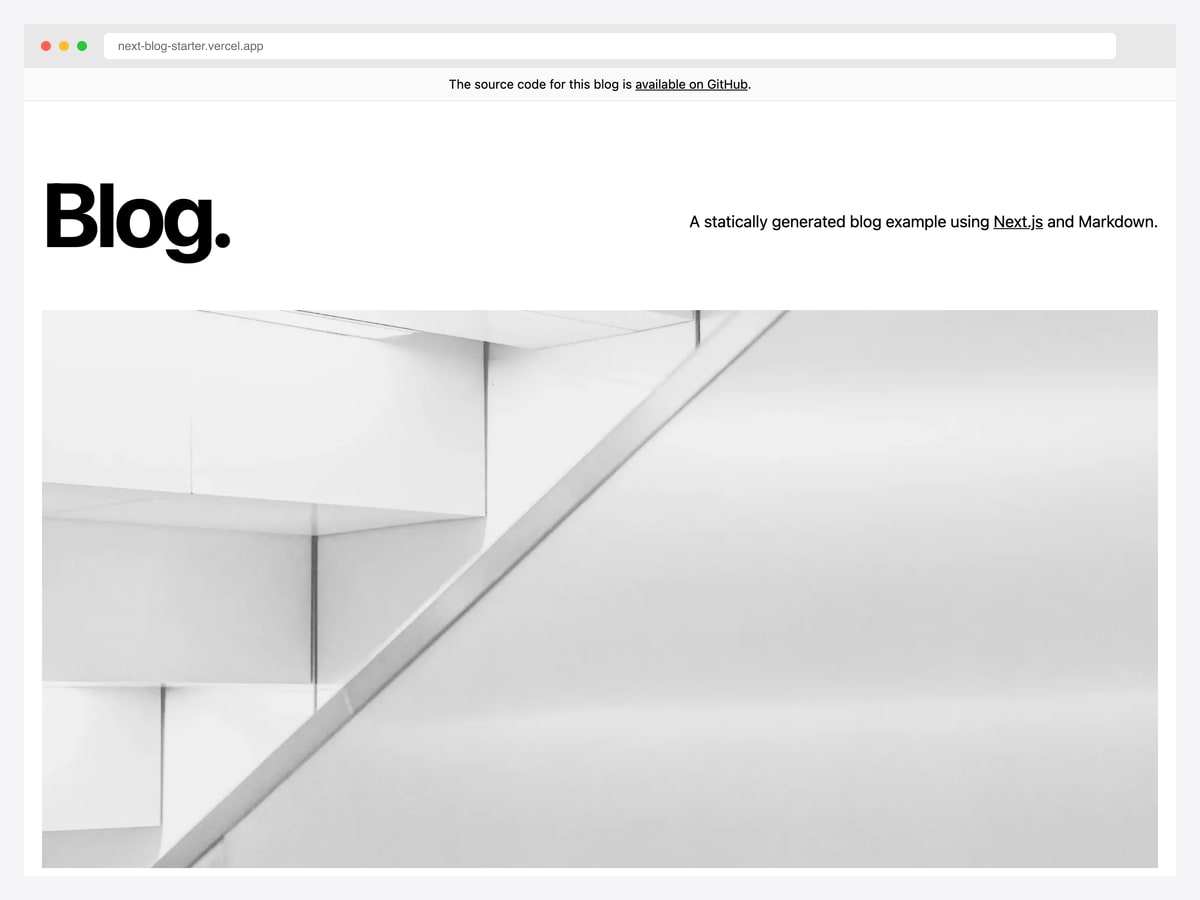
Why we like it: The official Next.js blog starter example maintained in the vercel/next.js repo. Demonstrates Static Generation with Markdown content stored in /_posts directory. Uses remark + remark-html for Markdown-to-HTML conversion and gray-matter for frontmatter parsing. Pattern that the rest of the Next.js community has adopted as the canonical “blog content pipeline” approach.
One-click Vercel deploy via the README. Minimal codebase — best as a learning starting point or as a reference when extending a more feature-rich template. The patterns shown here are how Vercel themselves recommend doing Next.js blogs at the framework level.
12. Magic UI Portfolio
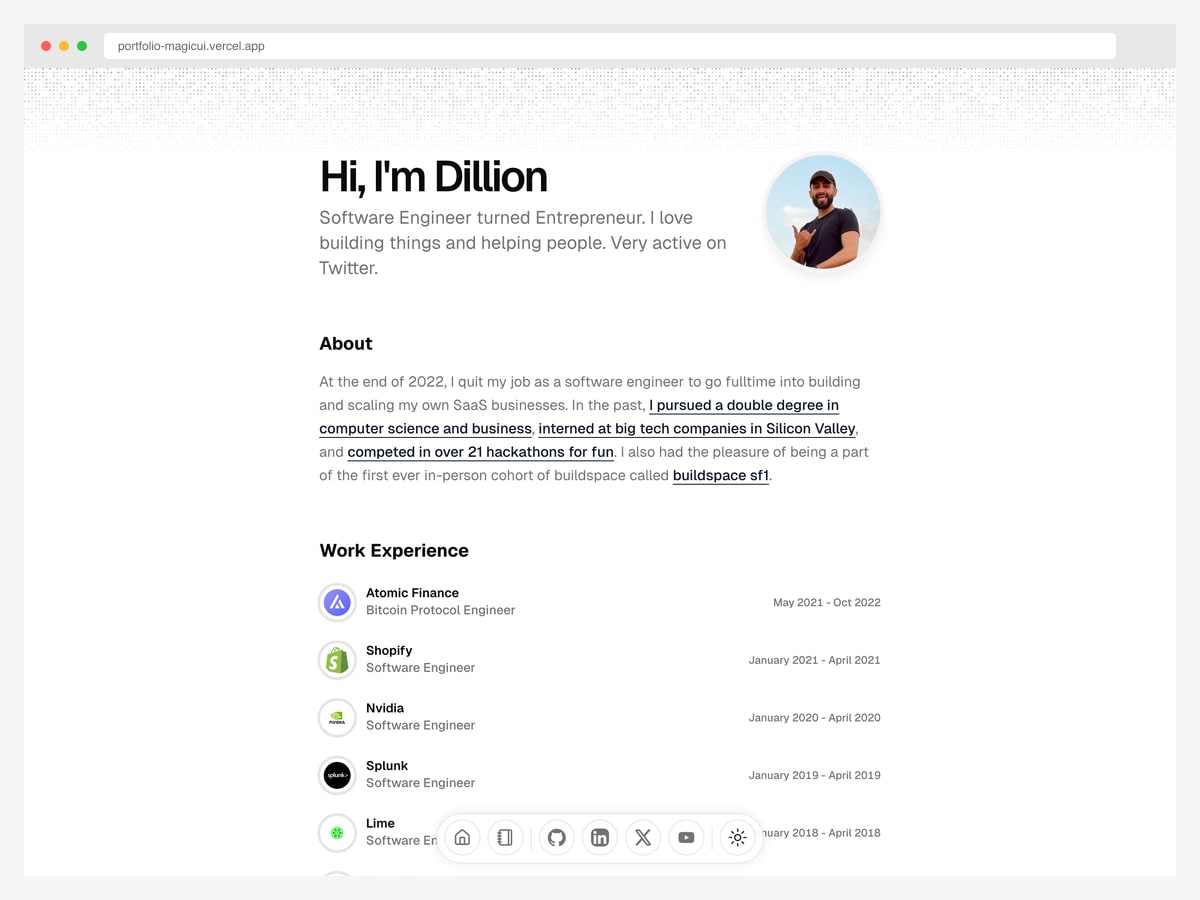
Why we like it: The cleanest “single config file” portfolio template that also ships with an integrated MDX blog. Edit one resume.tsx file and your hero, work history, projects, hackathons, and blog all populate from typed data. Setup takes under an hour from clone to deployed Vercel URL. Magic UI’s 21k-star animation library powers the visual polish.
Best when your blog isn’t your primary publication but a satellite of your developer portfolio — most personal sites in 2026 follow this combined pattern (portfolio + blog + about). Pair with the Magic UI Pro library ($99 lifetime) if you want to extend with 50+ premium animated blocks.
How to Choose a Next.js Blog Template
The right pick depends on what your blog needs:
- Solo technical writer / developer blog? Tailwind Next.js Starter Blog or Lee Robinson next-blog-mdx — MDX + analytics + RSS first-class.
- Monetizing content with paid subscriptions? NextBlog ($69-599) — only template on this list with paywall + Stripe + NextAuth out of the box.
- Mixing blog with docs / API reference? Nextra — Vercel-maintained, MDX-first, the docs ecosystem’s default.
- Non-technical content editors using a CMS? Stablo (free) or Sanity Personal Website Starter — both ship Sanity Studio integration.
- Multi-author blog? Bookworm Light (Themefisher) — author profiles + per-author archives built in.
- Multilingual blog? Nextplate — i18n is built in, rare in free blog templates.
- Agency / services site with blog? Bigspring Light — pricing / contact / blog all in one template.
- Learning the patterns from scratch? Vercel blog-starter (official) — small, readable, and the canonical reference implementation.
- Combined portfolio + blog? Magic UI Portfolio — single config, single deploy.
Next.js Blog Templates FAQ
MDX vs Markdown vs CMS — which content format?
MDX (Tailwind Next.js Starter Blog, Lee Robinson, Magic UI Portfolio): write JSX inside markdown for interactive components. Best for technical writing with custom code embeds, demos, callout boxes. Markdown (Vercel blog-starter): simpler, more portable, works with any Markdown editor. Best for prose-first blogs. CMS-backed (Stablo, Sanity Personal Website, NextBlog): non-technical editors can publish via a visual UI. Best when contributors don’t write Markdown or your blog is a team operation.
Contentlayer is unmaintained — what’s the alternative in 2026?
The original Contentlayer is less actively maintained, but the community fork Contentlayer2 is the production path. Alternatives: next-mdx-remote (more control, slightly more setup), velite (newer Contentlayer-style content pipeline), or direct use of remark/rehype with Server Components. Templates still built on Contentlayer (Tailwind Next.js Starter Blog v2 among them) will keep working, but treat that as a migration to schedule rather than defer: Contentlayer itself has had no commits since late 2024, so it is effectively unmaintained. Newer starters use MDX directly or Velite instead.
How do I add comments to a blog template that doesn’t have them?
Three popular free options: Giscus (uses GitHub Discussions, no signup for readers who already have GitHub), Utterances (uses GitHub Issues), Disqus (longer-established, includes ads on the free tier). Tailwind Next.js Starter Blog ships support for all three behind config flags. For paid options without ads: Hyvor Talk, Commento, or self-hosted Remark42. Most blog templates plug comments in via a 20-line component.
App Router or Pages Router for a new Next.js blog in 2026?
App Router. Every template on this list released or updated in 2026 defaults to App Router. React Server Components render your MDX content server-side for excellent SEO and Core Web Vitals, with no client-side JavaScript needed for the article body itself. Pages Router still works but Server Components are why Next.js wins over Astro / Gatsby for content sites in 2026 — and they require App Router.
What’s the right way to handle SEO?
Three baseline must-haves: per-post generateMetadata() for title + description + Open Graph tags, app/sitemap.xml for search engine crawl, and app/robots.txt for indexing rules. Tailwind Next.js Starter Blog ships all three plus structured data via JSON-LD (article schema for Google’s rich results). Add canonical URLs if you cross-post to Medium or dev.to. Skip aggressive SEO plugins — Next.js’s built-in metadata API is genuinely better than the WordPress / Yoast equivalents.
How do I host a Next.js blog for free?
Vercel (zero-config one-click deploy, best for Next.js), Netlify (works for any Next.js build), Cloudflare Pages (free tier with generous limits), or GitHub Pages (best for static-export Next.js blogs like the Vercel blog-starter example). Sanity-backed blogs need a hosting target that runs the Next.js Node runtime — Vercel and Netlify both qualify on free tiers; pure static hosts don’t.
Self-hosted Next.js blog vs Substack / Medium?
Self-hosted wins on: full design control, no platform fees on subscriber revenue (just Stripe’s 2.9%), no risk of platform deprecation, custom domain at no extra cost, owns the audience email list. Substack / Medium win on: built-in network effects (discovery via the platform), no infrastructure work, integrated payments. Best hybrid pattern: self-host your blog on Next.js, syndicate to Substack or Medium for distribution, keep the canonical URL pointing at your own domain.
How do I monetize a Next.js blog?
Three patterns: Paid newsletter (NextBlog template — paywall + Stripe + NextAuth built in; alternatively bolt Ghost or ConvertKit onto any blog template). Affiliate links + ads (works with any template, just disclose properly). Sponsored posts (any template, transparency required). NextBlog is the only template on this list with monetization baked in — every other template assumes you’ll add it yourself, which usually takes 2-5 days of integration work.
For broader Next.js template categories, see our Next.js portfolio templates roundup (many portfolios pair beautifully with these blog templates), Next.js landing page templates, Next.js SaaS templates, and our forthcoming Next.js AI chatbot templates and Next.js starter kits roundups.

You Might Also Like