
20 Best Free Tailwind CSS Landing Page Templates 2026

Tailwind CSS has become the default styling approach for modern landing pages, and for good reason. Utility-first classes let you prototype and iterate faster than traditional CSS frameworks, the design ceiling is effectively unlimited (no “looks like Bootstrap” problem), and the purged production builds are tiny. Combined with modern frameworks like Next.js, Astro, and Vite, Tailwind makes it possible to go from idea to deployed landing page in hours, not days.
We searched GitHub to find the 20 best free, open-source Tailwind CSS landing page templates available in 2026. Every project on this list is free for commercial use, actively maintained, and comes with a live demo. You’ll find options in pure HTML, React/Next.js, Astro, Vue, and even framework-agnostic component collections — so whatever your tech stack, there’s a Tailwind landing page that fits. The twenty ranked picks are ordered by GitHub stars; ahead of them we’ve added one editor’s pick that is too new to compete on star count but hard to beat on what you actually get — Velora UI, a complete MIT-licensed Tailwind 4 site rather than a single page.
Whether you’re launching a SaaS product, showcasing a portfolio, marketing a mobile app, or building an agency site, one of these templates will get you 80% of the way there before you write a single custom utility class.
Best Free Tailwind CSS Landing Page Templates
Editor’s Pick: Velora UI
Free — MIT licensed, Tailwind CSS 4, complete multi-page site
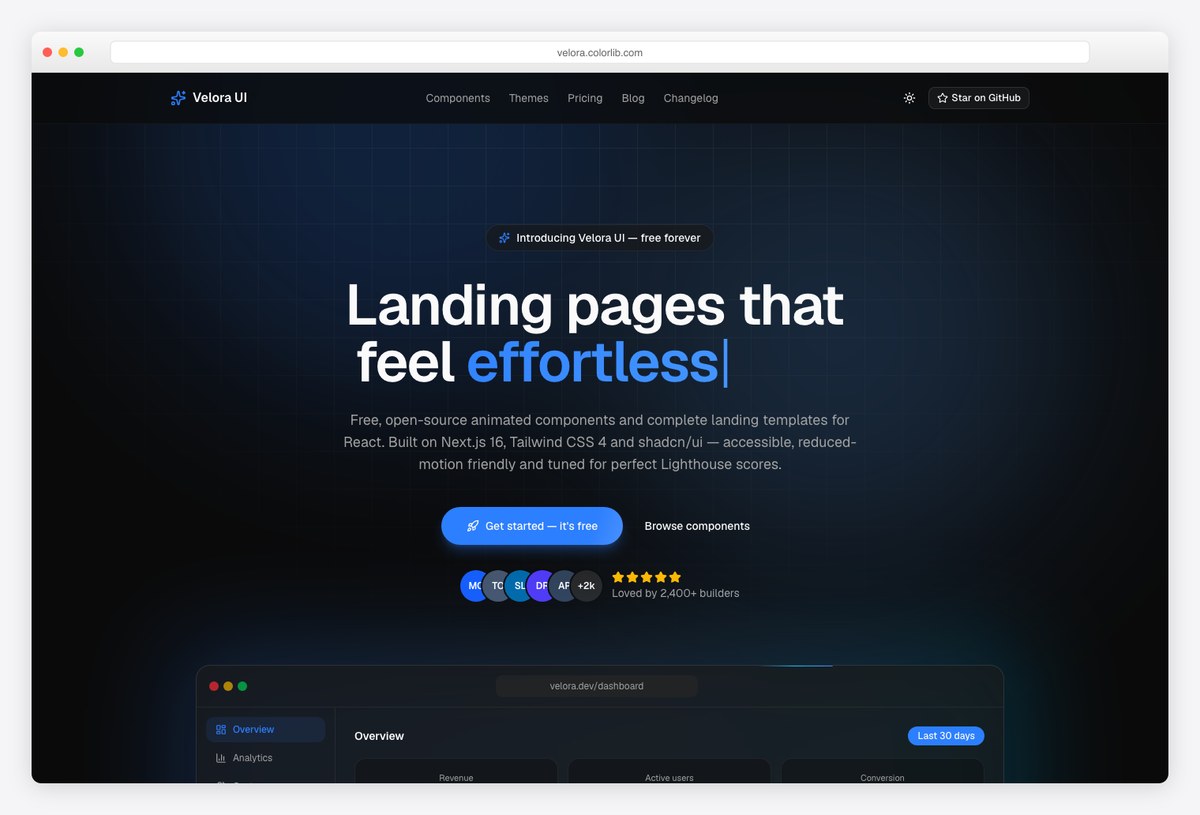
Every other entry on this list is ranked by GitHub stars, and Velora UI is too new to win that contest — so it sits here instead, on merit rather than seniority. It is the only free pick here that ships a whole marketing site: home, pricing, an MDX blog, about, contact, login, signup, changelog and a styled 404, all assembled from 64 animated components rather than hardcoded sections. Every component and the complete template are MIT, commercial use included.
The Tailwind story is the current one. It is built on Tailwind CSS 4 with shadcn/ui as the component layer, Next.js 16 App Router underneath, and Motion for the animation — no WebGL payloads, with components running 0.3–1.5 KB gzipped and 33 of the 64 carrying no runtime dependency at all. Because the components read your shadcn CSS variables instead of hardcoding hues, re-branding every gradient, beam and glow is a matter of editing one token block; six ready-made presets ship on the themes page. A global prefers-reduced-motion switch disables the animation for anyone who asks for that.
The trade-off to know going in: this is the marketing layer only. The pricing table, contact form and auth screens are front-end shells — no Stripe, no database — so it is a landing site to deploy, not a SaaS starter. It also assumes React; if you want plain HTML or Astro, take one of the ranked picks below. You can clone the whole repository, or pull a single component into an existing Tailwind project with npx shadcn@latest add https://velora.colorlib.com/r/aurora-background.json.
1. HyperUI
⭐ 11.9k GitHub Stars
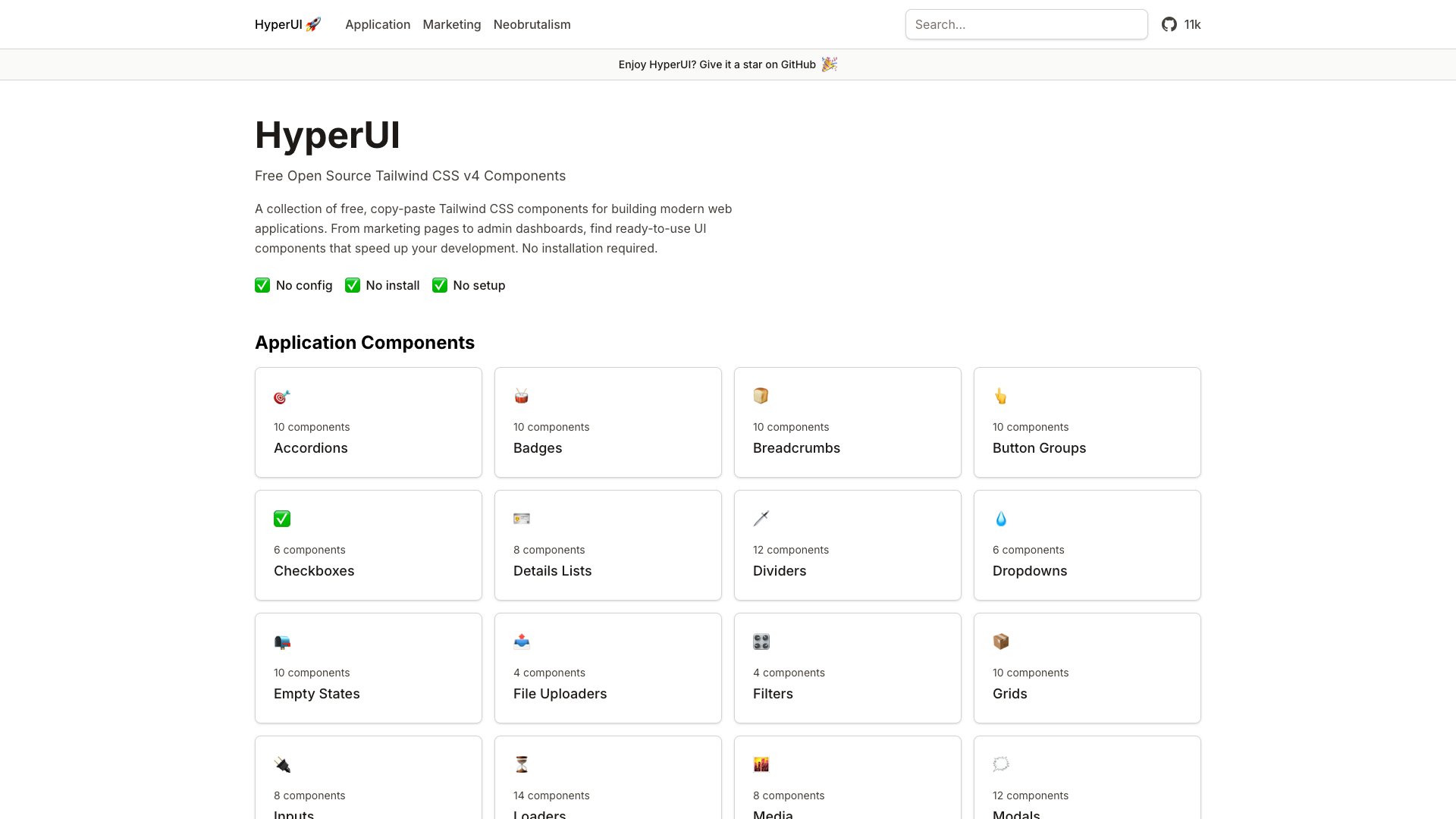
The largest free collection of Tailwind CSS components on GitHub, and it doubles as a landing page builder. HyperUI provides copy-paste components covering marketing sections, eCommerce layouts, and application UI — including complete hero sections, feature grids, testimonial carousels, pricing tables, CTAs, and footers. Tailwind CSS v4 support, dark mode, RTL, and Alpine.js integration are all included.
While technically a component library rather than a single template, the practical value for landing pages is immense: browse the collection, copy the sections you need, paste them together, and customize. No build tools required for the basic HTML components. At nearly 12k stars, it’s the most community-validated Tailwind component resource available.
2. Flowbite
⭐ 9.1k GitHub Stars
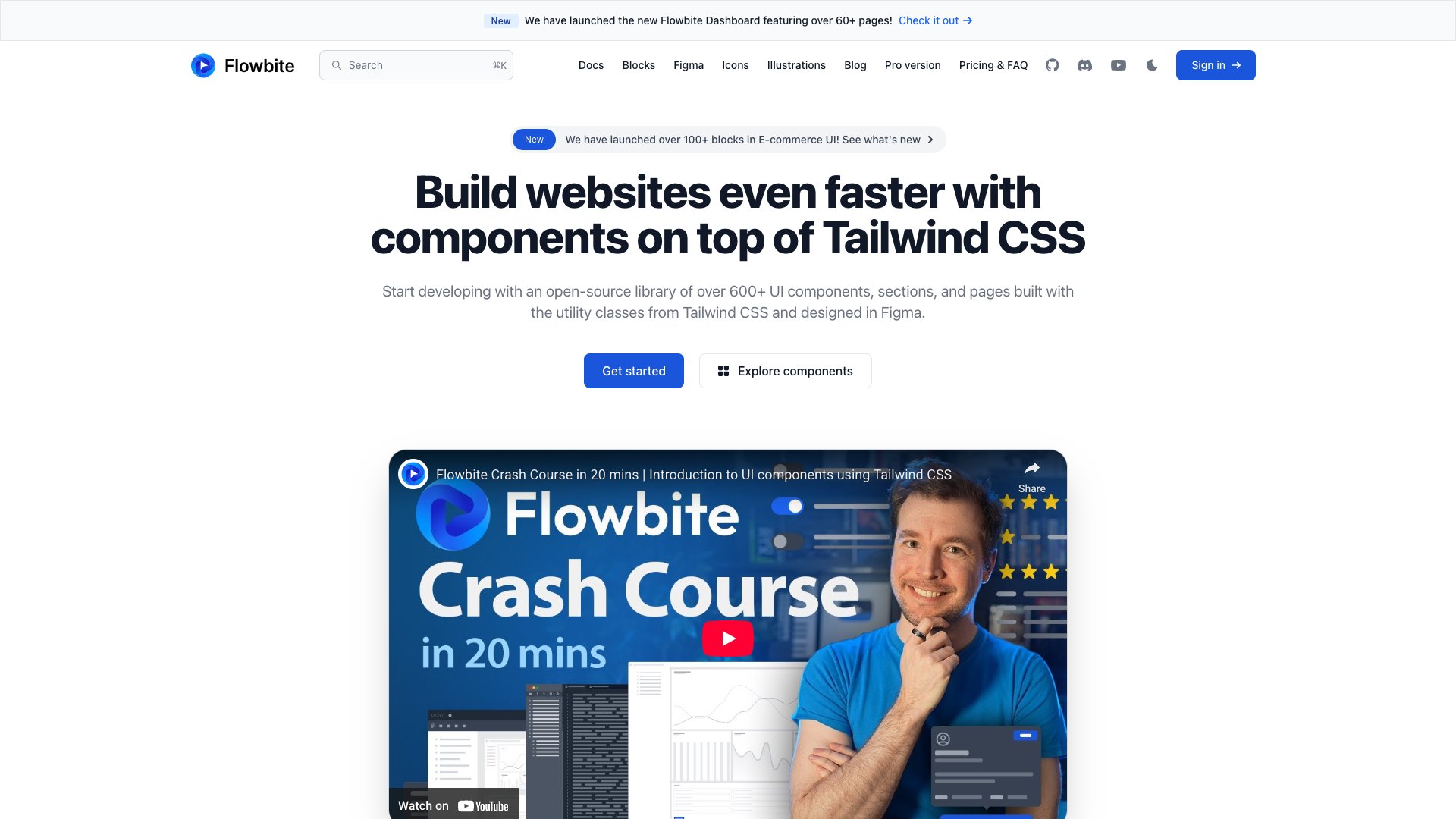
Flowbite is a complete frontend development framework built on Tailwind CSS, offering 400+ UI sections with dark mode, responsive layouts, RTL support, and interactive JavaScript components. It works as plain HTML but also has official adapters for React, Vue, Svelte, and Angular. The landing page blocks alone would fill an entire template marketplace.
The Figma design system integration means designers and developers work from the same source of truth. Hero sections, feature blocks, pricing tables, testimonials, team sections, FAQ accordions, newsletter signups, and footers — every landing page section you’d ever need exists in Flowbite’s library, ready to compose into a complete page. Tailwind CSS v4 support keeps it current.
If you’re also building admin dashboards, check out our roundup of the best Tailwind admin dashboard templates.
3. SaaS Boilerplate
⭐ 6.8k GitHub Stars
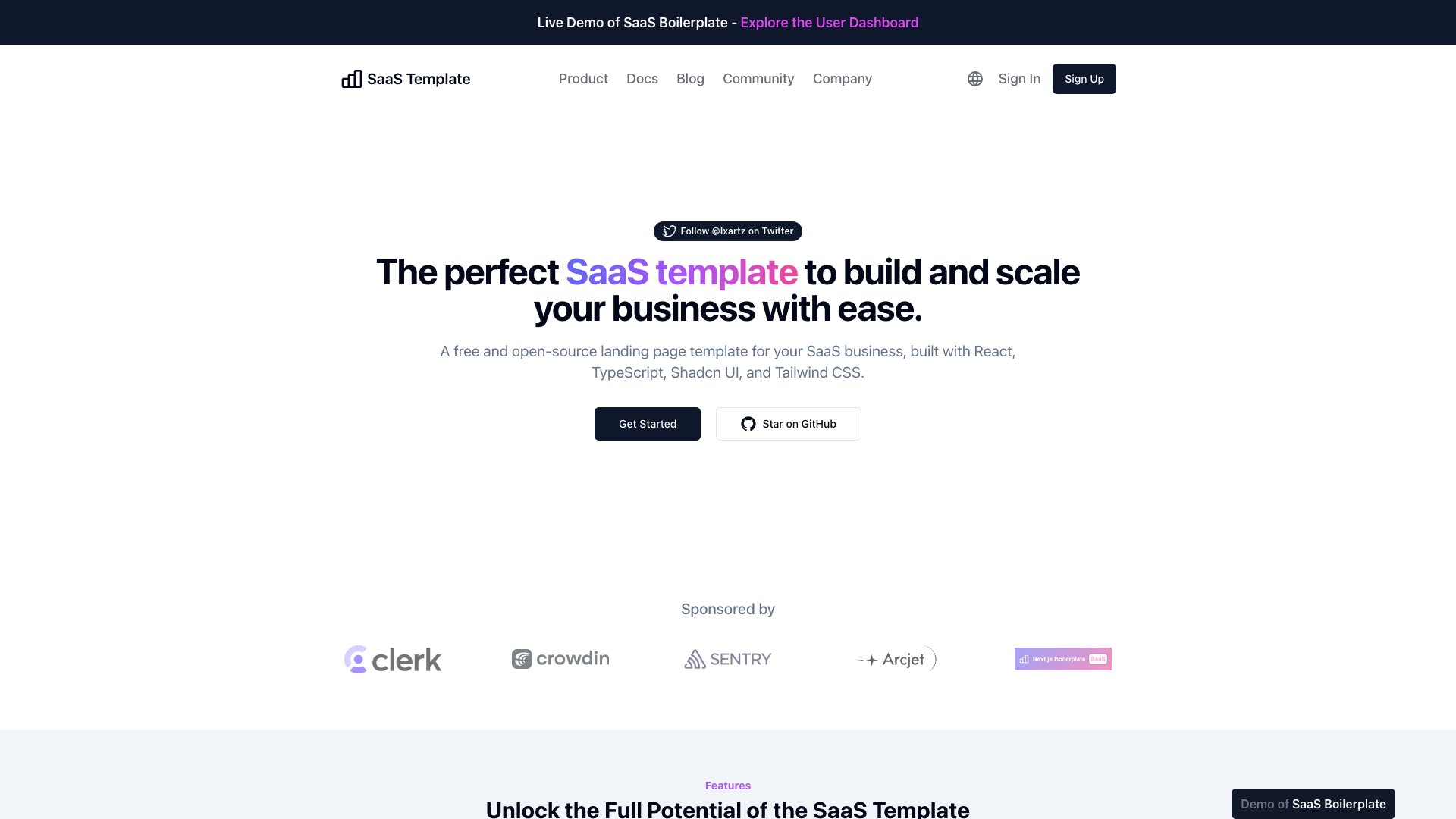
More than a landing page template — it’s a complete SaaS starter kit. Built with Next.js, Tailwind CSS, shadcn/ui, and TypeScript, the boilerplate includes a polished marketing landing page alongside authentication, multi-tenancy, roles/permissions, i18n, database integration, logging, testing, and Stripe payment integration. The landing page is production-ready from clone.
For SaaS founders who want to ship fast, having the landing page and the entire application infrastructure in a single repository eliminates the integration headaches that come with bolting separate tools together. The shadcn/ui components ensure the landing page and the application UI share the same design language. At 6.8k stars, the community validation is strong.
4. AstroWind
⭐ 5.4k GitHub Stars
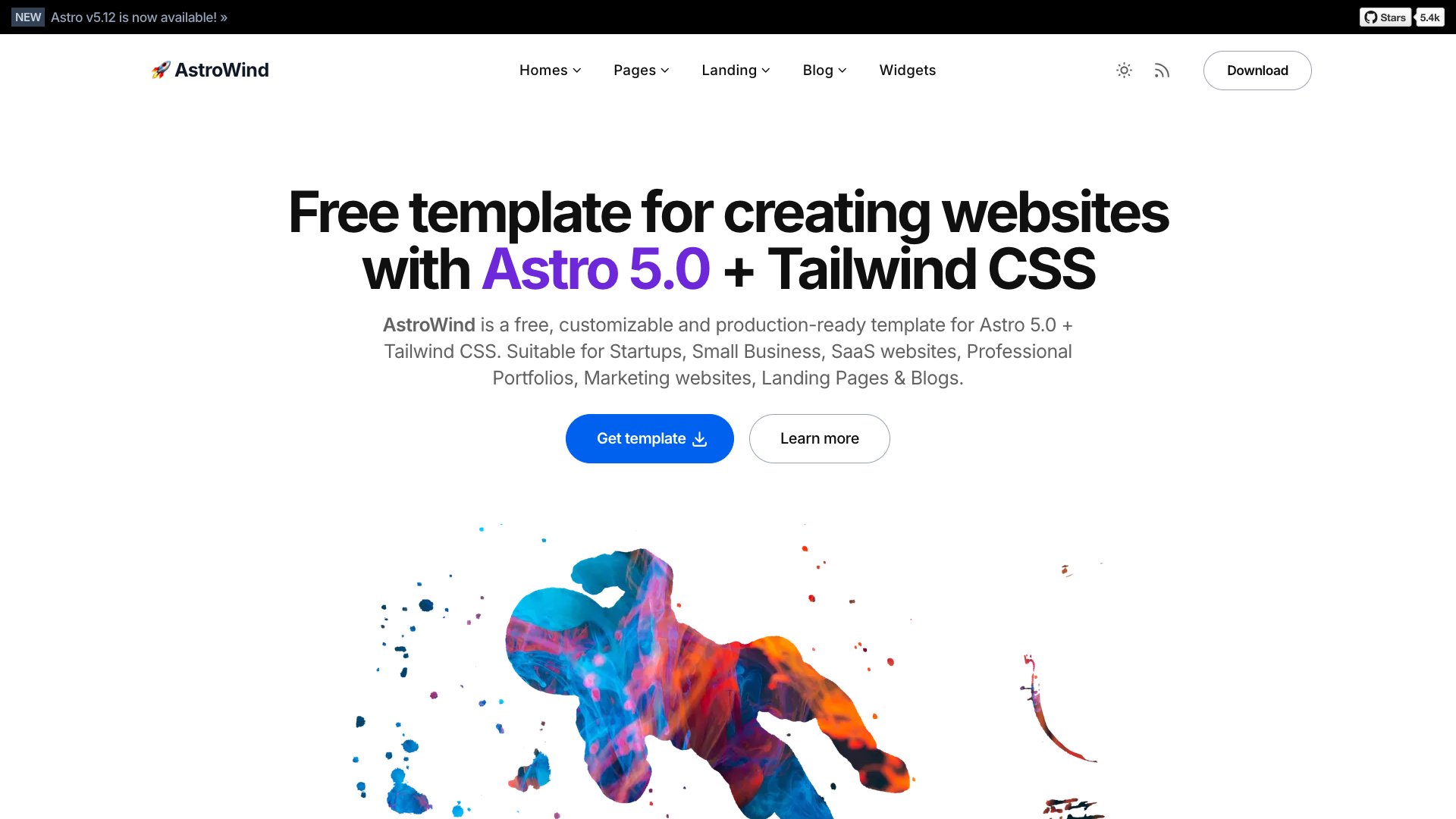
The most starred Astro theme for three consecutive years, and the go-to choice for developers who want Astro’s zero-JavaScript performance with Tailwind’s design flexibility. AstroWind includes a complete landing page with hero, features, testimonials, and CTAs, plus a blog with MDX support, dark mode, RTL, image optimization, and view transitions. Lighthouse scores are consistently 95+.
The SEO optimization is built in from the ground up — meta tags, Open Graph, structured data, XML sitemap, and RSS feed all come preconfigured. For teams that want the fastest possible landing page (Astro ships zero JS by default) with the best possible SEO, AstroWind is the template to start with. It tracks Astro releases closely and already runs on Astro 7.
5. Open React Template
⭐ 4.6k GitHub Stars

Cruip has built a reputation for the best-designed free landing page templates, and Open React Template continues that tradition. Designed for showcasing open-source projects, SaaS products, and online services, it delivers an animated hero section, feature grid, testimonials, newsletter signup, and a professional footer. Built with React, Next.js, and Tailwind CSS v4.
The animation work is subtle but polished — scroll-triggered reveals, hover effects, and micro-interactions that make the page feel alive without being distracting. The GPL license makes it free for any use. If your priority is “looks like a real product” rather than “looks like a template,” Cruip’s design sensibility delivers.
6. Simple Light
⭐ 4.4k GitHub Stars
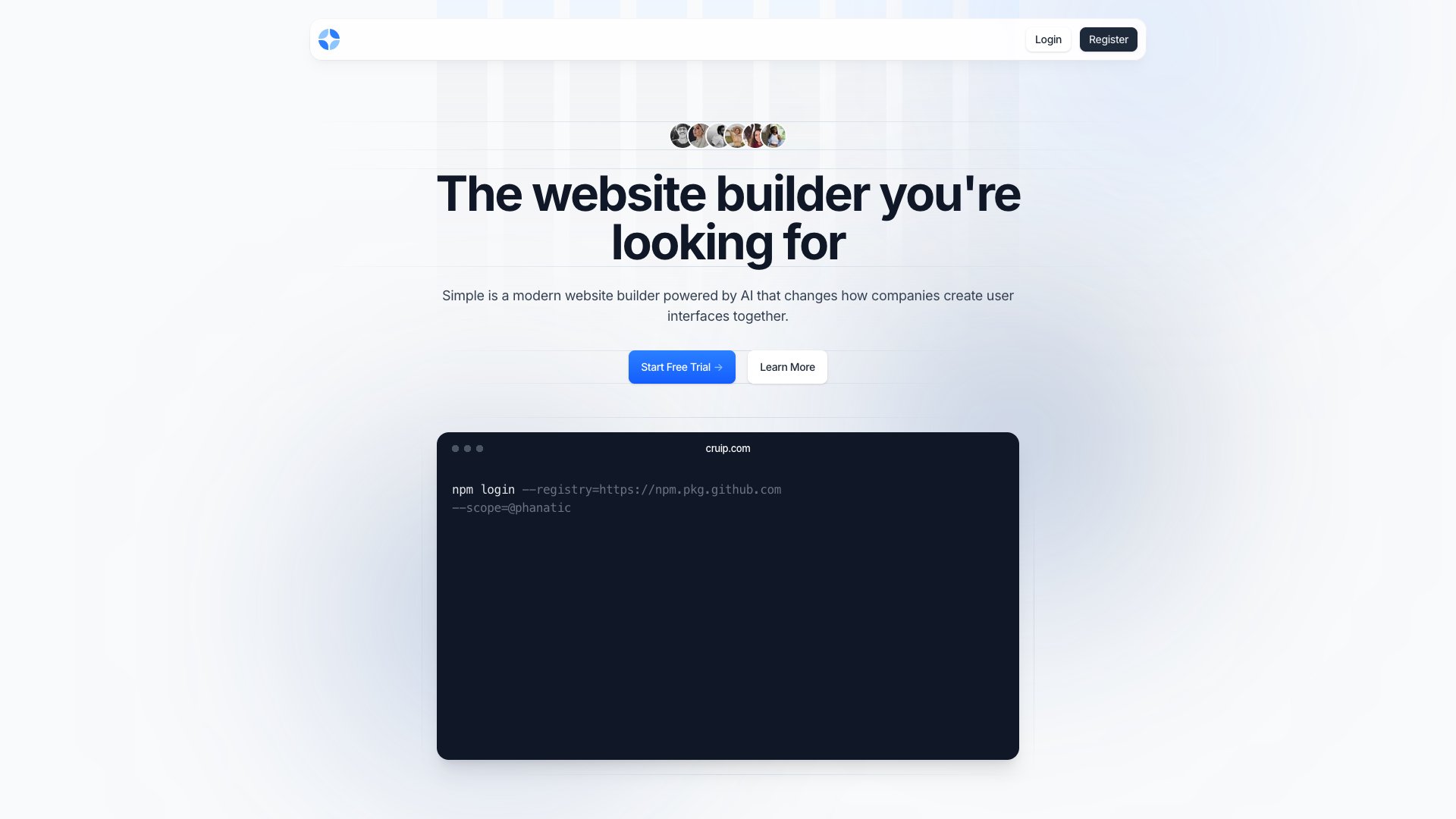
The other Cruip classic, and arguably the most forked SaaS landing page template on GitHub. Simple Light provides everything a developer needs for a SaaS product landing: hero with illustration, features grid, testimonials carousel, pricing table, newsletter signup, and a clean footer. Recently updated with Tailwind CSS v4 support on Next.js.
The “Simple” in the name is the value proposition — this template doesn’t try to impress with complex animations or unconventional layouts. Instead, it executes the proven SaaS landing page formula with clean design and quality code. Sometimes the best template is the one that gets out of your way. GPL licensed for free commercial use.
Looking for more Tailwind-based web templates? Check out our best Tailwind CSS templates collection.
7. Meraki UI
⭐ 2.7k GitHub Stars
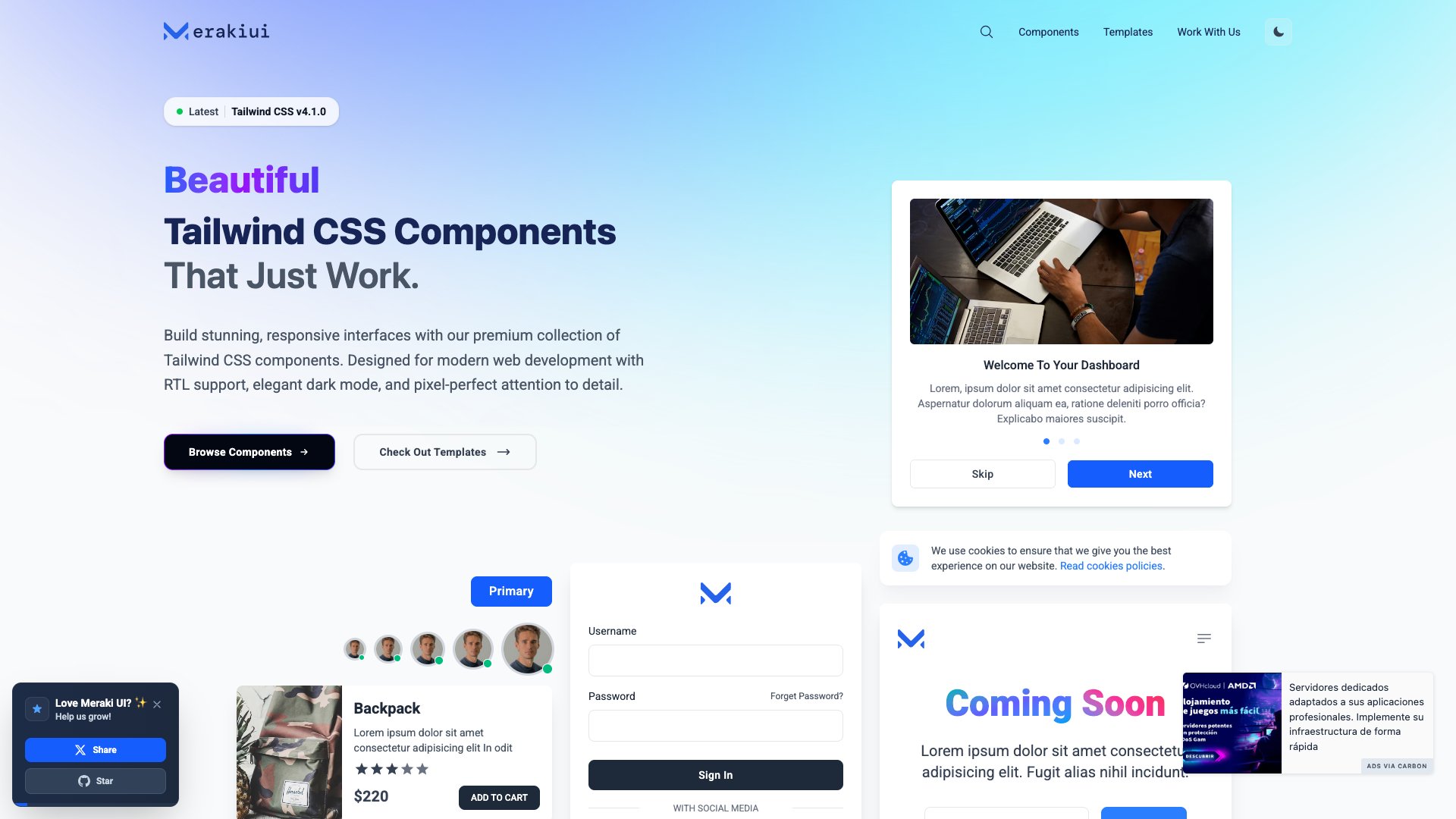
Meraki UI provides 200+ Tailwind CSS components with an emphasis on RTL (right-to-left) language support — a critical feature for projects targeting Middle Eastern and South Asian markets. Hero sections, feature grids, pricing tables, testimonials, CTAs, and complete footer layouts are all included with dark mode support and responsive Flexbox/Grid layouts.
The RTL support isn’t an afterthought — it’s a core design principle. Every component is tested in both LTR and RTL modes, making Meraki the best option for international landing pages. The copy-paste approach (no build tools required for basic HTML use) keeps the development workflow simple. For teams serving multilingual audiences, this is the component collection that actually handles it properly.
8. Next.js Landing Page Starter
⭐ 2.1k GitHub Stars
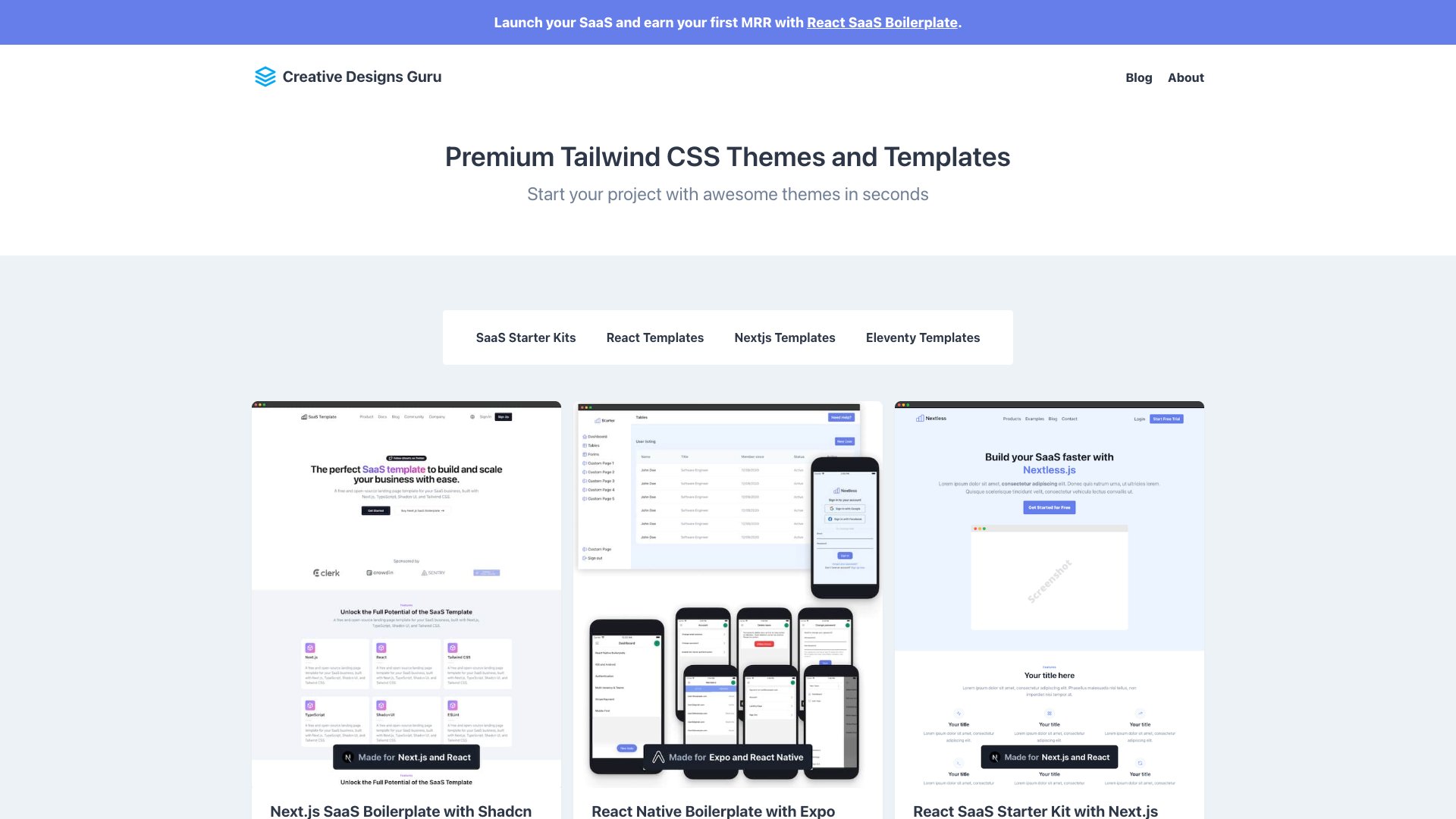
Ixartz’s dedicated landing page starter pairs Next.js 14 with Tailwind CSS and TypeScript, built with developer experience as the top priority. ESLint, Prettier, Husky, lint-staged, and VSCode integration come preconfigured — you get a professional development workflow from the first commit, not just a pretty page.
The hero, features, and CTA sections follow proven conversion patterns, and the Netlify deployment is one-click. For developers who want a clean, well-tooled starting point that they’ll customize heavily (rather than a feature-packed template they’ll need to strip down), this starter provides the right level of opinion without over-engineering.
9. Astroship
Maintenance: last commit March 2025 — more than a year and a half ago. The code is still usable, but the framework has shipped major releases since, so budget time to update dependencies yourself and check anything that touches build tooling.
⭐ 1.9k GitHub Stars
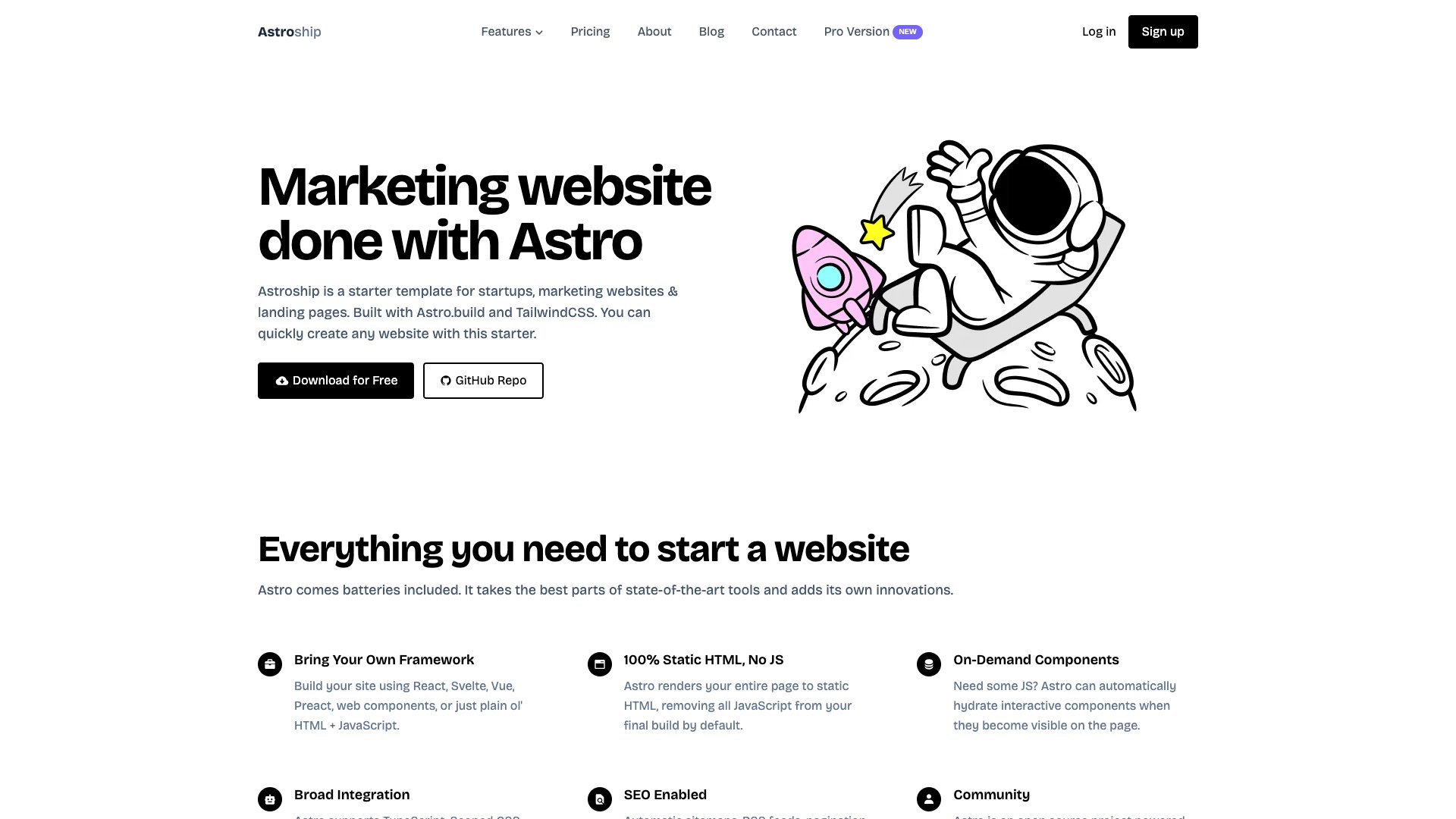
If AstroWind (#4) feels like too much, Astroship is the lean alternative. A clean, minimal landing page template for startups, marketing sites, and blogs built with Astro and Tailwind CSS. Essential pages (home, about, contact, blog) and components (hero, features, CTA) are included without the feature bloat. SEO-friendly, fast, and deployable to Netlify or Vercel with one click.
Web3Templates built Astroship as a practical starting point rather than a showcase piece. The design is professional without being flashy, and the codebase is small enough to understand completely in 30 minutes. For Astro developers who want a solid foundation without opinionated complexity, Astroship delivers exactly that.
10. Shadcn Landing Page
Maintenance: last commit October 2024 — more than a year and a half ago. The code is still usable, but the framework has shipped major releases since, so budget time to update dependencies yourself and check anything that touches build tooling.
⭐ 1.9k GitHub Stars
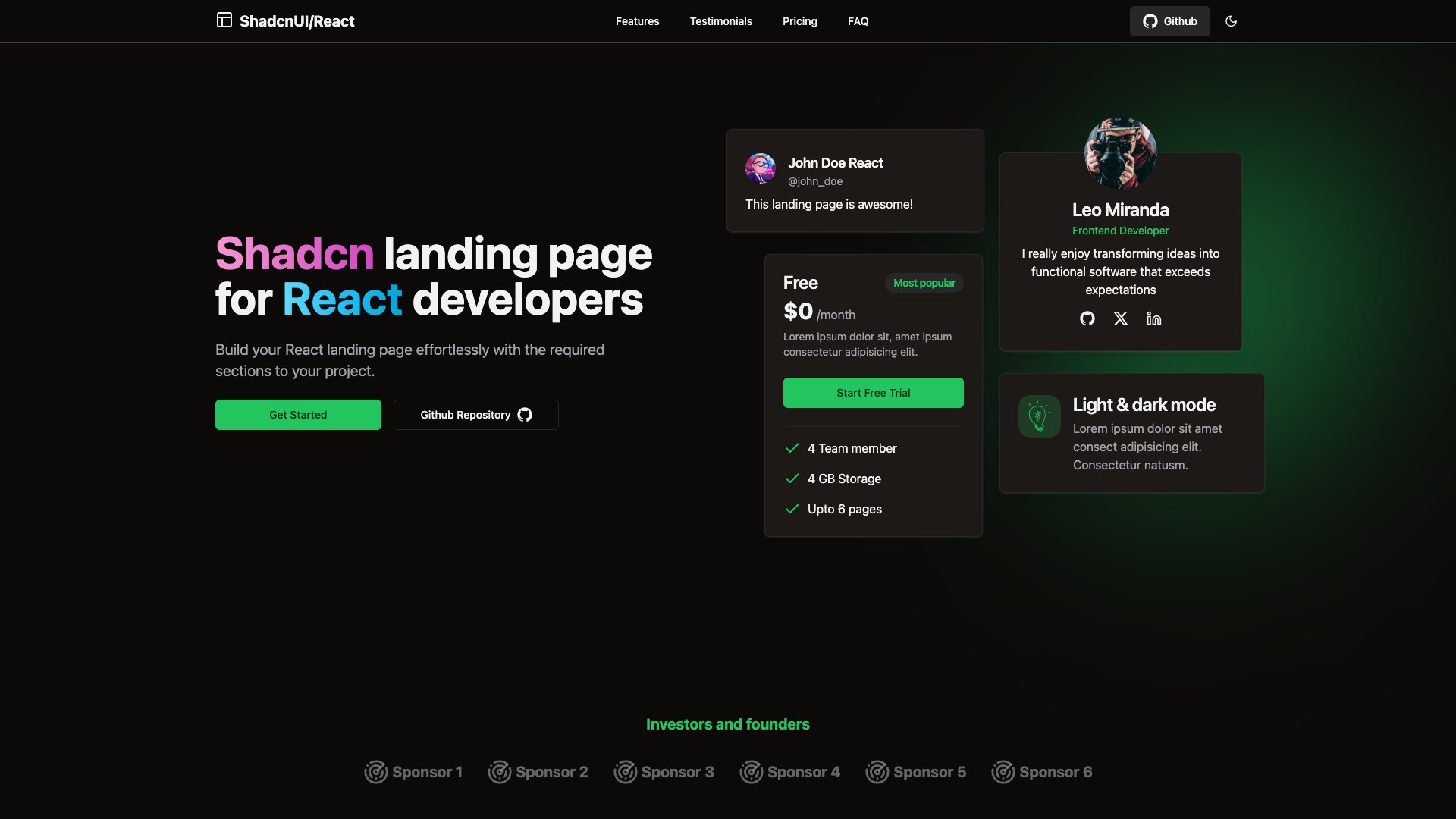
A polished landing page template that leverages shadcn/ui’s component system for a modern, accessible design. Hero section, feature grid, testimonials, pricing, FAQ, newsletter — all the essential sections built with Radix UI primitives underneath for proper accessibility. Dark mode works flawlessly, and the smooth animations add polish without hurting performance.
If your SaaS product uses shadcn/ui in its application (and increasingly many do), having the landing page share the same component library ensures visual consistency between your marketing site and your app. TypeScript and Tailwind CSS throughout, with a React + Vite setup that keeps development fast.
Need admin dashboards alongside your landing page? Our shadcn admin dashboard templates guide covers the best options.
11. Next SaaS Starter
Maintenance: last commit January 2024 — over two years ago. The code is still usable, but the framework has shipped major releases since, so budget time to update dependencies yourself and check anything that touches build tooling.
⭐ 1.7k GitHub Stars
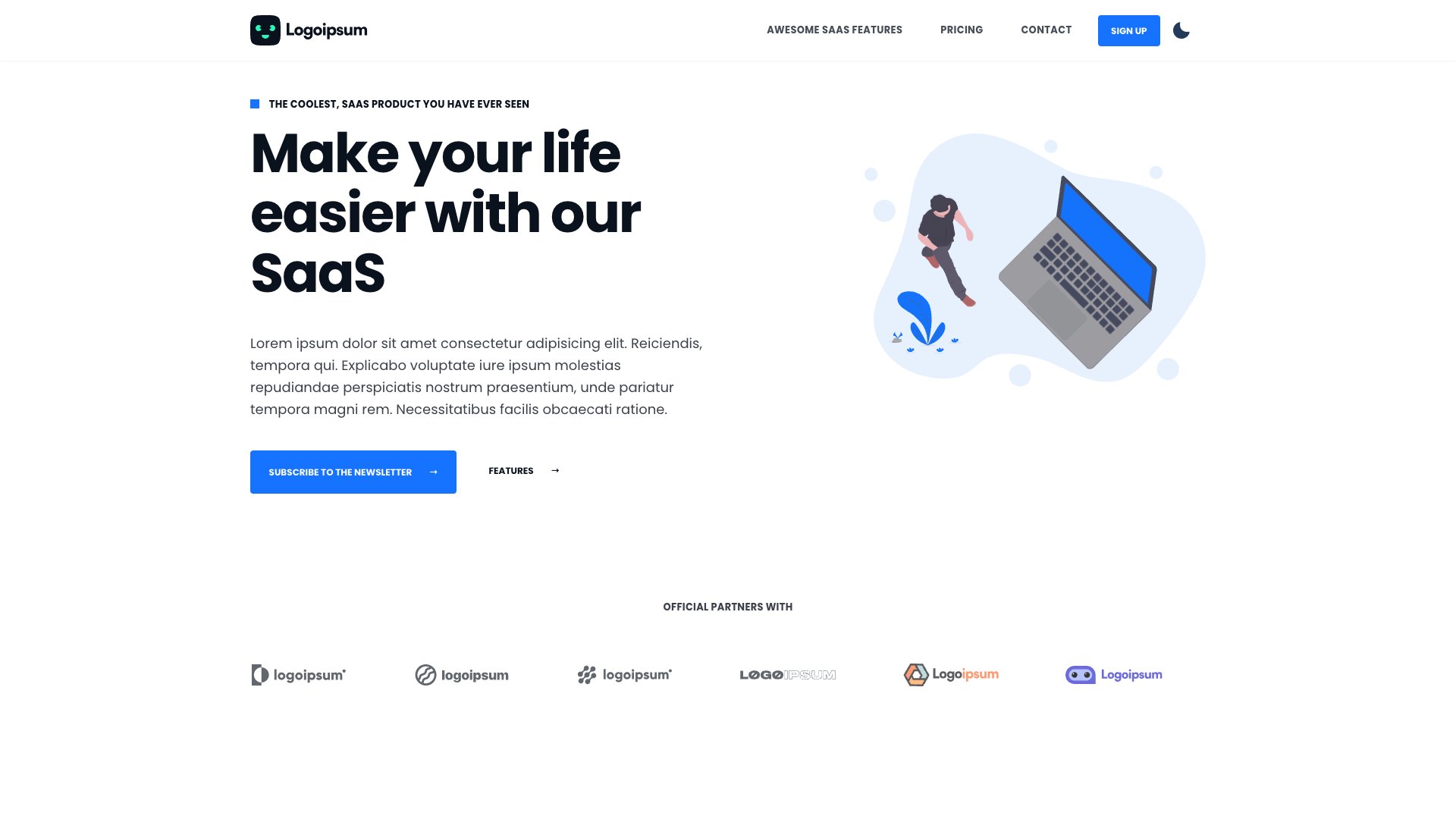
Blazity’s Next SaaS Starter is a conversion-focused landing page specifically designed for SaaS products using JAMStack architecture. Hero, features, pricing, testimonials, and CTA sections follow proven conversion patterns with clean, responsive design. The SEO optimization is thoughtful, targeting the keywords that SaaS products actually need to rank for.
The template is opinionated about one thing: selling software. Every section exists to move visitors toward a conversion action. No generic corporate filler, no unnecessary complexity — just a focused marketing page for a software product. If you know what you’re building is a SaaS product, this template understands the assignment.
12. Page UI
⭐ 1.6k GitHub Stars
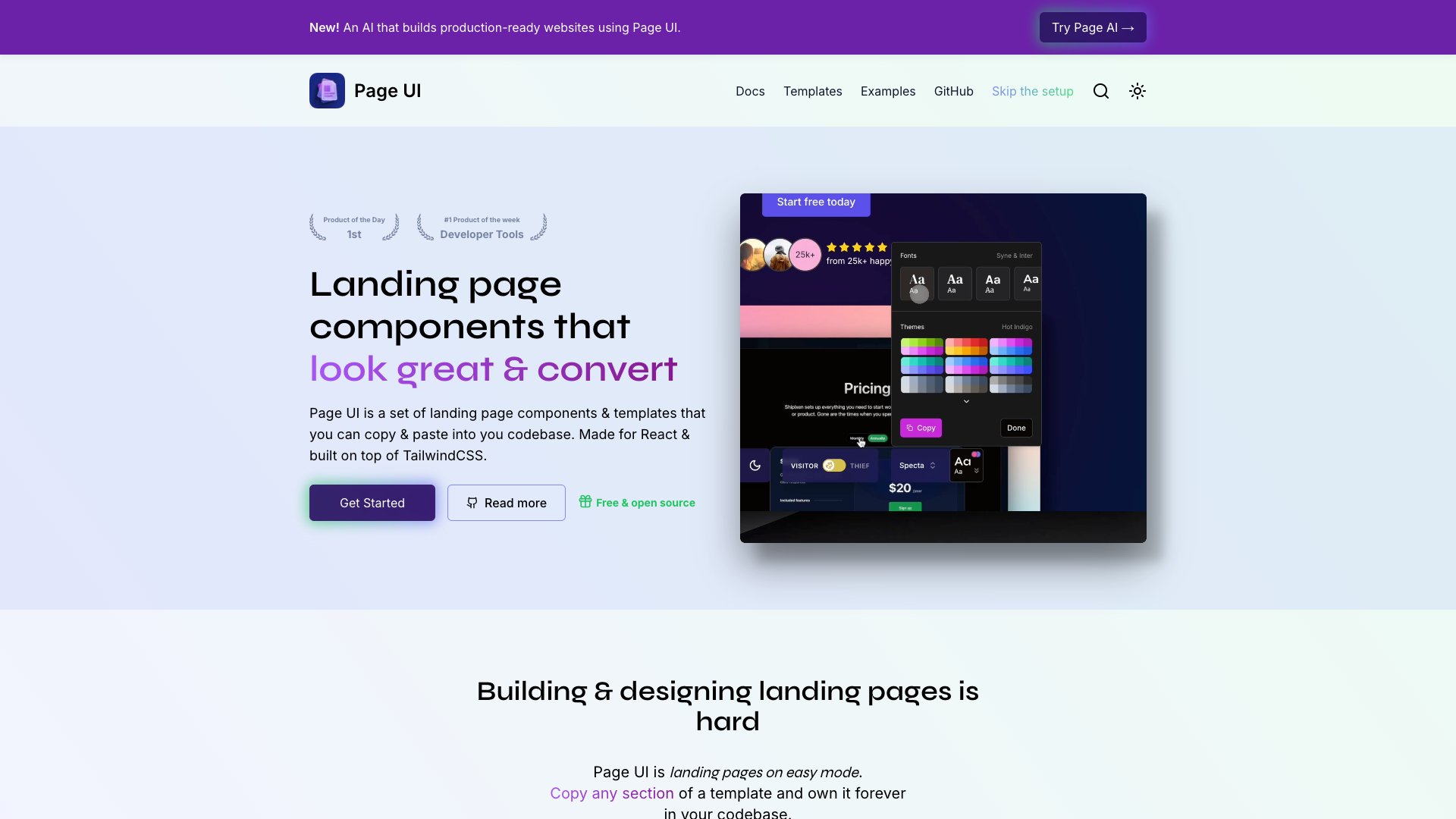
Page UI provides a collection of copy-paste landing page components designed specifically for React and Next.js with Tailwind CSS. Multiple hero variants, feature sections, pricing tables, testimonials, and dark mode support let you assemble a custom landing page from pre-built, high-quality blocks without being locked into a single template layout.
The component-based approach means you pick exactly what you need. Don’t want a pricing section? Don’t paste it. Need two different hero variants to A/B test? Copy both. The design quality of each individual component is high enough that assembled pages look cohesive, not frankensteined. For developers who want maximum customization with minimum effort, Page UI hits the sweet spot.
13. React Landing Page Template
Maintenance: last commit December 2023 — over two years ago. The code is still usable, but the framework has shipped major releases since, so budget time to update dependencies yourself and check anything that touches build tooling.
⭐ 1.6k GitHub Stars
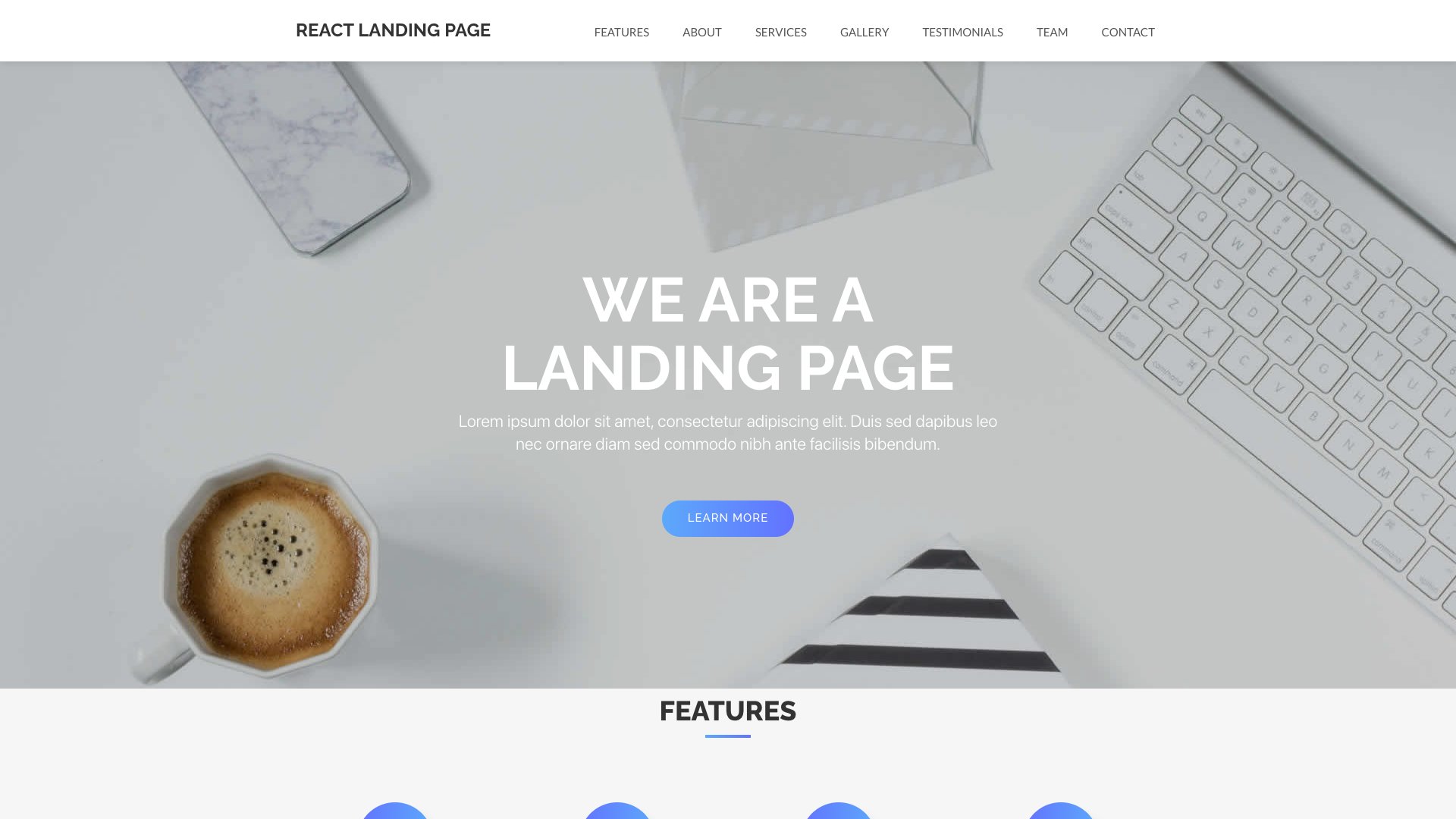
Sometimes you just need a straightforward one-page landing page without the complexity of a full SaaS boilerplate. This React + Tailwind template delivers exactly that: a clean hero section, about, services, contact form, and smooth scrolling. No authentication, no database, no backend — just a beautiful static page that loads instantly.
The simplicity is the feature. For companies and freelancers who need a professional web presence quickly — an agency page, a coming-soon site, a product announcement — this template gets you from clone to deployed in under an hour. The responsive design works across all devices, and the code is clean enough for React beginners to customize confidently.
14. Landy React Template
⭐ 1.6k GitHub Stars
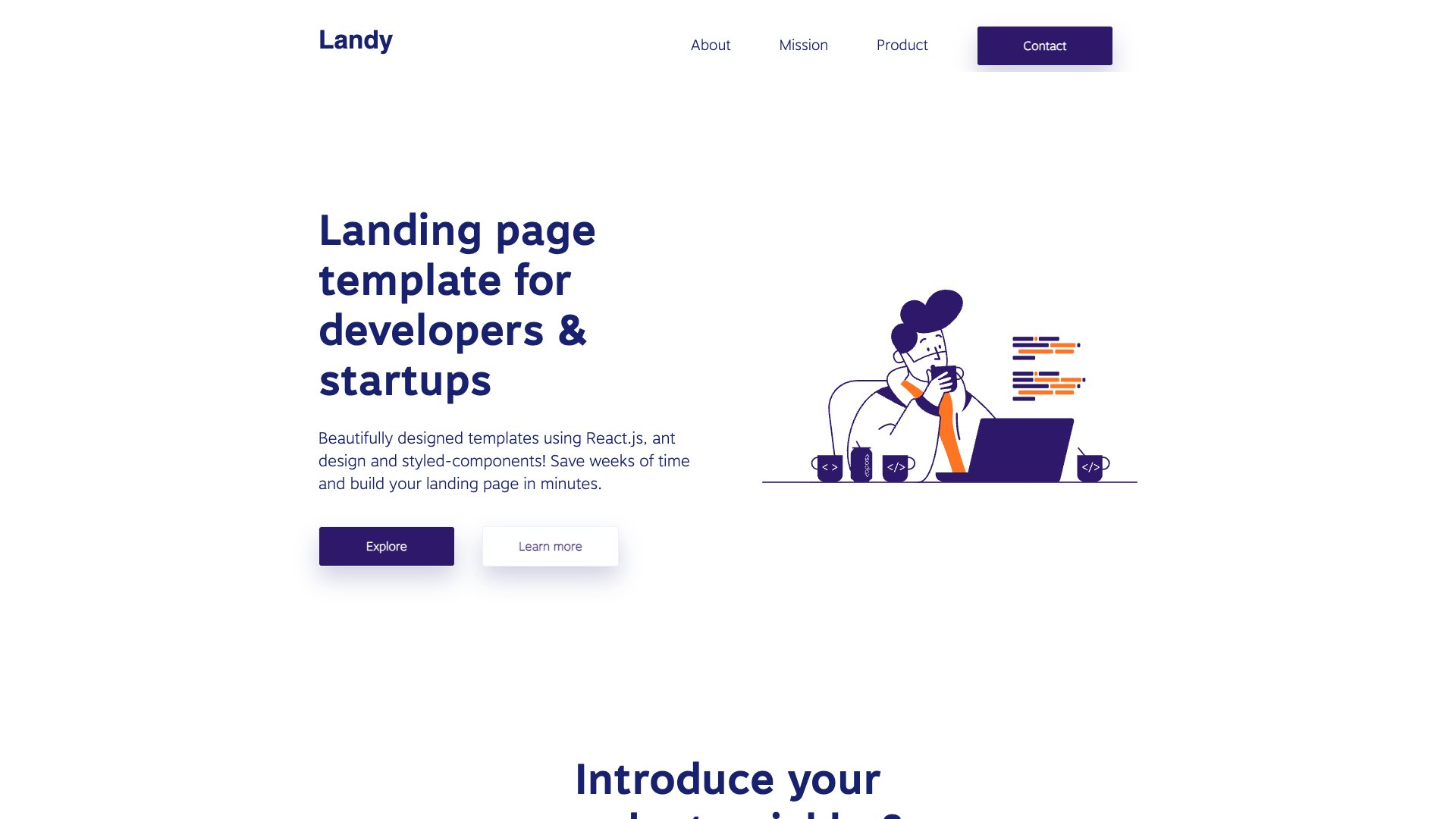
Landy differentiates itself with two features most landing page templates skip: internationalization (i18n) and a working contact form with email integration. Built with React, TypeScript, and Ant Design, the template supports multiple languages out of the box and sends real emails from the contact form. Scroll animations and a modular architecture round out the feature set.
For businesses that serve international markets and need their landing page in multiple languages from day one, Landy eliminates the “add i18n later” technical debt. The contact form actually working (not just a styled div with no backend) is a practical touch that saves setup time. Good for startups targeting multilingual audiences.
For more web templates across different frameworks, explore our free admin panels guide.
15. Tailwind Toolbox Landing Page
⭐ 1.4k GitHub Stars
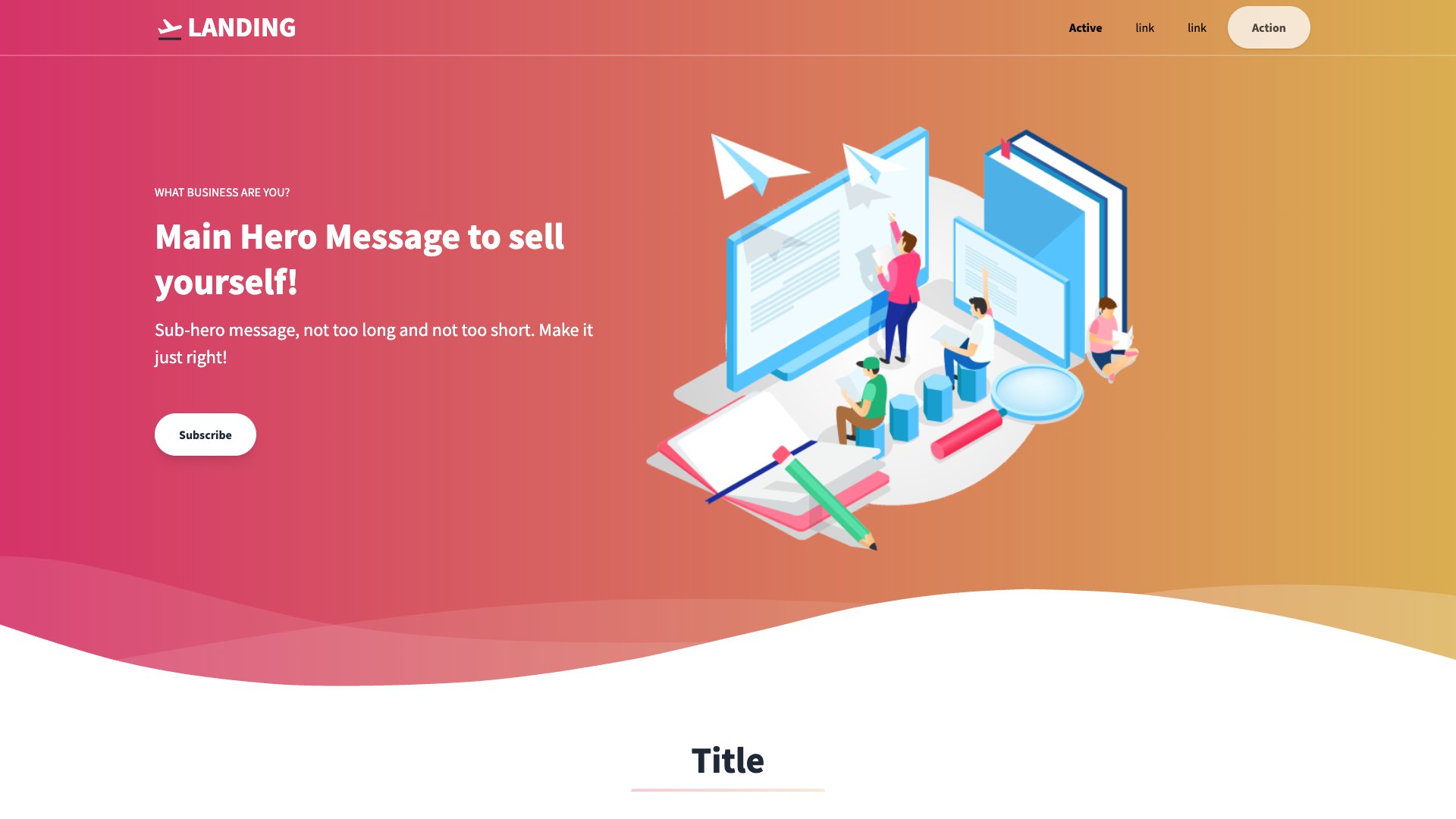
One of the earliest Tailwind CSS landing page templates, and still one of the simplest. Pure HTML with Tailwind utility classes — no build tools, no Node.js, no framework dependencies. A hero section with gradient background, feature cards, CTA sections, and a responsive layout. Open the HTML file in a browser and start editing.
The zero-dependency approach is the value proposition. For quick prototypes, client demos, simple marketing pages, or Tailwind CSS beginners who want to learn without framework complexity, this template is as accessible as it gets. Copy the file, edit the text, deploy anywhere that serves HTML. Sometimes the simplest tool is the best one.
16. ScrewFast
⭐ 1.3k GitHub Stars

ScrewFast combines Astro with Tailwind CSS and Preline UI components, adding GSAP animation integration for professional, polished scroll effects. The standout feature is Starlight documentation integration — you get a landing page and a full documentation site in the same project, sharing the same design system.
The GSAP animations elevate the template beyond typical static Tailwind pages, adding movement and visual interest that catches attention without hurting performance (Astro’s zero-JS-by-default approach keeps things fast). For open-source projects, developer tools, or any product that needs both a marketing page and documentation, ScrewFast eliminates the “two separate sites” problem.
17. Shadcn Next.js Landing Page
Maintenance: last commit January 2025 — more than a year and a half ago. The code is still usable, but the framework has shipped major releases since, so budget time to update dependencies yourself and check anything that touches build tooling.
⭐ 1.2k GitHub Stars
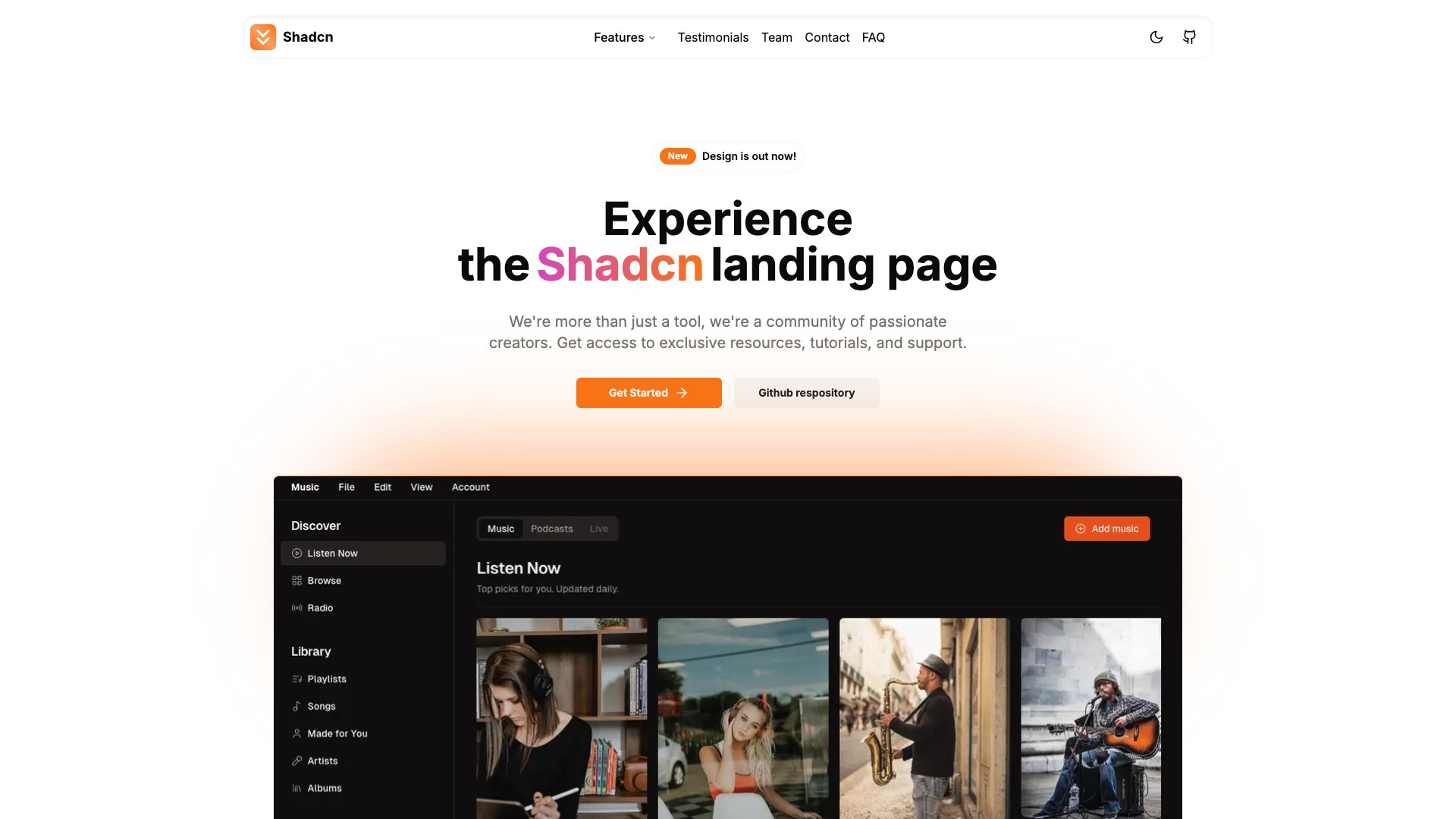
A Next.js variant of the shadcn landing page concept, with a refreshed design and clean component architecture. Hero, features, pricing, testimonials, FAQ, newsletter — all built on shadcn/ui primitives with dark mode and responsive layouts. The Next.js foundation adds server-side rendering for better SEO and faster initial loads.
If you’re building on Next.js (rather than Vite React), this version gives you the same shadcn/ui landing page quality with proper Next.js integration. SSR, image optimization, and file-based routing all work out of the box. A clean alternative to entry #10 for teams already committed to the Next.js ecosystem.
18. Play Tailwind
Maintenance: last commit March 2025 — more than a year and a half ago. The code is still usable, but the framework has shipped major releases since, so budget time to update dependencies yourself and check anything that touches build tooling.
⭐ 1.1k GitHub Stars
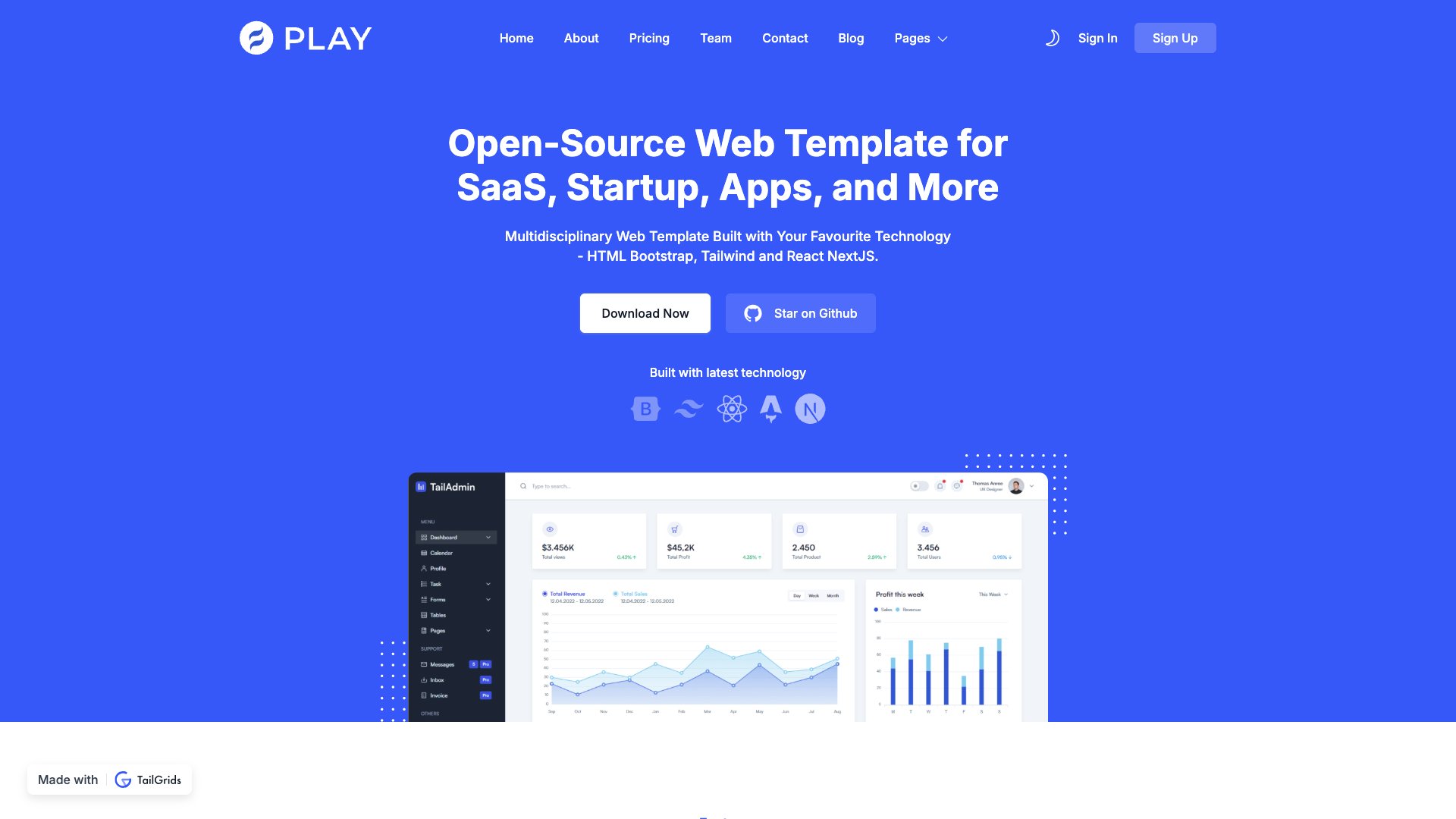
Play Tailwind is a complete website template crafted by TailGrids and UIdeck for startups, SaaS, and business websites. The feature list reads like a landing page checklist: hero, features, pricing, testimonials, blog, team section, contact form, and scroll animations. Every section a startup landing page needs, implemented with quality design and clean Tailwind CSS code.
The HTML + Tailwind approach means no framework lock-in. Copy the sections into your React, Vue, Astro, or plain HTML project. The design quality is high enough that the assembled page looks like a premium template, not a collection of generic components. For startups that need a complete landing page without choosing a JavaScript framework first, Play Tailwind provides exactly that.
For admin panel solutions alongside your landing page, check out our guide to the best Next.js admin dashboard templates.
19. Landwind
⭐ 1k GitHub Stars
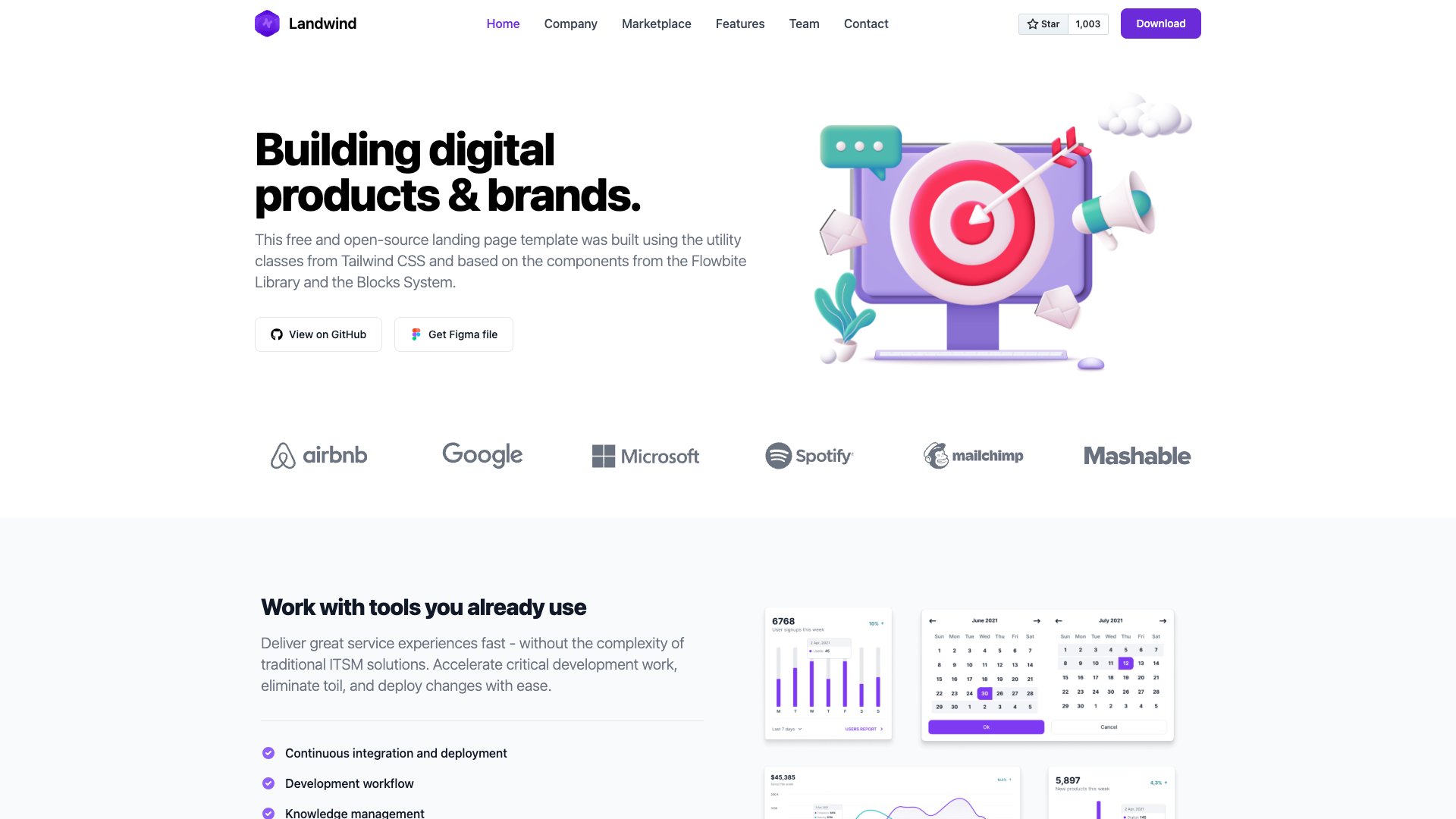
From Themesberg (the Flowbite team), Landwind is a focused SaaS landing page built with Tailwind CSS and Flowbite components. Hero, customer logos, feature sections with icons, social proof testimonials, pricing table, FAQ, and a clear CTA — every section is purpose-built for selling software. The design is clean, professional, and conversion-oriented.
Unlike the Flowbite library (#2) which gives you hundreds of components to assemble, Landwind gives you a complete, assembled landing page ready to customize. It’s the “give me the finished page” option for teams that want to change the copy and ship, not spend time composing components. Responsive across all devices with a focus on clarity over visual complexity.
20. Launch UI
⭐ 670 GitHub Stars

Launch UI rounds out our list with a focused collection of landing page components built on React, shadcn/ui, and Tailwind CSS. Multiple hero variants, feature sections, pricing tables, testimonials, and dark mode support — all designed for copy-paste assembly. The animation support adds polish to each section without requiring custom CSS keyframes.
The smaller star count belies the component quality. Each section is well-designed, properly responsive, and accessible via Radix UI primitives. For developers who want the shadcn/ui aesthetic in their landing page but need more section variety than a single template provides, Launch UI fills the gap between “use a template” and “build from scratch.”
Choosing the Right Tailwind Landing Page Template
Twenty options is a lot, so here’s the decision framework. For maximum component variety and flexibility, HyperUI (#1) and Flowbite (#2) give you hundreds of sections to compose. If you want a complete, ready-to-customize landing page, Simple Light (#6), Landwind (#19), and Play Tailwind (#18) ship as assembled pages you can edit and deploy immediately — and Velora UI goes furthest, shipping pricing, blog, auth and changelog pages alongside the landing page. For the fastest possible page load, AstroWind (#4) and Astroship (#9) leverage Astro’s zero-JS architecture. SaaS builders should look at SaaS Boilerplate (#3) for a full-stack solution or Next SaaS Starter (#11) for a pure landing page. And for multilingual projects, Meraki UI (#7) and Landy (#14) handle RTL and i18n properly.
The framework breakdown is worth noting: of the twenty ranked templates, eleven use React/Next.js, four use Astro, and five are framework-agnostic HTML. The shadcn/ui trend is strong with four ranked entries plus the featured Velora UI pick, reflecting the broader shift toward accessible, copy-paste component systems. Pick the framework your team already uses, check the live demo on mobile (landing pages live or die by mobile experience), and deploy. The best landing page template is the one that’s live — not the one you’re still evaluating next week.

You Might Also Like


