
Next.js vs Remix vs Astro: Which Framework Should You Use in 2026?
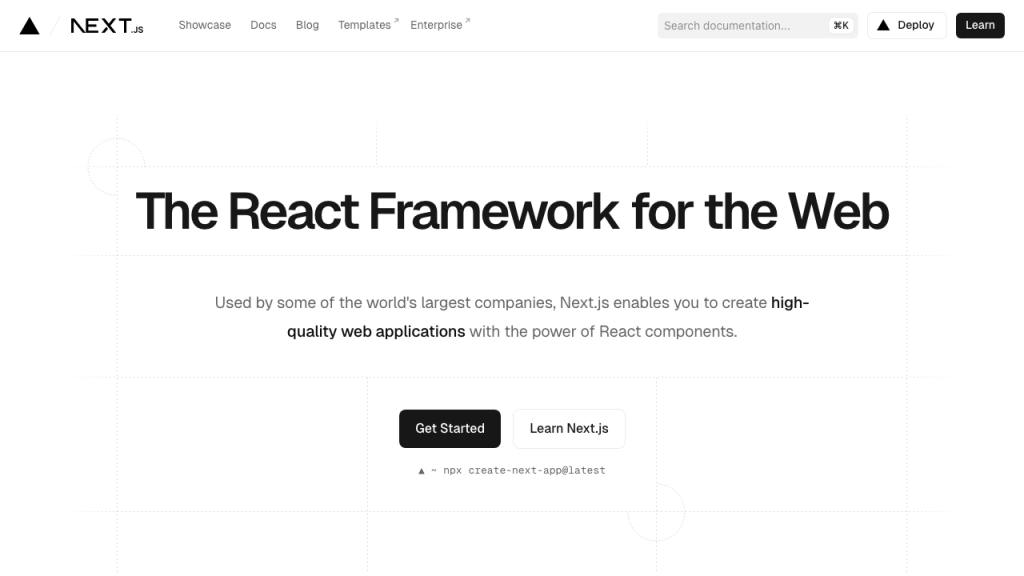
Choosing a JavaScript framework in 2026 means picking between three genuinely different philosophies. Next.js bets on React Server Components and tight Vercel integration. React Router (the successor to Remix) bets on web standards and progressive enhancement. Astro bets on shipping zero JavaScript by default.
Each is excellent — for the right project. This guide breaks down when to use which, with honest takes on strengths, weaknesses, and real-world trade-offs based on Next.js 16, React Router 8 and Astro 7.
Quick Answer
- Building a complex React app? Next.js — largest ecosystem, most features, best for full-stack React
- Want zero vendor lock-in? React Router — web standards, progressive enhancement, deploy anywhere
- Content-focused site? Astro — zero JS by default, best performance, use any framework
The State of Play in 2026
Before diving into comparisons, here’s where each framework stands right now:
| Metric | Next.js 16 | React Router 8 | Astro 7 |
|---|---|---|---|
| Version compared | 16.3 | 8.4 | 7.3 |
| GitHub Stars | 140k+ | 56k+ | 62k+ |
| npm Weekly Downloads | 65M+ | 60M+ (react-router) | 6.5M+ |
| Corporate Backing | Vercel | Shopify | Cloudflare (since January 2026) |
| Learning Curve | High | Medium | Low–Medium |
Important note on Remix: in May 2024 Remix merged into React Router, and React Router’s “Framework Mode” is the direct successor to Remix v2. Remix v2 reached end of life when React Router 8 shipped. The Remix name now belongs to Remix 3, a separate new framework built on a fork of Preact rather than React, which is still in release-candidate stage. Throughout this article, “React Router” means React Router 8 in Framework Mode — the full-stack framework experience, not just client-side routing.
Next.js 16: The Full-Stack React Powerhouse
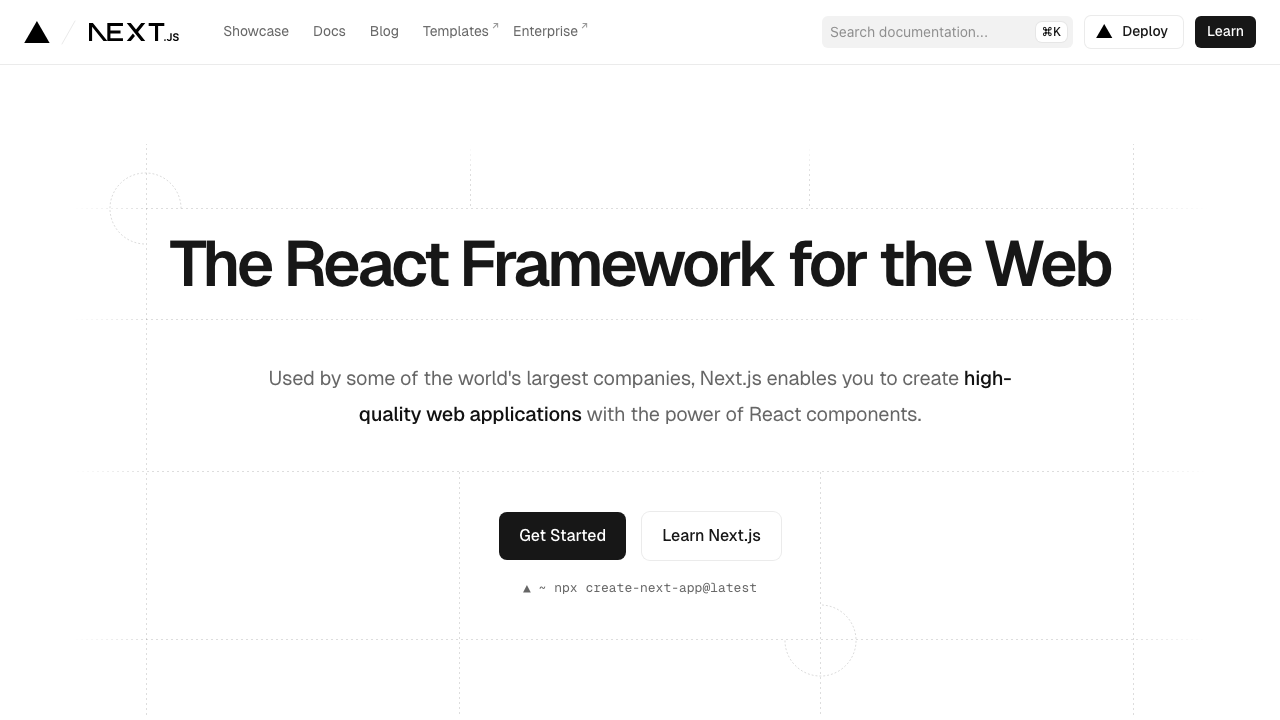
Next.js is the most feature-rich React framework available. Version 16 doubled down on React Server Components, introduced Cache Components (replacing PPR), added a new proxy.ts for middleware, and integrated Turbopack as the default bundler with 2–5x faster builds. Since then, Next.js 16.2 made the deployment Adapters API stable, and Next.js 16.3 added instant navigations for server-rendered pages, much lower dev-server memory use, and cached repeat builds.
Key Strengths
React Server Components (RSC): Next.js has the most mature RSC implementation. Server Components run on the server, ship zero JavaScript to the client, and can fetch data directly without API calls. In v16, the new "use cache" directive gives you granular control over caching at the component level — a massive improvement over the old page-level ISR approach.
Turbopack: The Rust-based bundler is now stable and the default. Hot Module Replacement is 10x faster than Webpack, and production builds are 2–5x quicker. For large codebases, this alone can save significant development time.
Ecosystem size: With 140k+ GitHub stars and 5M+ projects using it, Next.js has the largest ecosystem. Every React library, UI kit, and tutorial supports Next.js. The T3 Stack ecosystem, which builds on Next.js with tRPC and Prisma, is a great example of this framework dominance. When you hit a problem, someone has already solved it.
Built-in optimizations: Image optimization, font optimization, metadata API, analytics — features that other frameworks leave to third-party packages are built into Next.js.
Key Weaknesses
Complexity: The mental model is heavy. App Router vs Pages Router, Server Components vs Client Components, use cache vs revalidateTag, Server Actions, proxy.ts, streaming, Suspense boundaries — the concepts pile up quickly. v16 renamed middleware to proxy and changed caching APIs again, adding migration burden.
Vercel is still the reference platform: Next.js has always worked best on Vercel. The gap has narrowed: Next.js 16.2 made the Adapters API stable, built with OpenNext, Netlify, Cloudflare, AWS Amplify and Google Cloud, so other platforms deploy Next.js from a documented, versioned build output. Self-hosting still takes more setup than deploying to Vercel.
Client bundle size: Despite RSC reducing what ships to the browser, Next.js still sends the React runtime for hydration. A “hello world” page is ~85–100KB gzipped — significantly more than Astro’s zero.
Best For
- Complex full-stack React applications
- E-commerce with image-heavy catalogs
- Enterprise applications with Vercel deployment
- SaaS dashboards and admin panels
- Teams already invested in the React ecosystem
Who uses it: Stripe, Nike, OpenAI, Netflix, Spotify, Zapier, Auth0
React Router 8 (formerly Remix): The Web Standards Champion

React Router’s Framework Mode is what Remix became. The mental model is refreshingly simple: every route has a loader (data in), an action (mutations), and a component (UI). No server/client component distinction, no caching directives to learn — just web-standard Request/Response patterns.
Version 8 was a deliberately quiet release: builds are ESM-only, middleware is on by default, the separate react-router-dom package is gone (import from react-router and react-router/dom), and the minimums are now Node 22.22, React 19.2.7 and Vite 7. It also ended support for React Router v6 and Remix v2.
Key Strengths
Progressive enhancement: Forms work without JavaScript. The server handles form submissions via standard HTTP, and JavaScript enhances the experience (pending states, optimistic UI) when available. This isn’t just an accessibility feature — it means your app’s core functionality never breaks due to JavaScript errors.
Simple mental model: Loaders fetch data, actions handle mutations, components render UI. That’s it. There’s no Server Component vs Client Component distinction to manage, no caching directives to configure, and no bundler-level concepts to learn. If you know React and HTTP, you know React Router.
Zero vendor lock-in: React Router deploys identically on Vercel, Cloudflare, Netlify, AWS, or a $5 VPS. There’s no “works best on X” asterisk. Deployment templates exist for every major platform.
Route type safety: React Router has excellent TypeScript integration with automatic type inference for loaders and actions. Your route data is fully typed without manual type annotations.
Key Weaknesses
Brand confusion: the Remix-to-React-Router merge confused the ecosystem, and reusing the Remix name for Remix 3, an unrelated new framework, has made it worse. Older “Remix” tutorials describe what is now React Router, so check which one an article is actually about.
Fewer built-in features: No image optimization, no font optimization, no analytics integration. React Router gives you the primitives and expects you to choose your own solutions for everything else.
RSC still experimental: React Server Components support is still unstable in React Router 8. It is opt-in, and the team plans to stabilize it in a future minor release. If RSC is central to your architecture, Next.js is the safer bet today.
Best For
- Forms-heavy CRUD applications
- Apps that must work without JavaScript
- Teams that refuse vendor lock-in
- Startup MVPs that need to ship fast
- Government and accessibility-critical projects
- Developers who prefer web standards over framework magic
Who uses it: Shopify (Hydrogen), NASA, Cloudflare Dashboard, GitHub (internal), Epic Games, Sentry
Astro 7: The Content Performance King
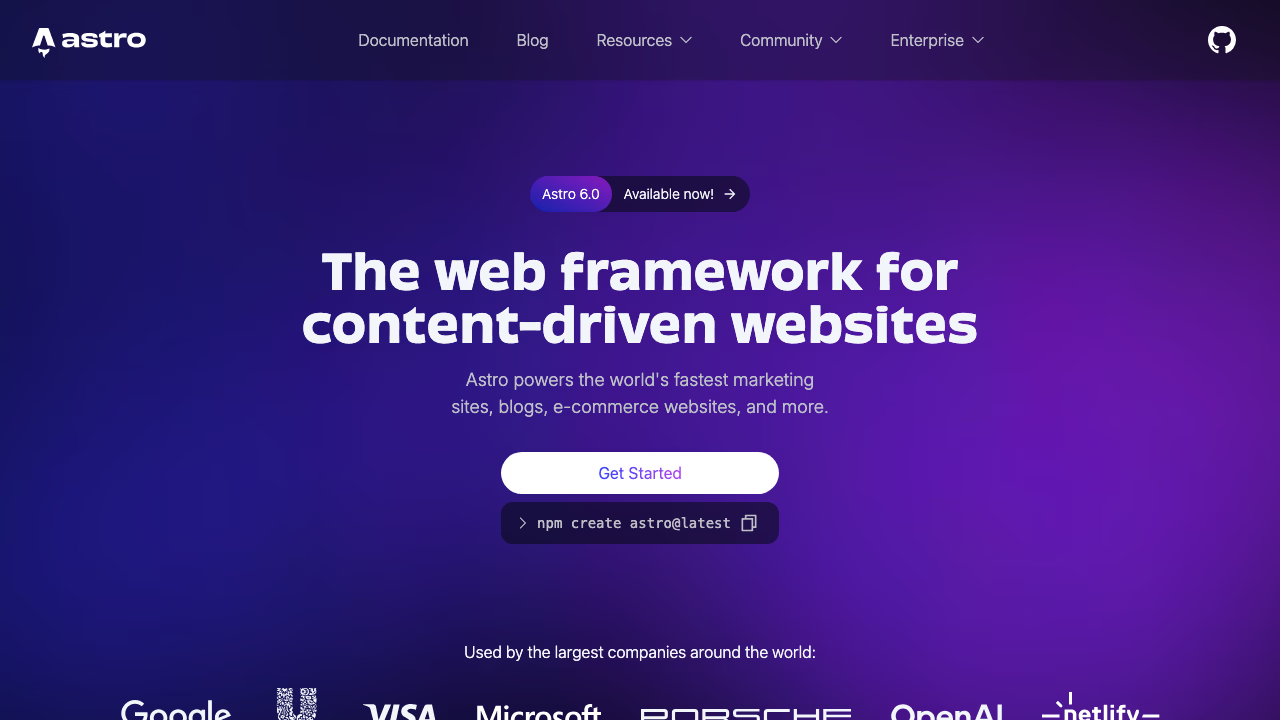
Astro takes a fundamentally different approach: ship zero JavaScript by default. A fully static Astro page sends 0KB of JS to the browser. When you need interactivity, Astro’s Islands architecture hydrates only the specific components that need it — not the entire page.
Astro 7 is a speed release. The .astro compiler has been rewritten in Rust, Vite 8 brings the Rolldown bundler, Markdown and MDX run through a Rust pipeline, and the Astro team reports build times 15–61% faster. It also adds stable route caching and a src/fetch.ts entry point for full control of the request pipeline. Cloudflare acquired the Astro team in January 2026 and committed to keeping the framework open source.
Key Strengths
Zero JS by default: This is Astro’s killer feature. A blog post, marketing page, or documentation site built with Astro ships no JavaScript unless you explicitly add interactive components. The performance difference is measurable — Lighthouse scores of 95–100 are the norm, not the exception.
Islands architecture: When you do need interactivity — a search bar, a shopping cart, a chart — you wrap that component in a client:* directive and only that island hydrates. The rest of the page stays as pure HTML. You can even mix frameworks: a React chart next to a Svelte form next to a Vue widget.
Content Collections: Astro treats content as a first-class concern. Define your content schema with Zod, drop Markdown/MDX files in a folder, and Astro gives you type-safe queries. Live Content Collections, added in Astro 6, fetch from external CMS sources at request time — no rebuilds needed.
Framework-agnostic: Use React, Vue, Svelte, Solid, Preact, or plain HTML — all in the same project. This is genuinely useful for teams migrating between frameworks or using the best tool for each component.
Key Weaknesses
Not for interactive apps: Astro is explicitly not designed for SPAs, dashboards, or real-time applications. If your app is more interactive than it is content, Astro’s architecture works against you — you’d end up wrapping everything in islands, defeating the purpose.
No shared state across islands: Each island is independent. Sharing state between a React header and a React sidebar requires external state management (nano stores, etc.) because they’re separate hydration roots. This is by design but can be frustrating.
Aggressive Node requirements: Astro 7 requires Node 22.12 or newer; Node 18 and 20 are no longer supported. If your deployment environment is pinned to older Node versions, this is a blocker. (React Router 8 now has a similar floor, so this is becoming the norm.)
Best For
- Blogs, documentation sites, and technical writing
- Marketing and landing pages
- Portfolio and agency websites
- Content-heavy sites with headless CMS backends
- Any site where performance is the top priority
- Teams using multiple frontend frameworks
Who uses it: Porsche, The Guardian, IKEA, Microsoft, Visa, NordVPN, Cloudflare, Google, Proton
Head-to-Head Comparison
Rendering Strategies
| Strategy | Next.js 16 | React Router 8 | Astro 7 |
|---|---|---|---|
| Static Generation (SSG) | Yes (use cache) |
Yes (pre-rendering) | Yes (default) |
| Server-Side Rendering | Yes (default) | Yes (loaders) | Yes (per-route opt-in) |
| Streaming SSR | Yes (Suspense) | Yes (promises + <Await>) | No |
| ISR / Revalidation | Yes (revalidateTag) | No (HTTP caching) | No |
| Islands Architecture | No | No | Yes |
| Zero JS Pages | No (React runtime) | No (React runtime) | Yes (default) |
| React Server Components | Stable | Experimental | N/A |
Performance
| Metric | Next.js 16 | React Router 8 | Astro 7 |
|---|---|---|---|
| Client JS (static page) | ~85–100KB gzip | ~80–100KB gzip | 0KB |
| Typical Lighthouse | 85–95 | 85–95 | 95–100 |
| Build Tool | Turbopack (Rust) | Vite 7+ | Vite 8 (Rolldown) + Rust compiler |
| Hot Reload Speed | Very fast (10x Webpack) | Fast (Vite HMR) | Fast (Vite HMR) |
| Hydration Approach | Full page or selective (RSC) | Full page | Per-island (best) |
Developer Experience
| Aspect | Next.js 16 | React Router 8 | Astro 7 |
|---|---|---|---|
| TypeScript | First-class + VS Code plugin | First-class + route type safety | First-class + Zod schemas |
| Documentation | Extensive but overwhelming | Good, still settling post-merge | Excellent and clear |
| API Routes | Yes (route.ts) | Yes (resource routes) | Yes (API endpoints) |
| Middleware | proxy.ts (renamed in v16) | On by default (v8) | Middleware |
| Image Optimization | Built-in | Manual | Built-in |
| Font Optimization | Built-in | Manual | Built-in |
Deployment Flexibility
| Platform | Next.js 16 | React Router 8 | Astro 7 |
|---|---|---|---|
| Vercel | Native (best) | Supported | Adapter |
| Cloudflare | Via OpenNext / Adapters API | Workers template | Official adapter |
| Netlify | Supported | Supported | Adapter |
| Docker/Self-host | Yes (next start) | Yes (Node server) | Yes (Node adapter) |
| Vendor Lock-in Risk | Low–Medium | None | None |
Decision Framework: Which One Should You Use?
Forget the feature comparison tables for a moment. The real decision comes down to what kind of thing you’re building:
Choose Next.js When…
Your project is a complex, interactive React application that needs SSR, authentication, API routes, image optimization, and a massive ecosystem of compatible libraries. E-commerce stores, SaaS platforms, and enterprise dashboards are Next.js’s sweet spot. Accept the complexity and Vercel-leaning deployment story in exchange for the most complete feature set available.
Choose React Router When…
You value simplicity, web standards, and deployment freedom over having every feature built-in. Forms-heavy CRUD apps, startup MVPs, and government/accessibility projects benefit most from React Router’s progressive enhancement and “no magic” approach. You’ll assemble your own stack for image optimization and analytics — but you’ll understand exactly how everything works.
Choose Astro When…
Your site is primarily content with sprinkles of interactivity. Blogs, documentation, marketing sites, portfolios, and landing pages should default to Astro. The performance advantage is real and measurable — zero JavaScript means faster page loads, better SEO, and lower hosting costs. If you find yourself wanting to make most of the page interactive, you’ve outgrown Astro’s sweet spot.
The Hybrid Approach
Many teams use more than one. A common pattern: Astro for the marketing site and documentation, Next.js or React Router for the application dashboard. Same domain, different subpaths, different frameworks optimized for different jobs. Don’t feel locked into a single choice across your entire organization.
Final Verdict
There’s no universal “best” framework in 2026 — only the best framework for your specific project. Next.js wins on features and ecosystem. React Router wins on simplicity and portability. Astro wins on performance and content.
The good news: all three are mature, well-maintained, and backed by serious companies. Whichever you choose, you’re building on solid ground. And if none of these three fit your needs, consider looking at SvelteKit templates and starters for another compelling modern framework option.

You Might Also Like