
15 Best T3 Stack Templates & Starters 2026
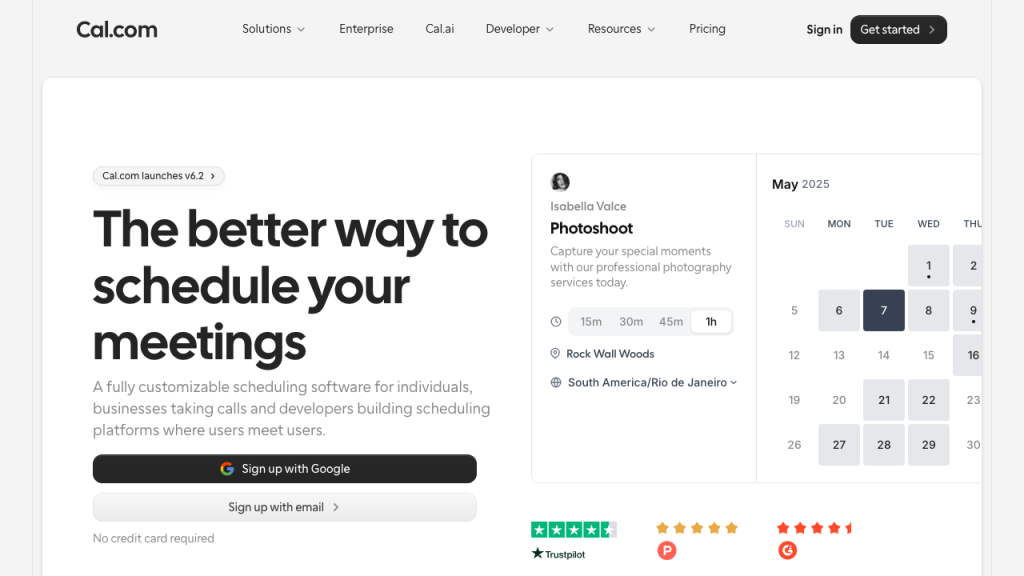
The T3 Stack — Next.js, tRPC, Prisma/Drizzle, Tailwind CSS, and TypeScript — has become the default full-stack framework for type-safe web applications. What started as Theo Browne’s opinionated stack recommendation has grown into an ecosystem with its own CLI, monorepo tooling, and hundreds of production apps. The core promise: end-to-end type safety from database to frontend, with zero code generation and minimal boilerplate. Since Next.js is the foundation of every T3 project, you may also want to explore our Next.js admin templates for dashboard-focused starting points.
We evaluated 40+ T3-adjacent templates and starters across GitHub, looking at real-world usage, code quality, maintenance activity, and how well each project demonstrates T3 patterns. The 15 picks below range from the official CLI scaffold to production platforms with millions of users — giving you reference implementations at every scale.
Quick Picks
- Best starting point: create-t3-app — the official CLI with 28,600+ stars, opinionated defaults that just work
- Best real-world reference: Cal.com — production scheduling platform, 40,500+ stars, the gold standard
- Best for SaaS: Taxonomy — shadcn’s reference app with Stripe, auth, and App Router
- Best monorepo: create-t3-turbo — official Next.js + Expo monorepo with Turborepo
- Best for e-commerce: Relivator — Next.js 15.3, Drizzle, Tailwind v4, full storefront
- Best for indie hackers: Cascade — minimal SaaS starter with Lemon Squeezy billing and analytics
1. create-t3-app
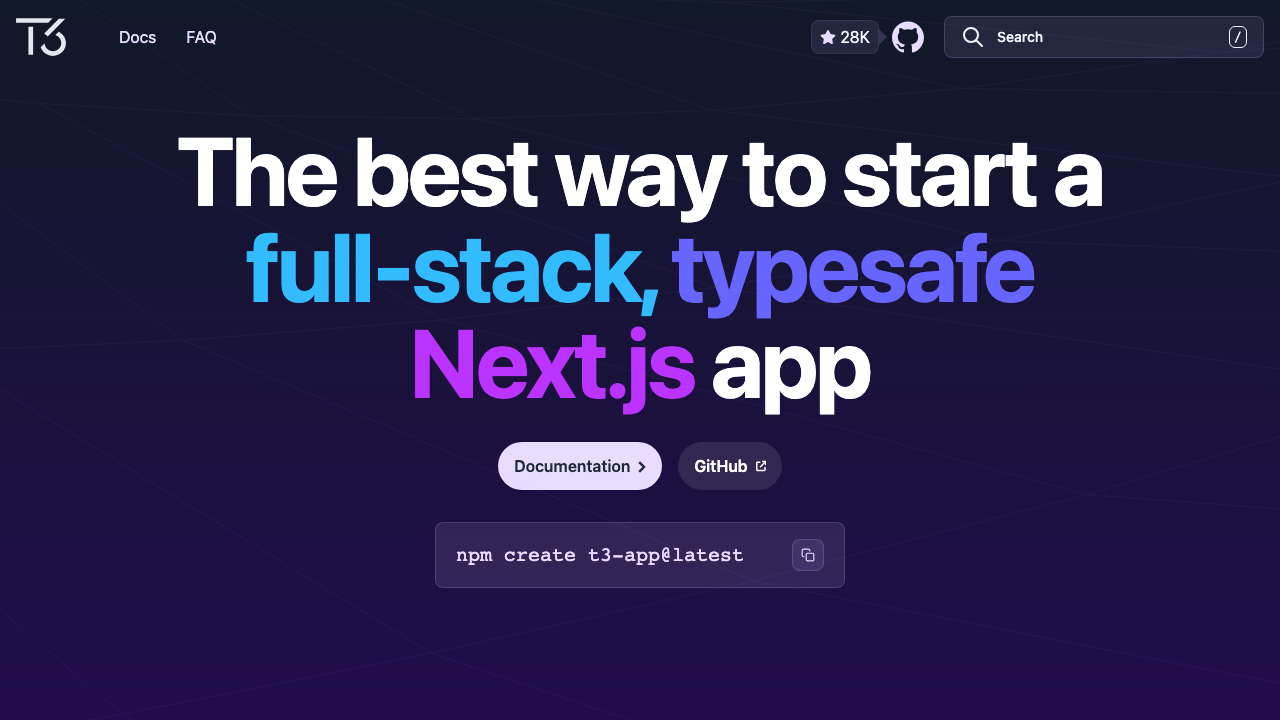
Why we like it: The canonical starting point for the T3 Stack. 28,600+ stars, maintained by the T3 community, and the CLI lets you pick exactly which pieces you want — tRPC, Prisma or Drizzle, NextAuth, Tailwind.
create-t3-app is the official CLI that scaffolds a new T3 project with interactive prompts. Choose your ORM (Prisma or Drizzle), opt into tRPC for end-to-end type-safe APIs, add Auth.js for authentication, and get Tailwind CSS configured out of the box. The generated code follows T3 conventions — server-side tRPC routers, type-inferred client hooks, and a clean project structure that scales.
This isn’t a template with demo pages and placeholder content. It’s a scaffold — the minimum viable setup to start building. That’s the point. The T3 philosophy is “solve the boring parts” (auth, API layer, styling, database) so you can focus on your application logic. If you’re new to the T3 Stack, start here. The documentation at create.t3.gg is excellent, and the Discord community is one of the most active in the Next.js ecosystem.
2. Cal.com
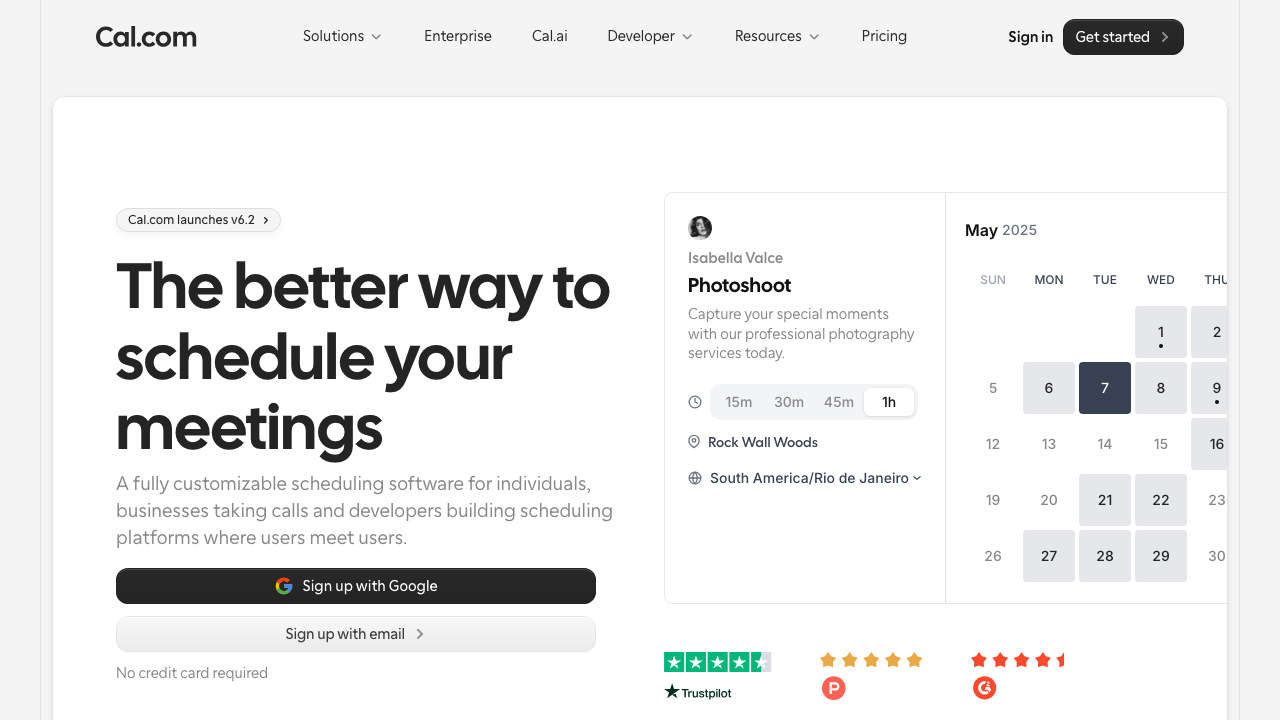
Why we like it: 40,500+ stars. A production scheduling platform used by thousands of companies — the single best reference for how T3 patterns work at scale. If you want to see how tRPC, Prisma, and NextAuth handle real-world complexity, study this codebase.
Cal.com is the open-source alternative to Calendly, and it’s built entirely on the T3 Stack. The Turborepo monorepo contains the main Next.js app, an Expo mobile app, shared tRPC routers, Prisma schema, and dozens of integrations (Google Calendar, Zoom, Stripe, Zapier). The tRPC usage is particularly instructive — hundreds of procedures organized into domain-specific routers with middleware for auth, rate limiting, and input validation.
What makes Cal.com invaluable as a reference is its scale. This isn’t a demo app — it handles real scheduling logic, timezone math, recurring events, team availability, and payment processing. The codebase shows how T3 patterns hold up when you have 50+ database models, complex business logic, and multiple deployment targets. The AGPL license means you can self-host freely, but commercial use requires a license. For learning T3 architecture, nothing else comes close.
3. Taxonomy
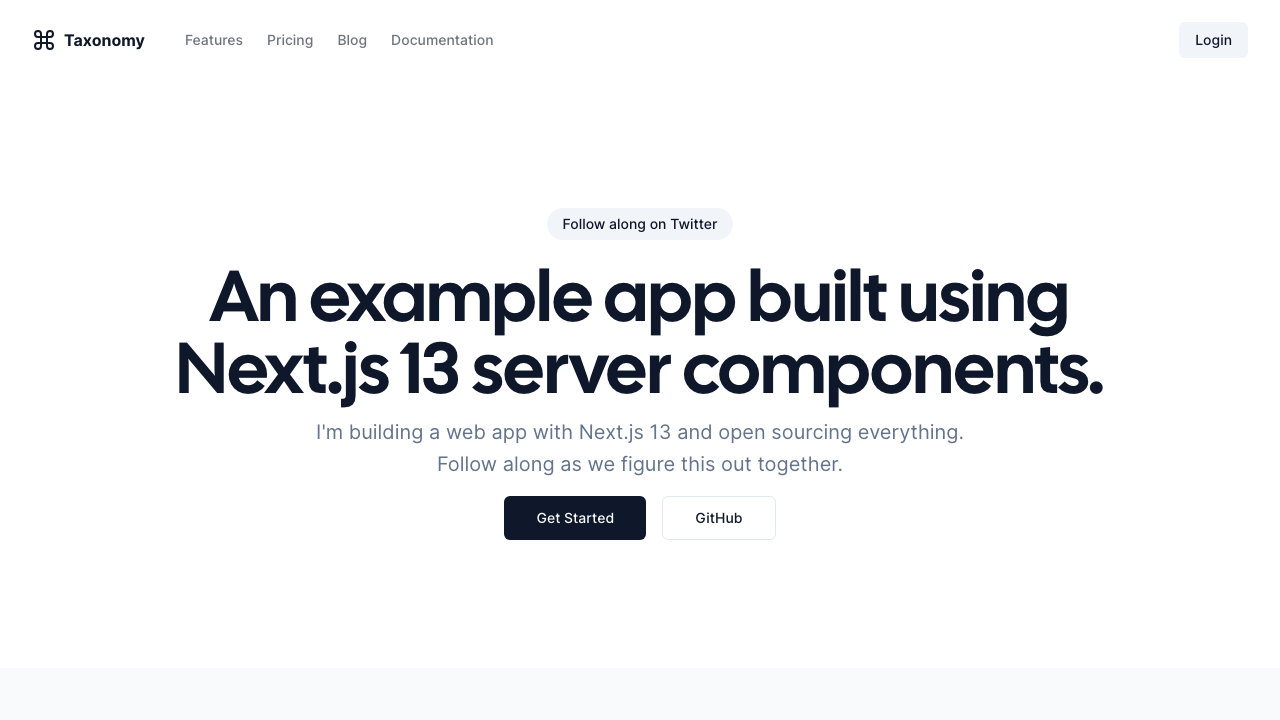
Why we like it: Built by shadcn (creator of shadcn/ui) as a reference implementation. 19,100+ stars. Shows how to build a SaaS app with the App Router, including authentication, billing, dashboard, blog, and marketing pages.
Taxonomy is shadcn’s open-source application that demonstrates Next.js App Router patterns for building SaaS products. It includes user authentication with NextAuth, Stripe subscription billing, a dashboard with CRUD operations, an MDX-powered blog, and marketing/landing pages — all styled with Tailwind CSS. The Prisma schema covers users, posts, subscriptions, and API keys.
The real value is seeing how a respected open-source maintainer structures a production app. Server Components, Server Actions, route groups, middleware-based auth guards, and optimistic UI updates are all implemented cleanly. While Taxonomy doesn’t use tRPC (it predates tRPC’s App Router adapter), the Prisma + NextAuth + Stripe integration patterns transfer directly to any T3 project. If you’re building a SaaS, this is your blueprint.
4. Dub
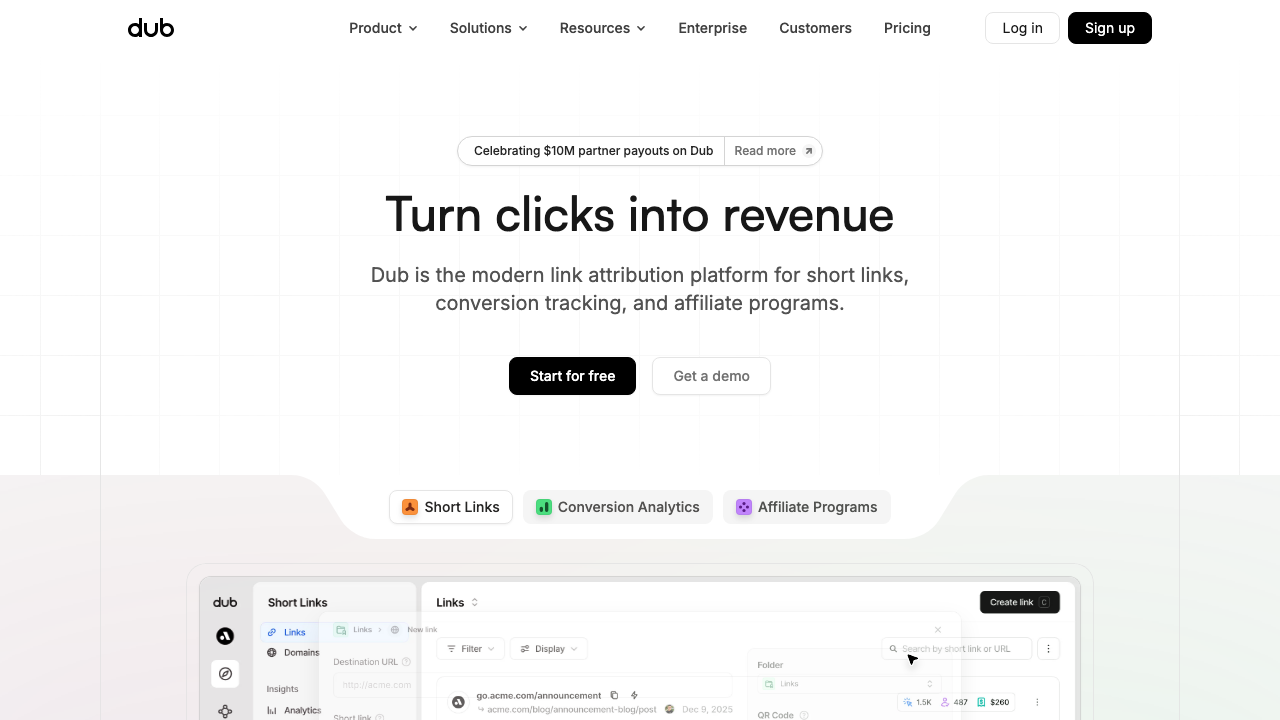
Why we like it: 23,100+ stars. A VC-backed production platform for link management and analytics — the best reference for building API-first products with the T3 Stack. Edge-ready architecture with Upstash Redis for rate limiting.
Dub is the open-source link management platform (think Bitly, but modern). Built by Steven Tey, it uses tRPC for internal APIs, Prisma for database operations, Upstash Redis for rate limiting and caching, and NextAuth for authentication. The architecture is edge-optimized — link redirects happen at the edge with sub-50ms latency worldwide.
What makes Dub instructive for T3 developers is its API design. The public REST API sits alongside the internal tRPC layer, showing how to build products that serve both a web dashboard and external API consumers. The analytics pipeline, workspace/team management, and custom domain support demonstrate patterns you’ll need in any serious SaaS. The codebase is clean, well-organized, and actively maintained by a funded team.
5. create-t3-turbo
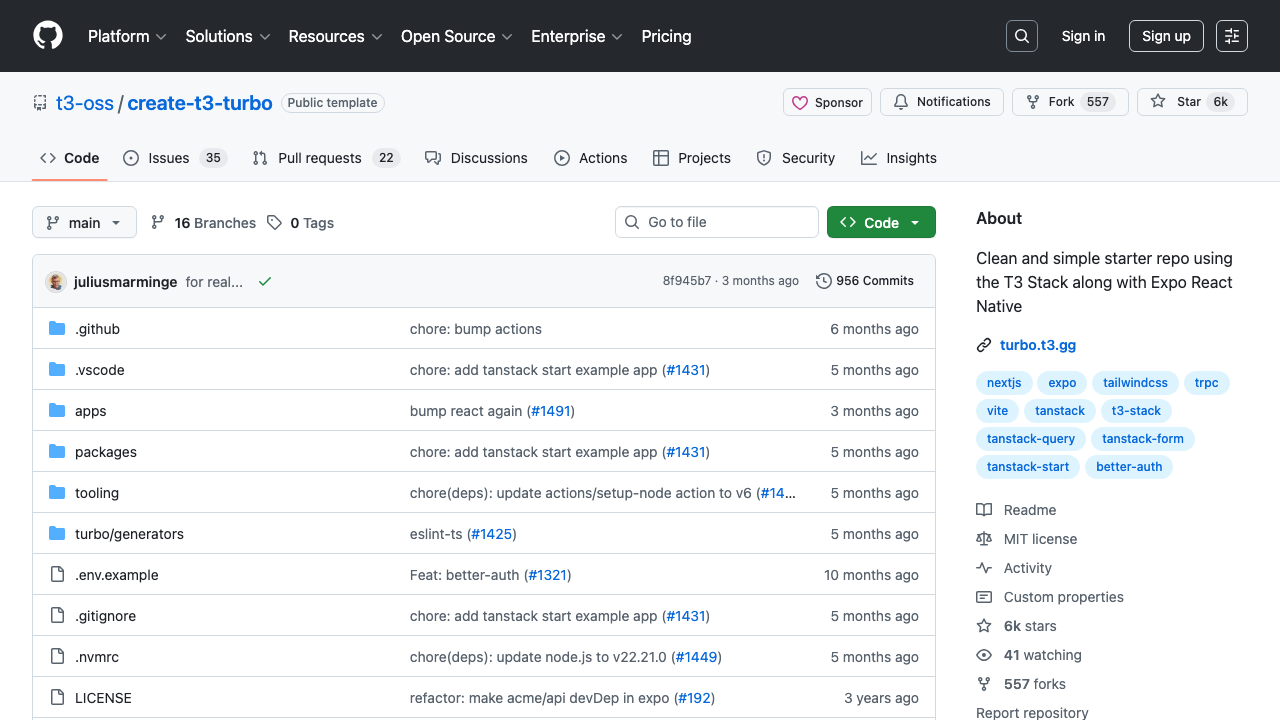
Why we like it: The official T3 monorepo template. 5,900+ stars. Shares tRPC routers, database schema, and auth logic between a Next.js web app and an Expo React Native mobile app — one codebase, two platforms.
create-t3-turbo extends the T3 Stack into monorepo territory with Turborepo. The shared packages pattern is the star — tRPC routers, Prisma/Drizzle schema, auth configuration, and validation schemas live in shared packages that both the Next.js web app and the Expo mobile app consume. Change a tRPC procedure once, and both platforms get the update with full type safety.
The Turborepo setup handles build caching, task orchestration, and dependency management across packages. This template solves the hardest problem in cross-platform development: keeping the web and mobile apps in sync without duplicating business logic. If you’re building a product that needs both a web dashboard and a mobile app, this is the most efficient architecture available in the JavaScript ecosystem.
6. Midday
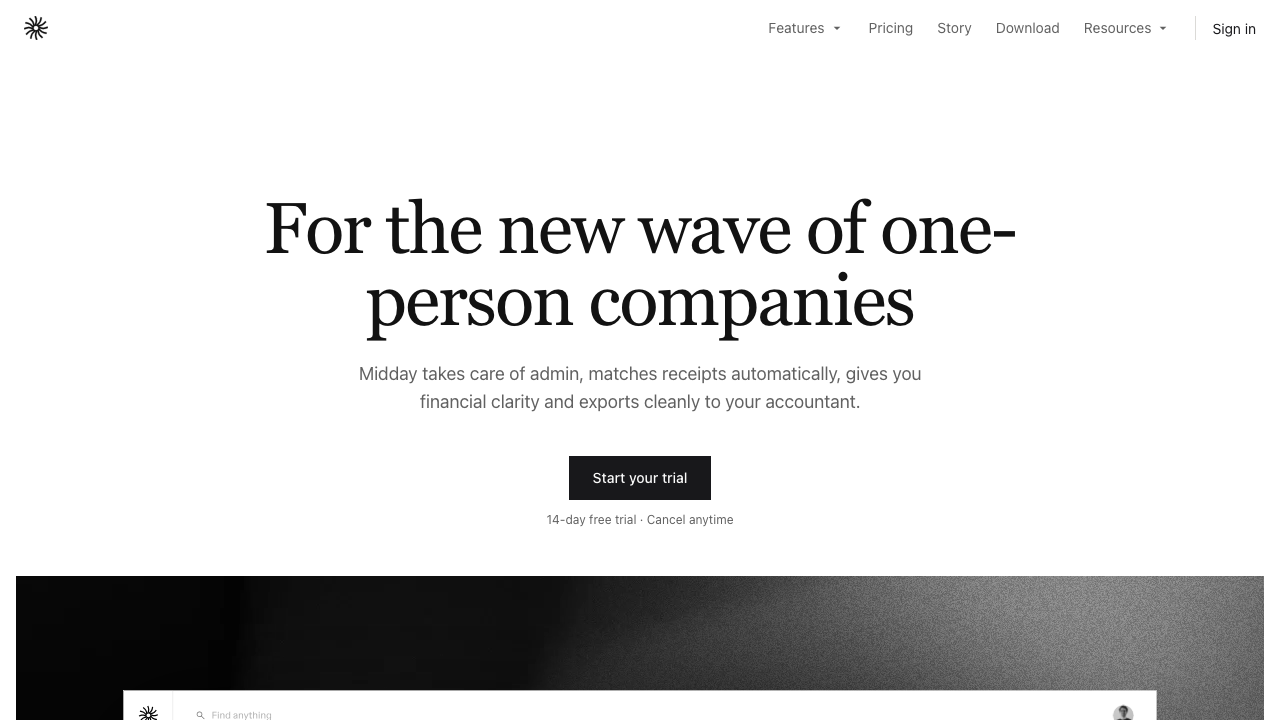
Why we like it: 14,000+ stars. A beautifully designed business suite — invoicing, time tracking, file storage, and banking integrations. Shows how to build a complex, data-heavy app with Supabase instead of Prisma.
Midday is an open-source business suite for freelancers and small teams. It covers invoicing, expense tracking, time tracking, file management, and bank account integrations via Plaid/GoCardless. The Turborepo monorepo contains the main Next.js app, shared UI components (shadcn/ui), Supabase edge functions, and email templates with React Email.
The design quality stands out — Midday looks and feels like a premium paid product, not an open-source project. The Supabase integration is particularly well-executed, using Row Level Security for multi-tenant data isolation, real-time subscriptions for live updates, and Supabase Storage for file management. If you prefer Supabase over Prisma for your T3-style projects, Midday is the best reference for that architecture.
7. Documenso
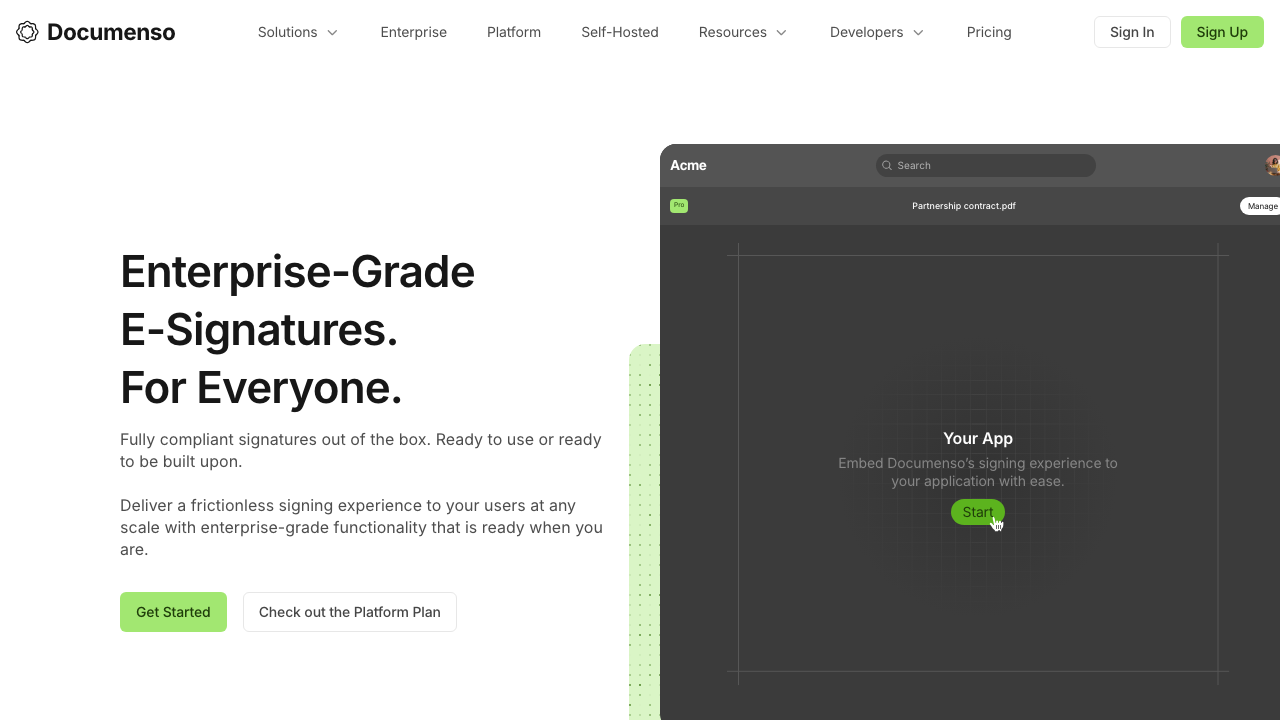
Why we like it: 12,500+ stars. The open-source DocuSign alternative, built with a clean T3 architecture. PDF rendering, digital signatures, email workflows, and team management — all type-safe with tRPC.
Documenso is an open-source document signing platform that directly competes with DocuSign. Upload a PDF, place signature fields, send it for signing, and track completion — all built with tRPC procedures, Prisma models, and a Next.js frontend. The PDF rendering uses pdf-lib for server-side manipulation and react-pdf for client-side display.
The tRPC router organization is exemplary — document, recipient, field, and signing routers are cleanly separated with proper middleware chains for authentication and authorization. The email workflow system (built with React Email and Resend) shows how to handle transactional emails in a T3 app. If you’re building any kind of document or workflow application, Documenso’s architecture is worth studying in detail.
8. next-saas-stripe-starter
Why we like it: 2,900+ stars. The fastest path from zero to a SaaS with working Stripe subscriptions. Landing page, auth, dashboard, billing portal, admin panel, and blog — all wired up and ready to customize.
next-saas-stripe-starter by mickasmt is a batteries-included SaaS template. Out of the box you get a marketing landing page, user authentication with Auth.js v5, Stripe subscription billing with multiple pricing tiers, a user dashboard, an admin panel, and an MDX-powered blog. The shadcn/ui components ensure the UI is polished and accessible.
The Stripe integration is the standout — webhook handlers, subscription lifecycle management, customer portal redirects, and pricing page components are all implemented and tested. Most SaaS starters skip the hard parts of billing; this one handles plan upgrades, downgrades, cancellations, and failed payment recovery. If you’re building a SaaS and don’t want to spend two weeks on Stripe integration, this template saves you that time.
9. Kirimase
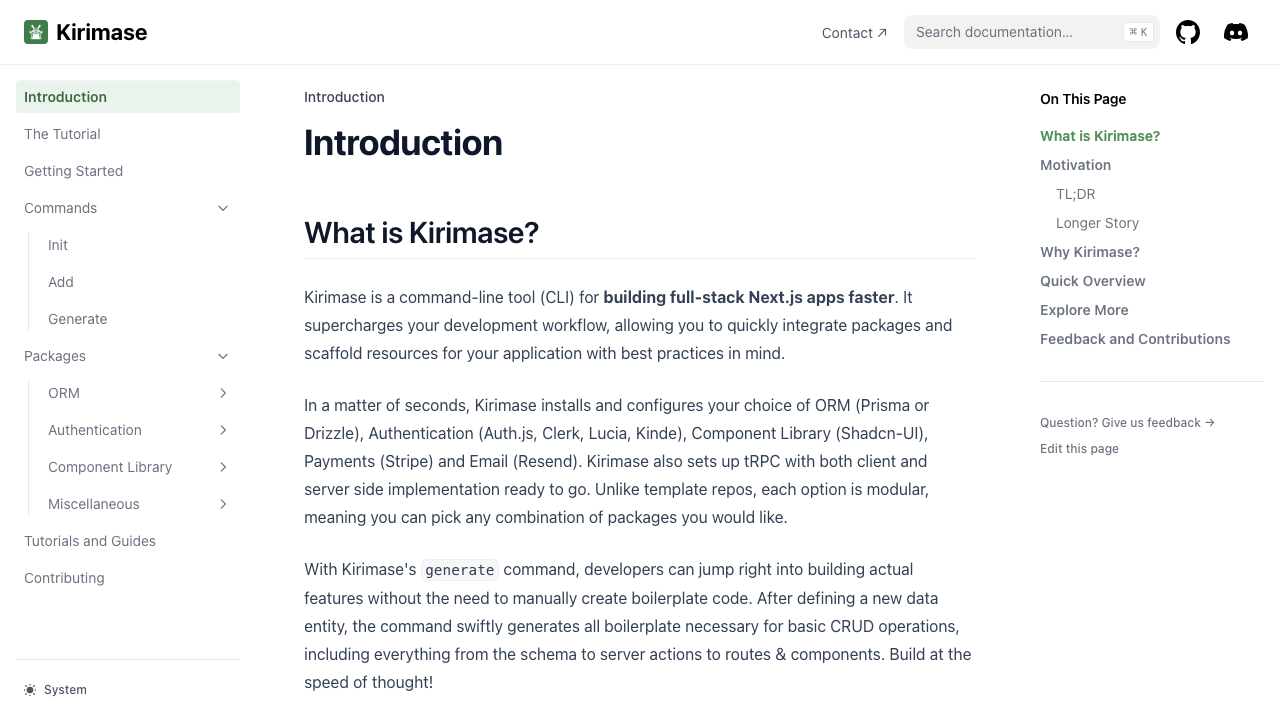
Why we like it: 2,800+ stars. A CLI that generates T3-style code — models, tRPC routers, Stripe config, auth setup — inside an existing Next.js project. Think of it as Rails generators for the T3 ecosystem.
Kirimase takes a different approach from traditional templates. Instead of giving you a pre-built app to modify, it’s a CLI tool that generates code into your existing Next.js project. Run kirimase init to configure your stack (choose your ORM, auth provider, UI library), then use kirimase generate to scaffold models, API routes, tRPC routers, and UI components on demand.
The power is in iteration speed. Need a new “Project” model with CRUD operations? One command generates the Prisma schema, tRPC router, and Next.js pages. The generated code follows T3 conventions and is fully editable — no lock-in to the tool. Kirimase supports Prisma and Drizzle for ORMs, Clerk, Auth.js, and Lucia for auth, and Tailwind with shadcn/ui or Mantine for UI. It’s the closest thing the T3 ecosystem has to Rails scaffolding.
10. Relivator

Why we like it: 1,500+ stars. The most cutting-edge T3-style e-commerce template — Next.js 15.3, Tailwind CSS v4, Drizzle ORM, and Polar for payments. Bleeding-edge stack for developers who want the latest everything.
Relivator is a full-featured e-commerce starter built on the absolute latest versions of everything. Next.js 15.3 with the App Router, Drizzle ORM (not Prisma), Tailwind CSS v4, Better-Auth for authentication, and Polar for payment processing. The storefront includes product listings, category filtering, cart management, checkout flow, and order history.
The Drizzle ORM usage is worth studying if you’re considering it over Prisma — Relivator shows how to structure schemas, write type-safe queries, and handle migrations with Drizzle Kit. The trade-off with Relivator is its aggressive adoption of bleeding-edge tools: Better-Auth and Polar are newer and less battle-tested than NextAuth and Stripe. But if you want to see where the T3 ecosystem is heading in 2026, this template is the forward-looking choice.
11. T4 App
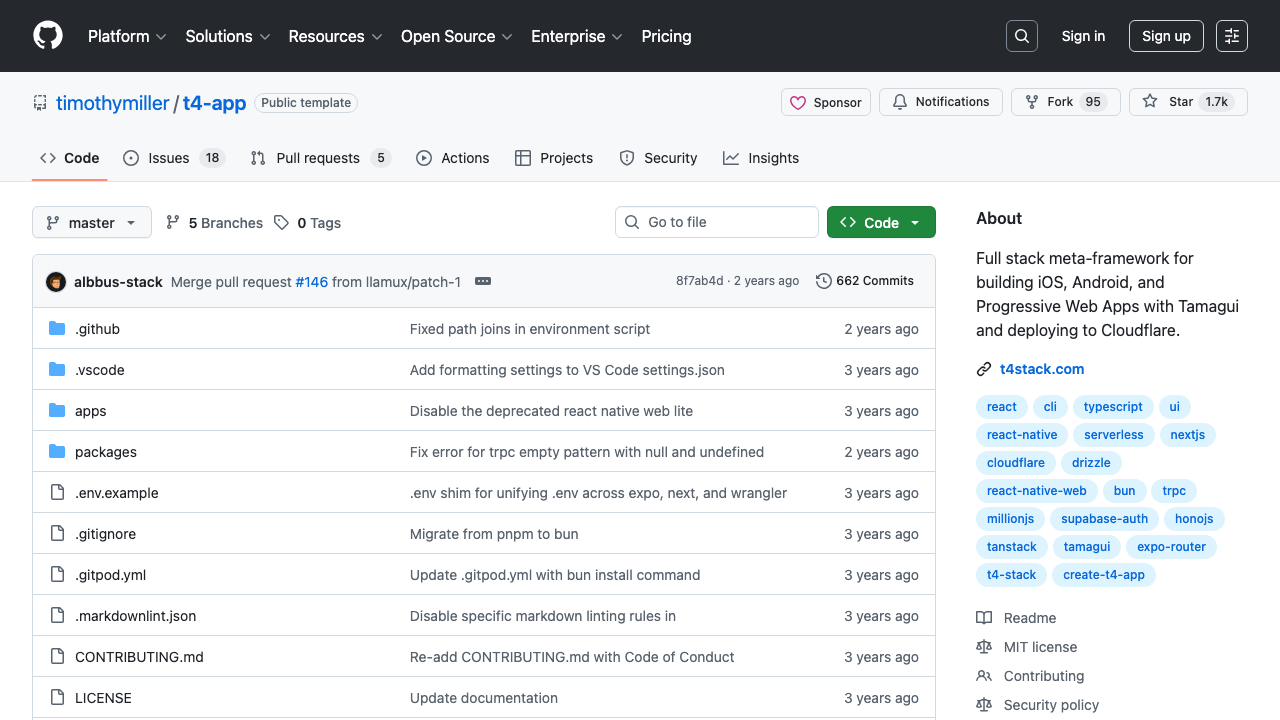
Why we like it: 1,700+ stars. T3 principles extended to native platforms with Tamagui for universal UI components. One design system that compiles to optimized CSS on web and native views on iOS/Android.
T4 App takes the T3 concept further by replacing Tailwind CSS with Tamagui — a universal UI library that compiles to optimized CSS on web and native components on iOS/Android. The tRPC + Drizzle + Supabase backend is shared between the Next.js web app and the Expo mobile app, just like create-t3-turbo, but the UI layer is also shared.
The key difference from create-t3-turbo is the styling approach. Tailwind CSS doesn’t work natively on React Native, so create-t3-turbo requires separate styling for web and mobile. Tamagui solves this — write your components once and they render appropriately on both platforms. The trade-off is learning Tamagui’s API instead of using familiar Tailwind classes. If truly universal UI is your priority, T4 App is the better monorepo choice.
12. Clerk + T3 Turbo
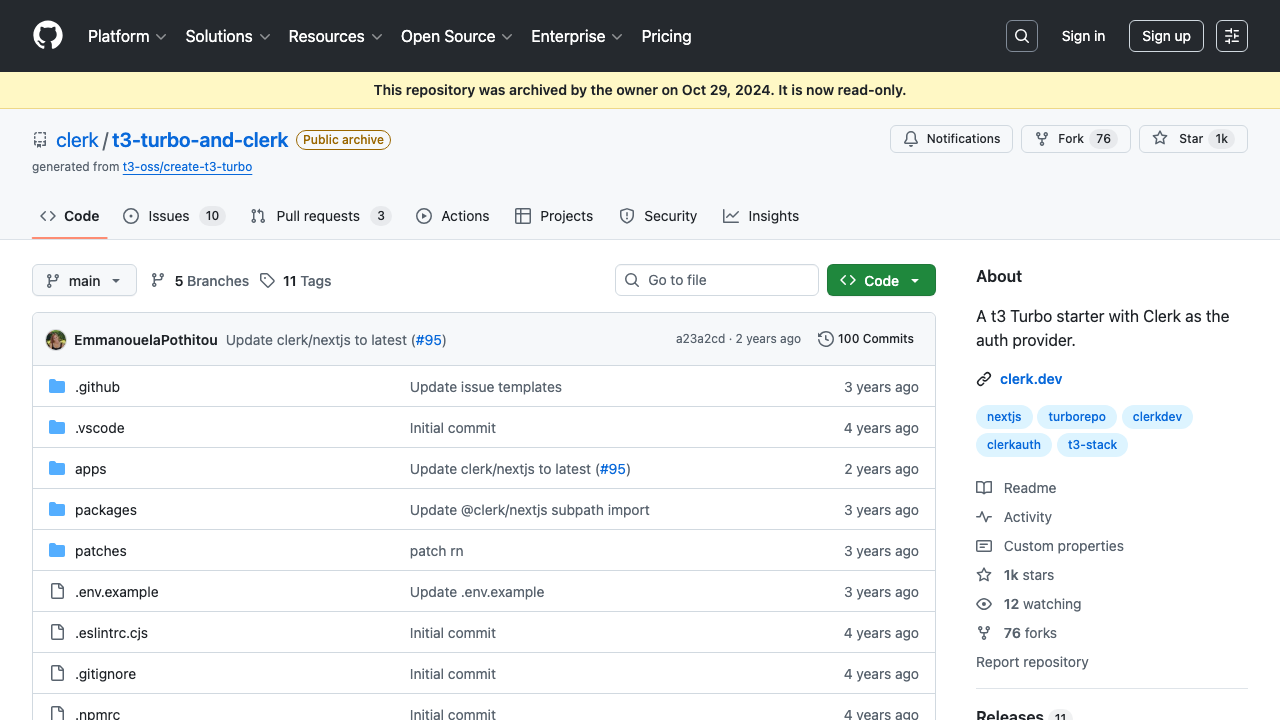
Why we like it: 1,000+ stars. Maintained by Clerk’s team — the official way to use Clerk authentication in a T3 Turbo monorepo. Pre-built sign-in/sign-up flows, organization management, and webhook handlers.
This is a fork of create-t3-turbo with NextAuth replaced by Clerk. Clerk handles authentication as a managed service — pre-built sign-in/sign-up UI components, social logins, multi-factor auth, organization/team management, and user profile pages. The integration is clean: Clerk middleware protects routes, and the tRPC context receives the authenticated user from Clerk’s session.
The advantage over NextAuth/Auth.js is reduced complexity. Clerk manages the session infrastructure, email verification, password resets, and OAuth provider connections — you don’t need to configure any of that. The trade-off is vendor lock-in and a monthly cost once you exceed the free tier. For teams that want auth solved completely so they can focus on product features, this template is the most productive starting point.
13. Cascade
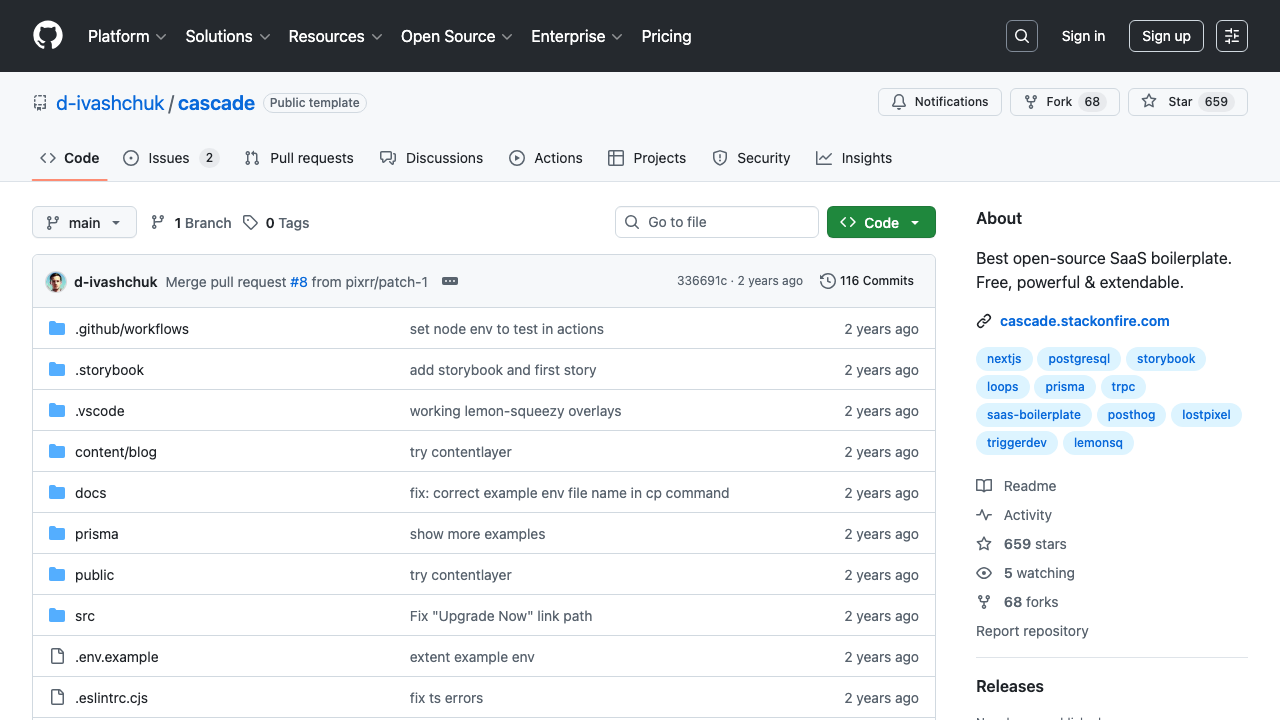
Why we like it: 659+ stars. The perfect indie hacker starter — T3 core with Lemon Squeezy billing (simpler than Stripe), PostHog analytics, and Sentry error tracking. Everything you need to launch and nothing you don’t.
Cascade is a SaaS starter built specifically for solo developers and indie hackers. The T3 core (Next.js, tRPC, Prisma, Tailwind) is augmented with Lemon Squeezy for billing (easier merchant-of-record setup than Stripe), PostHog for product analytics, and Sentry for error monitoring. The landing page, auth flow, dashboard, and settings pages are all ready to customize.
The Lemon Squeezy choice is deliberate — it handles sales tax, VAT, and payment processing as a merchant of record, which means less compliance headache for solo founders. PostHog integration gives you feature flags, session recordings, and analytics without a separate dashboard. The template is intentionally minimal: no over-engineering, no enterprise patterns you’ll never need. Ship your MVP in a weekend and iterate from real user feedback.
14. KARA Shop
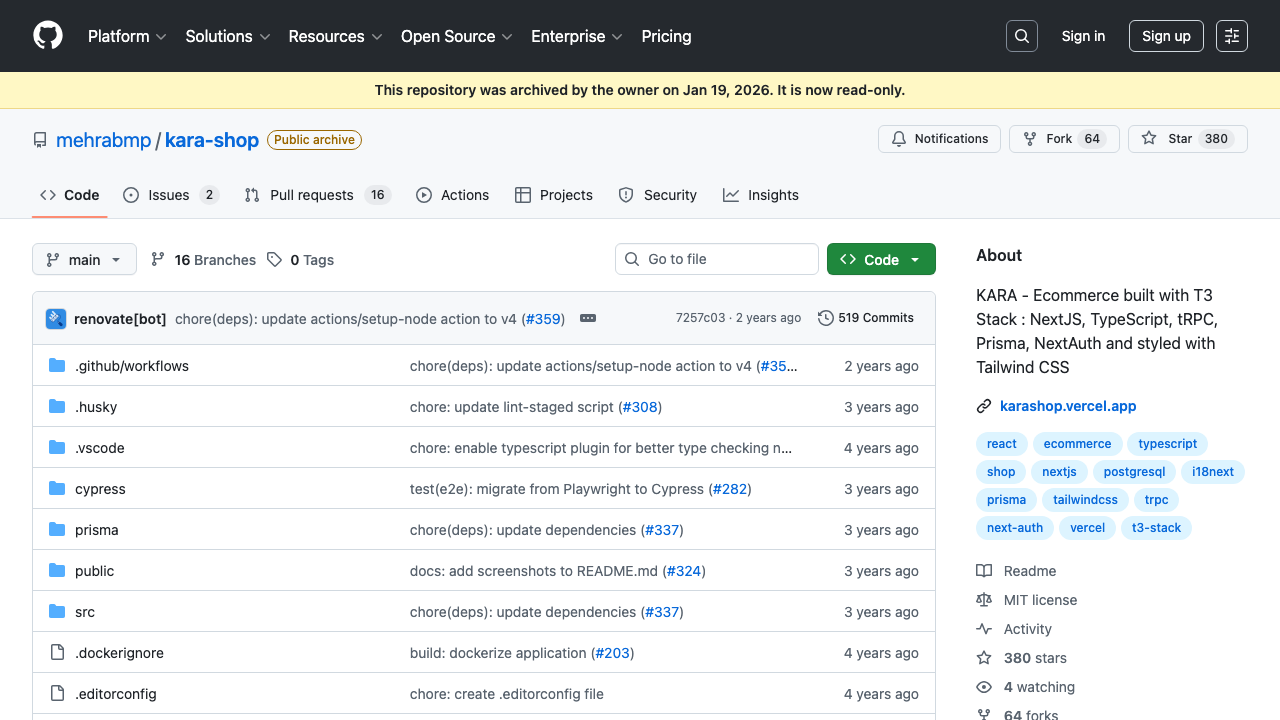
Why we like it: 380+ stars. A clean, focused e-commerce app that demonstrates T3 patterns for product listings, cart management, filtering, and checkout — without the bloat of a full commerce platform.
KARA Shop is a straightforward e-commerce application built with the core T3 Stack. Product listing with category filtering, product detail pages, cart management with optimistic updates via tRPC mutations, and user authentication with NextAuth. The Prisma schema covers products, categories, cart items, orders, and user profiles — a clean relational model for any online store.
What makes KARA Shop valuable is its simplicity. Unlike Relivator’s bleeding-edge stack, KARA Shop uses stable, well-documented tools and focuses on getting the fundamentals right. The tRPC procedures for cart operations show how to handle optimistic updates, error rollbacks, and cache invalidation — patterns you’ll need in any interactive T3 application. A solid learning resource for developers building their first T3 e-commerce project.
15. T3 Admin Dashboard
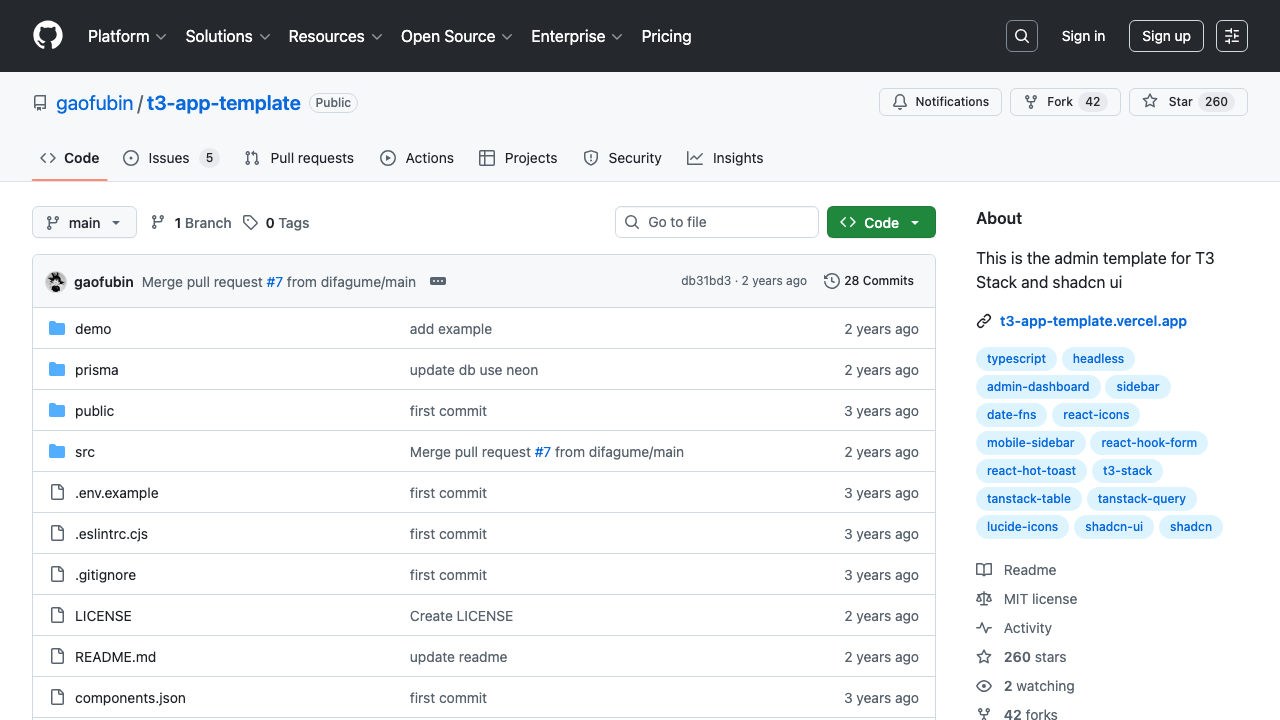
Why we like it: 260+ stars. The only T3 template focused specifically on admin panel UX — data tables with server-side pagination, filtering, and sorting via tRPC + TanStack Table. shadcn/ui components for the entire dashboard interface.
T3 Admin Dashboard fills a gap in the T3 ecosystem: admin panels. Most T3 templates focus on customer-facing features, but every SaaS eventually needs an internal dashboard for managing data. This template combines tRPC for data fetching with TanStack Table for advanced table features — server-side pagination, column sorting, multi-field filtering, and row selection. The shadcn/ui components provide a consistent admin UI.
The tRPC + TanStack Table integration is the key learning here. The table component sends pagination, sorting, and filter parameters through tRPC queries, and the server returns exactly the data slice needed. This pattern is dramatically more efficient than loading all data and filtering client-side. If you’re building a backoffice, CMS, or any data management interface with the T3 Stack, this template gives you the hardest piece — performant data tables — already solved.
How to Choose
The T3 Stack ecosystem has matured to the point where there’s a template for nearly every use case. Here’s how to narrow it down:
- Starting from scratch: create-t3-app — the official CLI, opinionated defaults, excellent docs
- Building a SaaS: Taxonomy (App Router patterns) or next-saas-stripe-starter (working Stripe billing out of the box)
- Need web + mobile: create-t3-turbo (Tailwind on web, separate mobile styles) or T4 App (universal UI with Tamagui)
- E-commerce: Relivator (cutting-edge stack) or KARA Shop (stable, focused fundamentals)
- Studying production architecture: Cal.com (scheduling, 40K+ stars) or Dub (API-first, edge-optimized)
- Indie hackers / solo founders: Cascade — Lemon Squeezy billing, PostHog analytics, ship-fast mentality
- Admin dashboards: T3 Admin Dashboard — TanStack Table + tRPC for data-heavy interfaces
If you’re still evaluating whether Next.js is the right foundation for your project, our Next.js vs Remix vs Astro comparison can help you decide. One pattern worth noting: the T3 ecosystem is splitting between Prisma and Drizzle for ORM. Prisma remains the default in create-t3-app and most production apps (Cal.com, Documenso, Dub), but Drizzle is gaining ground in newer projects (Relivator, T4 App) thanks to its lighter footprint and SQL-like query builder. Both work well with tRPC — pick based on whether you prefer Prisma’s declarative schema or Drizzle’s TypeScript-first approach.
For authentication, NextAuth/Auth.js is still the most common choice, but Clerk (Clerk + T3 Turbo) and Better-Auth (Relivator) are viable alternatives depending on whether you want managed auth or self-hosted flexibility.
You Might Also Like


Comments (No Comments)