13 Best Next.js Portfolio Templates for Developers 2026
Looking for a Next.js portfolio template that ships with App Router, React Server Components, and modern animation libraries — not a 2022-era starter abandoned mid-upgrade? These 13 picks span the full Next.js portfolio ecosystem: premium suites like Aceternity UI (4+ portfolio layouts) and Magic UI Pro, plus free open-source picks with 700-10,500 GitHub stars (Lee Robinson, Tailwind Next.js Starter Blog, mldangelo, Magic UI, Nim). Every demo and repository is re-checked before we republish this page.
A 2026-grade Next.js portfolio template uses App Router exclusively — Server Components for SEO-friendly project pages, the Next.js Image component for Core Web Vitals on the green, and Framer Motion / Motion-Primitives / Magic UI for the animation polish that separates a credible developer portfolio from a Wix template. Pair that with MDX-driven blog posts (Server Components render markdown server-side), dark mode with system preference detection, and a configuration-driven data model so you fill in one TypeScript file and deploy in under an hour.
We’ve grouped the 13 picks below into premium Next.js portfolio suites (Aceternity UI, Magic UI Pro, Next.js Templates Portfolio) and free / open-source Next.js portfolios (Lee Robinson, Tailwind Next.js Starter Blog, mldangelo, Magic UI Portfolio, Nim, Minimal Next.js Portfolio, realstoman, 1hanzla100, Flexy Dev, said7388). All thirteen are Next.js-exclusive — for non-Next.js React portfolios (Vite, Gatsby, React Router, Bootstrap), see our broader React portfolio templates roundup.
Related reading: React portfolio templates (broader scope), Next.js landing page templates, React landing page templates, Next.js admin dashboard templates, free Hugo themes and free Jekyll themes roundups.
Quick Picks
- Best premium suite: Aceternity UI Portfolios — All-Access plan unlocks 4 portfolio variants (Minimal, Minimalist, DevPro, Sidefolio) plus the rest of the Aceternity catalog
- Best Vercel-grade reference: Lee Robinson next-blog-mdx — 7.6k stars, the canonical Next.js + MDX portfolio by Vercel’s former head of DevRel
- Best animated components: Magic UI Pro — 21k+ star library, free Startup template + $99 Pro for premium blocks
- Best blog-first: Tailwind Next.js Starter Blog — 10.5k stars, MDX + RSS + syntax highlighting + analytics built in
- Best modern stack: mldangelo personal-site — Next.js 16 + React 19 + Tailwind v4, AI-friendly, GitHub Pages deploy
- Best single-config setup: Magic UI Portfolio (magicuidesign) — edit one resume.tsx file, deploy in under an hour
- Best minimal: Nim — one-page Next.js 15 + React 19 + Tailwind v4 + Motion-Primitives
- Best config-driven free: 1hanzla100/developer-portfolio — 800 stars, Next.js + TypeScript + Bootstrap + Lottie + react-reveal
- Best Next.js 16 + Turbopack: Minimal Next.js Portfolio — 178 stars, 7 themes (Dark, Light, Retro, Cyberpunk, Aurora, Synthwave, Paper)
- Best project-filter portfolio: realstoman/nextjs-tailwindcss-portfolio — 149 stars, project filtering by category and search
- Best premium Next.js Templates: Next.js Templates Portfolio — free + All-Access Pass for the full nextjstemplates.com catalog
- Best clean DX-focused: Flexy Dev — Next.js 15 + Tailwind v4 + Formspree contact, free + paid MDX blog upgrade
- Best dark/light toggle: said7388/developer-portfolio-nextjs — 79 stars, polished light/dark mode + 6+ pre-built sections
1. Aceternity UI Portfolios (Premium)
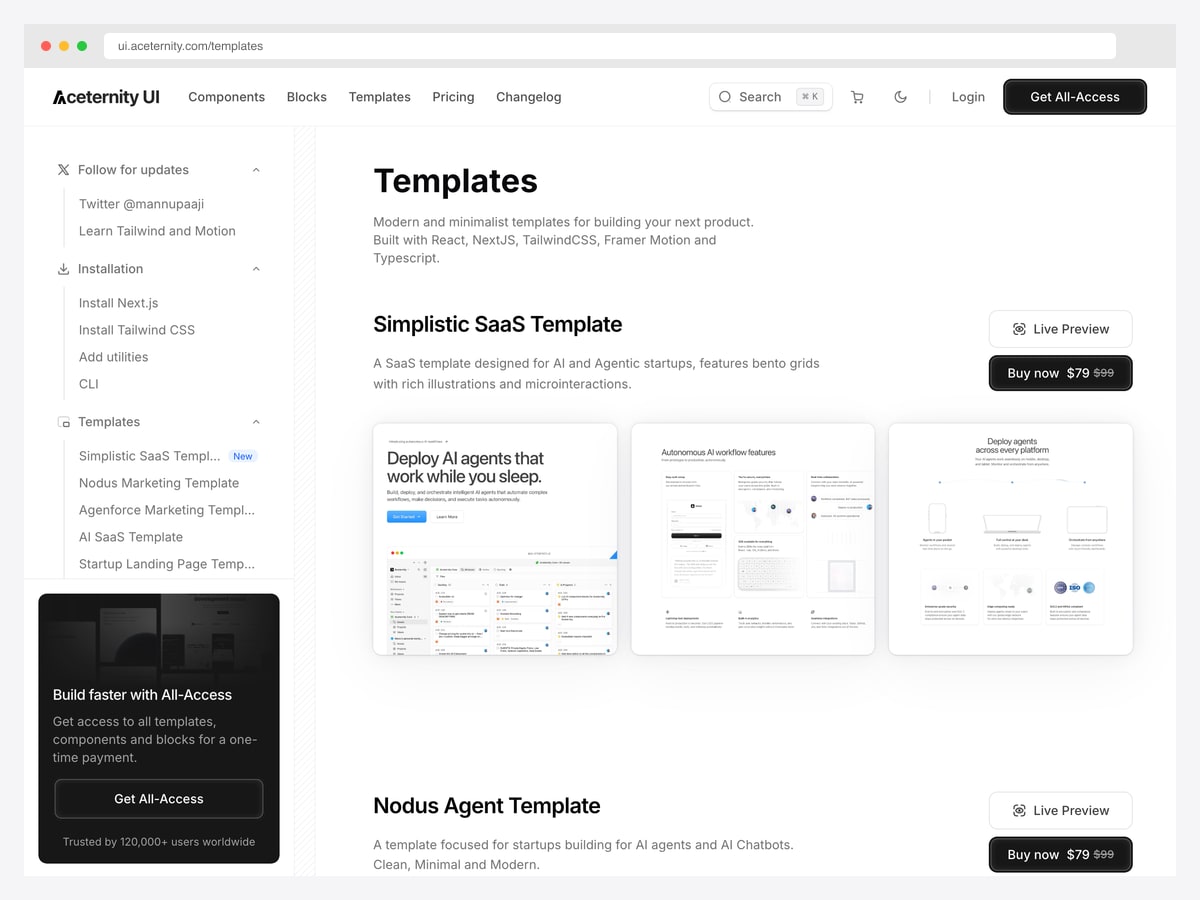
Why we like it: Four distinct Next.js portfolio templates in one license — Minimal, Minimalist, DevPro, and Sidefolio. Each takes a different layout philosophy: DevPro adds blogs and event pages for developers; Sidefolio runs a persistent sidebar with toggleable mobile drawer; Minimal and Minimalist trim the chrome for designers. One All-Access license unlocks every Aceternity template plus 100+ animated components.
The animation work is the value — Aceternity’s library has become the de facto reference for premium-feeling React landing pages in 2026. The portfolio variants extend the same design language into developer / designer / agency contexts.
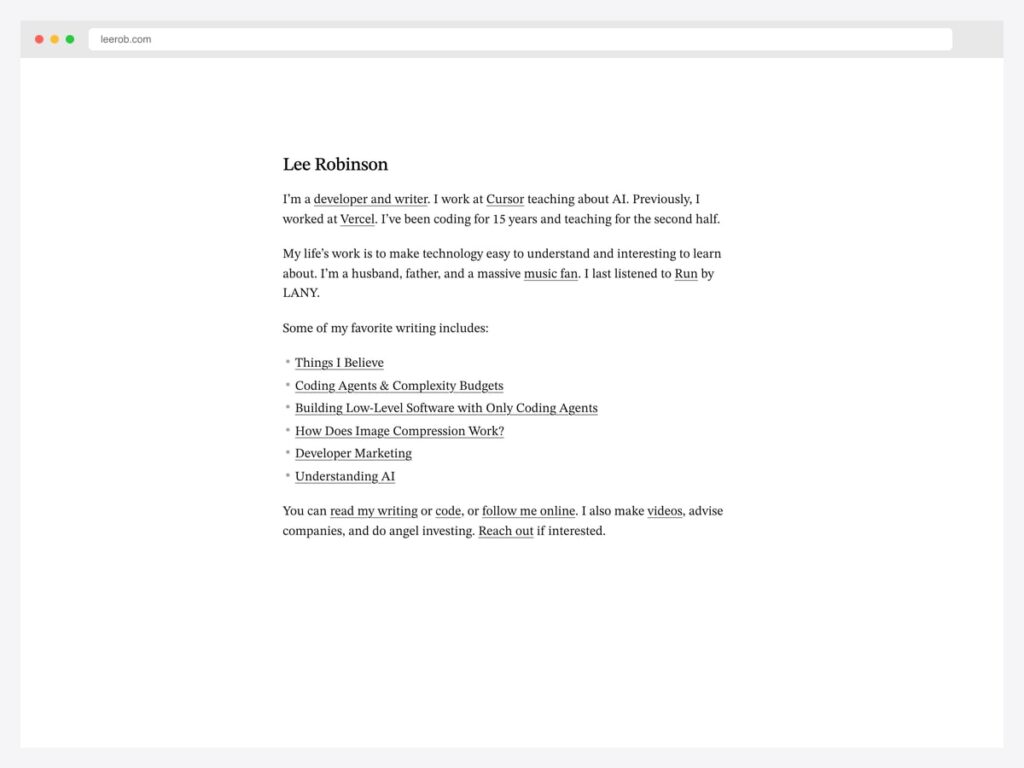
2. Lee Robinson next-blog-mdx
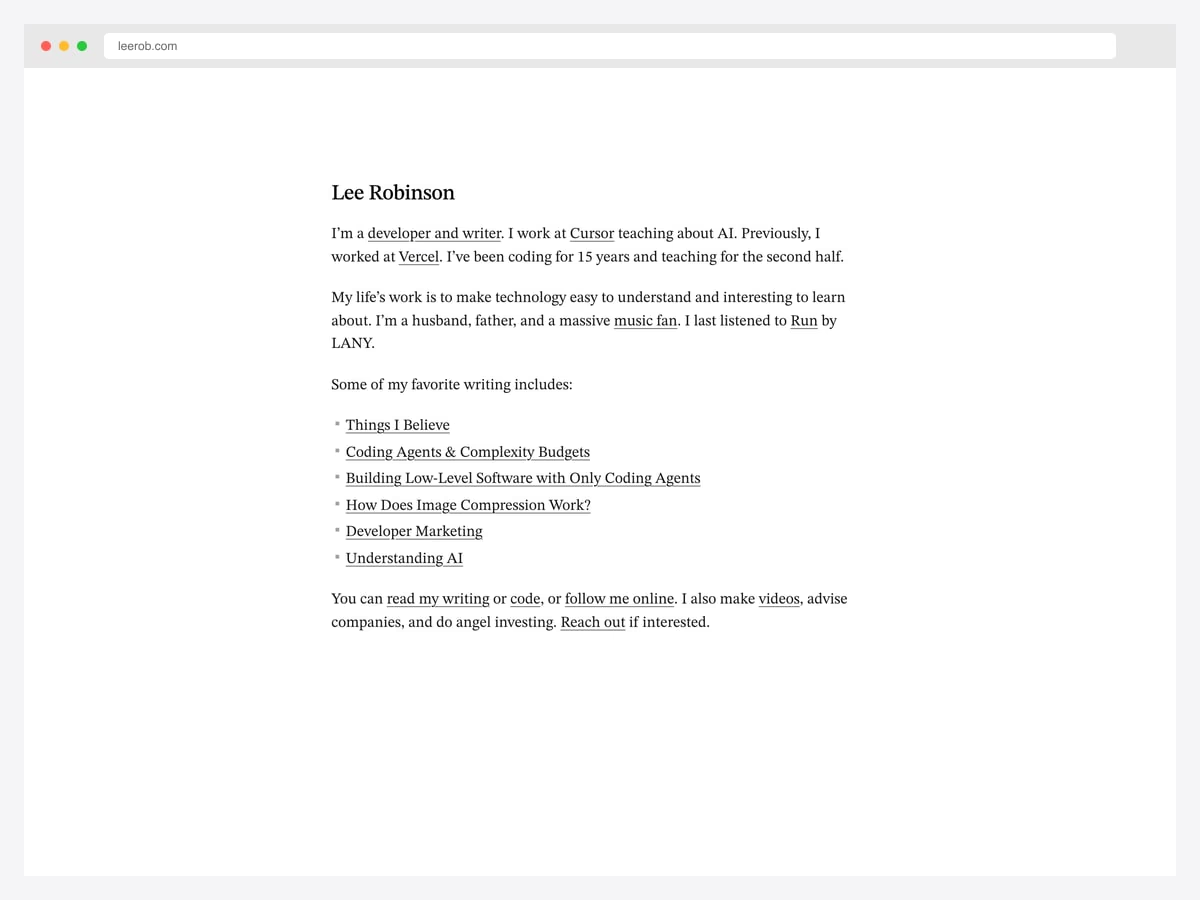
Why we like it: The personal site and template source from Lee Robinson — former head of DevRel at Vercel, now at Cursor. Next.js + MDX blog, Tailwind CSS, TypeScript, Vercel Analytics built in, and an optional Postgres database for managing redirects. Minimalist typography-first aesthetic that lets the writing do the talking.
1.4k+ forks because it’s the cleanest reference for “minimalist developer portfolio with MDX blog” in the Next.js ecosystem. Best when you want the official-grade implementation rather than a more opinionated paid template.
3. Magic UI Pro
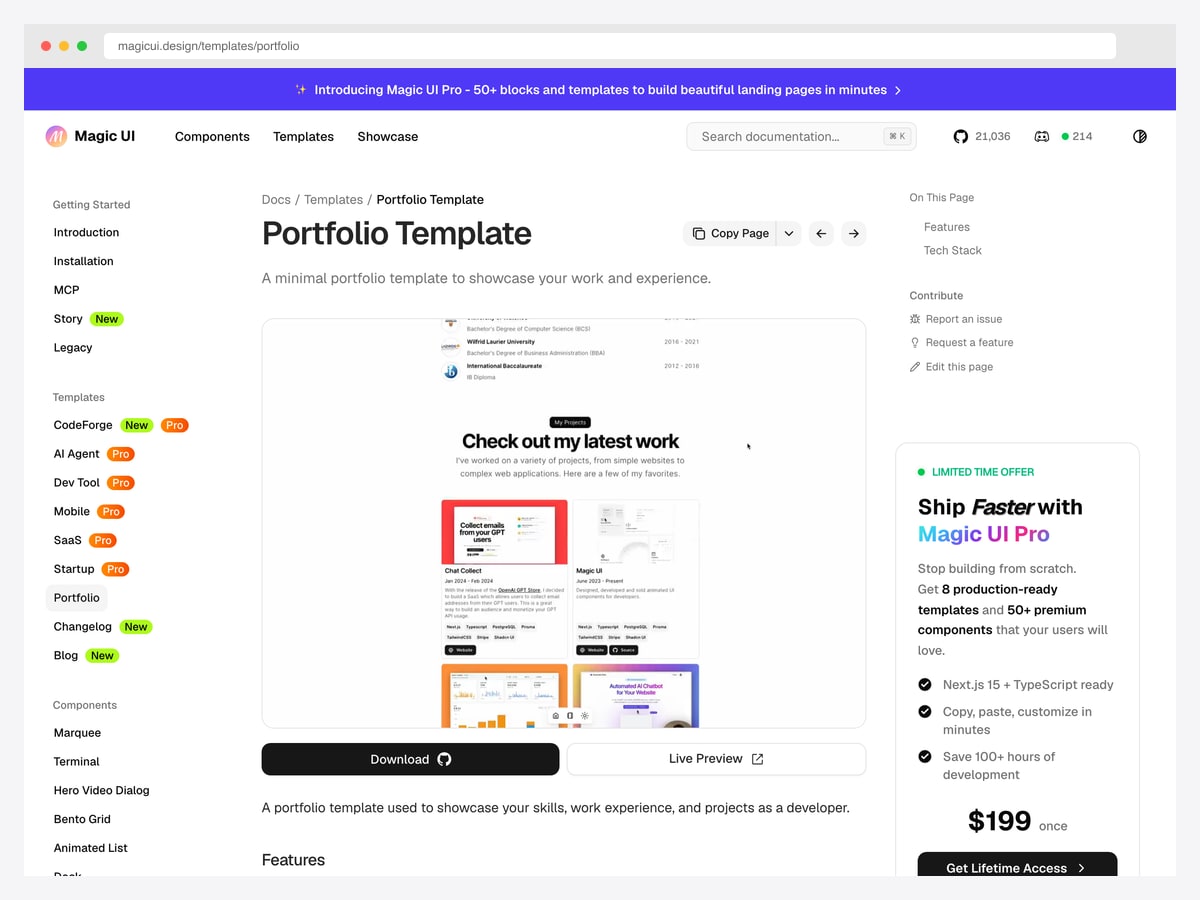
Why we like it: 21,000+ GitHub stars on the core library makes Magic UI the most-used animated component library in the React ecosystem. The free portfolio template (covered separately below) ships with 12 sections and 150+ animated components — particle effects, text animations, interactive cards. Pro version adds 50+ production-ready blocks and complete templates.
If your portfolio needs to stand out visually — applying to design-forward product teams, pitching freelance work to high-end clients — Magic UI’s animation library is unmatched in the free tier and the Pro upgrade adds the premium polish that separates “good portfolio” from “remembered portfolio.”
4. Tailwind Next.js Starter Blog
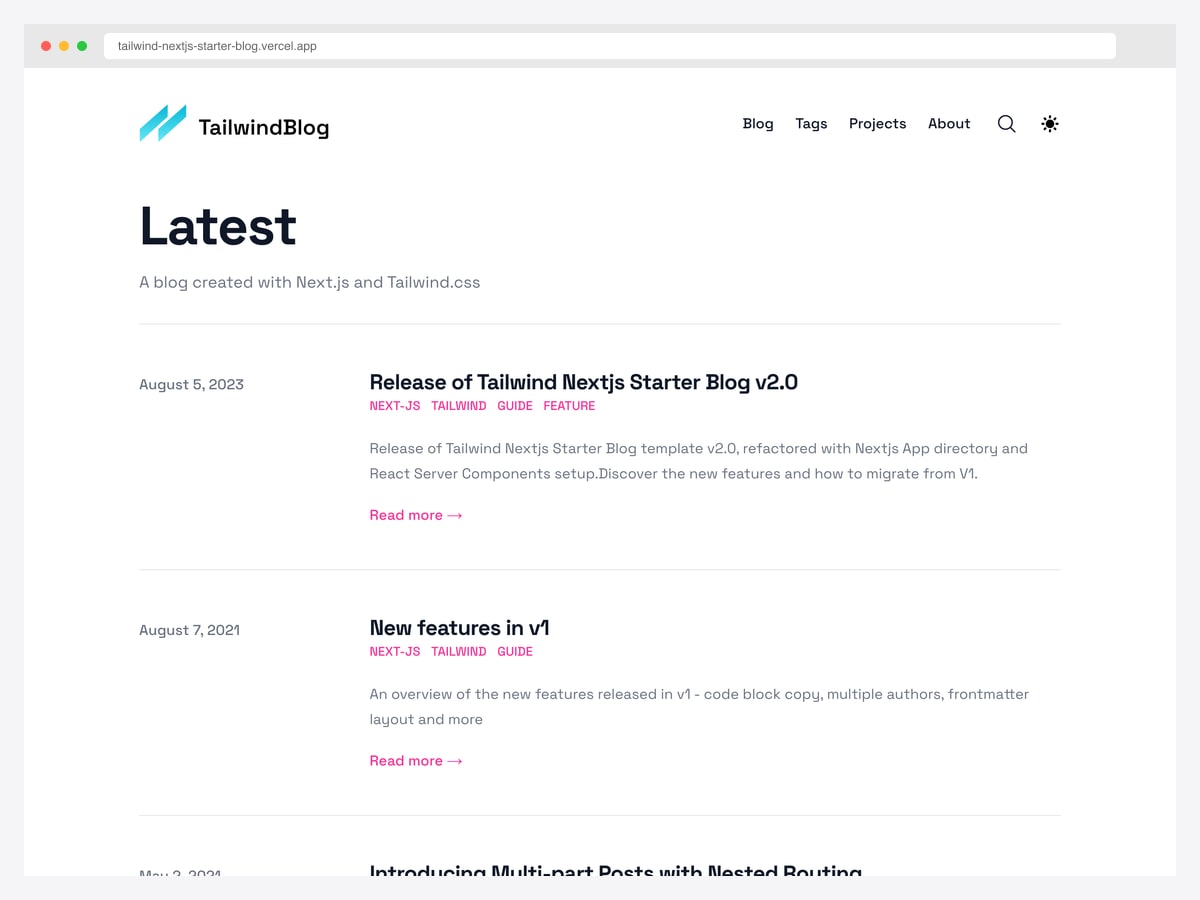
Why we like it: The de facto Next.js blogging starter that doubles as a portfolio. MDX content, server-side syntax highlighting with line numbers, RSS, sitemaps, KaTeX math support, and three optional comment systems (Giscus, Utterances, Disqus). Drop-in analytics for Umami, Plausible, and Google Analytics behind a single env var.
Originally aimed at technical writers replacing Jekyll or Hugo, but the about-page and projects sections make it a credible portfolio surface too. Best pick if your portfolio’s job is to convert “person reading my blog post” into “person about to email me” — the analytics + comment plumbing that’s first-class here.
5. mldangelo Personal Site
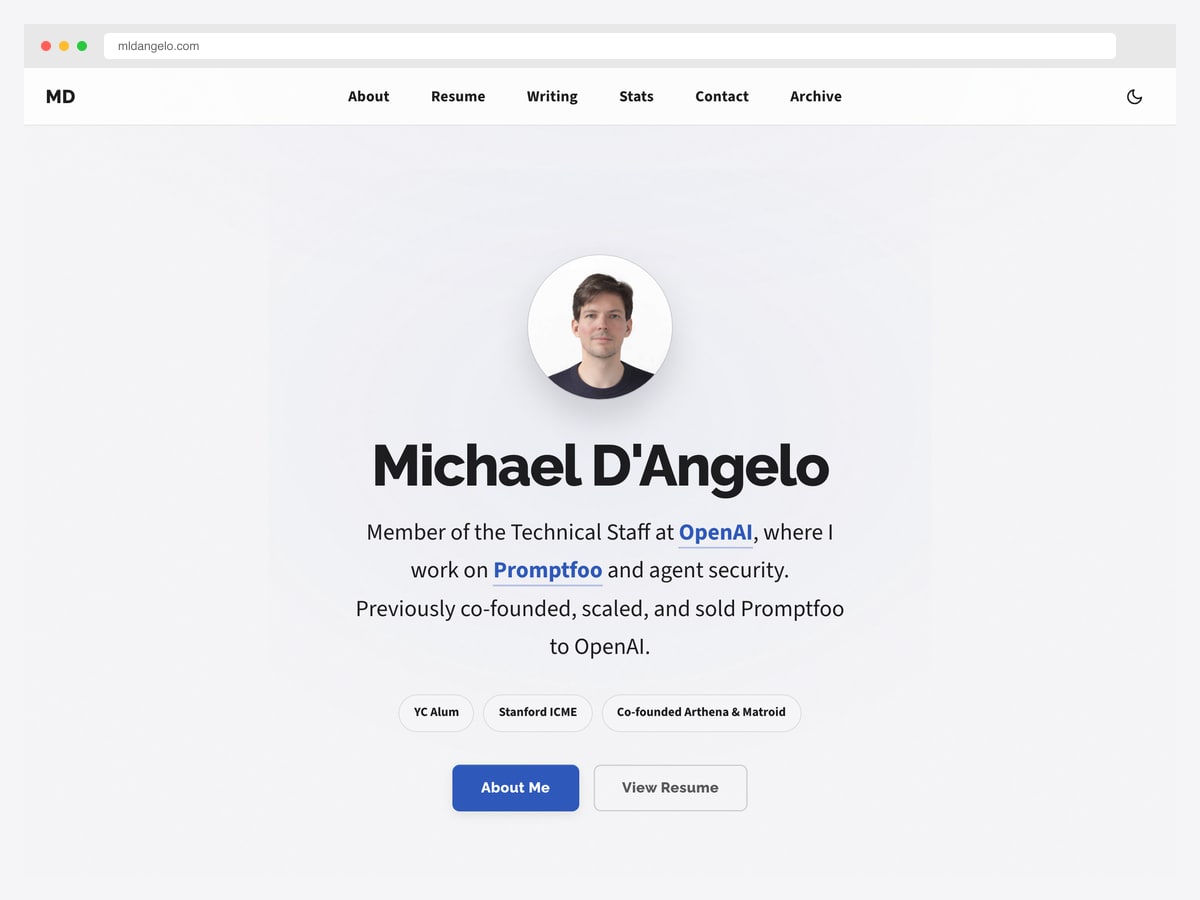
Why we like it: The most current personal-site template on this list — Next.js 16, React 19, TypeScript, Tailwind CSS v4. Every dependency on the latest major. Dark mode with system preference detection, markdown blog with RSS, automatic GitHub Pages deployment, and explicit “AI-friendly” annotations so GitHub Copilot, Claude, and Cursor produce sensible diffs.
“Fork, open in GitHub Codespaces, start editing” — zero local setup. The codebase is small enough to read end-to-end in an afternoon, which makes it a great learning template if you want to actually understand the code rather than treat it as a black box. The cleanest free pick for developers who insist on running React 19 + Tailwind v4 in production today.
6. Magic UI Portfolio (magicuidesign)
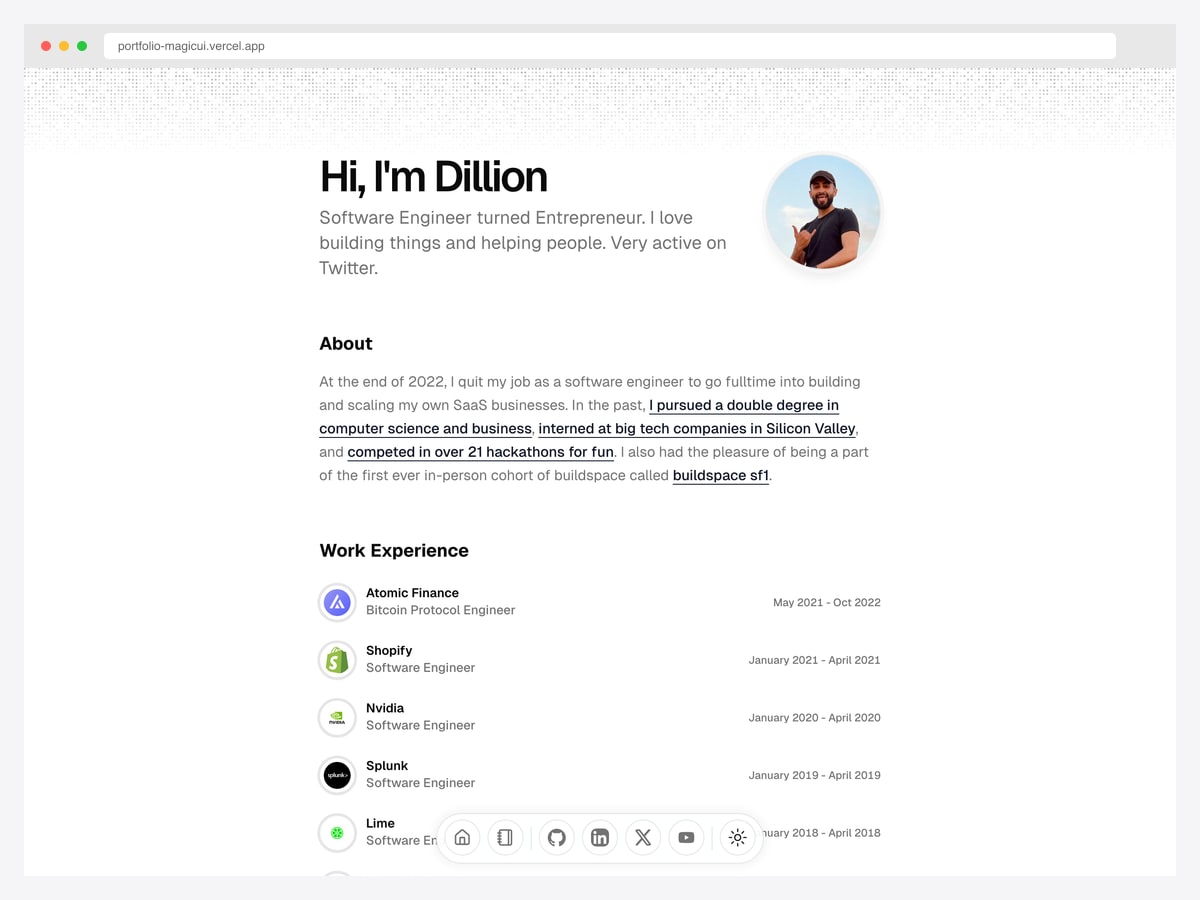
Why we like it: The cleanest “single config file” portfolio in the Next.js ecosystem. Edit one resume.tsx file and your hero, work history, projects, hackathons, and blog all populate from typed data. Setup takes under an hour from clone to deployed Vercel URL.
The Magic UI design language itself has 21,000+ stars — pour-on polish in every component, particle effects, animated text, and interactive cards. Pair with the Magic UI Pro library ($99 lifetime) above if you want to extend with 50+ premium blocks.
7. Nim (ibelick)
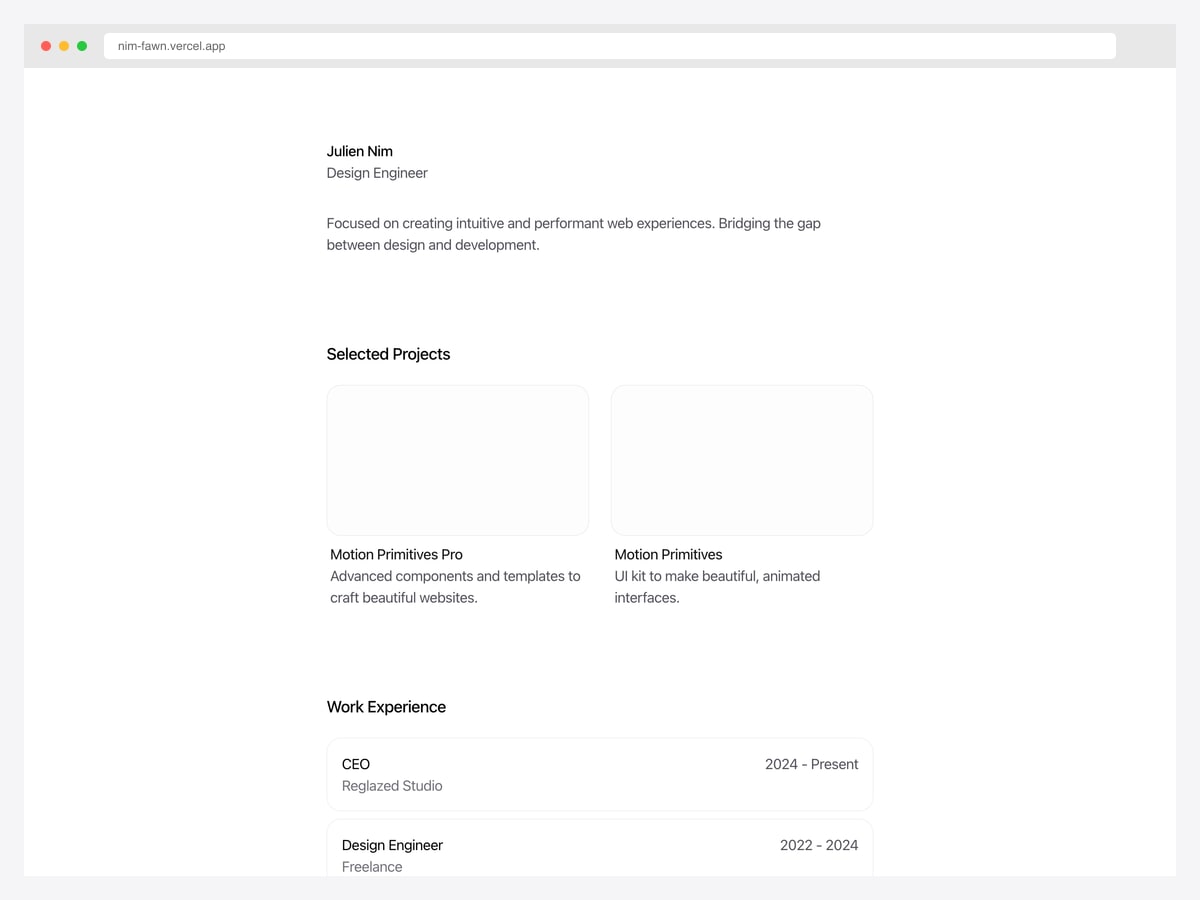
Why we like it: Minimal one-page portfolio by Julien Thibeaut. Accessible by default, dark mode included, MDX-based blog support. The whole site fits on one screen and reads more like a designed business card than a traditional portfolio.
Julien also maintains Motion-Primitives — a Framer-Motion-built animation library — so the animation work in Nim is the canonical reference for how to use that library well. Best fit for designer-developers, indie hackers, or anyone who wants signal over noise.
8. 1hanzla100/developer-portfolio
Status: the repository was archived in 2024, so it is frozen. It still deploys, and its config-driven approach is the appeal, but nothing in it will be updated — check the dependency versions before you build on it.
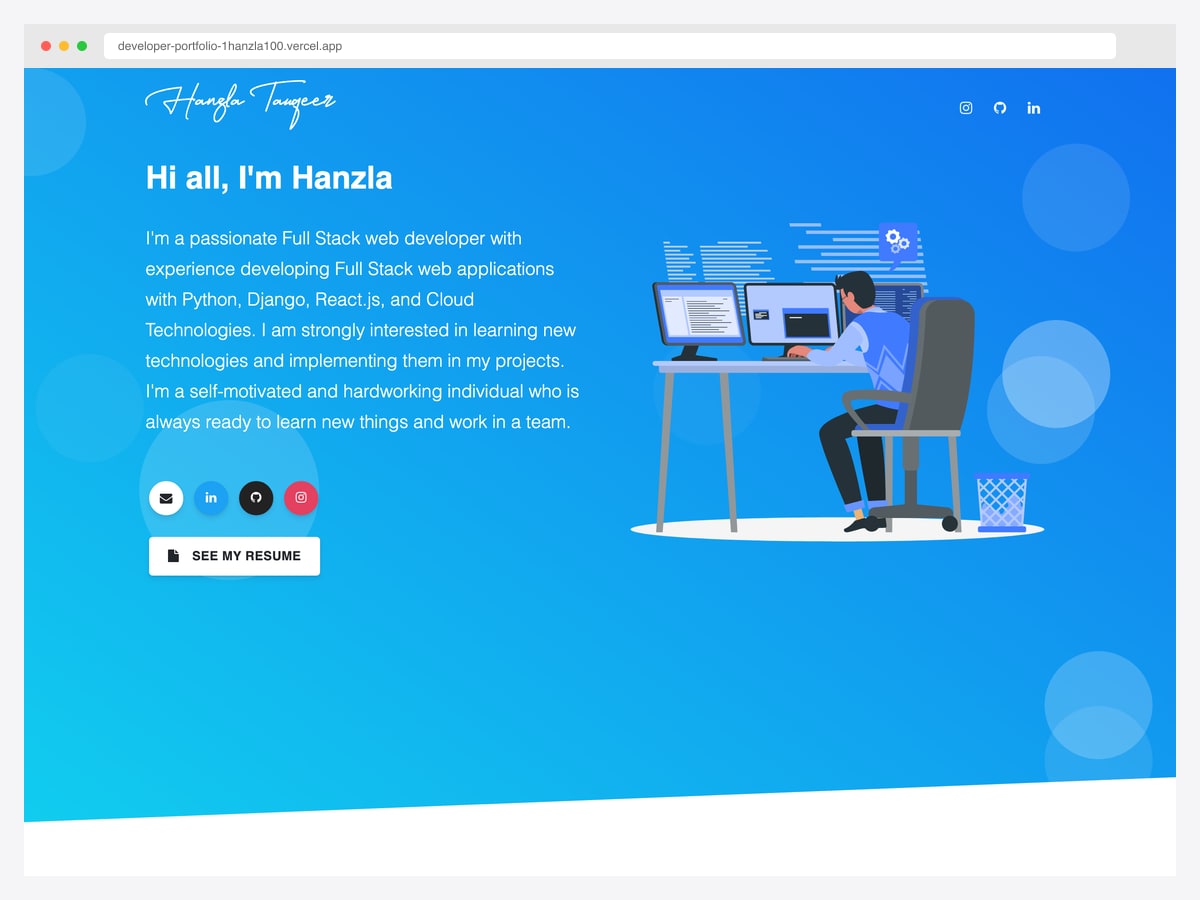
Why we like it: Everything customizes through a single portfolio.ts config file — summary, skills, education, work experience, client testimonials, and project cards. Lottie animations and react-reveal scroll triggers give it more motion than minimalist alternatives without going Three.js-heavy.
Apache 2.0 license. Best for developers who want a balanced “configuration over coding” approach — fill in the data, the template handles layout and animations. Older release cadence means you’ll want to bump dependencies before deploying, but the architecture stays clean across upgrades.
9. Minimal Next.js Portfolio (Naman Barkiya)
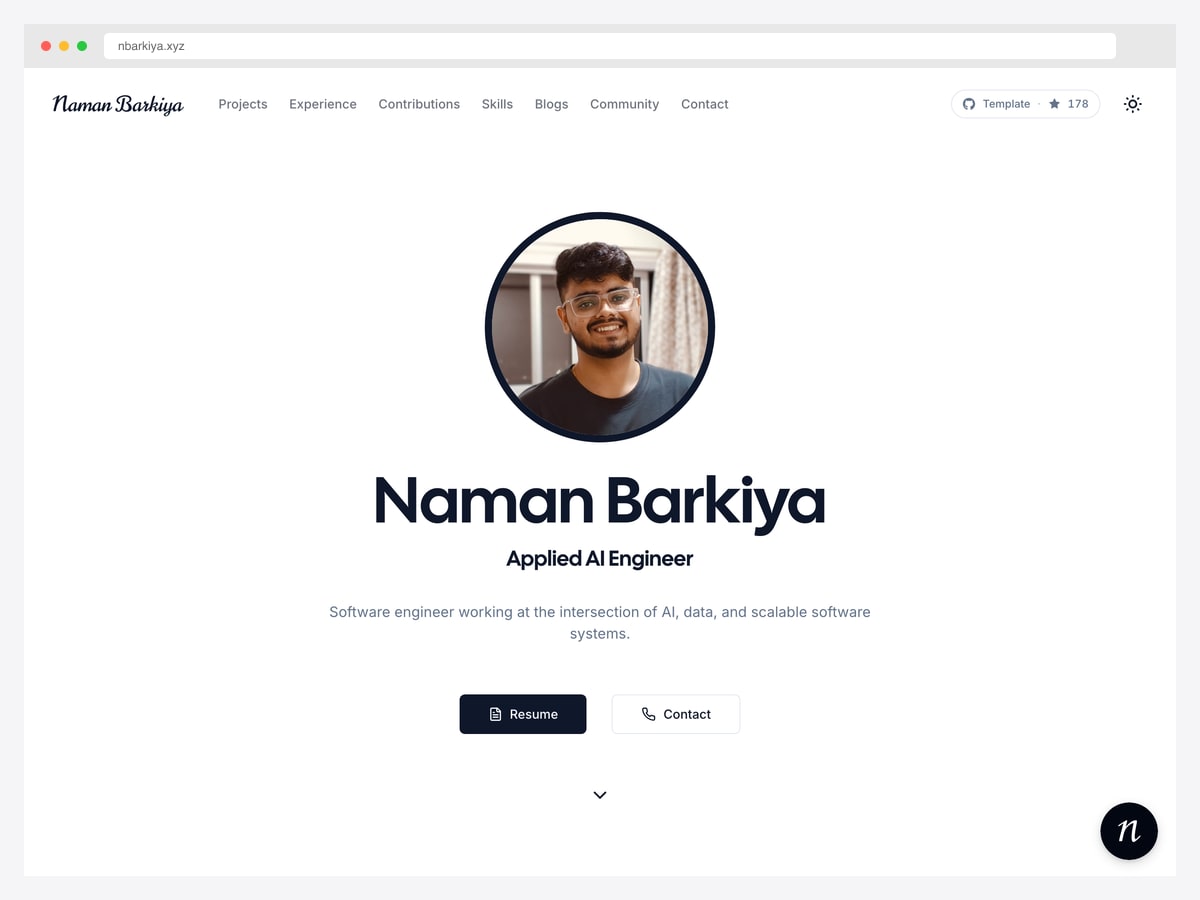
Why we like it: Modern Next.js 16 portfolio with Turbopack (Next.js’s new Rust-based bundler — significantly faster than Webpack in dev). Seven distinct theme variants out of the box: Dark, Light, Retro, Cyberpunk, Aurora, Synthwave, and Paper. Professional experience timeline with expandable sections, project showcase with live demo links, “100% Performance Score” with optimized Core Web Vitals.
The theme variety is the differentiator — most Next.js portfolio templates ship with one design and force you to customize. Naman Barkiya’s template lets you pick a vibe (Cyberpunk, Synthwave, Aurora) that matches your personal brand without designing it yourself. Configuration files for personal info, skills, projects, and experience.
10. realstoman/nextjs-tailwindcss-portfolio
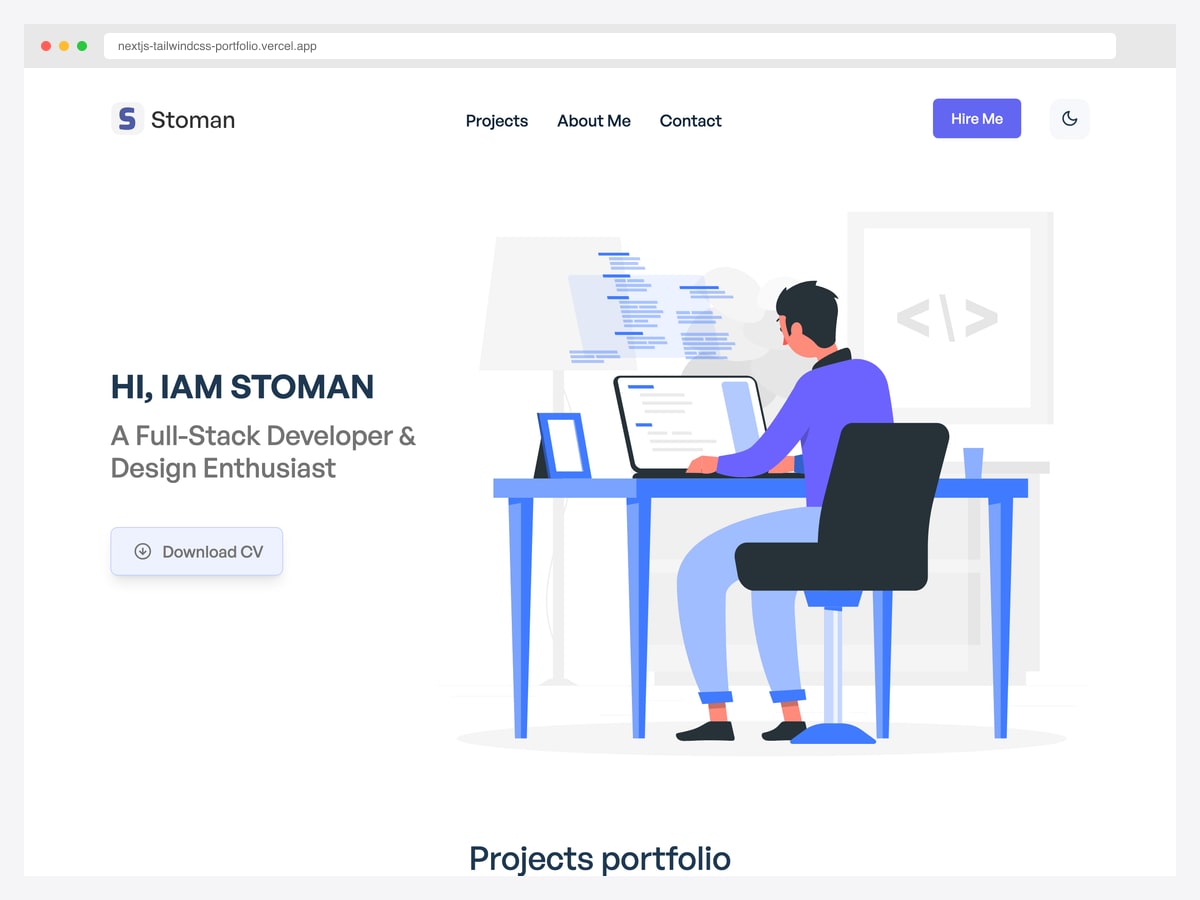
Why we like it: Custom hooks and reusable components, dark mode with smooth transitions, project filtering by category, and built-in search functionality across projects. Framer Motion transitions and animations, responsive design with back-to-top and file download buttons. Alternative versions built with React, Vue.js, and Nuxt.js are also available.
The project filter + search is rare in this category — most portfolio templates list projects but don’t help visitors find specific work in a deep portfolio. Best when you have 20+ projects to showcase and want visitors to navigate by category (web app, mobile, design system, open source).
11. Next.js Templates Portfolio
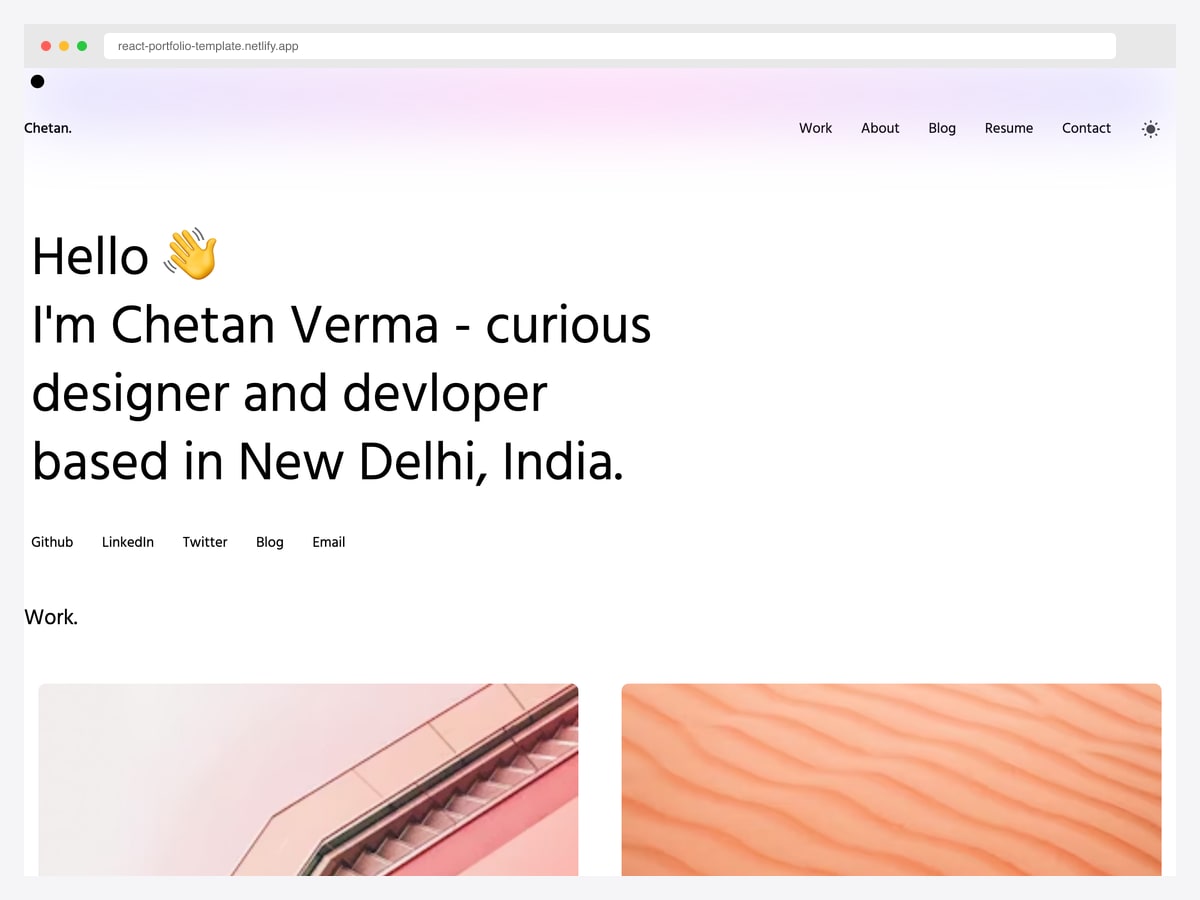
Why we like it: The free portfolio template from nextjstemplates.com — clean, minimalistic, and modern. Header / Work / Services / About / Contact sections pre-built, dark mode toggle, blog system with CRUD functionality, and a customizable GUI for personalization. Personal and commercial use permitted in the free version.
The All-Access Pass (over 90% savings vs buying templates individually) unlocks every Next.js Templates portfolio variant plus the broader SaaS / landing page / blog catalog — useful when you’ll build multiple Next.js sites over time and want one license that covers all of them.
12. Flexy Dev (AbdulBasit313)
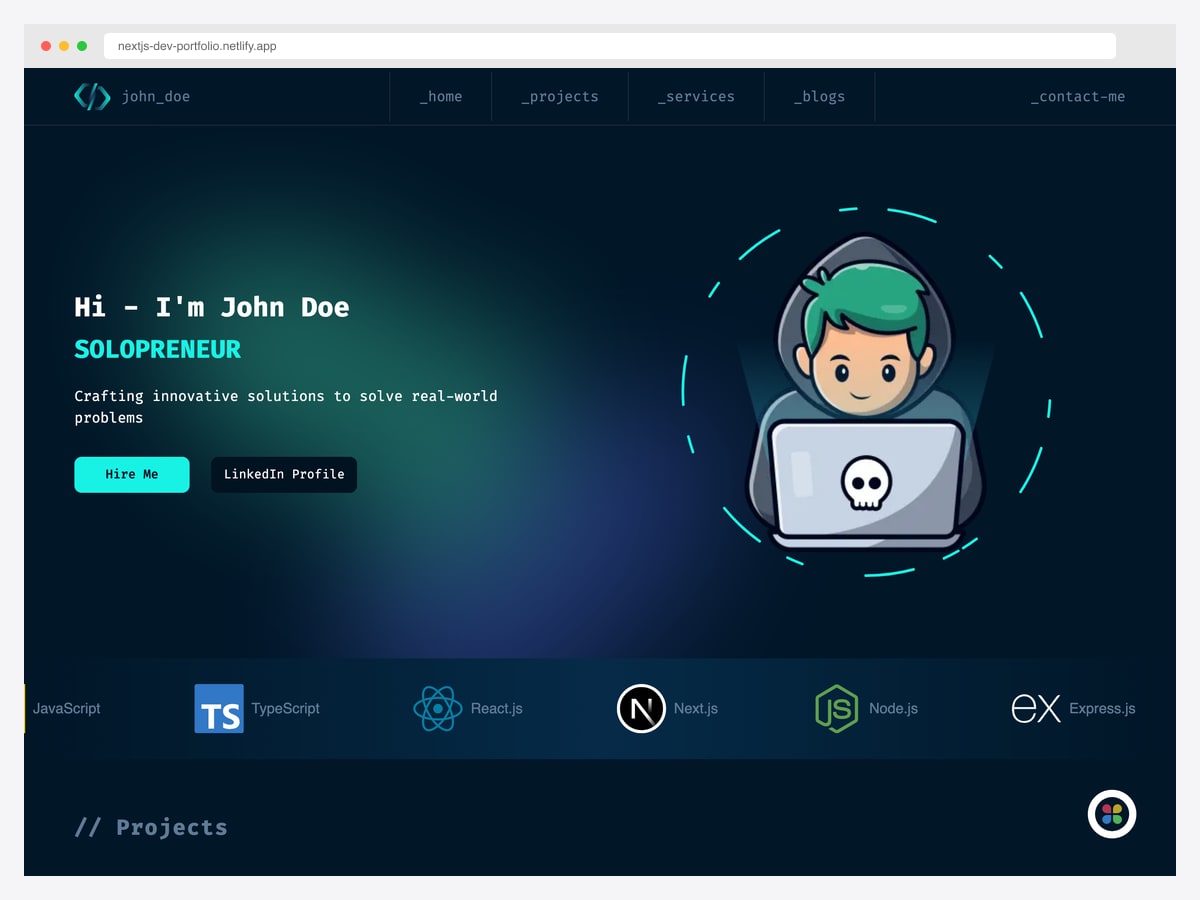
Why we like it: Pre-built sections for tagline, projects, services, testimonials, and skills. Formspree contact form integration (no backend required) and SEO optimization built in. Free version on GitHub, premium version with MDX blog system available on Gumroad — easy upgrade path when your portfolio grows into a content site.
A newer, lower-profile template, but built on Next.js 15 with Tailwind v4 — better foundation than many higher-starred templates running on Next.js 13/14. Best when you want a contemporary base without paying premium pricing.
13. said7388/developer-portfolio-nextjs
Status: archived since 2023 and the oldest option on this page. Fine to borrow layout ideas from; not a base to start a 2026 project on.
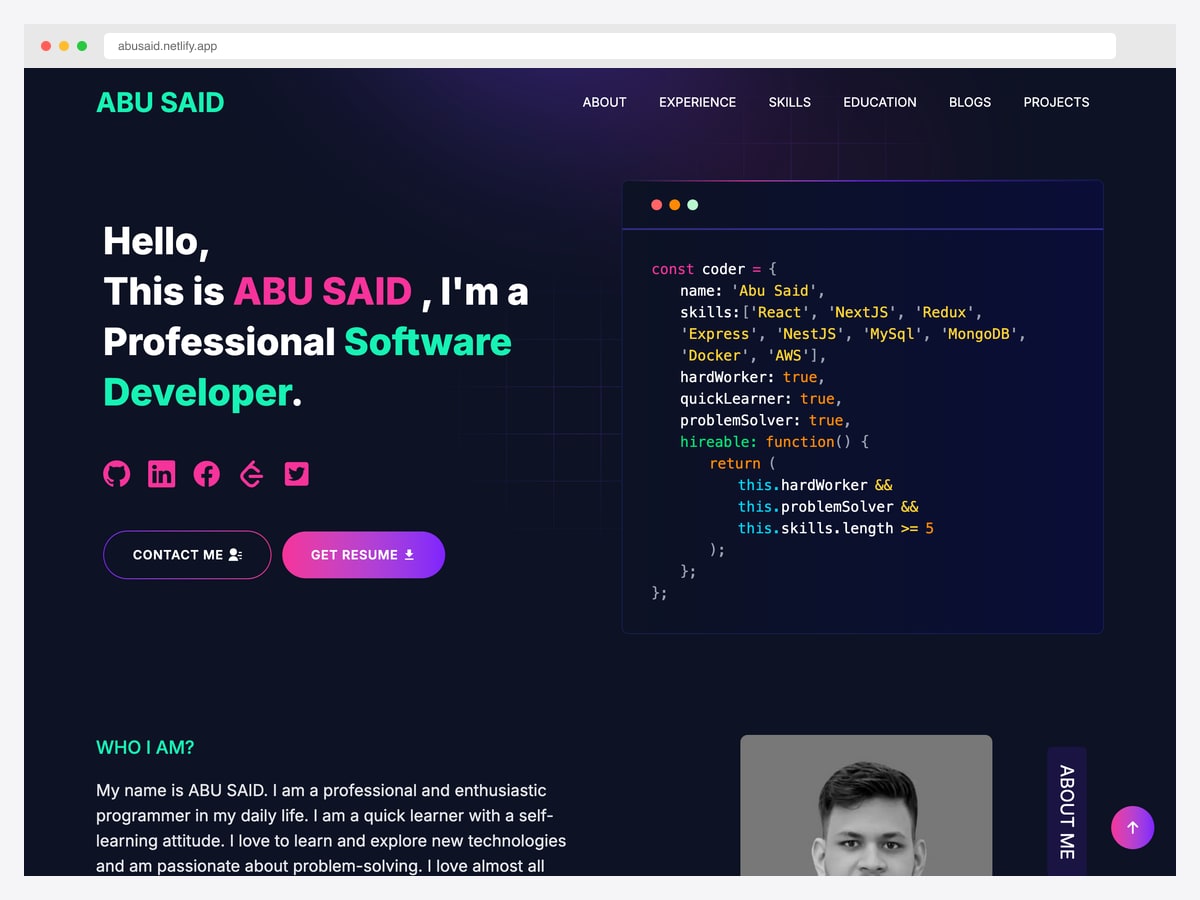
Why we like it: Software developer portfolio template with polished dark and light mode support. Customizable sections including home, about, resume, blog, and contacts. Education, skills, experience, and projects showcases. Built-in blog functionality and responsive design with multiple hosting options (Netlify, Firebase, Heroku, GitHub Pages).
Repository was archived in late 2025 but the source remains forkable — the design holds up well and the code is small enough to maintain yourself. Best when you specifically want this aesthetic and don’t need active upstream updates. Bump Next.js + Tailwind to current major versions before deploying.
How to Choose a Next.js Portfolio Template
The right pick depends on what your portfolio needs to do for you:
- Job hunting at a frontend-heavy team? Magic UI Portfolio or Magic UI Pro — the animation work signals “I know modern Next.js patterns.”
- Writing-first portfolio (blog, essays, technical writing)? Tailwind Next.js Starter Blog or Lee Robinson next-blog-mdx — MDX support and SEO plumbing are first-class.
- Want the latest Next.js 16 + React 19 + Tailwind v4? mldangelo personal-site or Minimal Next.js Portfolio (Turbopack).
- Designer-developer or indie hacker? Nim — restraint over flash, Motion-Primitives animations done well.
- Have $200-300 and want premium polish? Aceternity UI All-Access — four portfolio layouts plus the rest of their library.
- 20+ projects to showcase? realstoman/nextjs-tailwindcss-portfolio — the only template with project filtering + search.
- Want to pick a theme/vibe without designing it? Minimal Next.js Portfolio — 7 ready themes (Cyberpunk, Synthwave, Aurora, etc.).
- Prefer config-driven over code editing? Magic UI Portfolio (single resume.tsx) or 1hanzla100 (portfolio.ts).
Next.js Portfolio Templates FAQ
Why pick Next.js over Vite or plain HTML for a portfolio?
Next.js wins when you’ll add an MDX blog (Server Components render markdown server-side for SEO), when you might add API routes for contact forms or analytics, or when you want React Server Components for first-paint performance. For pure static portfolios without blog plans, Vite (sub-second dev startup) or plain HTML + Tailwind are lighter — see our broader React portfolio templates roundup for non-Next.js options.
App Router or Pages Router for a new portfolio?
App Router. Every template on this list released or updated in 2026 defaults to App Router. React Server Components render your portfolio’s about, projects, and blog server-side for excellent SEO and Core Web Vitals — then hydrate only the interactive bits (theme toggle, contact form, project filter). Pages Router still works but the React community has moved on.
How do I host a Next.js portfolio for free?
Vercel (zero-config one-click deploy, best for Next.js), Netlify (works for any Next.js build with the Next adapter), Cloudflare Pages (free tier with generous limits), or GitHub Pages (best for static-export Next.js sites like mldangelo’s). All four have free tiers that handle portfolio-scale traffic without issue. mldangelo and 1hanzla100 ship GitHub Pages deploy configs out of the box.
Do I need a custom domain?
For job hunting, yes — yourname.com beats yourname.vercel.app for credibility and is the difference between “this person has a portfolio” and “this person treats their personal brand seriously.” Cost: $10-15/year for a .com, free with the cheaper TLDs. All Vercel-hosted Next.js sites support custom domains on the free tier with automatic SSL.
Magic UI free vs Magic UI Pro — which?
Magic UI free (the magicuidesign/portfolio template + the 21k-star component library) gets you a complete, polished portfolio with 12 sections and 150+ animated components — usable for production without paying. Magic UI Pro ($99 lifetime) adds 50+ premium blocks and complete templates including an AI Agent variant. Pay only when you specifically want the premium blocks that aren’t in the free library, or when you’ll build multiple Next.js sites and want all of them in one license.
How do I add a blog to a portfolio template that doesn’t have one?
Add MDX support yourself — Next.js’s docs cover this well (next/mdx or @next/mdx). Or fork from a template that already has MDX wired in: Tailwind Next.js Starter Blog, Lee Robinson next-blog-mdx, and the premium Flexy Dev MDX upgrade all ship complete MDX blog systems. Nextra is another option specifically designed for documentation / blog-style content on Next.js.
How much should I customize before deploying?
At minimum: replace all personal details, replace project screenshots, swap the color palette to match your personal brand, write your own about-page copy. Don’t deploy with the template’s demo content — every hiring manager who’s seen a portfolio template recognizes the defaults. Spend 4-8 hours on customization before announcing your portfolio publicly; the difference between “configured template” and “personalized portfolio” is visible in seconds.
What about portfolios with 3D / Three.js scenes?
Three.js portfolios look incredible but come with trade-offs: heavier bundle sizes, slower initial paint, performance issues on lower-end mobile, and they require WebGL (which most server-side screenshot tools can’t render properly for share previews). If you want 3D, Adrian Hajdin’s project_3D_developer_portfolio (7.1k stars) is the most-forked reference — but for most developers, the animation work in Magic UI or Aceternity (CSS / SVG / Framer Motion, no WebGL) delivers comparable wow-factor without the downsides.
For broader portfolio template categories, see our React portfolio templates roundup (includes non-Next.js options like Brittany Chiang’s v4 on Gatsby, Simplefolio on Parcel, and Ryan Balieiro’s Vite + Bootstrap template). For Next.js landing pages, SaaS, and blog templates, see our Next.js landing page templates, Next.js SaaS templates, and forthcoming Next.js blog templates roundups.

You Might Also Like