
10 Best Fintech & Banking Dashboard Templates 2026
Building a fintech application means handling complex data visualizations, real-time market feeds, and strict compliance requirements — all while keeping the UI clean and trustworthy. Starting from scratch is rarely worth it when battle-tested dashboard templates already solve the hard layout and component problems. If you’re unsure where to begin, our guide on how to choose an admin dashboard template walks through the key decision factors.
We reviewed dozens of fintech and banking dashboard templates, testing each for data density, chart quality, responsive design, and real-world financial use cases. If you work in another regulated industry, our healthcare dashboard templates roundup covers similar enterprise-grade options. Here are the 10 best options for 2026, covering everything from Bloomberg-style trading terminals to clean consumer banking interfaces.
Quick Picks
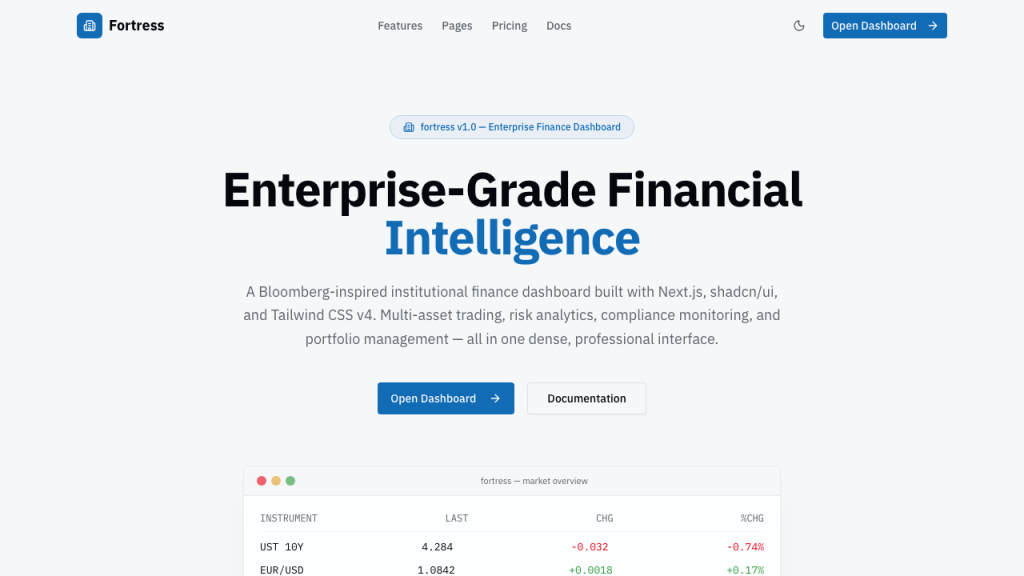
- Best for institutional trading: Fortress Dashboard — Bloomberg-inspired, 57+ pages with multi-asset trading views
- Best for investment apps: Vault Dashboard — Robinhood-style portfolio management with clean minimal design
- Best free React components: Tremor — 35+ accessible chart and dashboard components by Vercel
- Best enterprise analytics: Ant Design Pro — Production-ready React framework with financial analysis pages
- Best free full-stack banking: Bank — Complete React + NestJS banking application with 1.4k GitHub stars
1. Fortress Dashboard
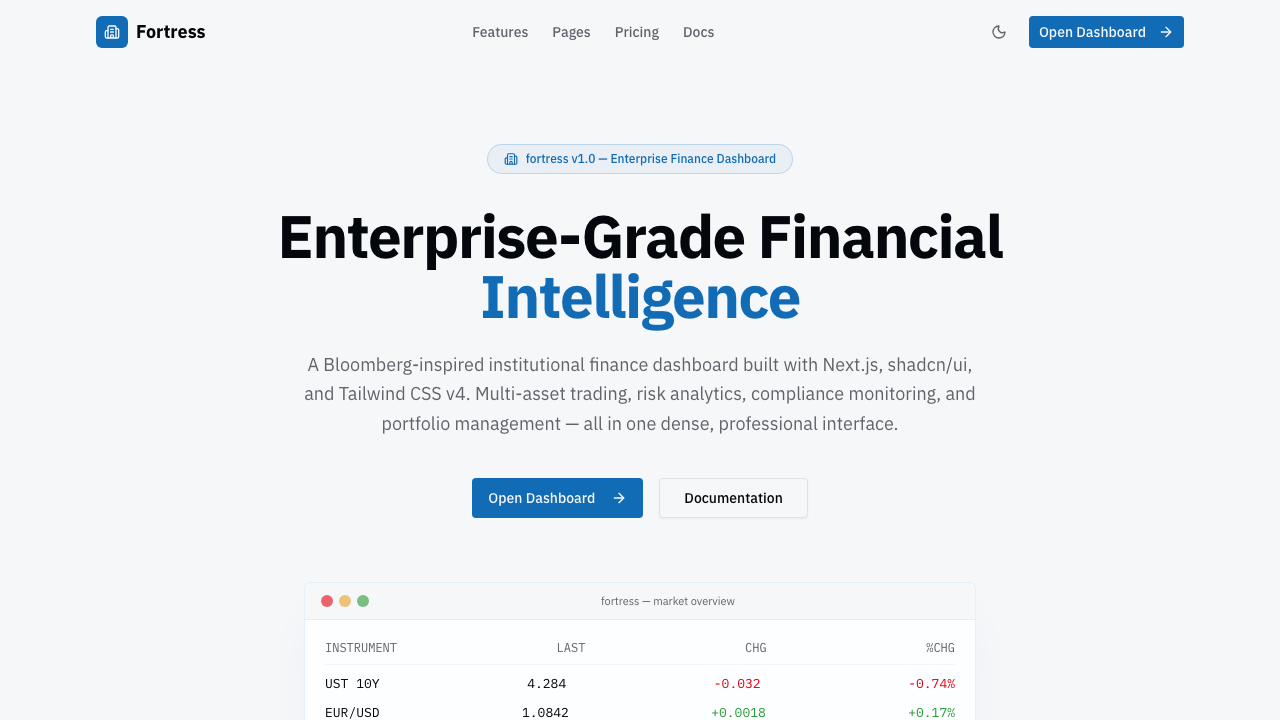
Why we like it: Fortress is the closest thing to a Bloomberg Terminal you’ll find in a Next.js template. The data density is impressive — market overview tables, multi-asset portfolio views, risk analytics, and compliance monitoring screens are all included across 57+ pages.
Built for institutional finance teams, Fortress packs Bloomberg-inspired layouts into a modern stack. You get multi-asset trading views with real-time data grids, risk analytics dashboards with heatmaps and correlation matrices, and a compliance monitoring section that covers regulatory reporting patterns.
The template ships with both light and dark themes, responsive layouts down to tablet, and TypeScript throughout. The shadcn/ui components mean every element is accessible and customizable without fighting a proprietary design system.
2. Vault Dashboard
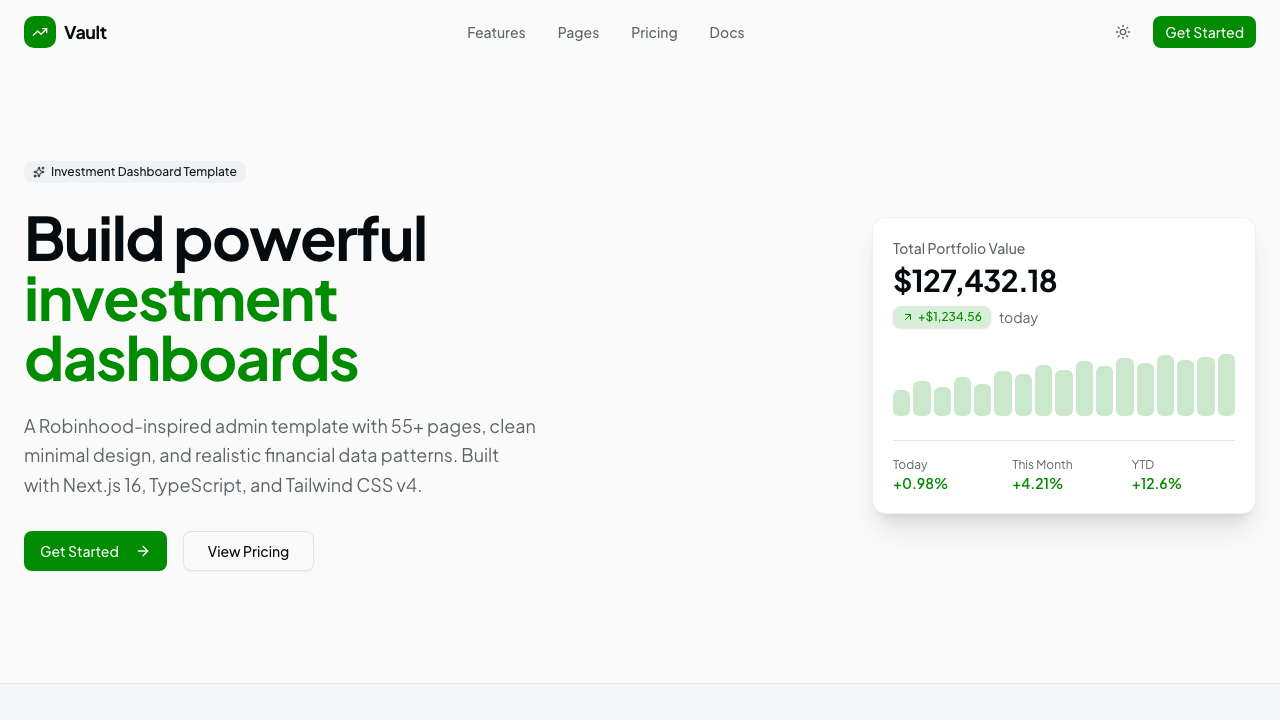
Why we like it: Where Fortress is dense and data-heavy, Vault goes the opposite direction with a Robinhood-inspired clean, minimal aesthetic. The portfolio overview with performance sparklines and the one-click trade interface feel polished enough to ship as-is.
Vault is built for consumer-facing investment platforms — the kind where simplicity builds trust. You get portfolio dashboards with gain/loss visualizations, stock detail pages with candlestick charts, watchlists, and transaction history views. The design language prioritizes white space and clear typography over data density.
Like Fortress, it runs on Next.js 16 with TypeScript, shadcn/ui, and Tailwind CSS v4. The 55+ page count includes onboarding flows, settings screens, and notification centers — all the secondary pages you’ll need for a complete investment app.
3. Tremor
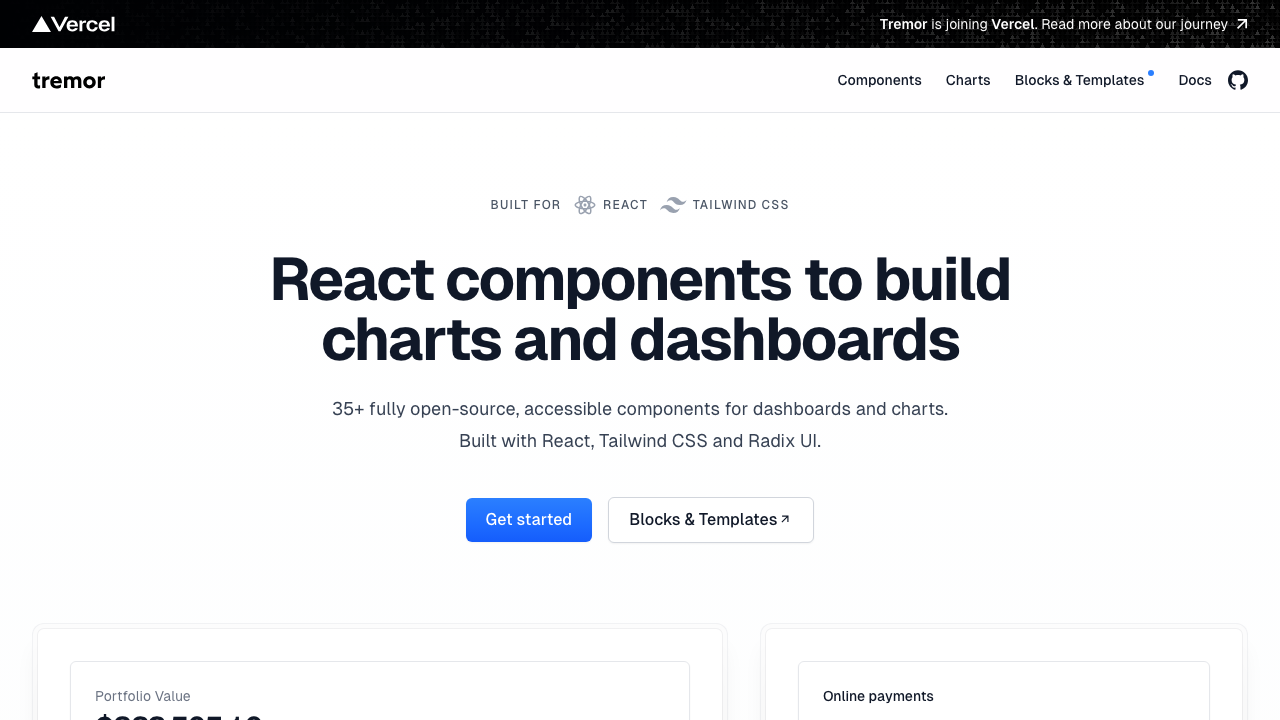
Why we like it: Tremor gives you 35+ accessible, beautifully designed chart and dashboard components that snap together like building blocks. Recently acquired by Vercel, it’s the best open-source option for teams that need to build custom financial UIs without starting from zero.
Unlike full templates, Tremor is a component library — you get bar charts, area charts, KPI cards, tables, and tracker components that you compose into your own layouts. Every component is built on Radix UI for accessibility and styled with Tailwind CSS for easy customization.
The library shines for fintech because the chart components handle large datasets gracefully, support real-time updates, and include built-in number formatting for currencies and percentages. The documentation includes financial dashboard examples you can copy directly.
4. Ant Design Pro
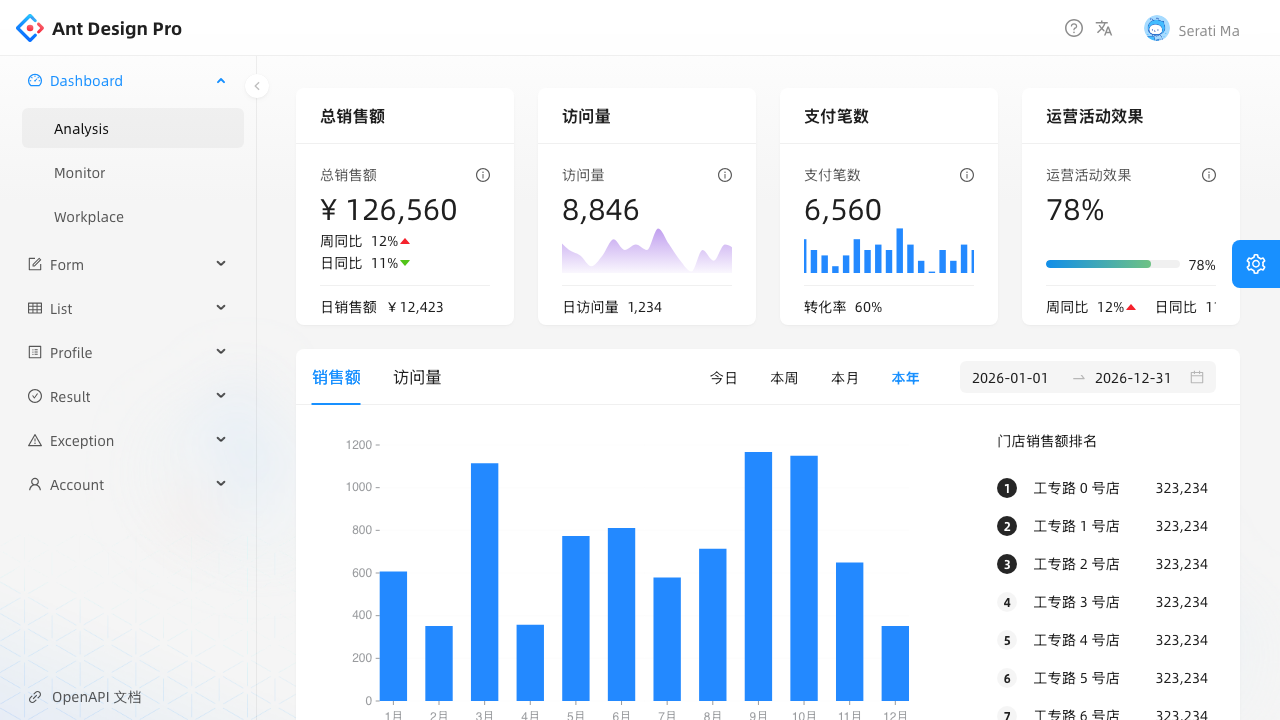
Why we like it: With 37k+ GitHub stars, Ant Design Pro is the most battle-tested enterprise dashboard framework available. The Analysis dashboard page is purpose-built for financial data — sales metrics, payment breakdowns, and revenue trend visualizations come ready out of the box.
Ant Design Pro goes well beyond a template — it’s a full production framework with authentication, internationalization, permission management, and a mock data system. The Analysis and Monitor dashboard pages demonstrate exactly the kind of dense, data-rich layouts fintech applications need.
The charting is powered by AntV, Ant Group’s visualization library used internally at one of the world’s largest fintech companies (Alipay). That means the charts handle edge cases — extreme values, missing data points, responsive resizing — that simpler charting libraries struggle with.
5. TailAdmin
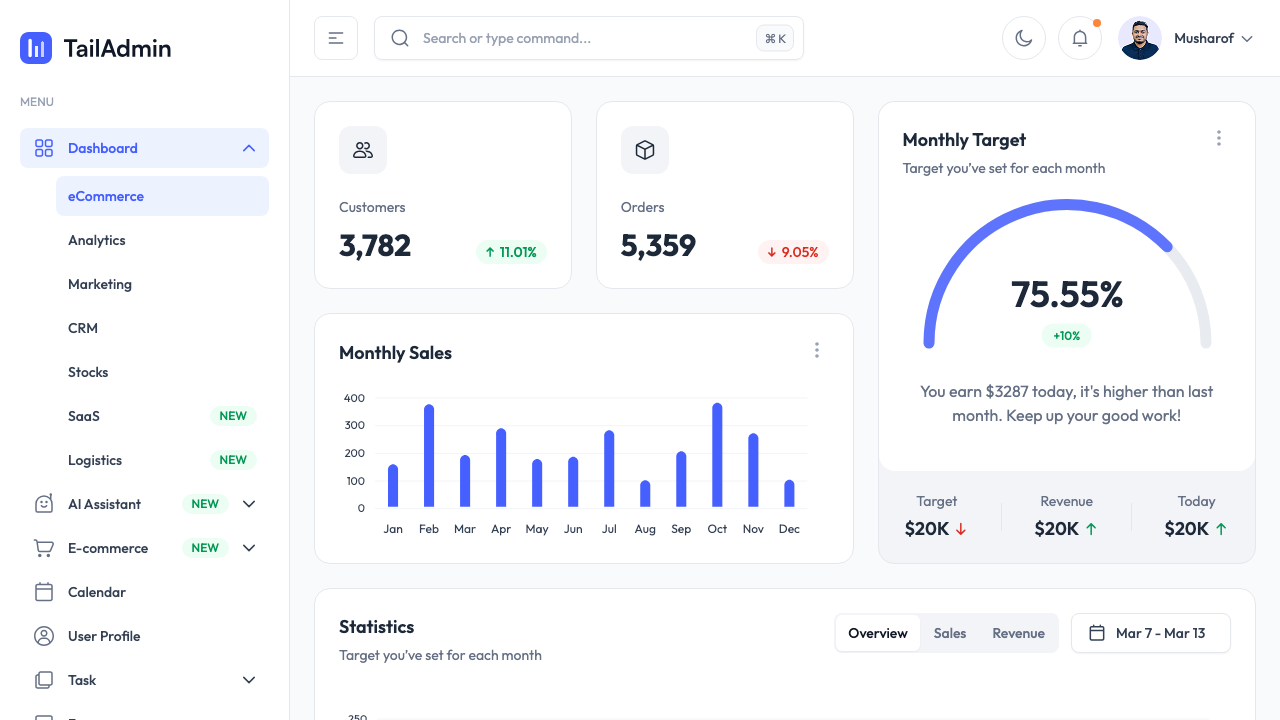
Why we like it: TailAdmin’s free tier is remarkably complete — eCommerce analytics, revenue tracking, and a stocks widget are all included. The Tailwind-first approach means the financial widgets integrate seamlessly into any existing Next.js project.
TailAdmin is a general-purpose admin dashboard, but its eCommerce and analytics pages work surprisingly well for fintech. The revenue charts, customer metrics, and order tracking patterns translate directly to payment processing, subscription management, and transaction monitoring use cases.
The free version includes 200+ UI components, 8 dashboard pages, dark mode, and the full Tailwind CSS source. The Stocks section (visible in the sidebar) provides real stock-style widgets with price charts and market data layouts. With 2,300+ GitHub stars and active development, it’s a safe long-term bet.
6. Horizon UI
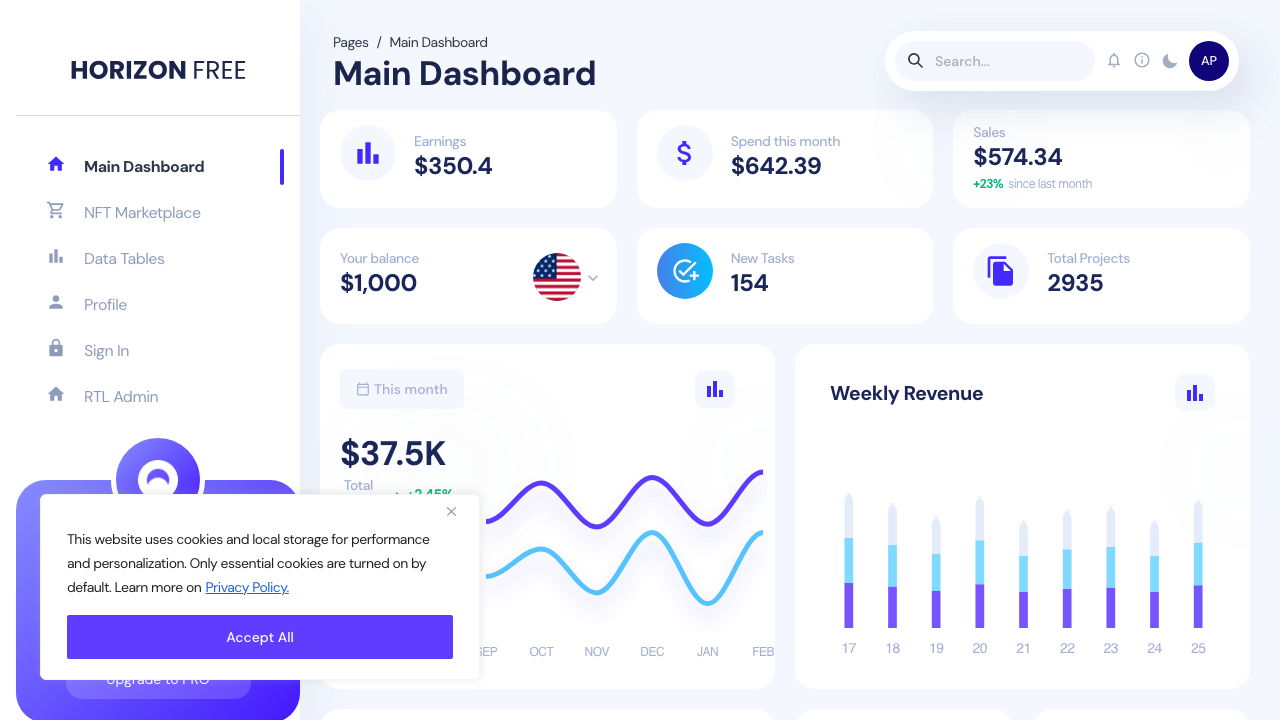
Why we like it: The main dashboard packs earnings, spending, sales, and revenue widgets into a single view with excellent visual hierarchy. Horizon UI’s Chakra foundation makes it fast to customize for any financial brand identity.
Horizon UI ships with a polished main dashboard that includes earnings tracking, weekly revenue charts, balance displays, and task management — a layout that maps well onto personal finance apps, payment dashboards, and fintech admin panels. The component library includes 70+ elements across 15+ sections.
The Chakra UI foundation provides built-in dark mode, responsive design, and accessibility. With 2,800+ stars on GitHub, an active community, and both JavaScript and TypeScript versions available, Horizon UI is a solid foundation for fintech prototypes that need to look production-ready from day one. For more general-purpose options, see our list of free admin dashboards.
7. Berry Dashboard
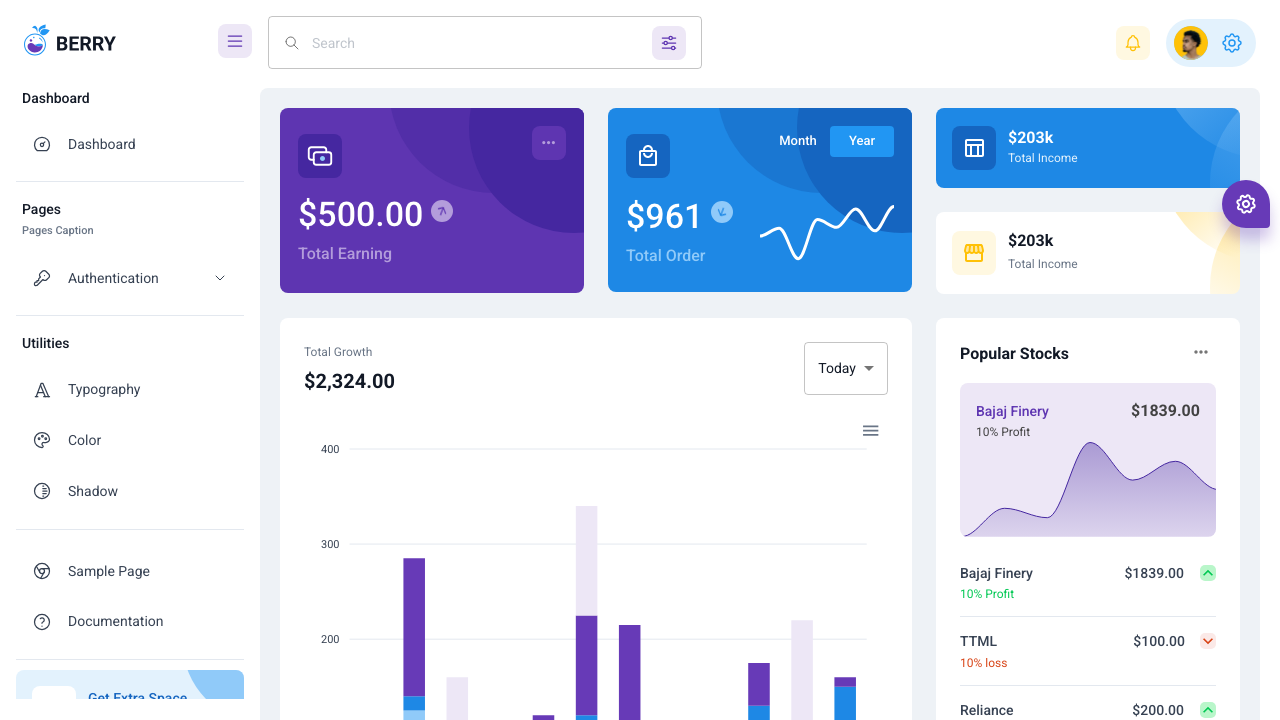
Why we like it: Berry’s free dashboard includes a “Popular Stocks” widget with live price cards, profit/loss indicators, and sparkline charts — it’s the most finance-ready free MUI template we found.
Berry stands out among free React dashboards because its default layout already includes financial elements. The earnings cards, revenue growth charts, and stock market widgets aren’t add-ons — they’re the primary dashboard content. This makes Berry a natural fit for fintech applications where financial KPIs are the core view.
Built on the latest Material UI v7 and React 19 with Vite for fast development, Berry includes authentication flows, Redux state management, and clean code architecture. The 2,100+ GitHub stars and CodedThemes’ long track record make it a reliable choice for production fintech projects.
8. SRTdash
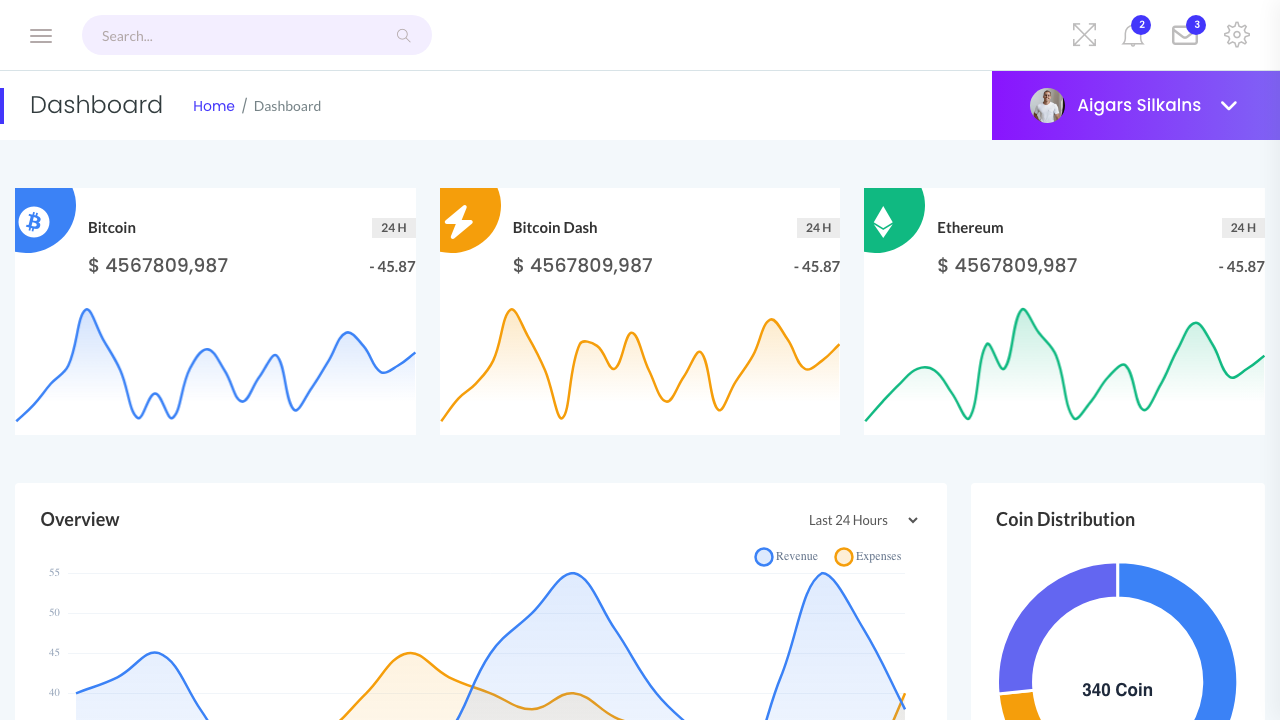
Why we like it: SRTdash is purpose-built for crypto — Bitcoin, Ethereum, and altcoin price cards with 24h sparklines, a coin distribution chart, and revenue/expense tracking come ready to go. It’s the fastest path to a crypto dashboard MVP.
Built by Colorlib, SRTdash is an HTML template specifically designed for cryptocurrency and ICO tracking. The dashboard features real-time coin price cards (BTC, ETH, DASH), portfolio overview charts, coin distribution visualizations, and a clean data table for transaction history.
The Bootstrap 5 foundation means it works everywhere, and the Chart.js integration keeps the bundle size small. SRTdash includes two dashboard variants — a crypto overview and an eCommerce version — so you can pick the layout closest to your use case and customize from there.
9. Bank
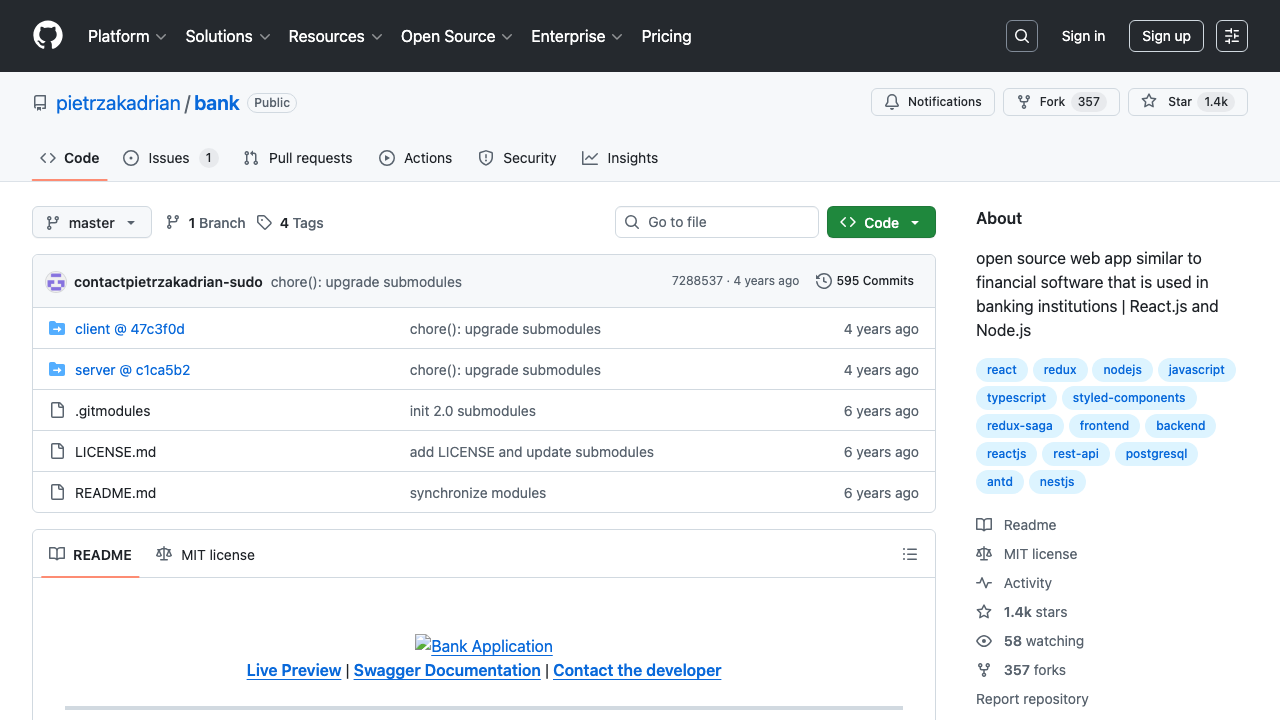
Why we like it: This isn’t just a dashboard template — it’s a complete banking application with real business logic. Double-entry bookkeeping, multi-currency support, and transactional integrity are built into the backend, not just mocked in the UI.
Bank by Adrian Pietrzak is a full-stack open-source banking application that goes far beyond typical dashboard templates. The React frontend handles account management, fund transfers, transaction history, and user settings, while the NestJS backend implements proper banking logic with PostgreSQL.
With 1.4k GitHub stars, 357 forks, and 595 commits, this is a mature project. The monorepo structure separates client and server cleanly, uses TypeGraphQL for the API layer, and includes features like JWT authentication, styled-components, and Redux-Saga for state management. If you’re building a neobank or banking prototype, this is your starting point.
10. Vue Crypto Dashboard
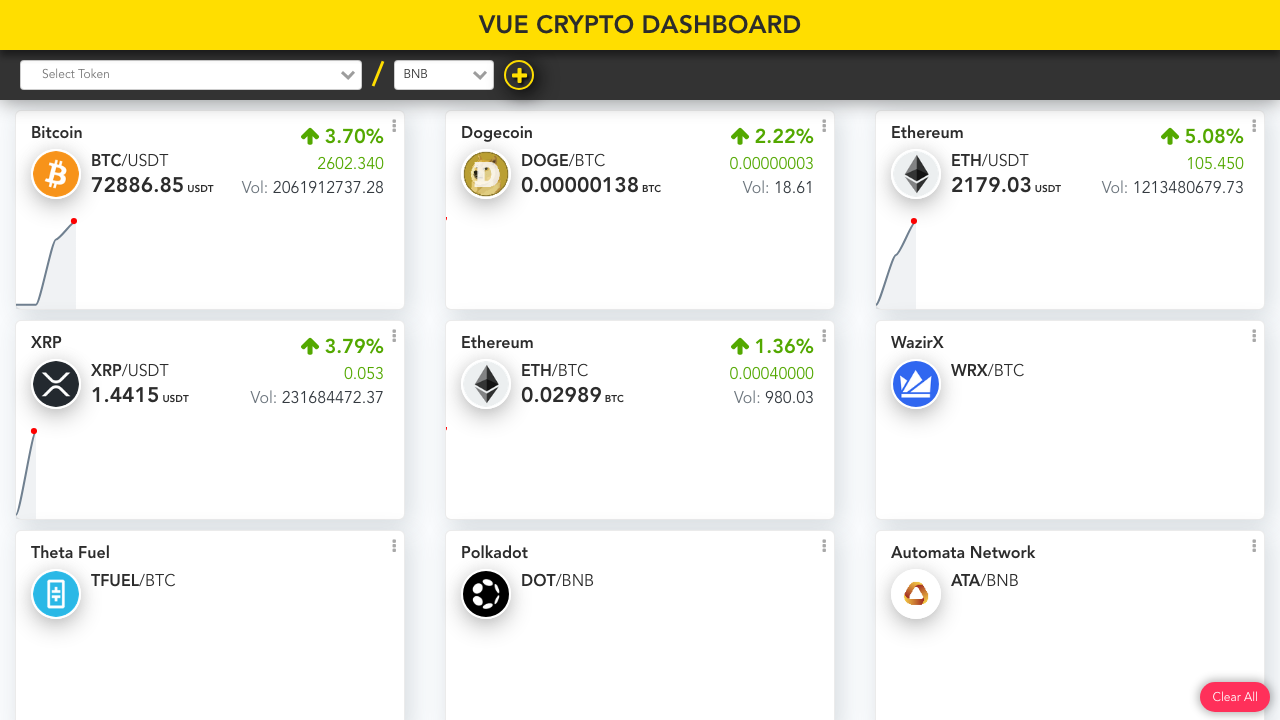
Why we like it: Unlike most crypto dashboards that use static mock data, Vue Crypto Dashboard connects to the Binance WebSocket API for real-time price updates. The live trading pairs, volume data, and sparkline charts make it a genuine monitoring tool, not just a template.
This Vue-based dashboard pulls live cryptocurrency data from Binance, displaying real-time prices, 24-hour change percentages, and trading volumes for multiple coin pairs. The amCharts integration produces rich, interactive SVG visualizations that handle streaming data smoothly.
The dashboard supports adding custom trading pairs, switching base currencies, and features a clean card-based layout for monitoring multiple assets simultaneously. For Vue developers building crypto exchanges, portfolio trackers, or market monitoring tools, this is a practical starting point with real API integration already wired up.
How to Choose a Fintech Dashboard Template
Picking the right template depends on your specific financial use case:
For institutional/enterprise finance: Start with Fortress or Ant Design Pro. Both handle the data density that professional trading and analytics interfaces demand. Fortress gives you finance-specific pages out of the box; Ant Design Pro gives you a more flexible enterprise framework.
For consumer-facing apps: Vault and Horizon UI prioritize clean design and usability over raw data density. Vault is purpose-built for investment apps, while Horizon UI works well as a general fintech foundation.
For crypto/Web3: SRTdash for a quick Bootstrap-based crypto dashboard, or Vue Crypto Dashboard if you need real-time Binance API integration.
For building custom: Tremor is the best component library approach — you get financial-grade chart components without being locked into someone else’s layout decisions.
You Might Also Like


Comments (No Comments)