13 Best Next.js Ecommerce Templates 2026 (Free + Premium)
Looking for a Next.js ecommerce template that ships with App Router, React Server Components, and real Stripe checkout in 2026? These 13 picks span the full range — Vercel’s 14k-star Next.js Commerce reference, premium dark D2C templates like Striker ($79), Sanity-backed NextCommerce ($69), Stripe-native paid SaaS like Your Next Store, and self-hosted full-stack platforms with admin dashboards. Every repository and demo is re-checked before we republish this page.
A 2026-grade Next.js ecommerce template uses the App Router exclusively — Server Components for SEO-friendly product pages, Server Actions for cart and checkout mutations, Suspense and useOptimistic for snappy UI updates, and the Next.js Image component for Core Web Vitals on the green. Pair that with a CMS (Sanity, headless commerce backend, or in-template), a payments processor (Stripe, Lemon Squeezy, Polar, Shopify), and a search layer (Algolia or built-in), and you have a launchable store in days instead of months.
We’ve grouped the 13 picks below into premium Next.js ecommerce templates (Striker, NextCommerce, Your Next Store, CozyCommerce, TheFrontKit) and free / open-source storefronts (Vercel Next.js Commerce, Saleor Storefront, Medusa DTC Starter, Relivator, Shopify + Next.js Starter, GoCart, Singitronic, Flatlogic Ecommerce). All thirteen ship on Next.js App Router or actively maintain App Router branches.
Related reading: React ecommerce templates (broader scope including non-Next.js React options), Next.js admin dashboard templates, Next.js SaaS templates & boilerplates, ecommerce admin dashboard templates, and shadcn/ui e-commerce admin templates roundups.
Quick Picks
- Best free overall: Vercel Next.js Commerce — 14k+ stars, App Router + Server Components + multi-platform adapters
- Best premium D2C: Striker — $79 lifetime, Next.js 16 + Tailwind v4, dark/sleek for sports / streetwear / fashion brands
- Best multi-channel headless: Saleor Storefront — Next.js 16 + React 19, GraphQL, multi-region + multi-currency from one codebase
- Best Sanity-backed premium: NextCommerce — $69-99 lifetime, Next.js 16 + Sanity CMS + Stripe + Algolia + NextAuth
- Best Stripe-native SaaS commerce: Your Next Store — $30/mo, AI Builder, MCP server for AI agents, 100/100 Lighthouse
- Best self-hosted platform: Medusa DTC Starter — official Medusa monorepo with full commerce backend
- Best modern stack: Relivator — Next.js 15 + React 19 + Tailwind 4 + shadcn/ui + Polar payments + Drizzle
- Best premium full-stack: CozyCommerce — Next.js + Prisma + Stripe + Algolia, 100+ UI components, admin dashboard included
- Best free Shopify storefront: Shopify + Next.js Starter — open-source Storefront API integration with Tailwind, free + paid tiers
- Best multi-vendor: GoCart — 790 stars, marketplace-ready with vendor dashboards and admin commission tracking
- Best electronics niche: Singitronic — 626 stars, Next.js + Node + MySQL + Prisma, full admin panel with CSV bulk upload
- Best premium business kit: TheFrontKit Ecommerce — 31 pre-built screens, WCAG-AA accessibility, agency license available
- Best free with backend included: Flatlogic Ecommerce — was $119, now free; Next.js SSR + Node.js + PostgreSQL + Stripe with admin panel
1. Vercel Next.js Commerce
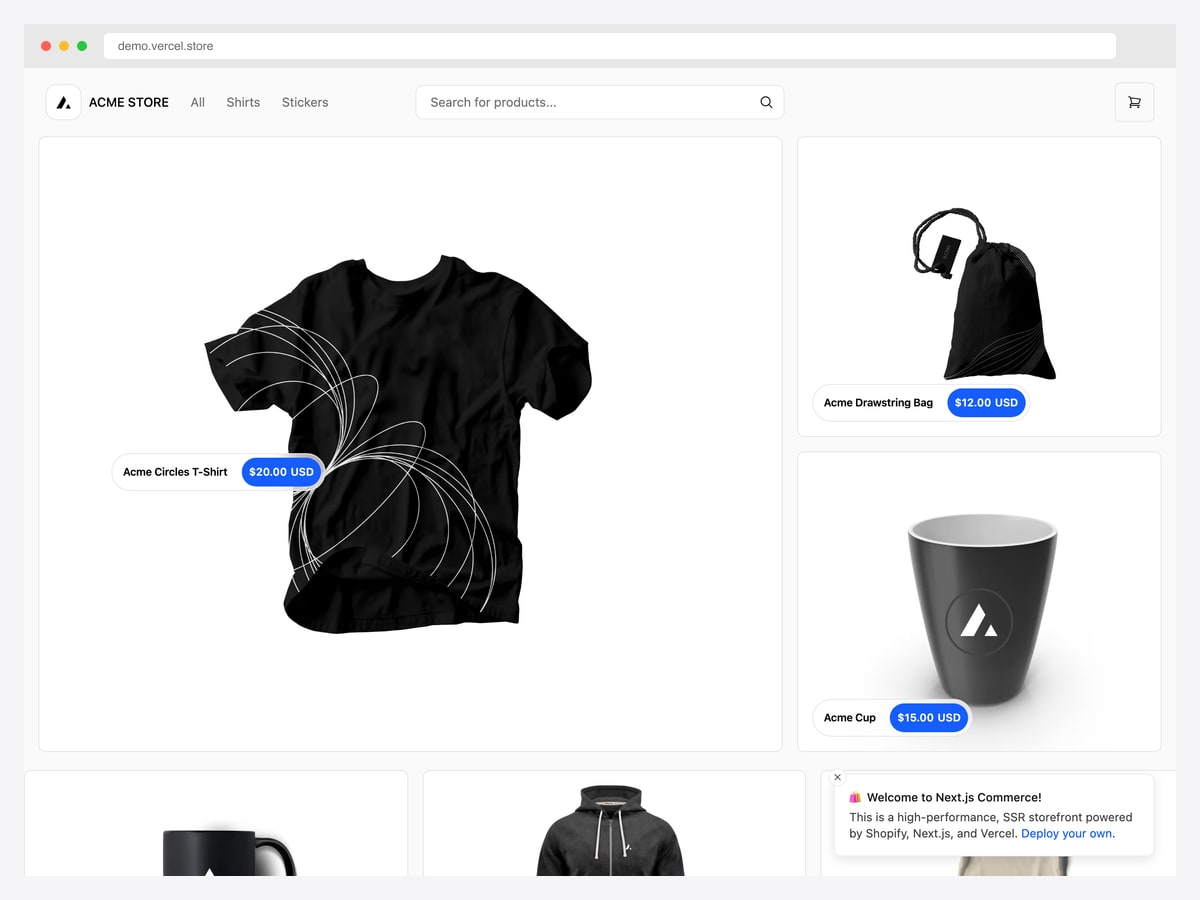
Why we like it: Vercel’s official Next.js Commerce — the canonical reference for modern App Router ecommerce. Server Components, Server Actions, Suspense, and useOptimistic in production-grade patterns you can read line by line. Provider adapters for Shopify (actively maintained), BigCommerce, Saleor, Medusa, and 8+ others via community ports.
The Shopify adapter is the most production-tested — if you’re backing the store with Shopify, no other Next.js template comes close on integration depth. One-click Vercel deploy via the README. Best free pick when you need the official-grade reference and will commit to its provider architecture.
2. Striker (by Ogresto)
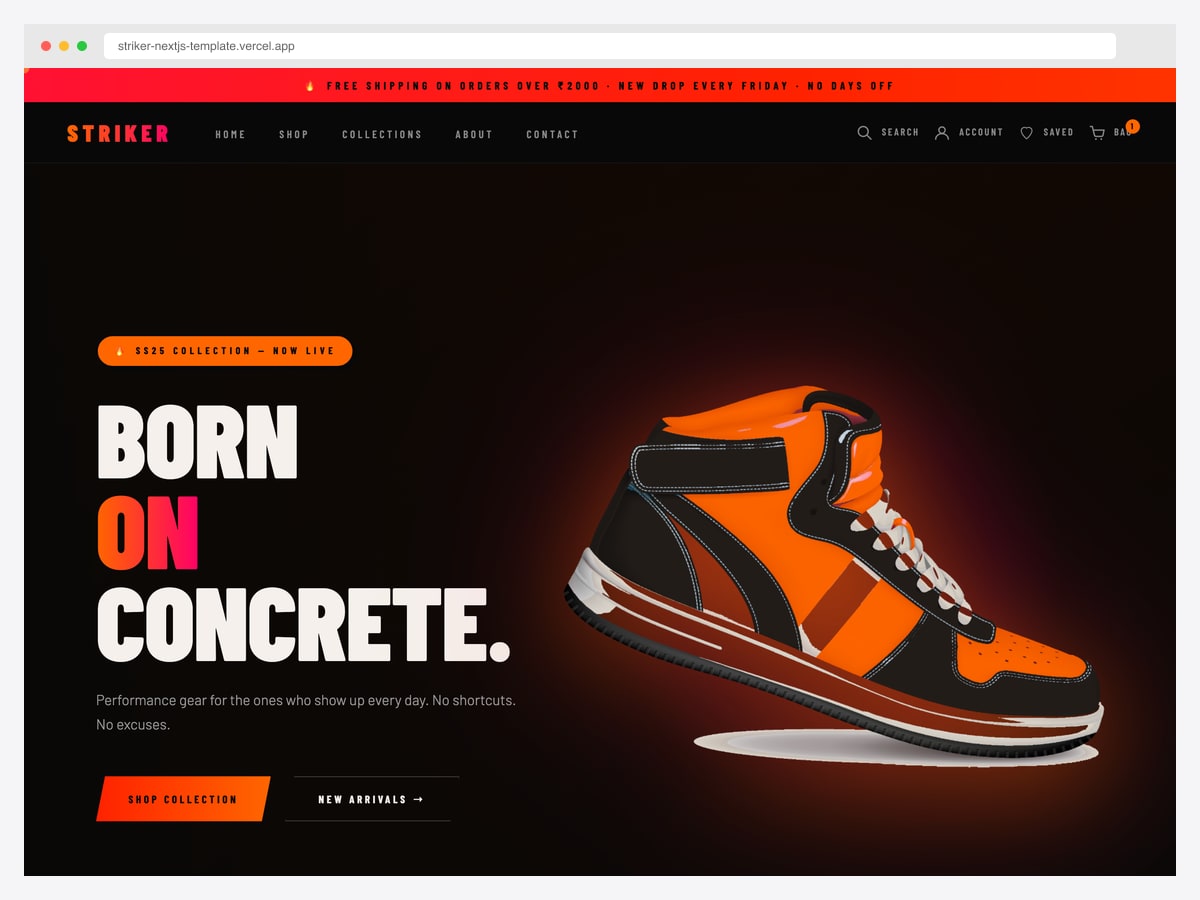
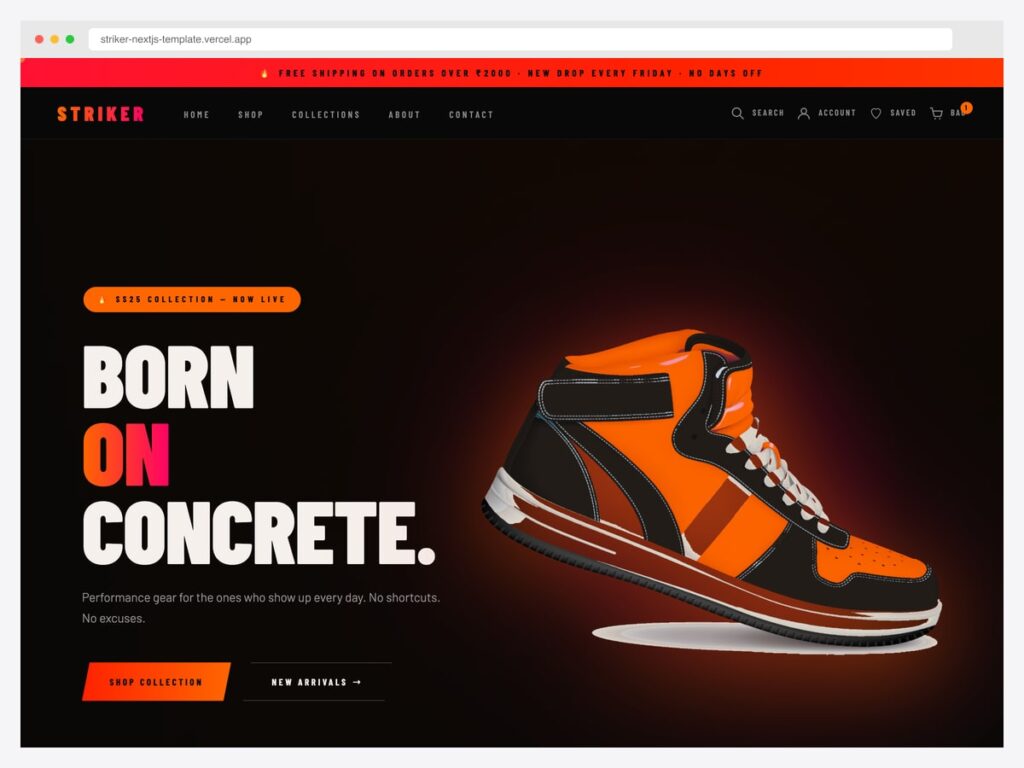
Why we like it: A premium dark Next.js ecommerce template built for “brands that want a bold, high-energy online presence — not another pale, minimalist storefront that looks identical to every other store.” Built on Next.js 16 App Router with TypeScript throughout and Tailwind CSS v4. 10+ production-ready pages: homepage, collection, product detail, cart, wishlist, account dashboard, search overlay, about, contact.
Best fit for sports brands, streetwear, fashion, fitness, electronics, and lifestyle D2C businesses where visual differentiation matters more than minimalist polish. The decoupled data layer is the production-grade detail that separates Striker from cheaper ThemeForest templates that hardcode demo data throughout.
3. Saleor Storefront
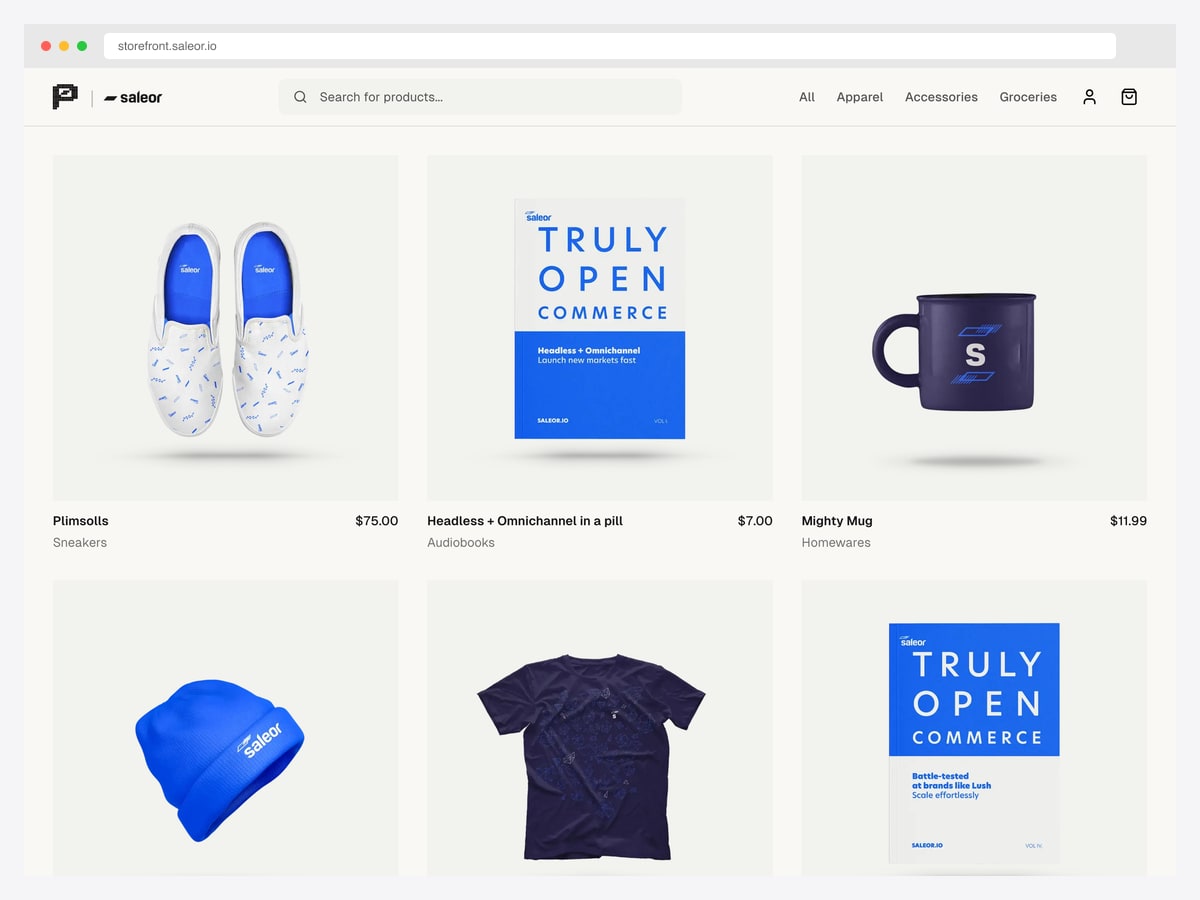
Why we like it: “A minimal, production-ready storefront template for Saleor” — one of the few free options shipping Next.js 16 + React 19 from day one. Multi-step checkout with guest and authenticated flows, multi-channel / multi-currency from a single codebase, complex variant selection, built-in accessibility, and a Cache Components architecture for performance. AI-ready codebase with documentation for agent integration.
Functional Source License (FSL-1.1-ALv2) — converts to Apache 2.0 after two years. Production-grade for sites that need true multi-channel commerce (one catalog across several brands or regions). Pair with the Saleor backend for an end-to-end open-source GraphQL commerce stack.
4. NextCommerce (Sanity-backed)
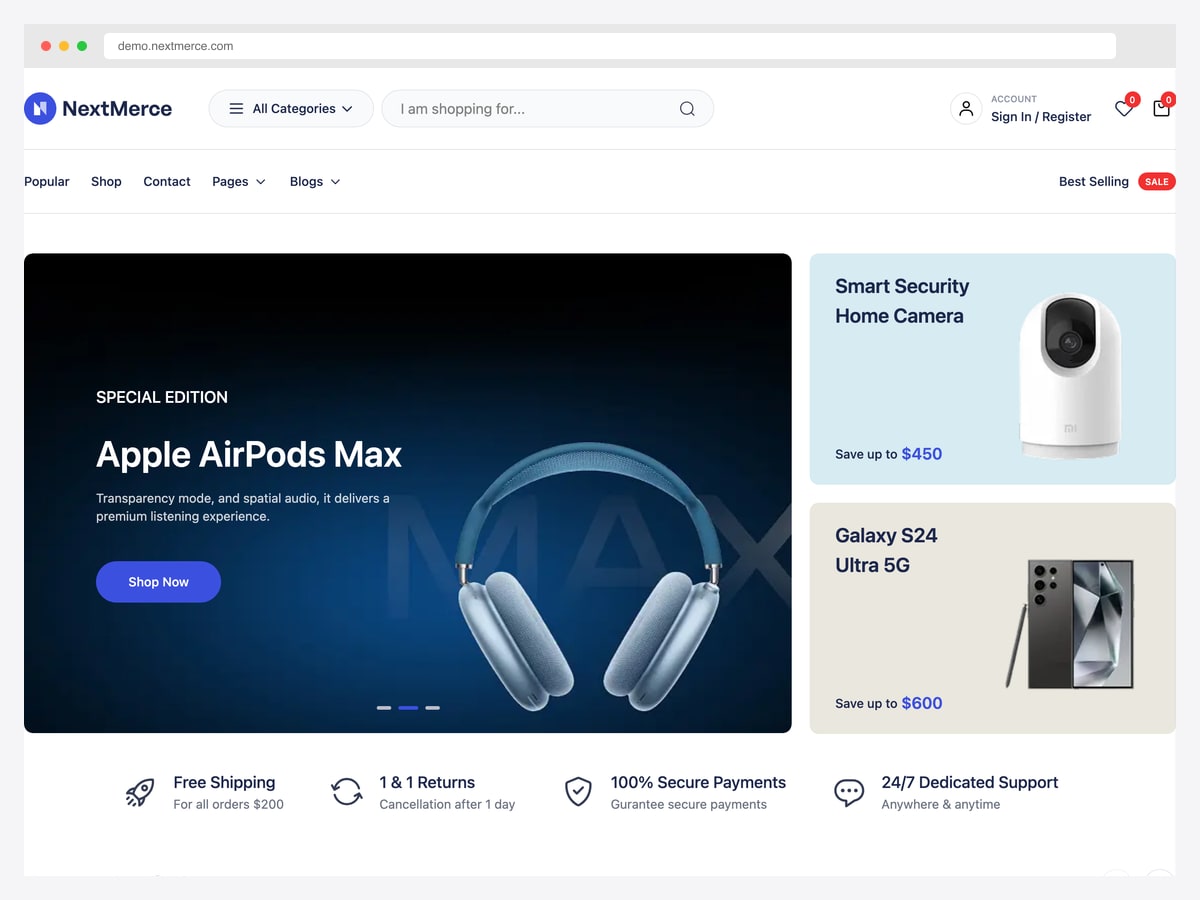
Why we like it: All-in-one ecommerce platform built on Next.js 16 and Sanity CMS — best when you want non-technical content management for both products and editorial content (blog, lookbooks, brand stories). Pre-integrated Stripe payments, Algolia search, NextAuth authentication. Server-side rendering and static generation for lightning-fast load times and SEO. Lifetime free updates.
$69 for one project or $99 for four commercial projects makes this the cheapest premium Next.js ecommerce kit that includes a CMS. The Sanity integration is the differentiator — content editors get a real CMS UI (rather than editing JSON or MDX files) while developers keep full code control over the storefront. Best for brands that publish a lot of editorial content alongside their store.
5. Your Next Store (YNS)
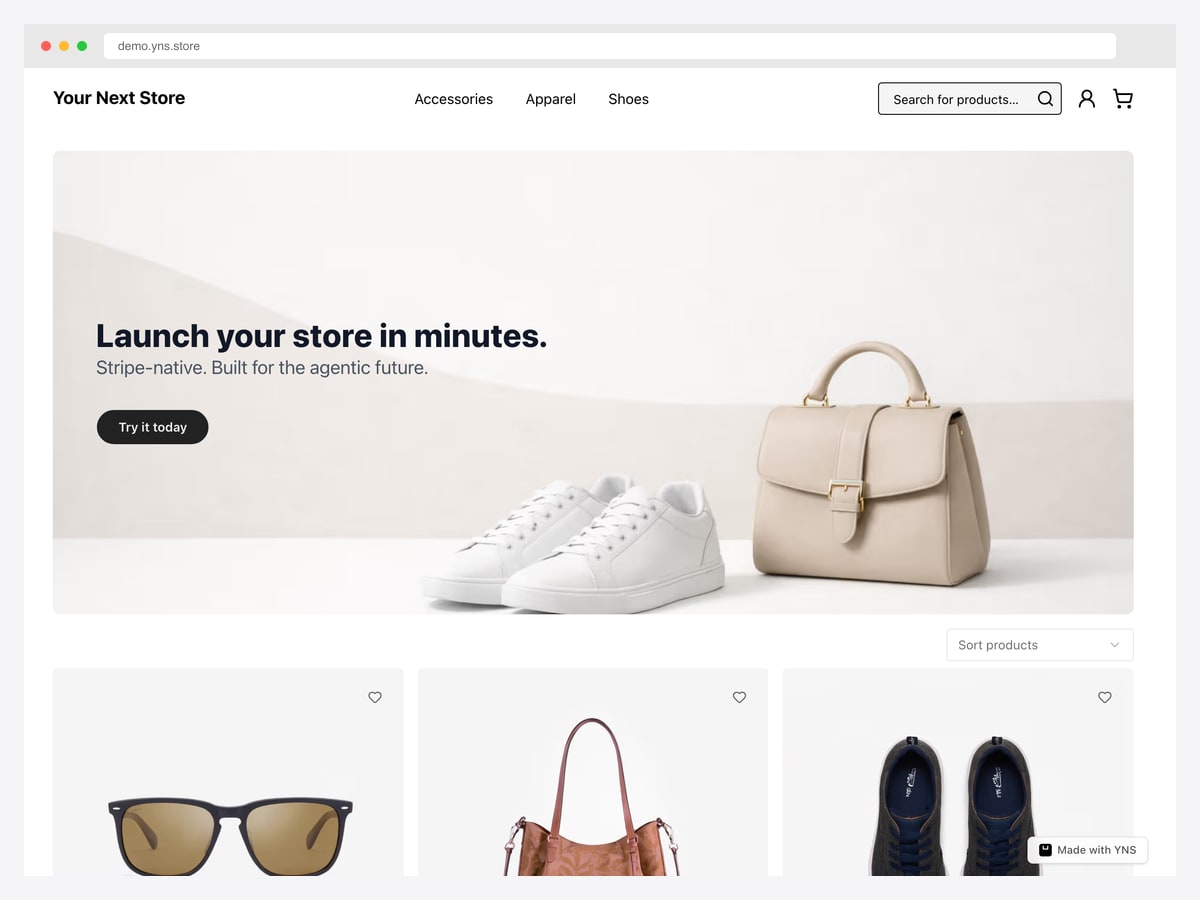
Why we like it: “A Commerce Operating System built for the agentic future.” Describe your store in plain English and the AI Builder generates a working storefront with products, cart, and checkout. MCP Server integration exposes commerce primitives to AI agents (Claude, Cursor, custom agents). Stripe-native checkout with cards, wallets, BNPL, tax, and fraud protection. 100/100 Lighthouse scores out of the box. No platform transaction fees — you pay only Stripe’s standard processing rates.
The MCP server feature differentiates YNS from every other Next.js commerce option — Claude or Cursor can read your product catalog, update inventory, and create draft orders via natural language. DirectCart™ converts direct messages into sales — unique for creator commerce. Pick YNS over self-hosted templates when you don’t want to manage infrastructure, and over Shopify when you want Next.js-grade performance and developer ergonomics.
6. Medusa DTC Starter
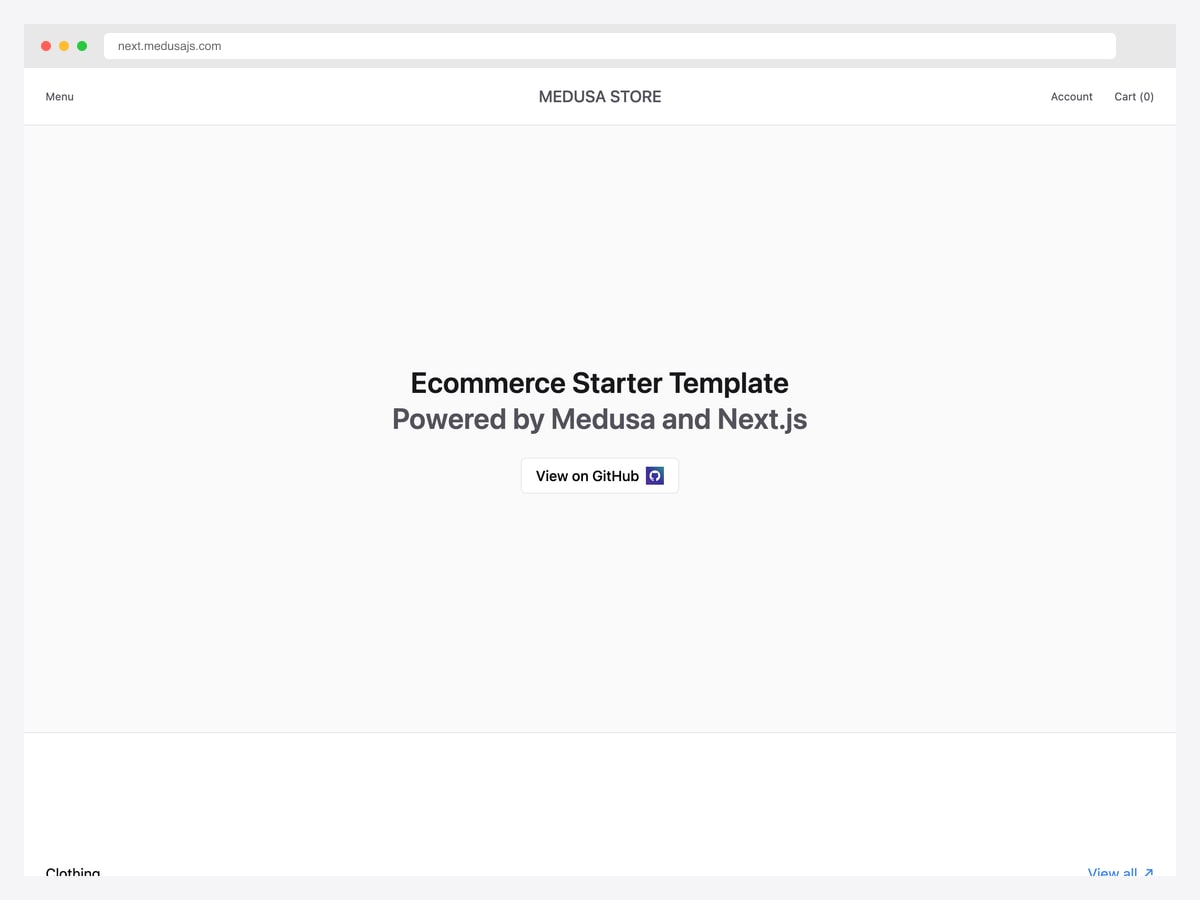
Why we like it: Official Medusa Next.js storefront — the recommended successor to the deprecated nextjs-starter-medusa repo. Includes Medusa’s full commerce features: multi-region support, product catalog with variants, cart, multi-step checkout, customer accounts, and order management. Monorepo structure with the Medusa backend and Next.js storefront in one codebase.
Medusa is the leading open-source headless commerce platform — think “Shopify for self-hosted.” You own every line of code, every database row, and every API endpoint. Setup is more involved than Vercel Commerce — requires running the Medusa backend on Node + PostgreSQL, often via Medusa Cloud. Best when you need custom pricing logic, complex inventory, or B2B workflows that Shopify doesn’t support without expensive Plus tiers.
7. Relivator
Why we like it: A modern free stack in one repo — Next.js 15.3, React 19.1, TypeScript 5.8, Tailwind 4.1. Better Auth for authentication, Polar for subscription / one-time payments with customer portal, Drizzle ORM on Neon PostgreSQL, and shadcn/ui throughout. Polar’s merchant-of-record model handles tax / VAT compliance for you. AI-ready for Cursor and Claude Code.
v1.4.5 released May 2025 with 29 releases total; the last commit was in October 2025, so it is now a major Next.js version behind. The Polar payments choice (rather than Stripe) is unusual and worth highlighting: lower fees, built-in tax handling, simpler subscription models. Best pick when you’re starting a new ecommerce project today and want every dependency on the latest major version.
8. CozyCommerce
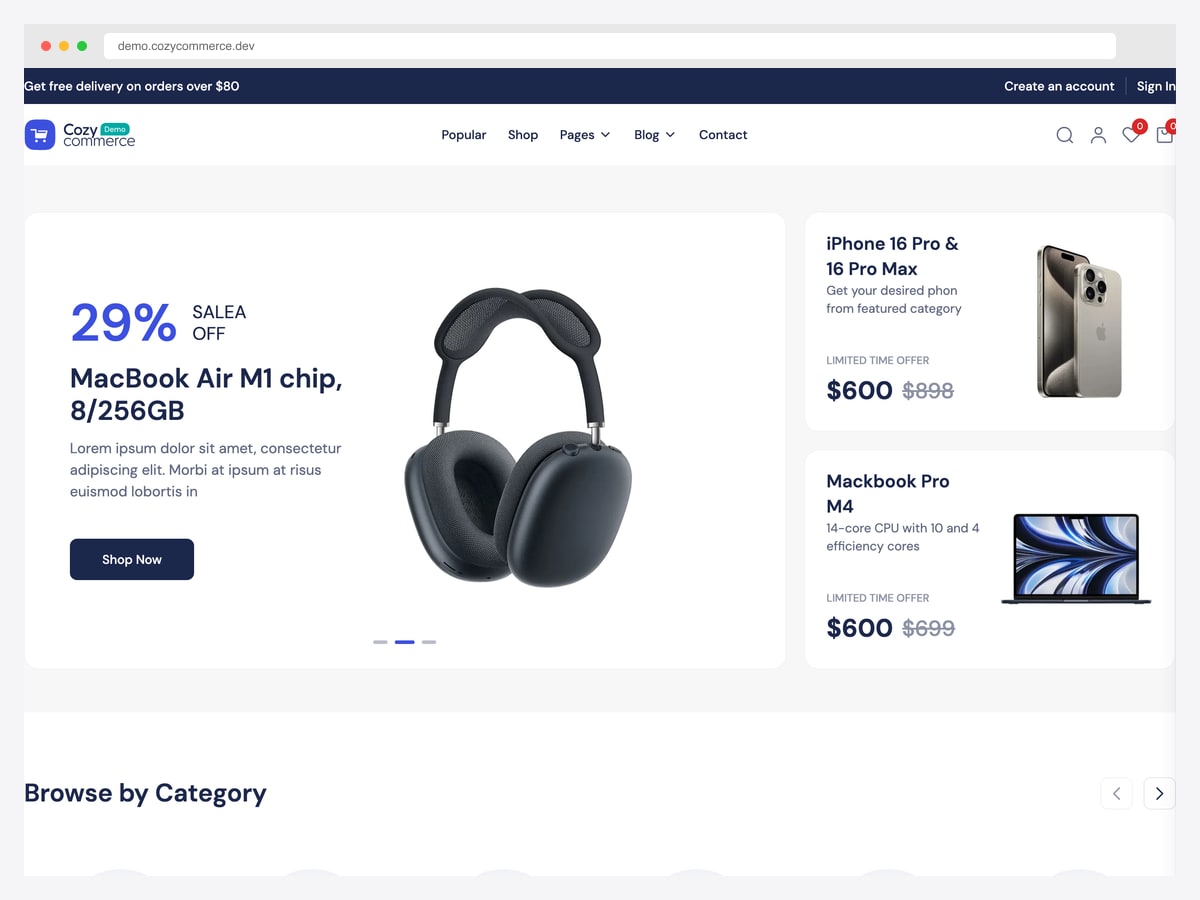
Why we like it: “Complete Next.js eCommerce Solution” — frontend storefront, admin dashboard, and backend APIs in a single codebase. Built-in CMS for managing products, categories, and blog without external platforms. 100+ UI components, 20+ pre-built pages, pre-integrated Stripe / Algolia / NextAuth. One-click deployment to Vercel, Netlify, or Railway. Lifetime free updates.
Best premium pick when you want a self-hosted store with admin panel but don’t want to assemble it from open-source pieces yourself. Compare against Singitronic (free, fewer pages) and Medusa (free, more flexible backend but you wire the admin yourself). CozyCommerce is the middle path — pay once, get the polished full-stack package with content management included.
9. Shopify + Next.js Starter Template
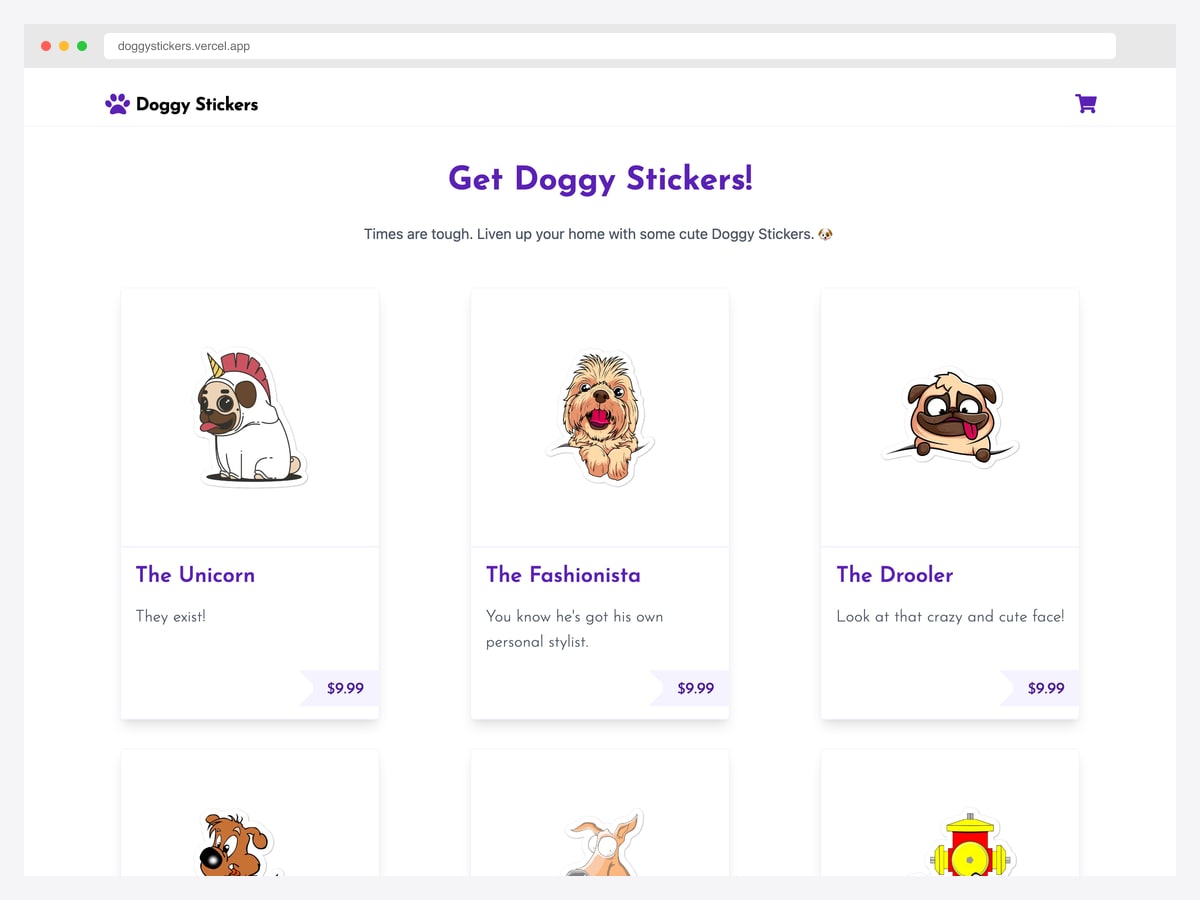
Why we like it: Free open-source Next.js storefront purpose-built for the Shopify Storefront API. Pre-built ecommerce functionality including product listing, product detail pages, cart, and checkout that connect directly to your Shopify catalog. Tailwind CSS styling, responsive design, and a clean integration pattern you can extend. Personal and commercial use rights included.
Pick this over Vercel Commerce (which also supports Shopify) when you want a simpler starting point with less abstraction — the architecture is leaner and easier to modify for stores that don’t need Vercel Commerce’s multi-provider adapter system. Demo at doggystickers.vercel.app shows a working sticker store. The All-Access Pass unlocks the rest of Next.js Templates’ catalog at a steep bulk discount.
10. GoCart
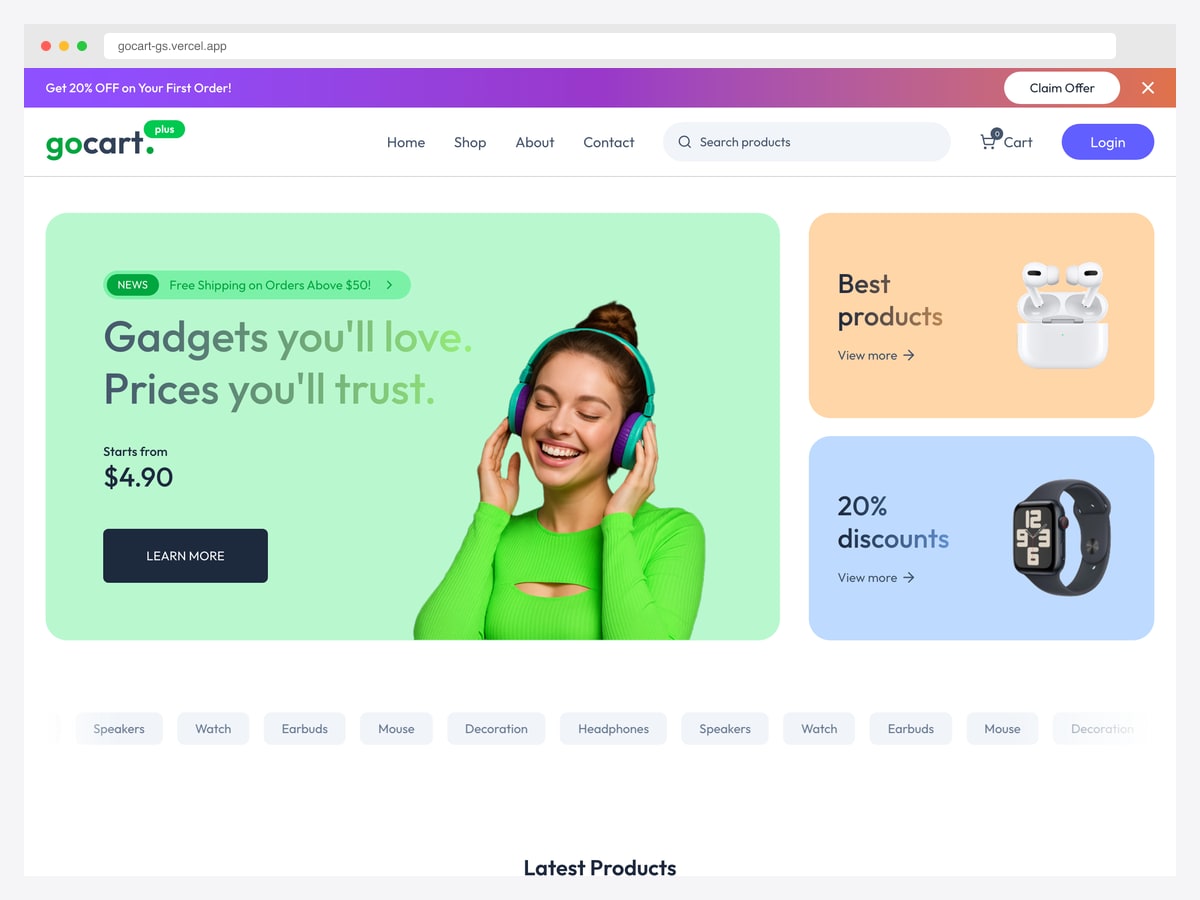
Why we like it: The cleanest free multi-vendor Next.js ecommerce template — most ecommerce templates assume a single seller, GoCart ships with vendor dashboards, multi-seller storefronts, and admin platform oversight including commission tracking. Customer-facing storefront with responsive design, vendor product / sales management, and admin moderation built in.
Multi-vendor marketplaces (Etsy-style craft sites, niche product aggregators, B2B procurement) usually force a custom build or heavy Magento install. GoCart is the only mid-popularity free Next.js option that ships with the multi-vendor pattern wired in. Demo at gocart-gs.vercel.app.
11. Singitronic
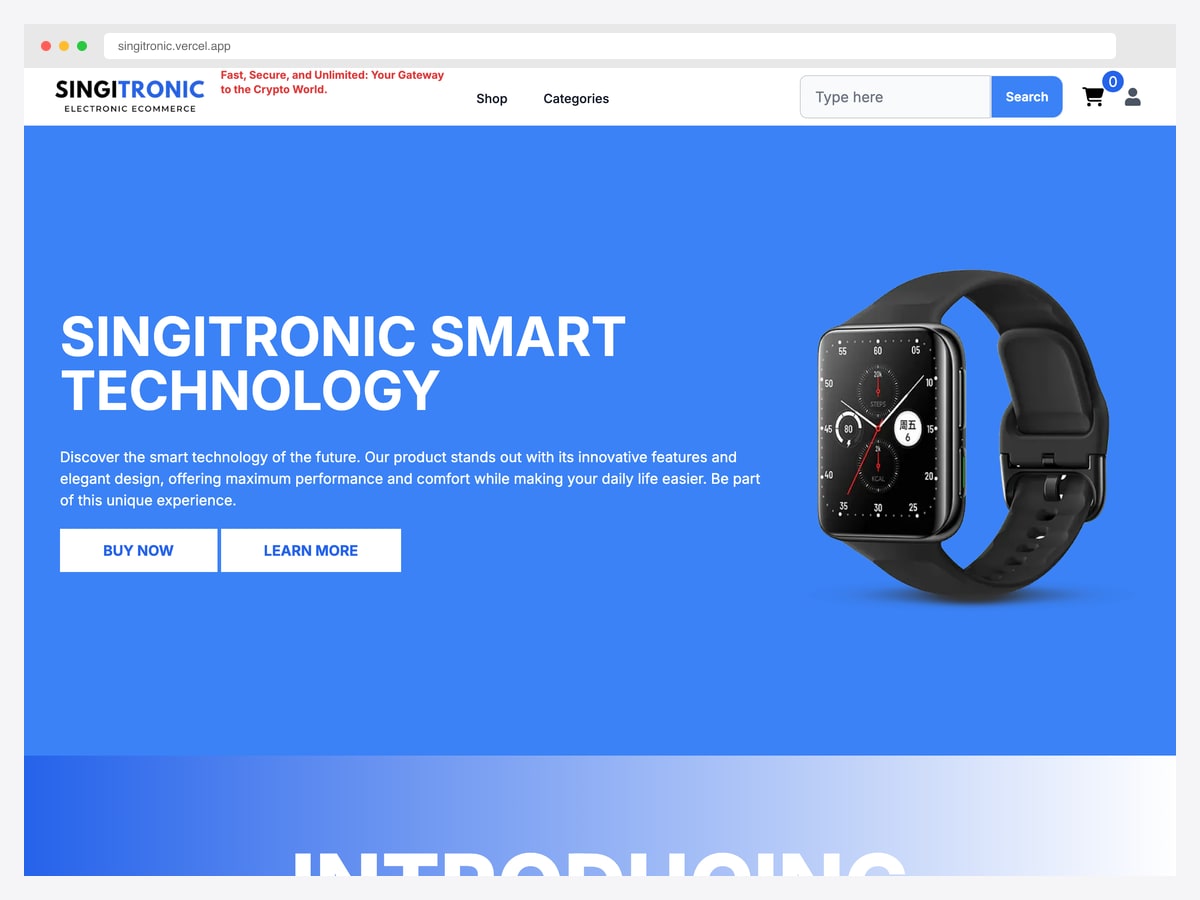
Why we like it: Fully functional admin panel for handling orders, products, categories, and users — most free ecommerce templates ship the storefront and leave the admin to you. Singitronic includes both. Bulk product upload via CSV, complete shopping experience with browse / search / wishlist / cart, user authentication, and well-documented codebase with internal comments. 40 pages of software engineering documentation covering the full development lifecycle.
Branded around electronics retail but the underlying patterns work for any product category. MySQL + Prisma is unusual on this list — most modern Next.js templates default to Postgres. Best for self-hosted stores where MySQL hosting is preferred (legacy infrastructure, lower-cost shared hosting). MIT license, latest commit October 2025.
12. TheFrontKit Ecommerce Starter Kit
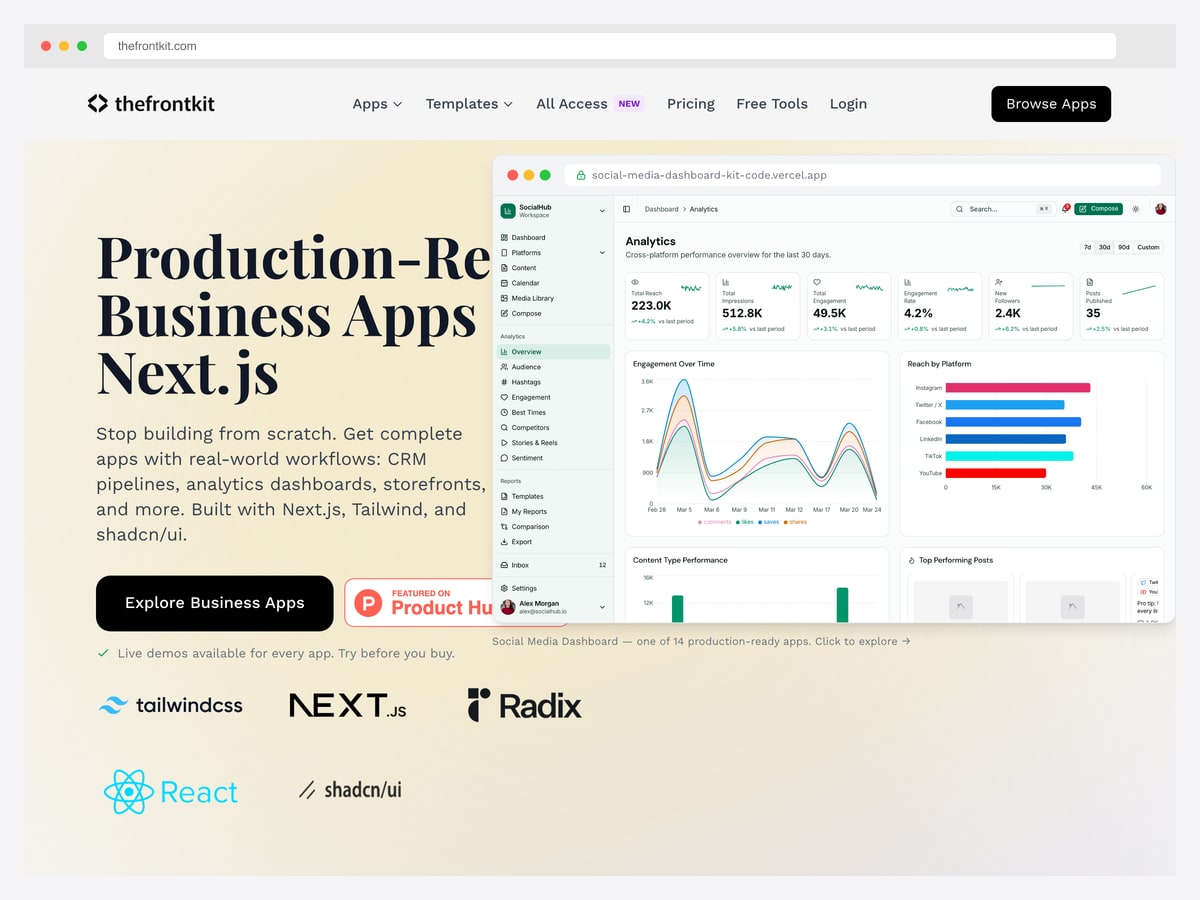
Why we like it: 31 pre-built screens covering the complete shopping experience: homepage with hero and featured products, product listing with filters and sort, product detail with gallery and variants, search results, cart with promo codes, multi-step checkout, order confirmation, wishlist, login, registration, order history, and a full admin dashboard. WCAG-AA accessibility by default with audit documentation.
The accessibility-first positioning is rare in the ecommerce template space — most templates ship without explicit WCAG compliance and require retrofits. Agency plan licensing for client work makes this a strong pick for agencies building stores for clients in regulated industries (healthcare, government, education) where accessibility audits are mandatory.
13. Flatlogic Ecommerce React Template
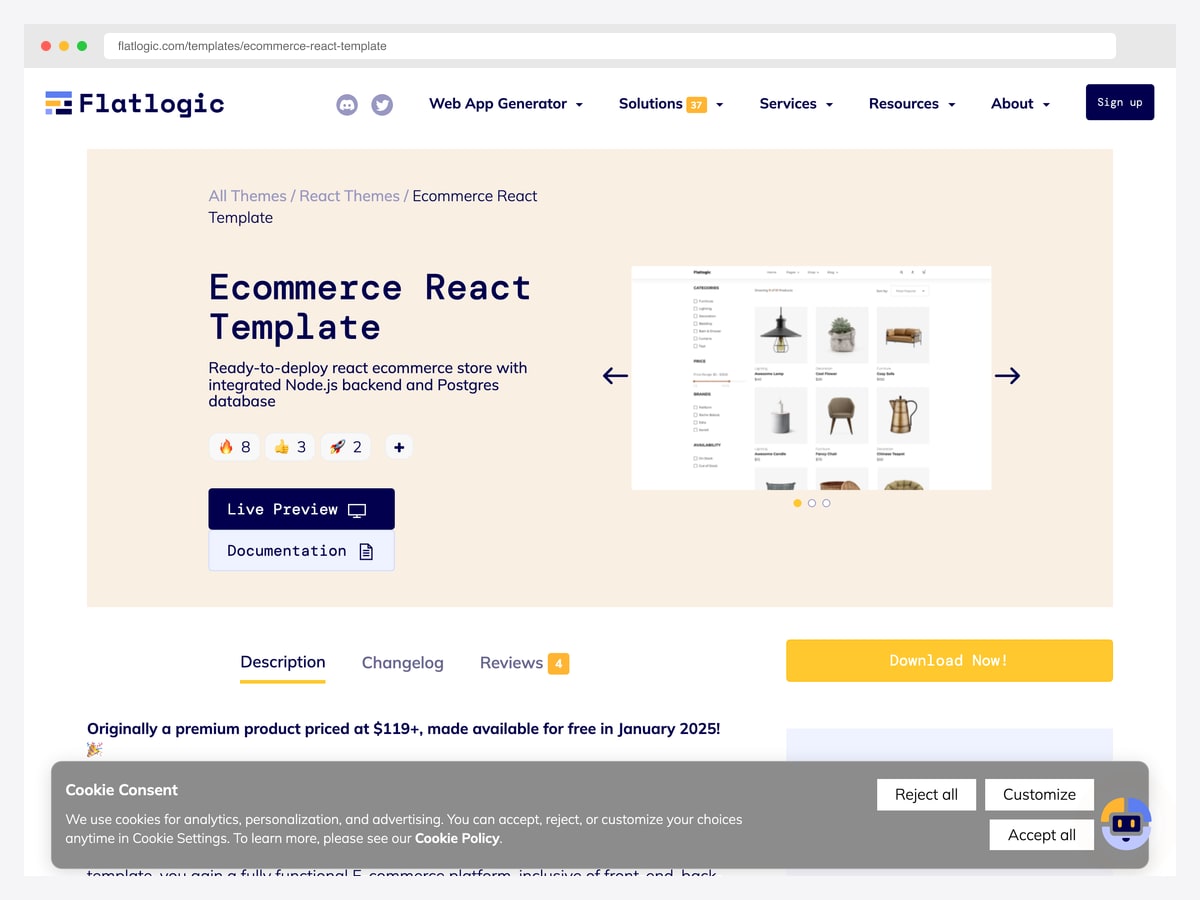
Why we like it: Originally a $119 premium template, Flatlogic made it free in January 2025 — still one of the most complete free Next.js ecommerce starters available. Includes the Next.js SSR frontend, Node.js backend with Sequelize ORM, PostgreSQL database, Stripe payments, products listing with filters, server-side rendering for SEO, blog and CMS modules, user registration, and a working checkout page.
The full-stack inclusion (Next.js + Node + PostgreSQL all wired together) sets this apart from frontend-only ecommerce templates — you can clone, run npm install, and have a working store with admin panel in under an hour. Older React 16 base means you’ll want to bump dependencies before going live, but the architecture is clean enough that the upgrade isn’t difficult.
How to Choose a Next.js Ecommerce Template
The right pick depends on what your store needs from day one:
- Selling on Shopify already? Vercel Next.js Commerce or Shopify + Next.js Starter — both connect natively to the Storefront API.
- Don’t want to manage backend infrastructure? Your Next Store — SaaS commerce OS with Stripe-native checkout and AI agent integrations.
- Bold D2C brand (fashion, sports, streetwear)? Striker — purpose-built for visually distinctive D2C brands at $79 lifetime.
- Need a CMS for editorial content? NextCommerce ($69-99) for Sanity-backed catalogs + blog, or CozyCommerce for built-in CMS.
- Need multi-channel / multi-currency? Saleor Storefront — purpose-built for this with GraphQL.
- Want maximum control with self-hosting? Medusa DTC Starter — you own every line of code and every database row.
- Building a multi-vendor marketplace? GoCart — the only free option with multi-vendor patterns wired in.
- Want React 19 + Tailwind 4 + Polar payments in one repo? Relivator.
- Need WCAG-AA accessibility compliance? TheFrontKit Ecommerce — accessibility audits are first-class.
- Want a free full-stack starter with backend included? Flatlogic Ecommerce or Singitronic.
Next.js Ecommerce Templates FAQ
App Router or Pages Router for a new Next.js ecommerce site in 2026?
App Router exclusively. Every template on this list defaults to App Router. React Server Components let you render product pages server-side for SEO and Core Web Vitals, then hydrate only interactive parts (cart, search). Server Actions handle cart and checkout mutations without exposing API routes. Pages Router still works but the React community has moved on — Pages-only ecommerce templates are not being updated to React 19 / Tailwind v4 / shadcn/ui.
Headless commerce vs. full-stack template — which to pick?
Headless (Vercel Commerce + Shopify, Saleor Storefront + Saleor backend, Medusa DTC Starter + Medusa backend) — best when you have multiple frontends (web + mobile + kiosk) or want full design control. Full-stack templates (CozyCommerce, Singitronic, Flatlogic) — best when you want one codebase that handles everything from storefront to admin. The rule of thumb: if you’ll only ever have one frontend and you can self-host comfortably, full-stack is simpler. If you’ll add mobile apps or content surfaces later, headless scales better.
Why so many “free” templates with paid Pro tiers?
Templates from nextjstemplates.com (Striker, NextCommerce, Shopify + Next.js Starter, Play) and ixartz (Next-js Boilerplate, SaaS-Boilerplate) follow an open-core model — usable free version + paid Pro that unlocks more features, integrations, or pages. The pattern works because: the free version pulls in customers who upgrade later, and even unpaid users contribute issues and feedback that improve the paid version. Pick the free version to validate, upgrade only when a specific feature gap blocks your product launch.
Stripe, Lemon Squeezy, Polar, or Shopify Payments — which processor?
Stripe is the default — supported by every template on this list, lowest fees on volume, cleanest developer experience. Lemon Squeezy and Polar are merchant-of-record options that handle global sales tax / VAT automatically (Polar is what Relivator uses). For US-only single-product stores, Stripe wins. For solo founders selling worldwide, Lemon Squeezy or Polar are easier. Shopify-backed stores use Shopify Payments inside the Shopify checkout — most Next.js templates handle this transparently via the Shopify Storefront API.
Striker $79 vs NextCommerce $69 — which premium under $100?
Striker is purpose-built for D2C brands that want bold visual differentiation — sports, streetwear, fashion. Next.js 16 + Tailwind v4 + decoupled data layer (swap demo data for Shopify, WooCommerce, Medusa). NextCommerce is purpose-built for content-heavy commerce — Sanity CMS for both products and blog content, plus Algolia search and NextAuth. Pick Striker for fashion / lifestyle D2C, NextCommerce for content-heavy commerce (recipe sites, lookbooks, brand storytelling).
How do I handle multi-region / multi-currency?
Saleor Storefront is built for this from the ground up — multi-channel / multi-currency from one codebase via GraphQL. Medusa DTC Starter ships multi-region support out of the box. Vercel Next.js Commerce inherits multi-region capability from its backend adapter (Shopify Markets, BigCommerce Channels, etc.). For single-template solutions (Striker, NextCommerce, CozyCommerce), expect to wire multi-currency yourself — usually a Stripe-side concern with currency display logic in the storefront.
Can I self-host without Vercel?
Yes. Every template on this list deploys to Vercel as the default, but most also run on: Netlify (Vercel Commerce, NextCommerce, GoCart, Singitronic), Railway (CozyCommerce explicitly supports it), Render, DigitalOcean App Platform, AWS Amplify, or a self-hosted Node server via Docker. Saleor Storefront and Medusa DTC Starter both have Docker images in their READMEs. The only template on this list that requires Vercel infrastructure for its full feature set is Your Next Store (which is a managed SaaS, not a self-hosted template).
Realistic timeline from template clone to first paying customer?
Realistic timelines: 1-3 days with Your Next Store SaaS (no code changes, just add products and a domain). 1-2 weeks with Vercel Commerce or Shopify + Next.js Starter if you already have a Shopify catalog. 2-4 weeks with Striker, NextCommerce, or CozyCommerce — installing, configuring Stripe / Sanity / Algolia, swapping demo content for real product data. 4-8 weeks with Medusa DTC Starter or self-hosted templates — backend setup, database migrations, payment configuration, product imports, custom features.
For broader template categories beyond Next.js ecommerce, see our roundups of React ecommerce templates (broader scope including non-Next.js React options), Next.js admin dashboard templates, Next.js SaaS templates & boilerplates, and shadcn/ui e-commerce admin templates.

You Might Also Like