
13 Best React Ecommerce Templates 2026 (Free + Premium)
Looking for a React ecommerce template that ships with real Stripe checkout, working product variants, and an admin panel — not just a styled landing page? These 13 picks cover the full spectrum: Vercel’s 14k-star Commerce reference, Saleor and Medusa headless storefronts, Stripe-native paid SaaS like Your Next Store, and full-stack open-source platforms with admin dashboards. Every repository and demo is re-checked before we republish this page.
A 2026-grade React ecommerce template handles seven load-bearing surfaces: a product catalog with filters and search, product detail pages with variant selection (size / color / SKU), cart and wishlist with persistent state, multi-step checkout wired to Stripe or another payment processor, user accounts with order history, admin or merchant dashboard for product / order / customer management, and a marketing layer with blog / about / contact pages. Building all of that from scratch is months to a year of engineering. Starting from a battle-tested template — whether free open-source or premium boilerplate — gets you to a launchable store in days to weeks.
We’ve grouped the 13 picks below into premium React ecommerce templates / SaaS commerce platforms (Your Next Store, CozyCommerce, TheFrontKit) and free / open-source storefronts and platforms (Vercel Next.js Commerce, Saleor Storefront, Medusa DTC Starter, Relivator, Flatlogic Ecommerce, React Storefront, GoCart, Singitronic, jeffersonRibeiro/react-shopping-cart, binshops/react-ecommerce). Most are Next.js-based — modern React ecommerce templates in 2026 almost universally use the App Router for SEO, Server Components for performance, and Server Actions for cart / checkout mutations.
Related reading: Next.js ecommerce templates (the Next.js-exclusive deep-dive), React templates, React admin dashboard templates, E-commerce admin dashboard templates, and shadcn/ui e-commerce admin templates roundups.
Quick Picks
- Best free overall: Vercel Next.js Commerce — 14k+ stars, the canonical reference with Shopify / BigCommerce / Saleor / Medusa adapters
- Best premium SaaS commerce OS: Your Next Store — $30/mo Stripe-native, AI Builder, MCP server for AI agents
- Best multi-channel headless: Saleor Storefront — Next.js 16 + React 19, GraphQL, multi-region + multi-currency from one codebase
- Best modern stack: Relivator — Next.js 15 + React 19 + Tailwind 4 + shadcn/ui + Polar payments + Drizzle
- Best self-hosted commerce platform: Medusa DTC Starter — official Medusa monorepo, full multi-region commerce backend
- Best premium full-stack: CozyCommerce — Next.js + Prisma + Stripe + Algolia, 100+ UI components, admin dashboard included
- Best premium business kit: TheFrontKit Ecommerce — 31 pre-built screens, WCAG-AA accessibility, agency license available
- Best free with backend: Flatlogic Ecommerce React Template — was $119, now free; React + Node + PostgreSQL + Stripe with admin panel
- Best PWA storefront: React Storefront — 835 stars, Apache 2.0, PWA-first, used in production by The Tie Bar, 1-800-FLOWERS
- Best multi-vendor: GoCart — 790 stars, Next.js + Tailwind + Redux Toolkit, marketplace-ready
- Best electronics niche: Singitronic — 626 stars, Next.js + Node + MySQL + Prisma + NextAuth, full admin panel
- Best learning project: jeffersonRibeiro/react-shopping-cart — 2.6k stars, plain React + Hooks + Context + Styled Components
- Best PrestaShop headless: binshops/react-ecommerce — Next.js storefront for PrestaShop with multi-language support
1. Vercel Next.js Commerce
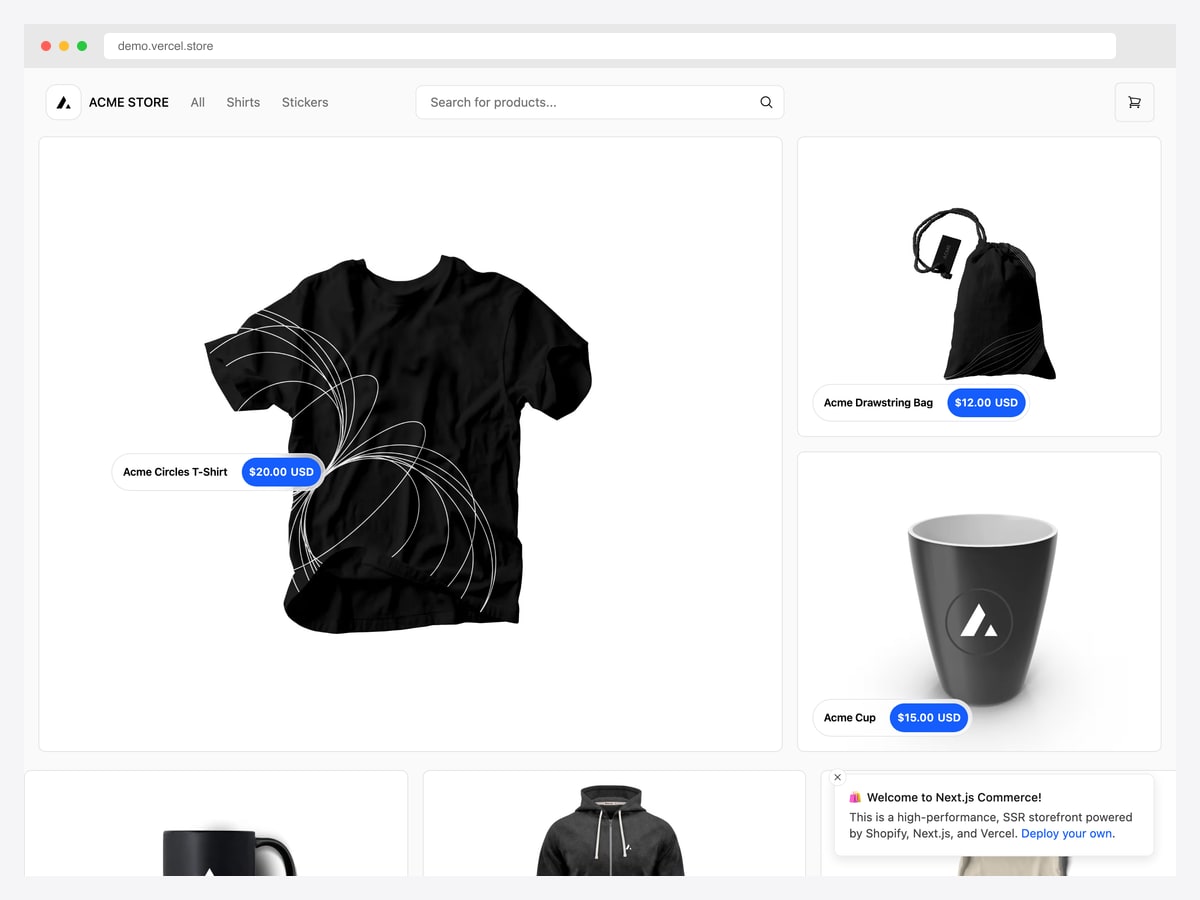
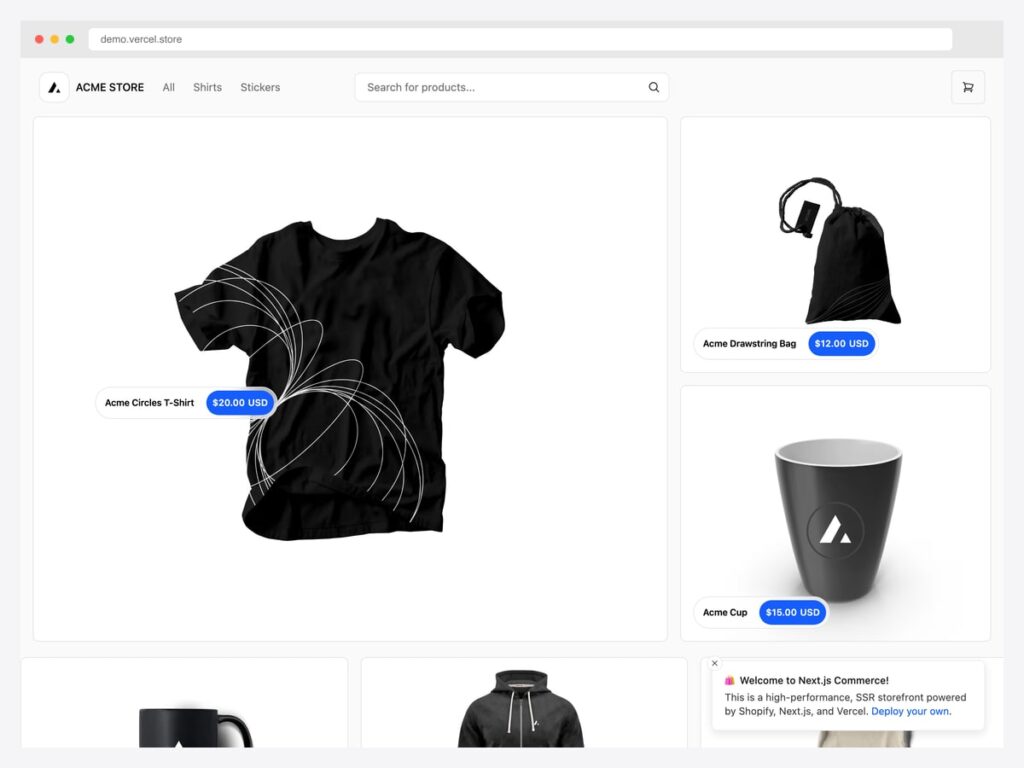
Why we like it: A high-performance, server-rendered ecommerce application maintained by Vercel. Built around Next.js App Router with React Server Components, Server Actions, Suspense, and useOptimistic — the most idiomatic modern Next.js codebase you can fork. Multiple provider integrations: Shopify (the actively-maintained reference), BigCommerce, Saleor, Medusa, and 8+ others via community ports.
Demo at demo.vercel.store runs the Shopify-backed variant. Deployment-ready for Vercel — one-click via the README’s deploy button. Best when you want the canonical implementation, especially if you’ll back the store with Shopify (where Vercel Commerce’s depth of integration is unmatched by any alternative on this list).
2. Your Next Store (YNS)
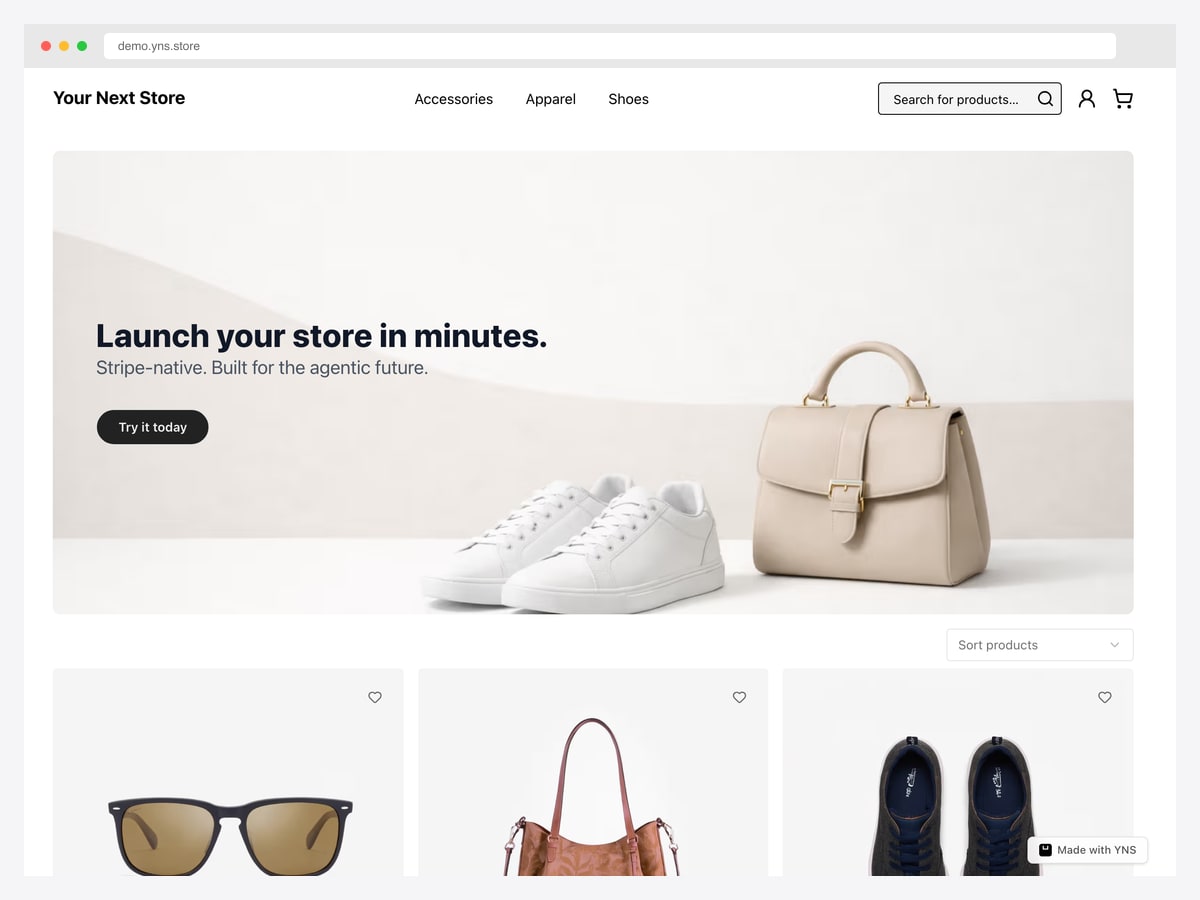
Why we like it: “A Commerce Operating System built for the agentic future” — describe your store in plain English and YNS’s AI Builder generates a working storefront with products, cart, and checkout. MCP Server integration exposes commerce primitives to AI agents (Claude, Cursor, custom agents) for inventory, content, and order operations. Stripe-native checkout supports cards, wallets, BNPL, tax, and fraud protection. 100/100 Lighthouse scores out of the box.
The MCP server feature is the differentiator that most ecommerce platforms haven’t shipped yet — Claude or Cursor can read your product catalog, update inventory, and create draft orders via natural language. Best when you’ll lean heavily into AI-powered store operations rather than manual product management.
3. Saleor Storefront
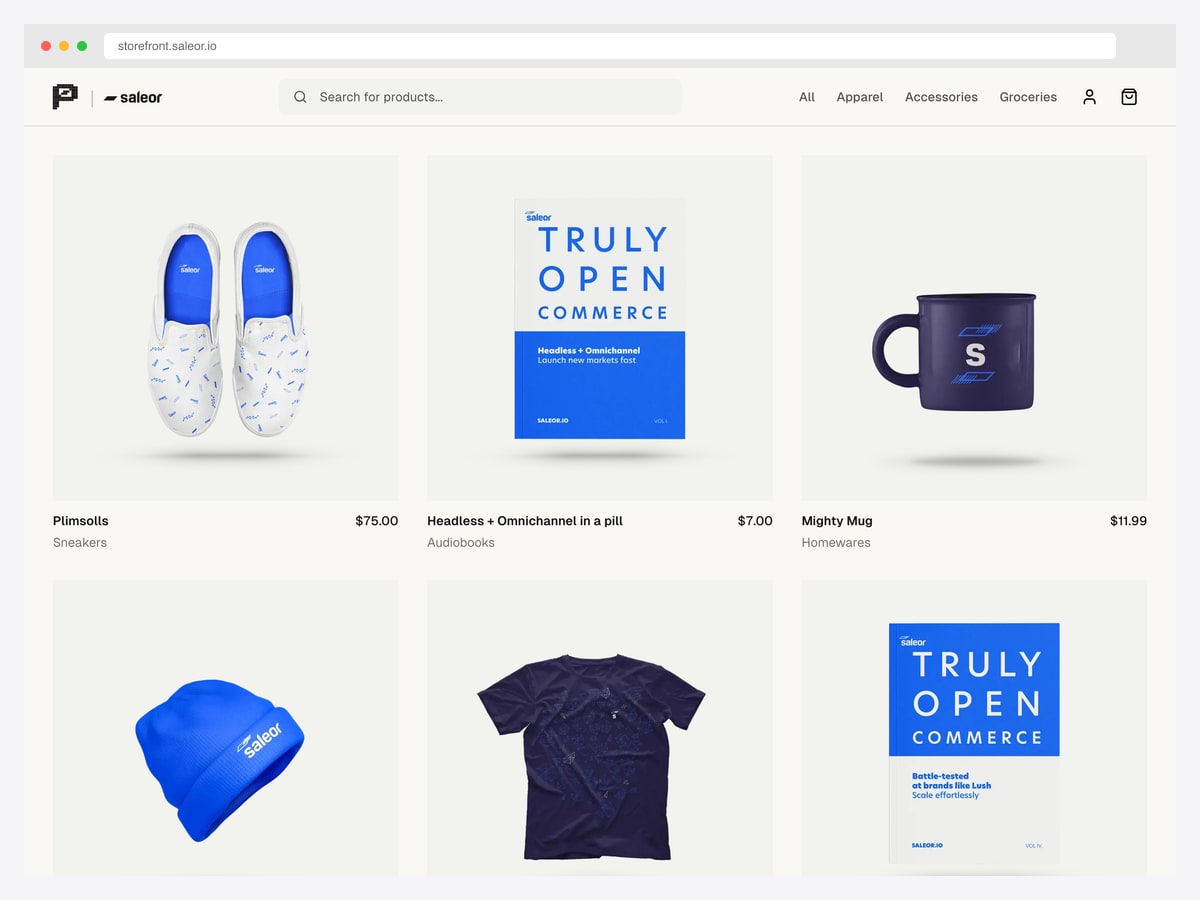
Why we like it: “A minimal, production-ready storefront template for Saleor” — and one of the few free React ecommerce options shipping Next.js 16 + React 19 from day one. Multi-step checkout with guest and authenticated flows, multi-channel / multi-currency from a single codebase, complex variant selection, built-in accessibility, and a Cache Components architecture for performance. AI-ready codebase with documentation for agent integration.
Functional Source License (FSL-1.1-ALv2) — converts to Apache 2.0 after two years. Production-grade for sites that need true multi-channel commerce (one product catalog across several brands or regions). Pair with the Saleor backend for an end-to-end open-source GraphQL commerce stack.
4. Relivator
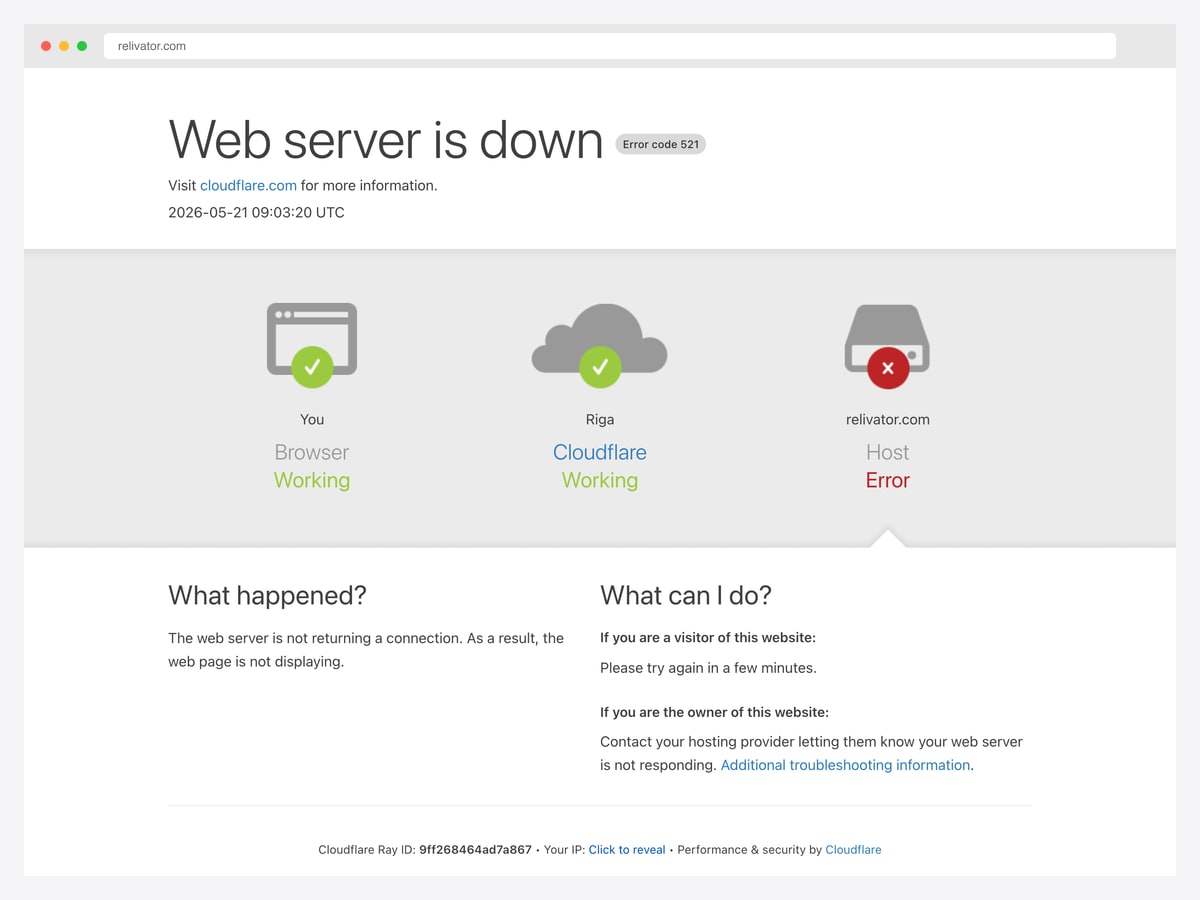
Why we like it: A modern free stack in one repo — Next.js 15.3, React 19.1, TypeScript 5.8, Tailwind 4.1. Better Auth for authentication, Polar for subscription / one-time payments with customer portal, Drizzle ORM on Neon PostgreSQL, and shadcn/ui throughout. Polar’s merchant-of-record model means tax / VAT compliance is handled for you. AI-ready for Cursor and Claude Code.
v1.4.5 released May 2025 with 29 releases total; the last commit was in October 2025, so it is now a major Next.js version behind. Best pick when you’re starting a new ecommerce project and want this exact stack in one repo. The Polar payments integration (rather than Stripe) is unusual and worth highlighting: lower fees, built-in tax handling, simpler subscription models.
5. Medusa DTC Starter
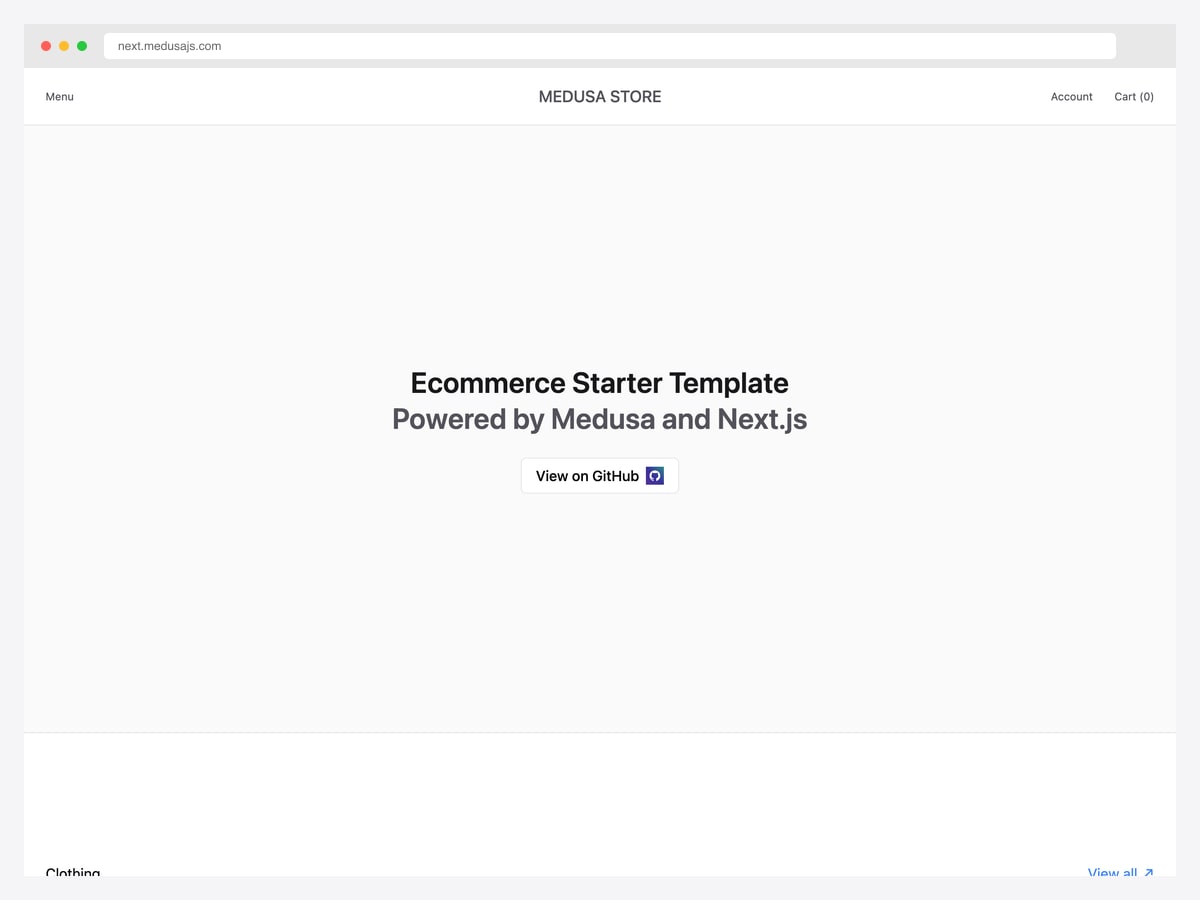
Why we like it: Official Medusa Next.js storefront — the recommended successor to the deprecated nextjs-starter-medusa repo. Includes Medusa’s full commerce features: multi-region support, product catalog with variants, cart, multi-step checkout, customer accounts, and order management. Monorepo structure with the Medusa backend and Next.js storefront in one codebase.
Medusa is the leading open-source headless commerce platform — think “Shopify for self-hosted.” You own every line of code, every database row, and every API endpoint. Best for stores that need full control (custom pricing logic, complex inventory, B2B workflows) without paying Shopify or BigCommerce monthly fees. Setup is more involved than Vercel Commerce — requires running the Medusa backend on Node + PostgreSQL, often via Medusa Cloud.
6. CozyCommerce
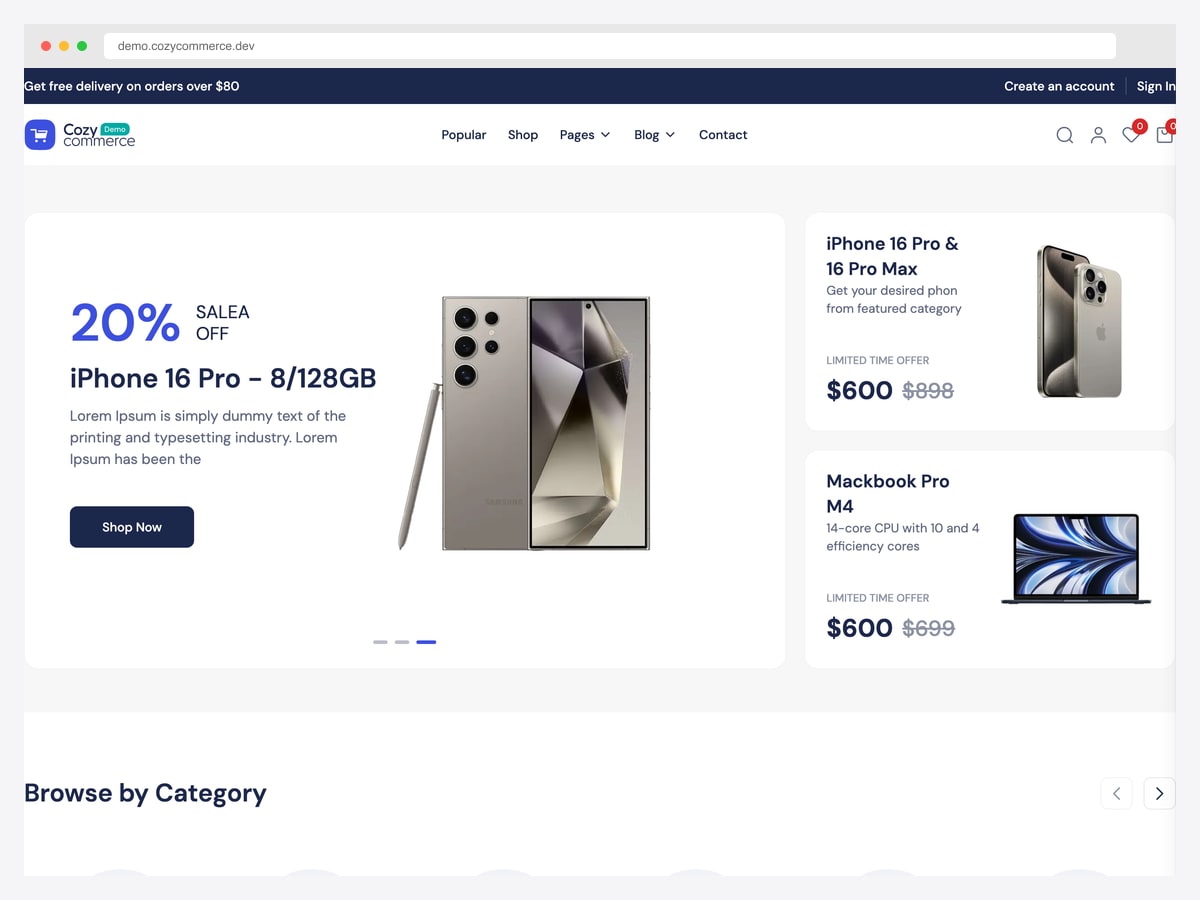
Why we like it: “Complete Next.js eCommerce Solution” — frontend storefront, admin dashboard, and backend APIs in a single codebase. Built-in CMS for managing products, categories, and blog without external platforms. 100+ UI components, 20+ pre-built pages, pre-integrated Stripe / Algolia / NextAuth. One-click deployment to Vercel, Netlify, or Railway. Lifetime free updates.
Best pick when you want a self-hosted store with admin panel but don’t want to assemble it from open-source pieces yourself. Compare against Singitronic (free, fewer pages) and Medusa (free, more flexible backend but you wire the admin yourself). CozyCommerce is the middle path — pay once, get the polished full-stack package.
7. TheFrontKit Ecommerce Starter Kit
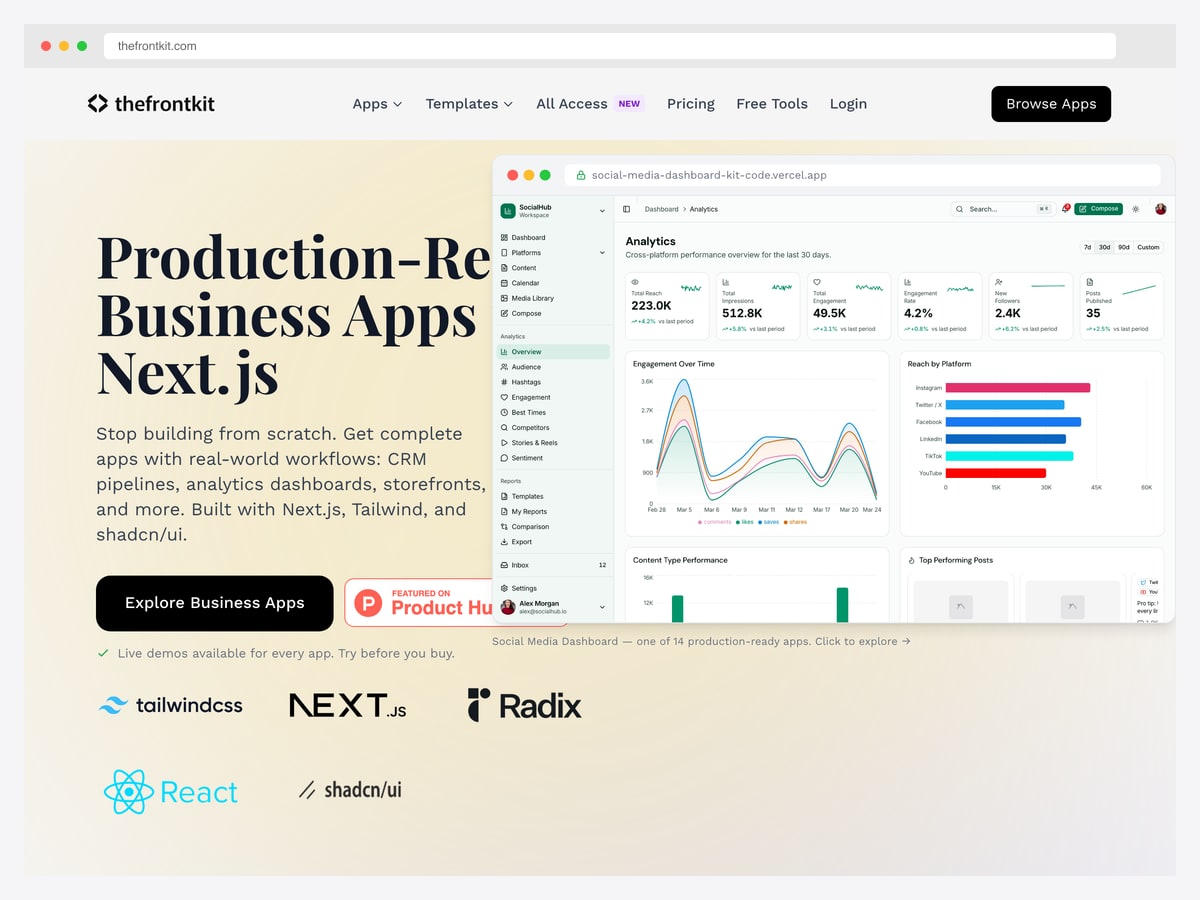
Why we like it: TheFrontKit ships production-ready business applications built on Next.js, with the E-commerce Starter Kit including 31 pre-built screens covering the complete shopping experience: homepage with hero and featured products, product listing with filters and sort, product detail with gallery and variants, search results, cart with promo codes, multi-step checkout, order confirmation, wishlist, login, registration, order history, and a full admin dashboard. WCAG-AA accessibility by default with audit documentation.
The accessibility-first positioning is unusual in the ecommerce template space — most templates ship without explicit WCAG compliance and require retrofits. Agency plan licensing for client work makes this a strong pick for agencies building ecommerce sites for clients in regulated industries (healthcare, government, education) where accessibility audits are mandatory.
8. Flatlogic Ecommerce React Template
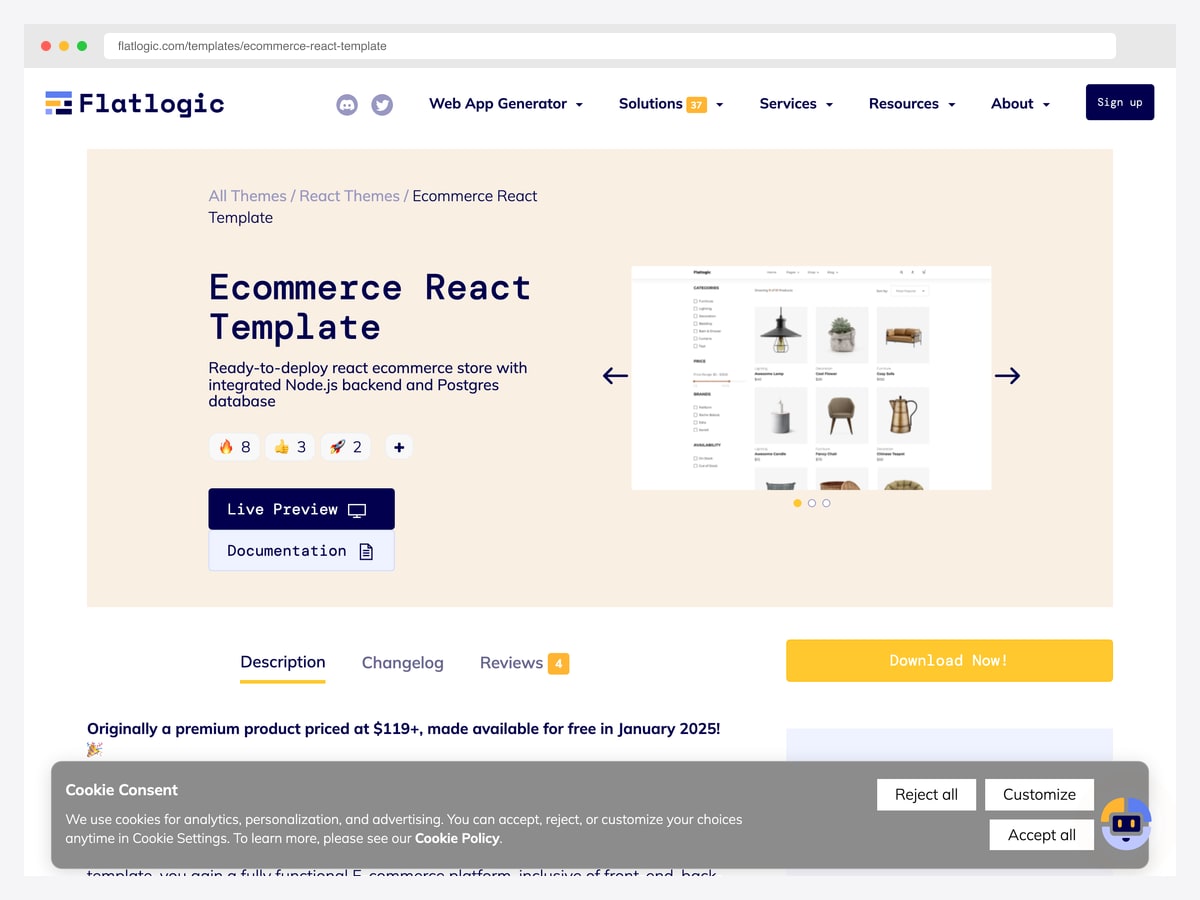
Why we like it: Originally a $119 premium template, Flatlogic made it free in January 2025 — and it’s still one of the most complete free React ecommerce starters available. Includes the React + Next.js SSR frontend, Node.js backend with Sequelize ORM, PostgreSQL database, Stripe payments, products listing with filters, server-side rendering for SEO, blog and CMS modules, user registration, and a working checkout page.
The full-stack inclusion (React + Node + PostgreSQL all wired together) sets this apart from frontend-only ecommerce templates — you can clone, run npm install, and have a working store with admin panel in under an hour. Older React 16 base means you’ll want to bump dependencies before going live, but the architecture is clean enough that the upgrade isn’t difficult.
9. React Storefront
Maintenance: last commit March 2023 — over three years ago. It still installs, but the framework has shipped major releases since, so budget time to update dependencies yourself and check anything that touches build tooling.
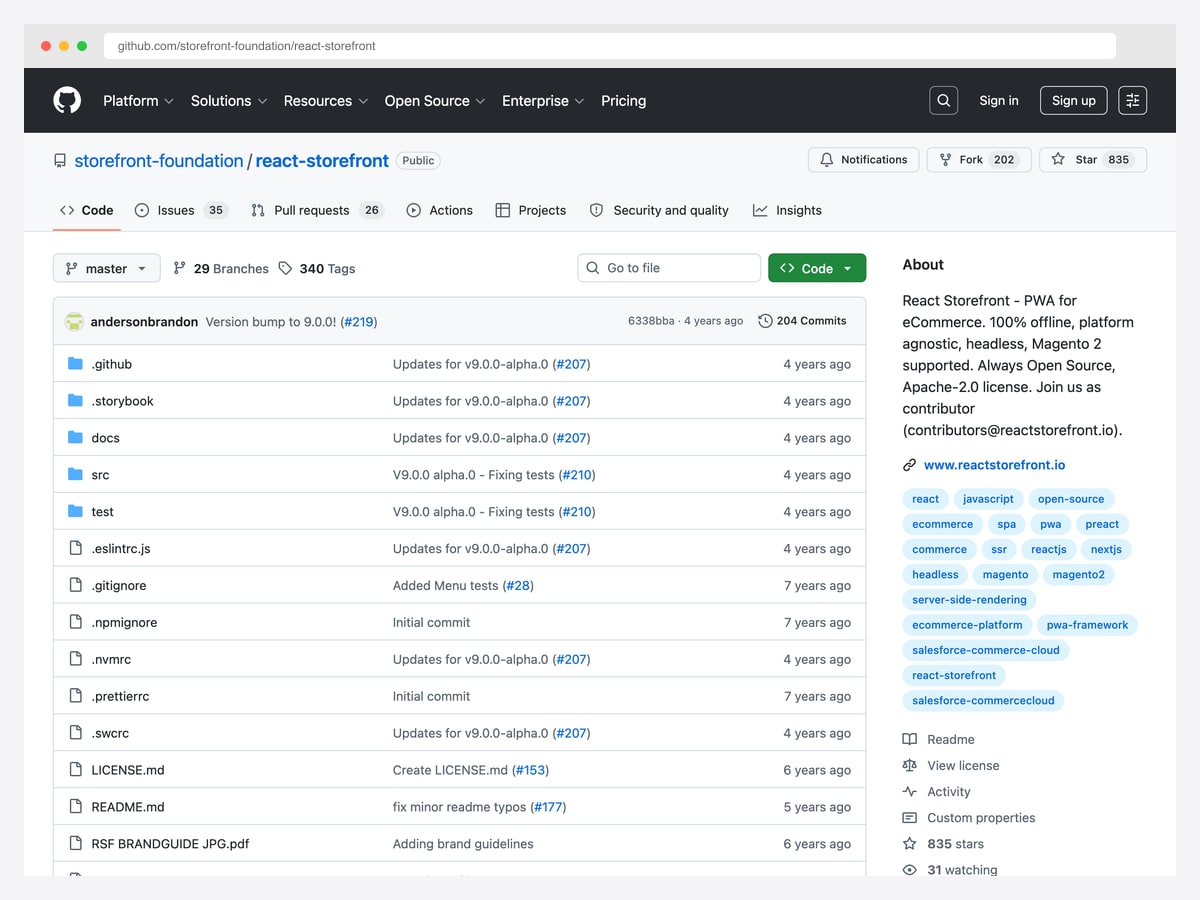
Why we like it: Progressive Web App framework purpose-built for ecommerce — 100% offline-capable, platform-agnostic, headless. Supports Magento 2 and Salesforce Commerce Cloud out of the box, plus any custom backend via the adapter pattern. Server-side rendering, automatic AMP page generation, predictive prefetching, and code splitting. “No config — download and start coding.”
Powers production sites including The Tie Bar, Akira, and 1-800-FLOWERS.COM — rare for an open-source ecommerce framework to have public enterprise references. Latest major release was v9.0.0 in early 2022, so the cadence is slower than Relivator or Saleor — but for stores that need PWA + headless + multi-backend support, it’s the most mature option available.
10. GoCart
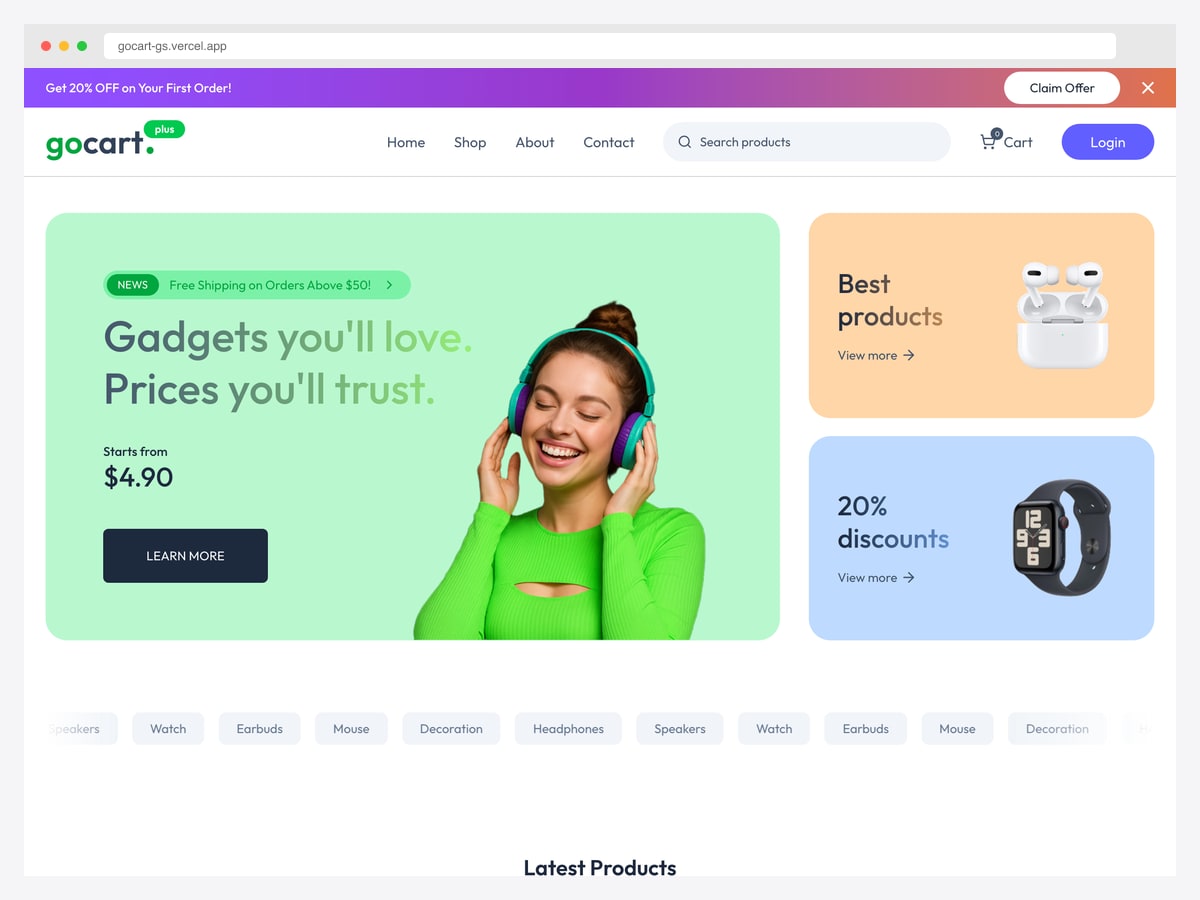
Why we like it: The cleanest free multi-vendor ecommerce template — most React ecommerce templates assume a single seller, GoCart ships with vendor dashboards, multi-seller storefronts, and admin platform oversight including commission tracking. Customer-facing storefront with responsive design, vendor product / sales management, and admin moderation built in.
Multi-vendor marketplace use cases — Etsy-style craft marketplaces, niche product aggregators, B2B procurement platforms — typically force a custom build or a heavy Magento install. GoCart is the only mid-popularity free Next.js option that ships with the multi-vendor pattern wired in. Demo at gocart-gs.vercel.app.
11. Singitronic
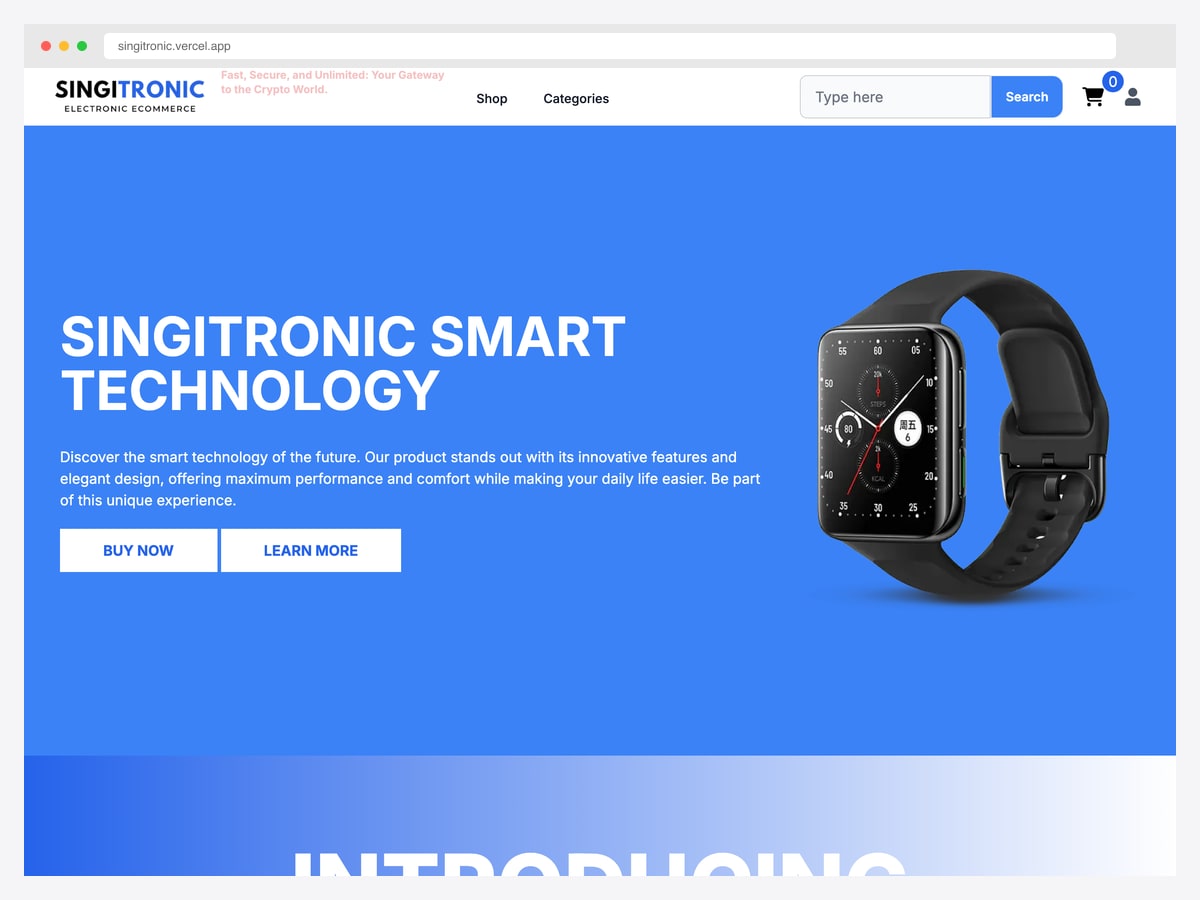
Why we like it: “Fully functional admin panel” for handling orders, products, categories, and users — most free ecommerce templates ship the storefront and leave the admin to you. Singitronic includes both. Bulk product upload via CSV, complete shopping experience with browse / search / wishlist / cart, user authentication, and well-documented codebase with internal comments. 40 pages of software engineering documentation covering the full development lifecycle.
Branded around electronics retail but the underlying patterns work for any product category. MySQL + Prisma is unusual in this list — most modern templates default to Postgres. Best for self-hosted stores where MySQL hosting is preferred (legacy infrastructure, lower-cost shared hosting). MIT license, latest commit October 2025.
12. jeffersonRibeiro/react-shopping-cart
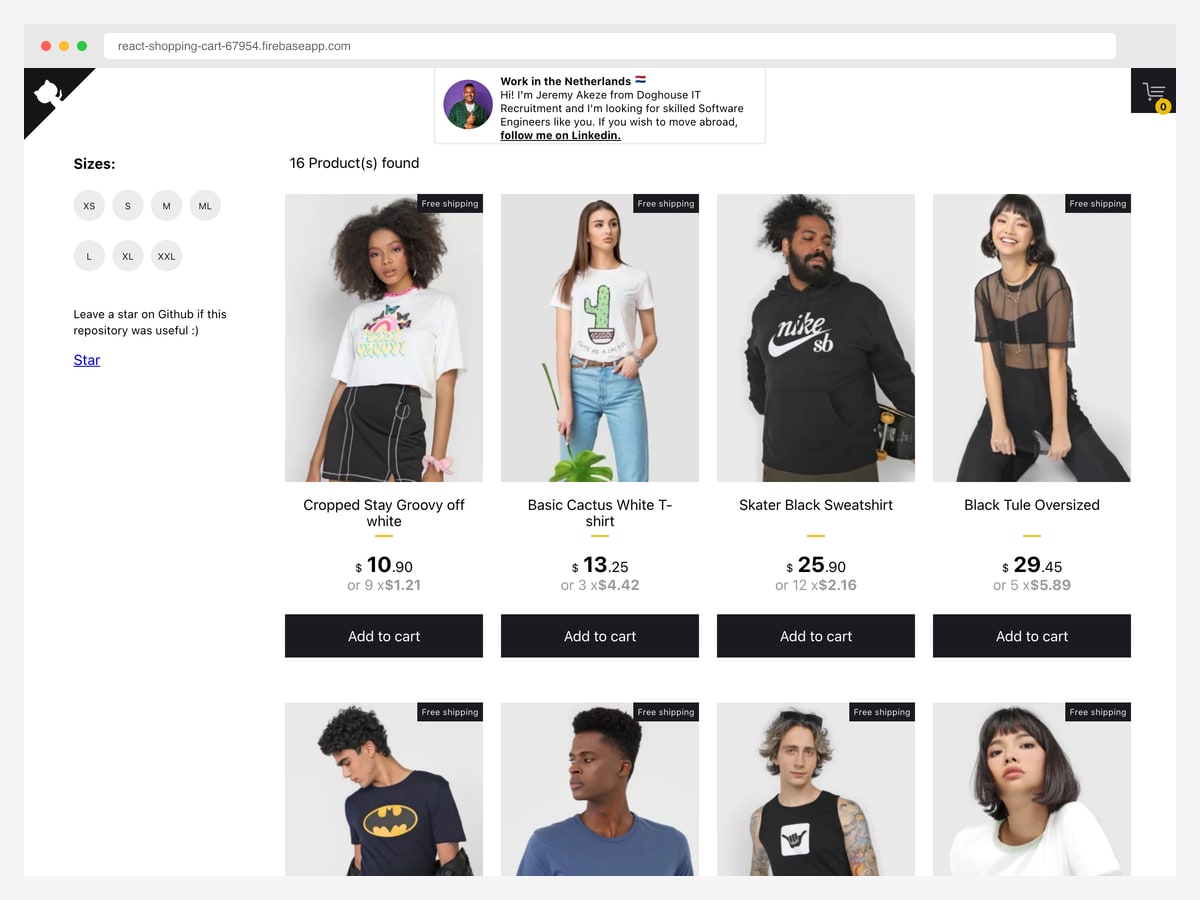
Why we like it: A clean “simple shopping cart prototype” that’s earned 2.6k stars not because it’s a complete ecommerce platform — but because it’s the cleanest reference implementation of cart state management in React using Hooks + Context API. Add / remove products from a floating cart, filter by available sizes, fully responsive design. Firebase backend handles persistence.
Not a production-ready template — explicitly framed as a “learning resource” by the author. Best when you’re building a React ecommerce site from scratch and want to understand cart state patterns rather than fork an opinionated stack. The 1.2k+ forks suggest it’s used as a starting point even though it’s not marketed that way.
13. binshops/react-ecommerce (PrestaShop)
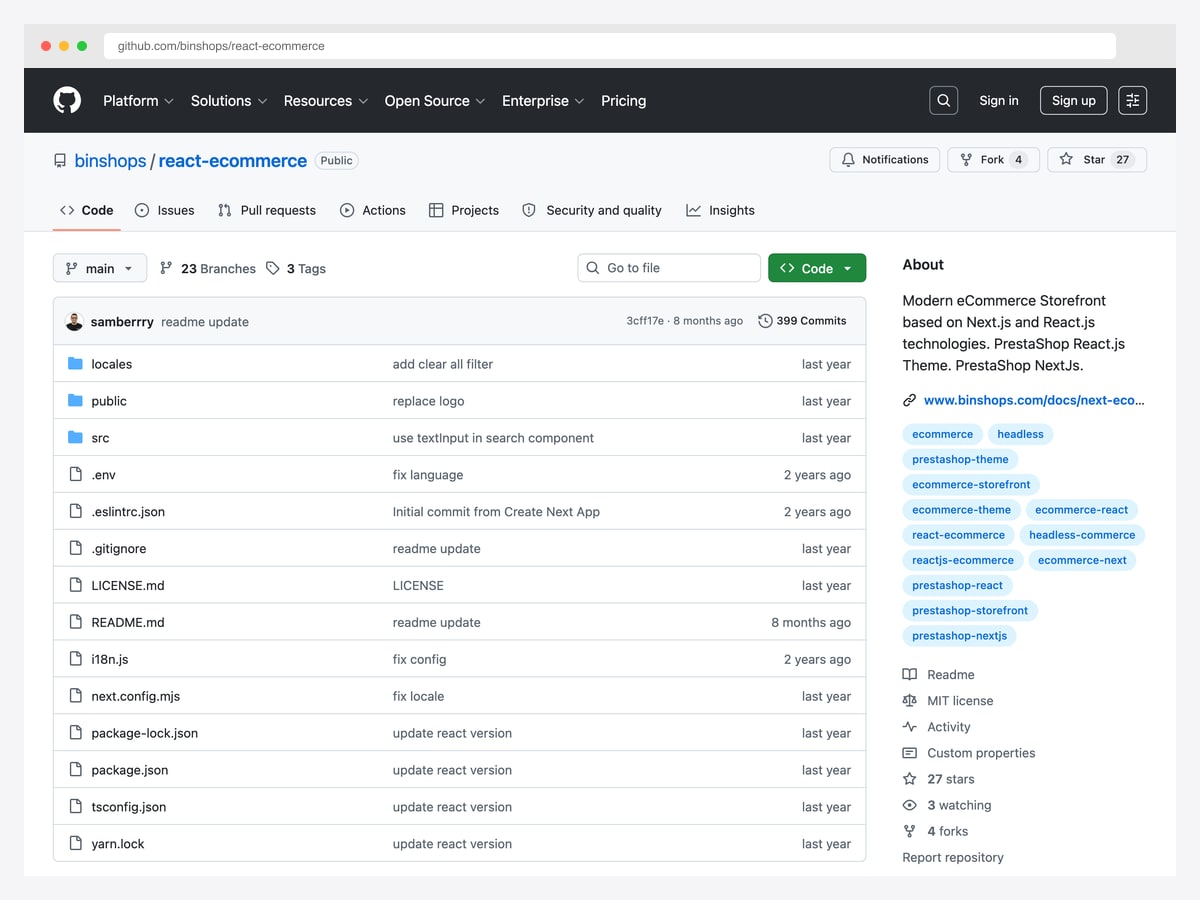
Why we like it: One of the few maintained React storefronts for PrestaShop merchants who want to keep their existing PrestaShop admin and product catalog while moving the customer-facing storefront to a modern React frontend. 30+ pre-built React components, fully functional home / product detail / product listing pages, sample API integration, and multi-language support (English and French locales out of the box).
Headless commerce pattern — connects to PrestaShop’s REST APIs rather than modifying the PrestaShop theme layer. V2 is the officially supported full-featured option (paid) through binshops.com; this V1 is the MIT-licensed open-source base. Best when migrating an existing PrestaShop store to a modern React frontend without rebuilding the backend.
How to Choose a React Ecommerce Template
The right pick depends on what your store needs from day one:
- Selling on Shopify already? Vercel Next.js Commerce — its Shopify integration is unmatched.
- Don’t want to manage backend infrastructure? Your Next Store — SaaS commerce OS with Stripe-native checkout and AI agent integrations.
- Need multi-channel / multi-currency? Saleor Storefront — built for this from the ground up with GraphQL.
- Want maximum control with self-hosting? Medusa DTC Starter — you own every line of code and every database row.
- Building a multi-vendor marketplace? GoCart — the only free option with multi-vendor patterns wired in.
- Want the bleeding-edge stack (React 19 + Tailwind 4 + Polar payments)? Relivator.
- Need WCAG-AA accessibility compliance? TheFrontKit Ecommerce — accessibility audits are first-class.
- Existing PrestaShop merchant? binshops/react-ecommerce — keep PrestaShop, modernize the frontend.
- Want a free full-stack starter with backend included? Flatlogic Ecommerce React Template (was $119, now free) or Singitronic.
- Need PWA / offline-first? React Storefront — production-tested at 1-800-FLOWERS scale.
- Learning React ecommerce patterns from scratch? jeffersonRibeiro/react-shopping-cart.
React Ecommerce Templates FAQ
Should I use a React ecommerce template or start with a SaaS like Shopify?
SaaS platforms (Shopify, BigCommerce) are faster to launch but lock you into their feature set, payment processor rates, and design constraints. A React ecommerce template gives you full control — custom checkout flows, custom product variants, no platform fees — but you handle hosting, security, and ongoing maintenance. Hybrid options (Vercel Commerce + Shopify backend) give you Shopify’s catalog management with a fully custom storefront. If your store is your main business, the template route is almost always the better long-term investment.
Headless commerce — what is it and do I need it?
Headless commerce separates the storefront (what customers see) from the backend (product catalog, inventory, orders). Saleor, Medusa, and Shopify Storefront API all expose headless backends that you pair with a React storefront like the templates on this list. You need headless when: you have multiple frontends (web + mobile app + kiosk), when you want full design control beyond what a template platform allows, or when performance / SEO matter more than SaaS convenience. Skip headless if you’re selling fewer than 1,000 products with simple variants — a standard Shopify theme will get you there faster.
Vercel Next.js Commerce vs. Saleor Storefront vs. Medusa DTC Starter — which?
Vercel Commerce is the frontend; you bring a backend (Shopify, BigCommerce, Saleor, Medusa, etc.). Best when you want maximum flexibility on the storefront side. Saleor Storefront is purpose-built for the Saleor open-source GraphQL backend — pick this if you’ll also self-host Saleor. Medusa DTC Starter is purpose-built for the Medusa open-source commerce backend — pick this if you’ll self-host Medusa. All three are MIT-or-similar licensed and free. The decision usually comes down to which backend you’ll commit to, not the frontend.
What payment processor should I use?
Stripe is the default — supported by every template on this list and lowest fees on volume. Lemon Squeezy or Polar are merchant-of-record options that handle global sales tax / VAT automatically (Polar is what Relivator uses). For US-only single-product stores, Stripe wins. For solo founders selling worldwide without setting up tax registrations in 30 countries, Lemon Squeezy or Polar are easier. PayPal can be added on top but it’s rarely the primary processor anymore. Shopify-backed stores use Shopify Payments inside the Shopify checkout, which most React templates handle via the Shopify Storefront API.
Are there fully Vite-based (non-Next.js) React ecommerce templates?
Few maintained ones — most production-grade React ecommerce templates have moved to Next.js for SSR, SEO, and Server Components support. jeffersonRibeiro/react-shopping-cart is the closest pure-React-with-Hooks reference, but it’s a learning project rather than a complete template. If you specifically need Vite, look at GitHub topics vite-ecommerce and vite-react-ecommerce, but expect to integrate auth / payments / catalog yourself.
How do I add a blog / content marketing to these templates?
Several templates ship blog functionality already: Flatlogic includes a CMS module, CozyCommerce has an integrated blog, NextCommerce (Next.js Templates) uses Sanity. For templates without blogs (Vercel Commerce, Medusa DTC, GoCart), add MDX-based blogs by importing patterns from the Tailwind Next.js Starter Blog we cover in our Next.js landing page roundup. Sanity, Contentful, and Strapi all integrate cleanly with Next.js-based ecommerce stores.
What about ThemeForest react ecommerce templates?
ThemeForest hosts many React ecommerce templates ranging $20-80. Quality varies — many use older React + Pages Router and don’t survive React 19 / Tailwind 4 upgrades. The templates on this list are curated for active maintenance and 2026 stacks. If you find a ThemeForest template using App Router + Tailwind v4 + active commits in 2026, it’s likely competitive; otherwise prefer free options like Vercel Commerce or Saleor Storefront that have ten times the contributor base for fixes and updates.
Realistic timeline from template clone to first paying customer?
Realistic timelines: 1-3 days with Your Next Store SaaS (no code changes, just add products and a domain). 1-2 weeks with Vercel Commerce or Saleor Storefront if you already have a Shopify / Saleor catalog. 2-6 weeks with Medusa DTC Starter or self-hosted templates (Singitronic, CozyCommerce) — backend setup, database migrations, payment configuration, product imports. 1-3 months if you’ll significantly customize the storefront design or add custom features beyond what the template ships.
For broader React and Next.js template categories, see our roundups of Next.js ecommerce templates (the Next.js-exclusive deep-dive), React templates, React admin dashboard templates, e-commerce admin dashboard templates, and shadcn/ui e-commerce admin templates.

You Might Also Like