
15 Best SvelteKit Templates & Starters 2026
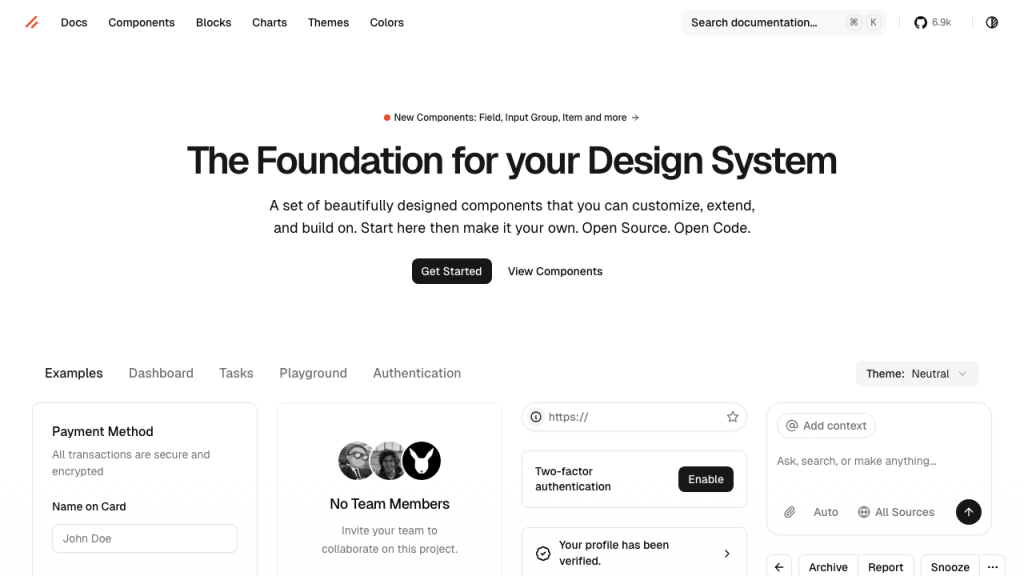
SvelteKit has earned its place as one of the most developer-friendly full-stack frameworks available today. With its file-based routing, server-side rendering, and zero-config deployment, SvelteKit makes it easy to build everything from static blogs to complex SaaS applications. But starting from scratch every time is a waste of energy — that’s where templates and starters come in.
We’ve reviewed dozens of SvelteKit starters and hand-picked the 15 best for 2026. Our selection criteria include code quality, active maintenance, documentation, real-world usefulness, and community adoption. Whether you need an admin dashboard, a SaaS boilerplate, an e-commerce storefront, or a personal blog, there’s a starter here that will save you weeks of setup time. If you’re also considering other modern full-stack frameworks, our T3 Stack templates guide covers the Next.js + tRPC + Prisma ecosystem.
Quick Picks
- Best Component Library: shadcn-svelte — Beautiful, accessible, copy-paste components built on Bits UI and Tailwind CSS
- Best SaaS Starter: CMSaasStarter — Production-ready SaaS template with Stripe billing, Supabase auth, and 100/100 PageSpeed
- Best Admin Dashboard: Flowbite Admin Dashboard — Full-featured admin panel with charts, CRUD pages, and Tailwind CSS styling
- Best for Data & Analytics: Evidence — Code-based BI platform that turns SQL and markdown into interactive dashboards
- Best Blog Starter: Blog Starter — Clean, fast static blog with Markdown, RSS, pagination, and Svelte 5 support
1. Flowbite Svelte Admin Dashboard
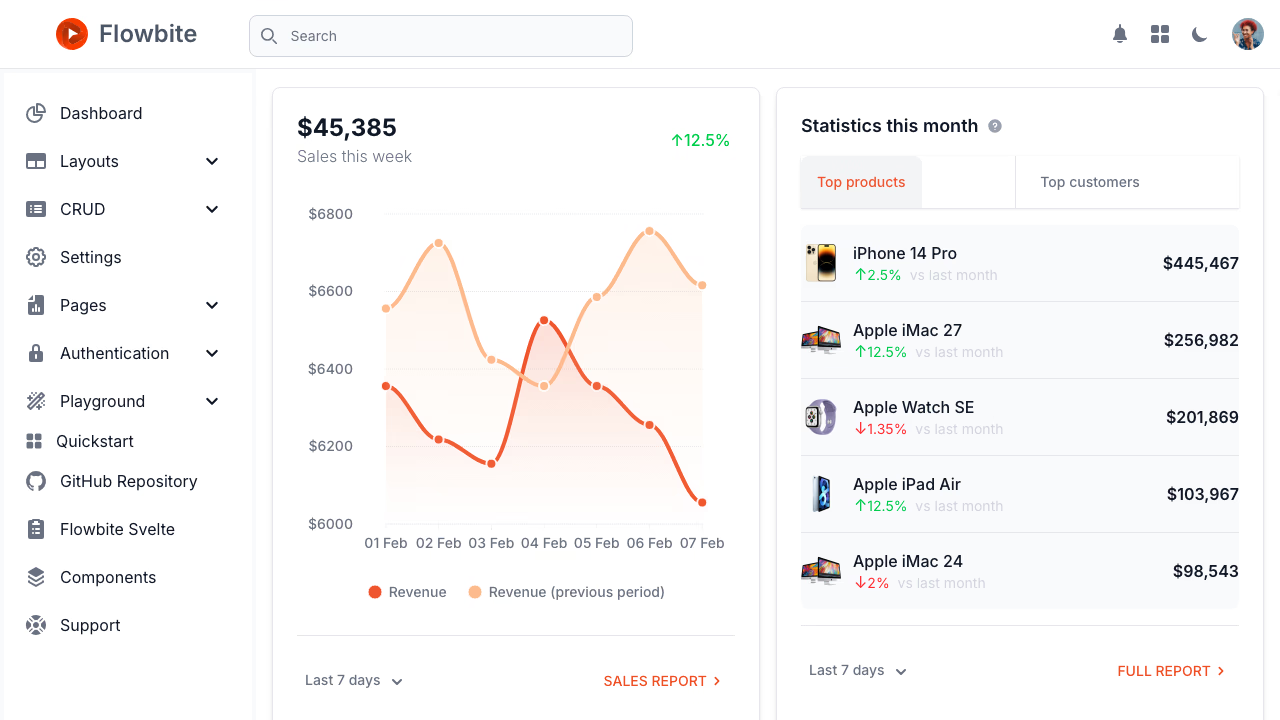
Why we like it: A polished, production-ready admin dashboard built entirely with Svelte components — no jQuery, no heavy dependencies, just clean Tailwind-powered UI.
The Flowbite Svelte Admin Dashboard is a free, open-source admin template built with Flowbite’s Svelte component library and Tailwind CSS. It ships with multiple dashboard layouts, CRUD pages for managing products and users, complete authentication flows (login, register, password reset), settings pages, and custom error pages. With nearly 500 GitHub stars and active maintenance from the Themesberg team, it’s one of the most complete SvelteKit admin starters available. For a broader look at admin panels in the Svelte ecosystem, see our dedicated Svelte admin templates collection.
What sets this apart from generic admin templates is that every component is a native Svelte component — there’s no runtime overhead from jQuery or other legacy libraries. The dashboard includes ApexCharts integration for data visualization, responsive sidebar navigation, and a clean design that works across all screen sizes. Whether you’re building an internal tool or a client-facing admin panel, this template gives you a massive head start.
2. Evidence
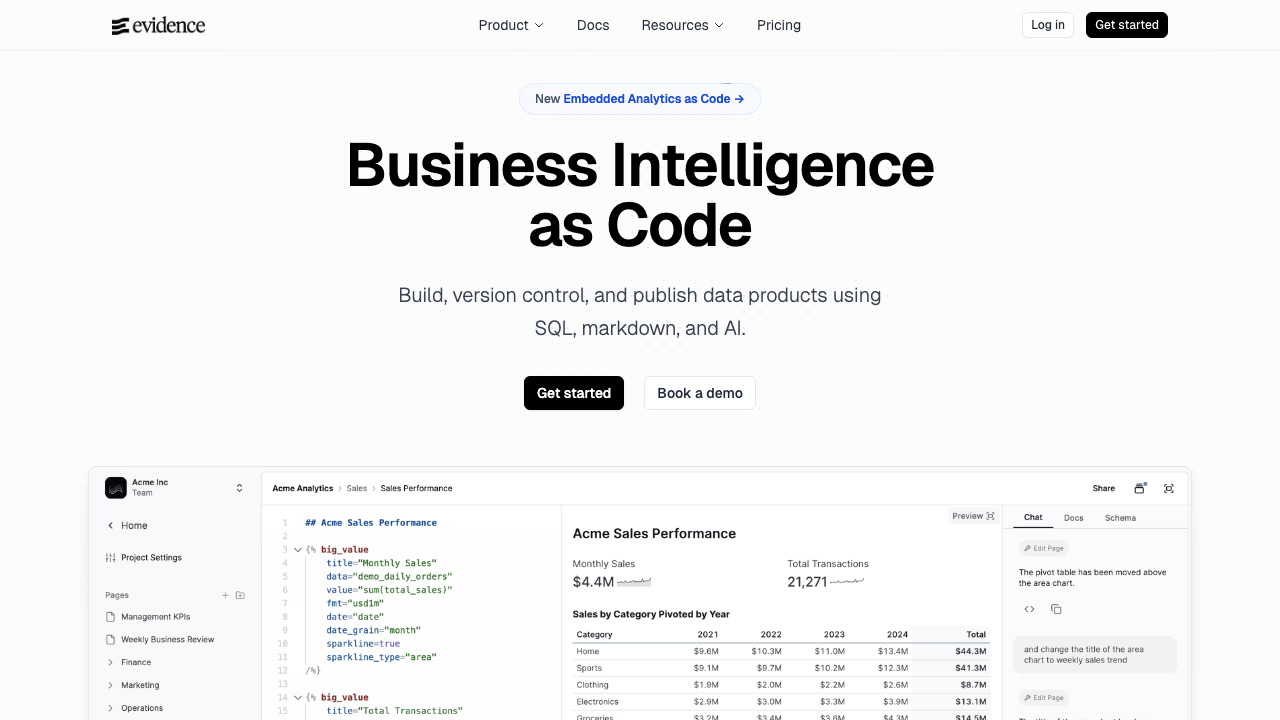
Why we like it: Turns SQL queries and markdown files into beautiful, interactive data dashboards — no drag-and-drop BI tool needed.
Evidence is an open-source, code-based business intelligence framework built on SvelteKit. Instead of using drag-and-drop dashboard builders, you write SQL queries directly in markdown files, and Evidence renders them as interactive charts, tables, and visualizations. It connects to 12+ databases including Snowflake, BigQuery, PostgreSQL, and ClickHouse, with sub-second query execution on millions of records thanks to built-in DuckDB.
With over 6,000 GitHub stars and SOC 2 Type II certification, Evidence is trusted by data teams who want version-controlled, reviewable analytics. It supports templated pages with loops and conditional logic, making it easy to generate hundreds of reports from a single template. You can deploy to Vercel, Netlify, or self-host — and the output is a static SvelteKit site that loads instantly. If your project needs any kind of data visualization or reporting, Evidence is a game-changer.
3. CMSaasStarter
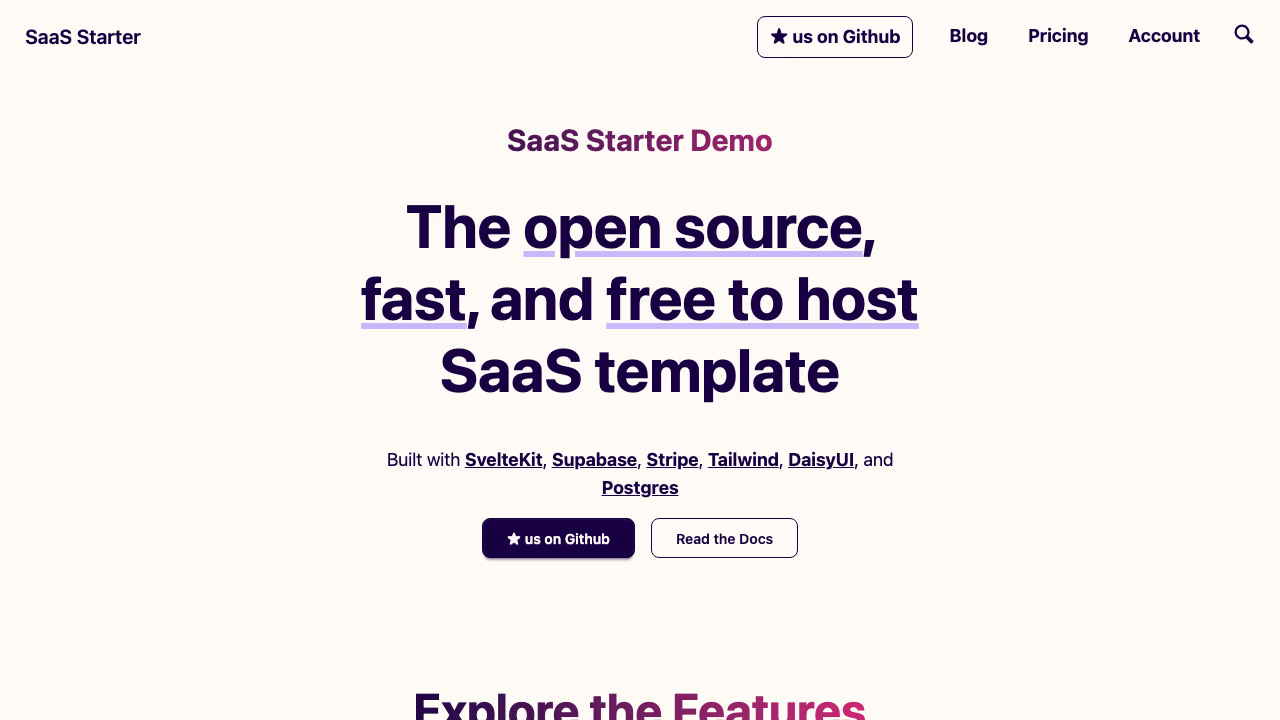
Why we like it: The most complete free SaaS boilerplate for SvelteKit — authentication, billing, blog, and marketing pages all included out of the box.
CMSaasStarter is a production-ready SaaS template that combines SvelteKit with Supabase for authentication and database, Stripe for subscription billing, and Tailwind CSS with DaisyUI for styling. It consistently scores 100/100 on Google PageSpeed Insights, proving that a feature-rich SaaS app doesn’t have to sacrifice performance. With 2,300+ GitHub stars, it’s the most popular SaaS starter in the SvelteKit ecosystem.
The template includes everything you’d expect from a paid boilerplate — but it’s completely free and MIT-licensed. You get user authentication with email verification and OAuth, a Stripe-powered pricing page with multiple subscription tiers, a self-serve billing portal, a blog engine with RSS feeds, contact forms, site search, and a polished marketing homepage. It’s designed for Cloudflare Pages deployment, giving you edge-level performance at minimal cost. If you’re launching a SaaS product and don’t want to spend weeks on boilerplate, this is the one to grab.
4. shadcn-svelte
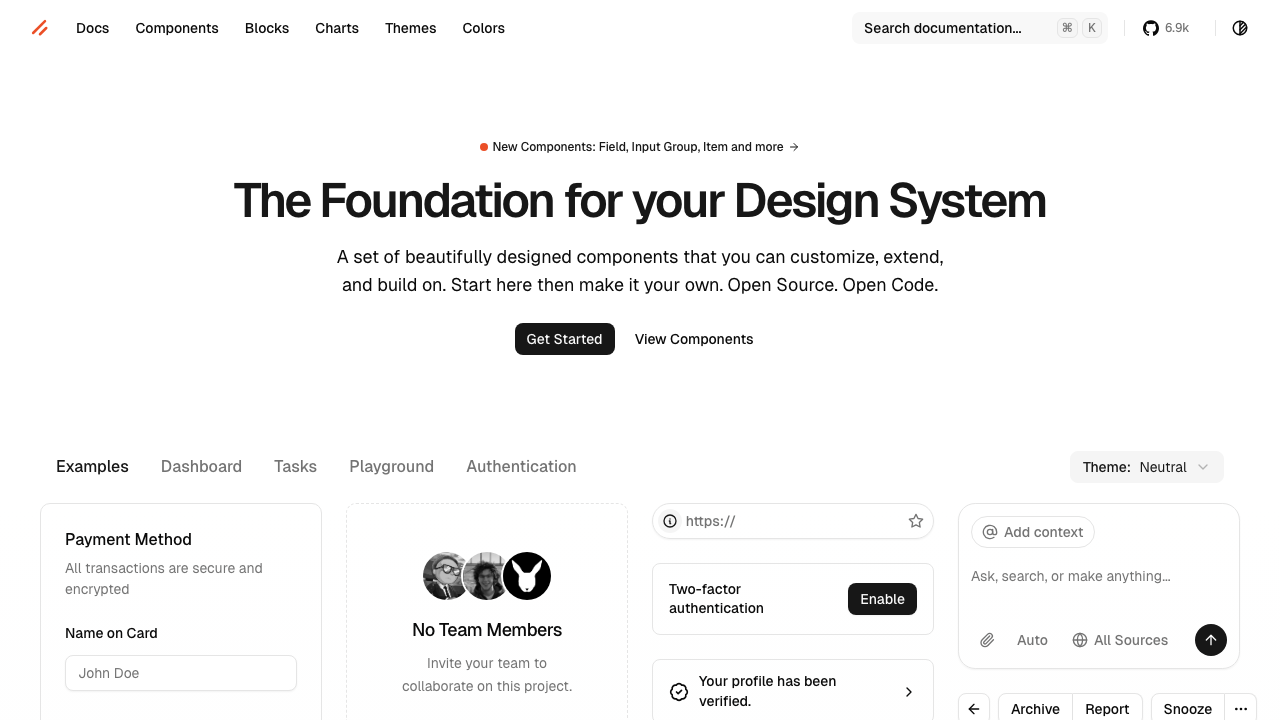
Why we like it: The most popular Svelte component library — beautifully designed, fully accessible, and you own every line of code because components are copied into your project.
shadcn-svelte is the community-led Svelte port of the wildly popular shadcn/ui library. It provides a collection of beautifully designed, accessible UI components that you copy and paste directly into your SvelteKit project. Unlike traditional component libraries distributed via npm, shadcn-svelte gives you full ownership of the code — every component lives in your project and can be modified without limitations. The library covers everything from buttons, cards, and forms to complex components like data tables, command palettes, and date pickers.
Built on top of Bits UI for accessibility primitives and Tailwind CSS for styling, shadcn-svelte components are keyboard-navigable, screen-reader-friendly, and fully themeable. The project includes a CLI tool (npx shadcn-svelte@latest add) that scaffolds components into your project with zero configuration. It supports light and dark modes, custom color themes, and integrates seamlessly with SvelteKit’s form actions and server-side rendering. If you’re still weighing meta-framework options, our Next.js vs Remix vs Astro comparison can help you evaluate the alternatives. If you’re building any kind of SvelteKit application that needs a professional UI, start here.
5. Skeleton UI
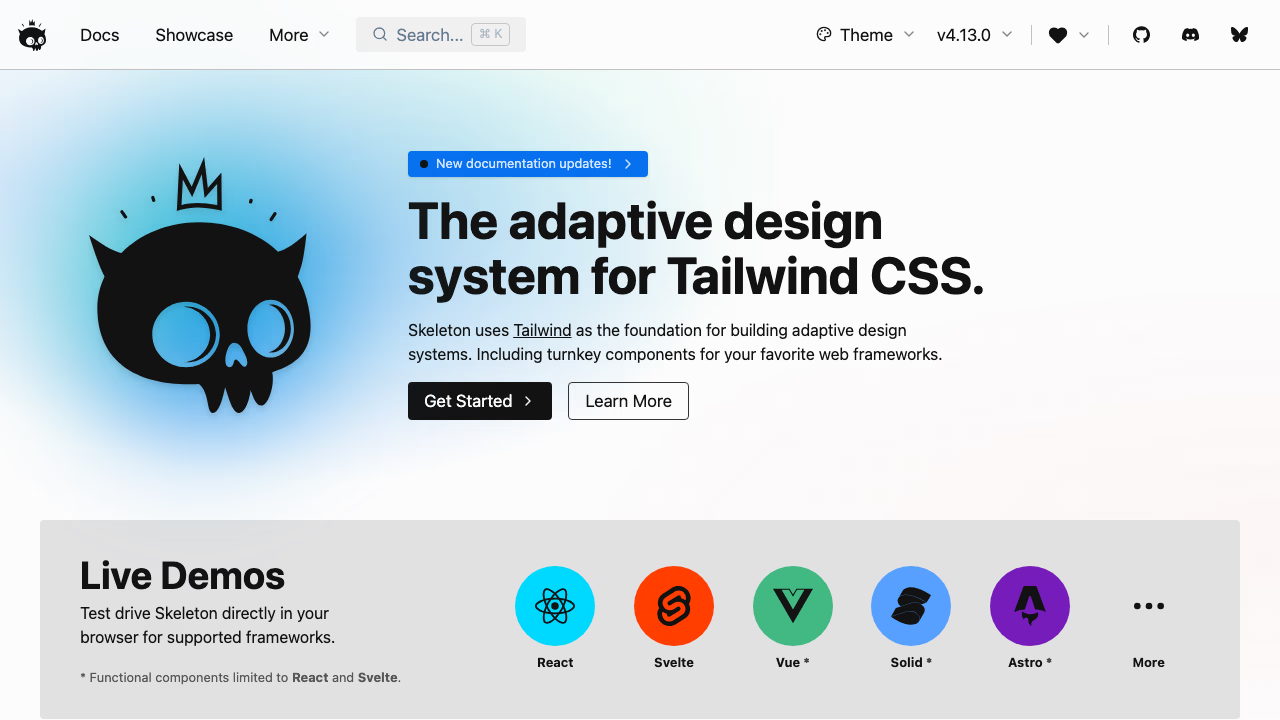
Why we like it: A complete design system with a built-in theme generator, giving you consistent colors, typography, and components across your entire application.
Skeleton UI is an adaptive design system built on Tailwind CSS that provides opinionated solutions for theming, colors, typography, and components. With 5,900+ GitHub stars and over 9,000 dependent projects, it’s one of the most established UI frameworks in the Svelte ecosystem. Unlike minimal component libraries, Skeleton gives you a full design system — meaning your buttons, cards, modals, and navigation all share a cohesive visual language out of the box.
One of Skeleton’s standout features is its theme generator tool, which lets you create custom color schemes and design tokens without manually editing configuration files. The library is fully accessible (a11y compliant), supports multiple frameworks including React and Svelte, and comes with comprehensive documentation. For SvelteKit projects specifically, Skeleton provides dedicated packages with server-side rendering support and tight integration with SvelteKit’s routing and layout system. If you need a design system rather than just a component library, Skeleton is the best choice available.
6. Flowbite Svelte
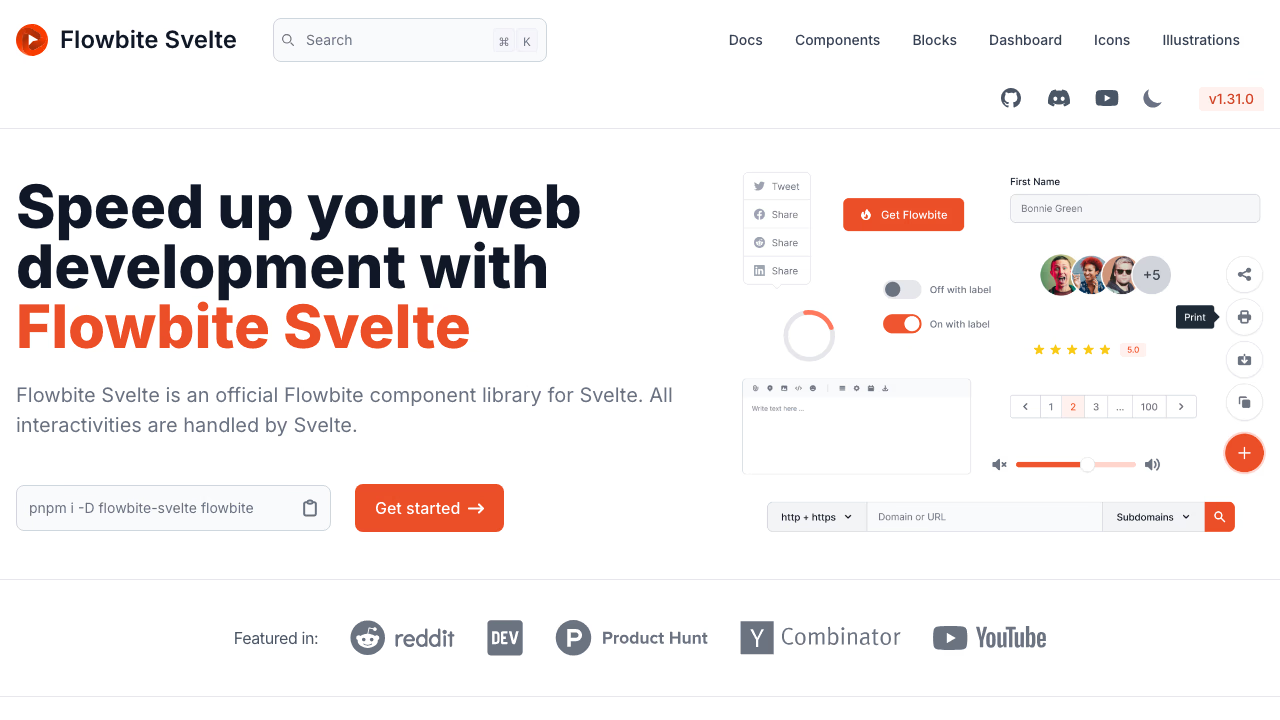
Why we like it: Over 60 production-ready Svelte components with full TypeScript support — the fastest way to build a professional-looking SvelteKit app.
Flowbite Svelte is the official Svelte component library from the Flowbite ecosystem, providing 60+ interactive UI components built with Tailwind CSS. Every component — from alerts, badges, and breadcrumbs to modals, tooltips, and data tables — is a native Svelte component with full TypeScript support. With 2,700+ GitHub stars and over 5,200 commits, it’s one of the most actively maintained Svelte component libraries available.
What makes Flowbite Svelte particularly appealing is its breadth. The library covers basic elements (buttons, cards, forms), navigation (navbar, sidebar, pagination, bottom navigation), data display (tables, list groups, timelines), and feedback components (toasts, modals, spinners). Every component includes comprehensive documentation with code examples, and the library integrates seamlessly with SvelteKit’s SSR capabilities. If shadcn-svelte is the “own your code” approach, Flowbite Svelte is the “install and go” approach — both are excellent, and which you choose depends on how much customization control you need.
7. SvelteKit Commerce
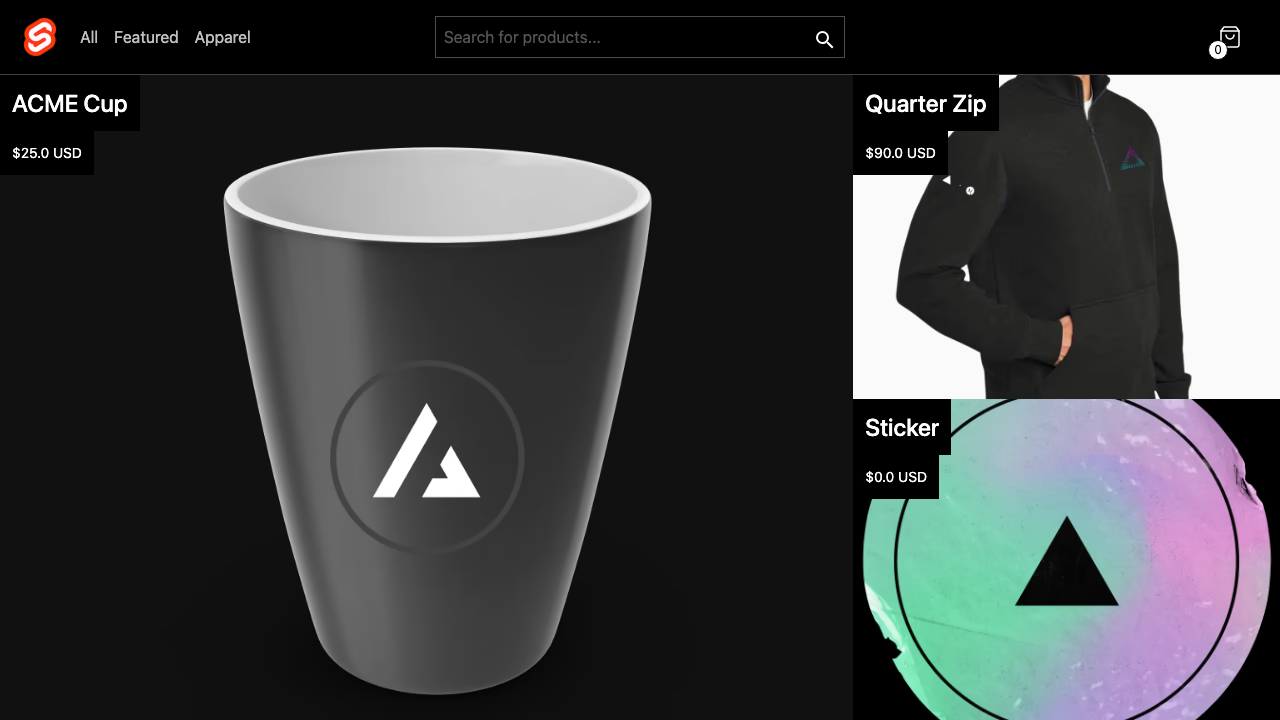
Why we like it: Built by Vercel themselves — the SvelteKit equivalent of their popular Next.js Commerce template, with Shopify integration baked in.
SvelteKit Commerce is Vercel’s official e-commerce template for SvelteKit, modeled after their hugely popular Next.js Commerce starter. It provides a complete storefront experience powered by Shopify’s Storefront API, with product listings, search, cart functionality, and checkout — all rendered with SvelteKit’s server-side capabilities for optimal SEO and performance. The template comes with Tailwind CSS styling and ships with read-only Shopify credentials so you can see it working immediately.
As an official Vercel project, the deployment experience is seamless — one click and your store is live on the edge. The template demonstrates SvelteKit best practices for data fetching, form handling, and dynamic routing, making it an excellent reference even if you plan to swap Shopify for another commerce backend. The codebase is clean and well-structured, using Svelte stores for cart state and SvelteKit’s load functions for server-side data fetching. If you’re building an e-commerce site with SvelteKit, this is the reference implementation to start from.
8. SvelteKit Blog Starter
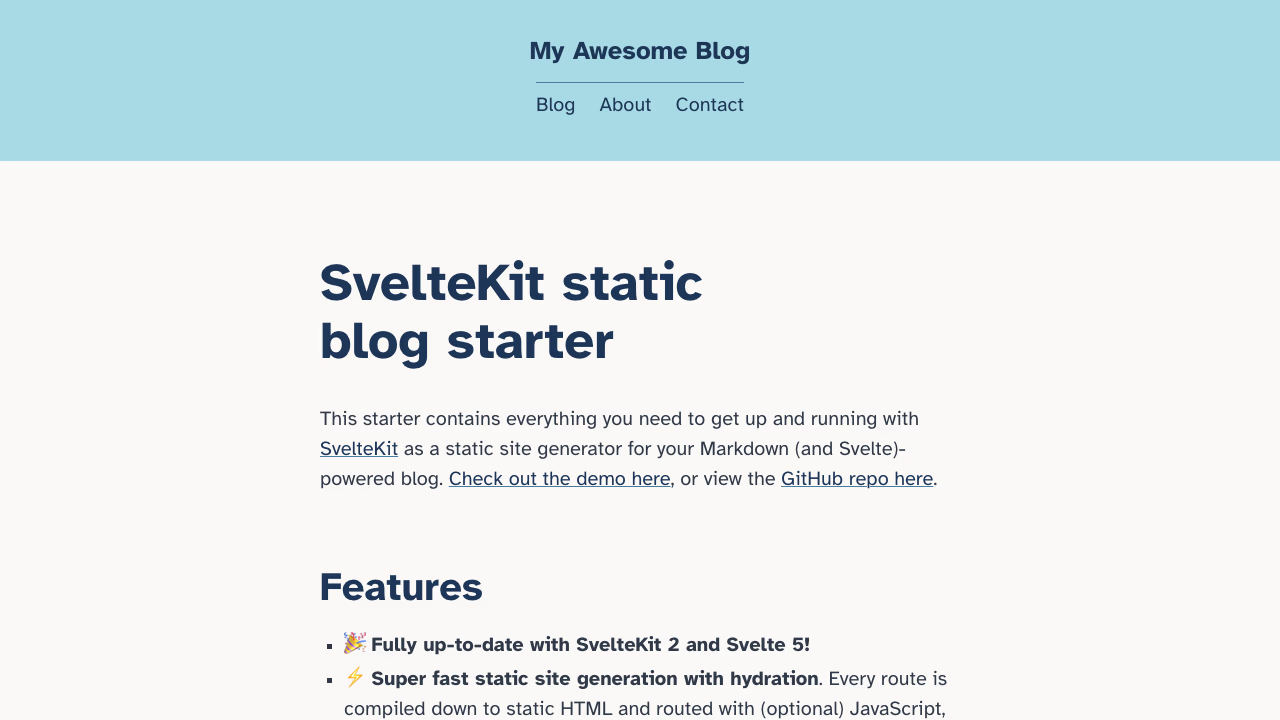
Why we like it: The cleanest, most well-documented SvelteKit blog starter — updated for Svelte 5 with zero-config preloading and automatic pagination.
Josh Collinsworth’s SvelteKit Blog Starter is the go-to template for developers who want a fast, no-nonsense blog. With 500+ GitHub stars, it’s one of the most popular blog starters in the ecosystem. Built on SvelteKit 2 and Svelte 5, it compiles all routes to static HTML for blazing-fast page loads while retaining hydration for interactive elements. Just drop your markdown files into src/lib/posts and you have a blog.
The template handles all the essentials automatically: pagination, category pages, RSS feed generation, SEO meta tags, and page transitions. It uses locally-hosted fonts (no Google Fonts tracking), supports Rehype plugins for extended markdown functionality, and includes a JSON API for posts. The styling is vanilla CSS by default but can easily be swapped for Tailwind or Sass. Setup is a single command — npx degit josh-collinsworth/sveltekit-blog-starter my-blog — and you’re writing content in minutes.
9. Urara
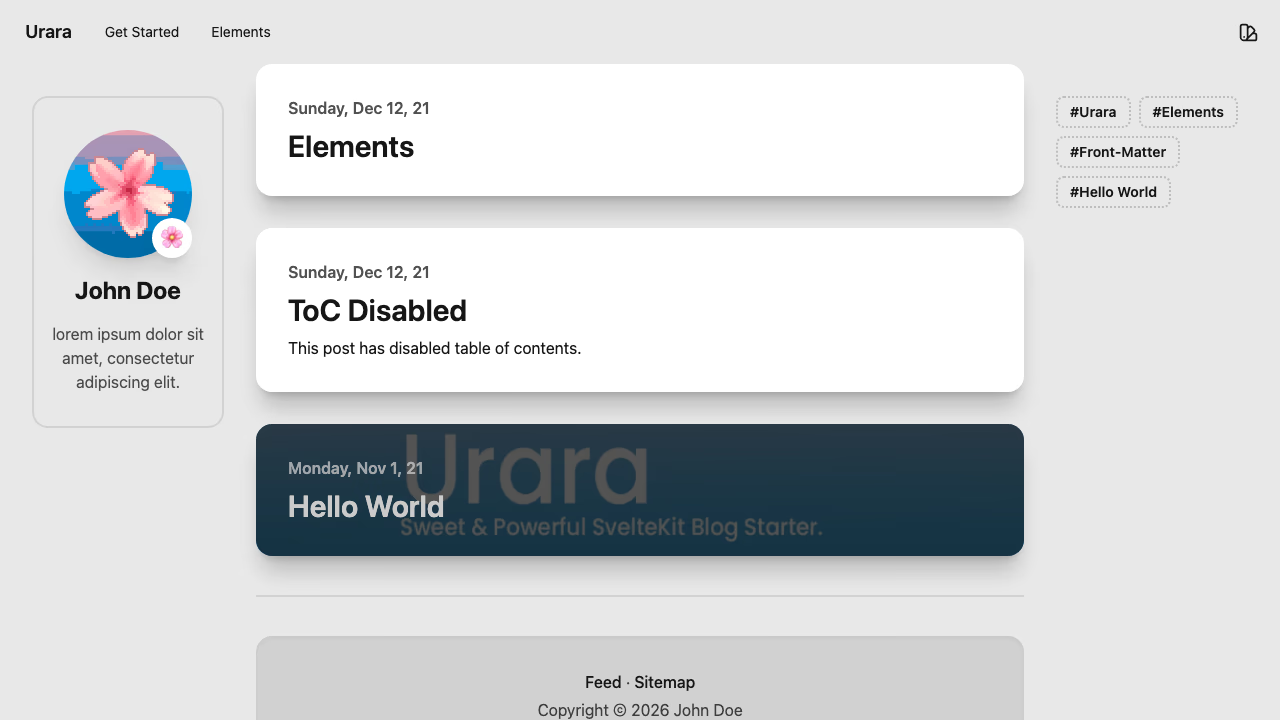
Why we like it: The only SvelteKit blog starter with full IndieWeb support — microformats2, Webmentions, and PWA capabilities built in.
Urara is a sweet, powerful SvelteKit blog starter designed for the IndieWeb. With 640+ GitHub stars, it stands out from other blog templates by embracing open web standards: microformats2 markup for machine-readable content, Webmention integration for decentralized comments, and full PWA support with offline reading. It uses TailwindCSS with DaisyUI for a polished, themeable design that looks great without custom CSS work.
Under the hood, Urara uses MDsveX for markdown processing with Shiki syntax highlighting, UnoCSS for utility styles, and VitePWA for service worker generation. It ships with Atom feed and sitemap generation, multiple comment system support (Webmentions, Giscus, Utterances), and automatic file handling for articles and images at build time. If you believe in owning your content and participating in the open web rather than walled-garden platforms, Urara is built for you. Setup is simple: npx degit importantimport/urara my-blog.
10. KitForStartups

Why we like it: Flexible payment integration with both Stripe and Lemon Squeezy support — plus email, auth, and OAuth all pre-configured.
KitForStartups is an open-source SaaS boilerplate by Okupter that solves the most tedious parts of launching a new product. With 730+ GitHub stars, it provides pre-built solutions for authentication (email/password, social logins, OAuth), payment processing (with your choice of Stripe or Lemon Squeezy), transactional email sending with local testing, and a well-organized project structure that scales as your app grows.
What differentiates KitForStartups from CMSaasStarter is its flexibility. While CMSaasStarter is opinionated about Supabase and Stripe, KitForStartups lets you choose your payment provider and gives you more control over the authentication flow. The project is built with TypeScript throughout, comes with comprehensive documentation at docs.kitforstartups.com, and has an active Discord community for support. If you’ve already picked your tech stack and want a boilerplate that adapts to your choices rather than dictating them, KitForStartups is the way to go.
11. Daison Starter
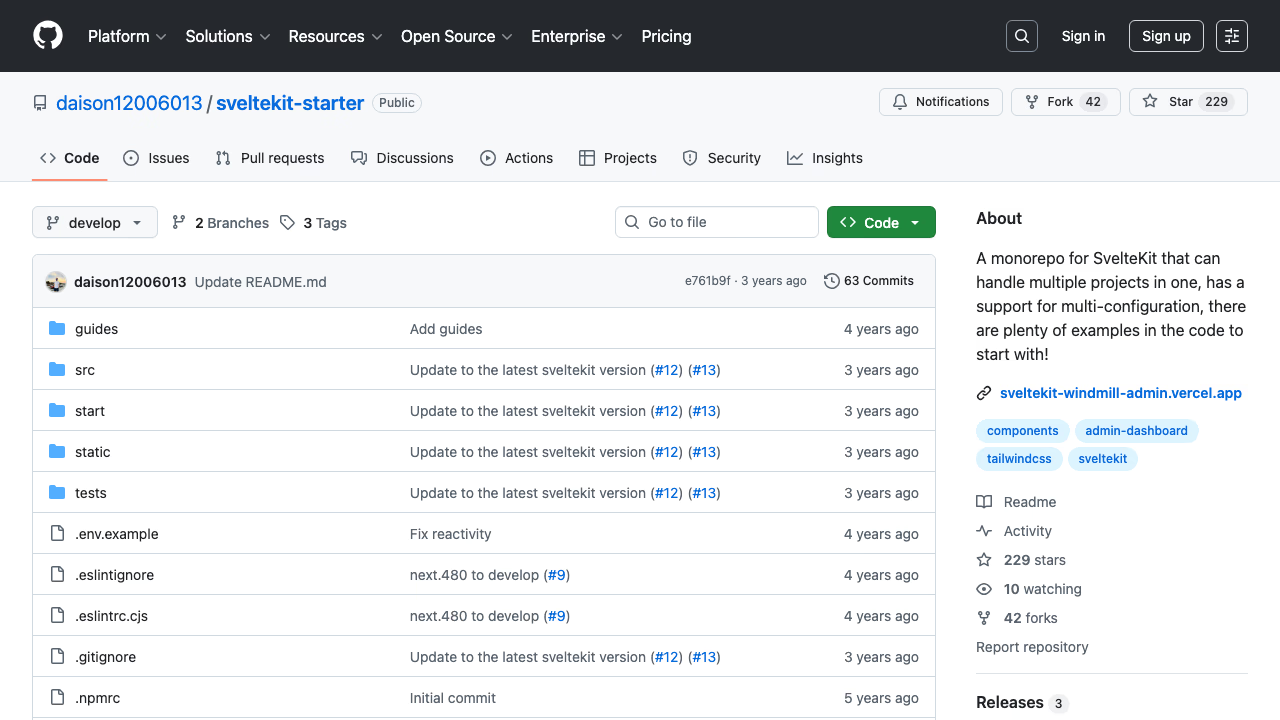
Why we like it: A minimal but well-structured SvelteKit starter that gives you just enough scaffolding without the bloat of full-featured boilerplates.
Not every project needs a full SaaS boilerplate with authentication, payments, and a blog engine. The Daison Starter takes the opposite approach — it provides a clean, minimal SvelteKit foundation with TypeScript configuration, Tailwind CSS styling, and a sensible project structure that you can build on top of. It’s the kind of starter you reach for when you know what you need but don’t want to spend time on initial setup and tooling configuration.
The template includes ESLint and Prettier for code quality, a well-organized directory structure following SvelteKit conventions, and basic layout components to get you started. It’s pre-configured for deployment and includes the essential development tooling that every SvelteKit project needs. Think of it as the scaffolding between npm create svelte@latest and a full-featured boilerplate — enough structure to be productive immediately, without opinions that get in your way later.
GitHubView Project
12. PocketBase SvelteKit Starter
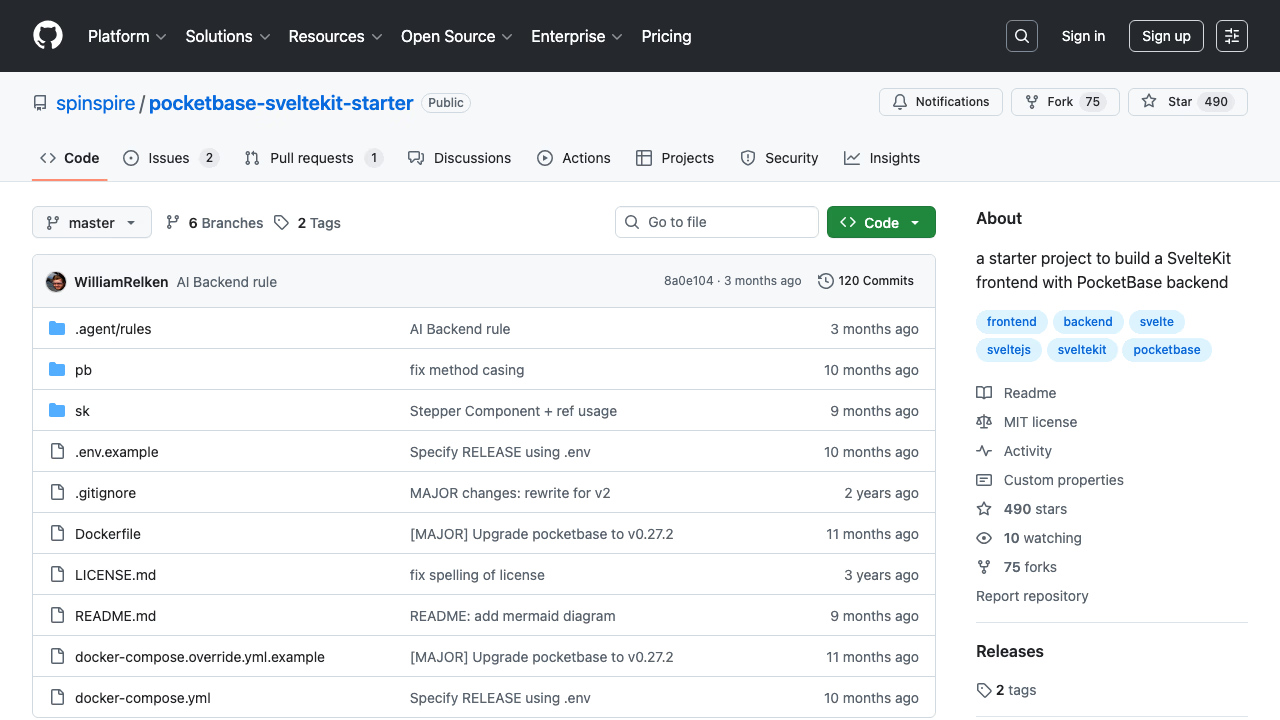
Why we like it: A complete full-stack setup with a single Go binary backend — no external database server, no cloud dependencies, just SQLite and SvelteKit.
The PocketBase SvelteKit Starter combines a static SvelteKit frontend with PocketBase, the open-source backend built on a single Go binary with embedded SQLite. With 490+ GitHub stars, this template proves that you don’t need a cloud database service to build a full-stack application. PocketBase provides real-time subscriptions, built-in authentication (email and OAuth2), file storage, and an admin dashboard — all without running a separate database server.
The starter is designed as a JAMstack architecture: the SvelteKit frontend is fully static and client-side only, requiring no Node.js runtime in production. This makes deployment incredibly simple — you can run everything with Docker Compose or just download the PocketBase binary and serve the static files. The template includes hot module reloading for development, TypeScript support, and SCSS styling. It’s extensible through JavaScript hooks or custom Go code, giving you flexibility as your application grows. For developers who want a self-contained, self-hostable full-stack solution without vendor lock-in, this is the ideal starting point.
13. swyxkit
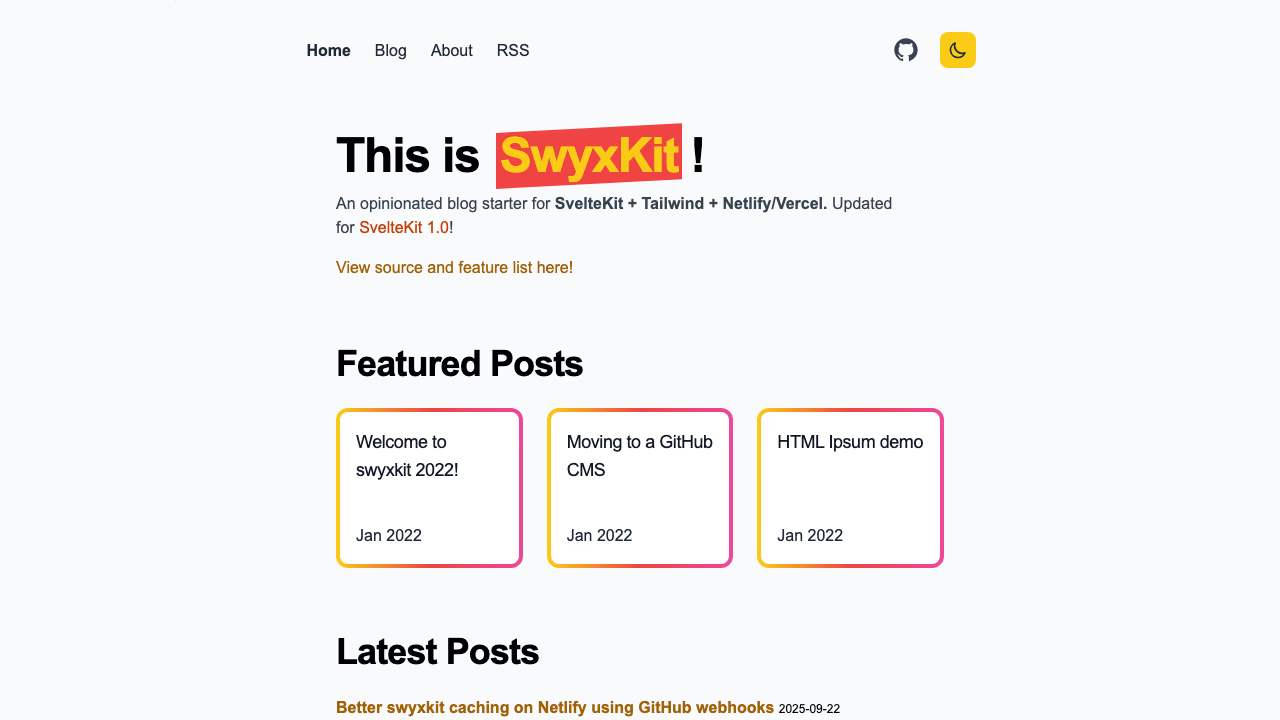
Why we like it: Uses GitHub Issues as a CMS — write your posts in GitHub’s editor, and they automatically appear on your blog. Brilliant for developers.
swyxkit is an opinionated blog starter created by Shawn Wang (swyx), a well-known developer educator and content creator. With 710+ GitHub stars, its most innovative feature is using GitHub Issues as a content management system — you write blog posts as GitHub issues, and the starter pulls them via the GitHub API and renders them on your site. No separate CMS, no database, no markdown files to manage. It’s perfect for developers who already live in GitHub.
Beyond the clever CMS approach, swyxkit is packed with features: light/dark mode toggle, RSS and sitemap generation, fuzzy search with match highlighting, table of contents for posts, Twitter and YouTube embed support, and Utterances-powered comments (lazily loaded for performance). The starter achieves perfect 100s on Lighthouse scores and deploys to Netlify in about 40 seconds. It also includes a Histoire design system sandbox for component development, JSDoc typechecking, and ESLint/Prettier configuration. If you’re a developer who wants a blog that fits your workflow, swyxkit is hard to beat.
14. Rodney Lab Blog Starter
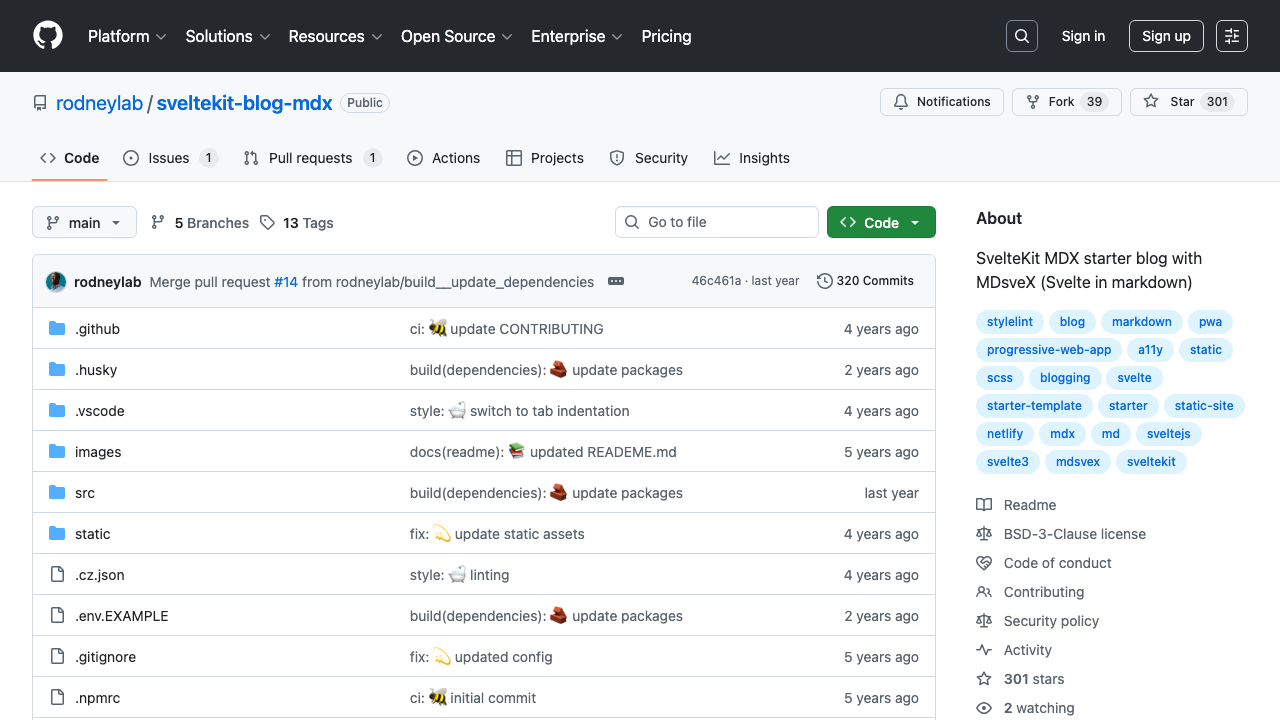
Why we like it: Creates a fully functional Progressive Web App out of the box — your blog works offline, can be installed on mobile devices, and loads instantly.
The Rodney Lab SvelteKit Blog MDX starter focuses on what many blog templates overlook: performance and security. With 300+ GitHub stars, it generates a Progressive Web App out of the box — complete with service worker for offline availability, PWA manifest for mobile installation, and Content Security Policy headers for protection against XSS attacks. It uses MDsveX for writing Svelte components directly within markdown files, giving you the flexibility to embed interactive elements in your blog posts.
The template includes responsive image generation via vite-imagetools (automatic srcset and format conversion), automatic XML sitemap generation, self-hosted fonts for privacy, and SCSS styling. The project structure is clean and well-documented, making it easy to understand and extend. While it may not have the star count of some other starters, Rodney Lab is known in the Svelte community for high-quality tutorials and best-practice code. This starter reflects that reputation — every technical decision is deliberate and well-reasoned.
15. Medusa SvelteKit Starter
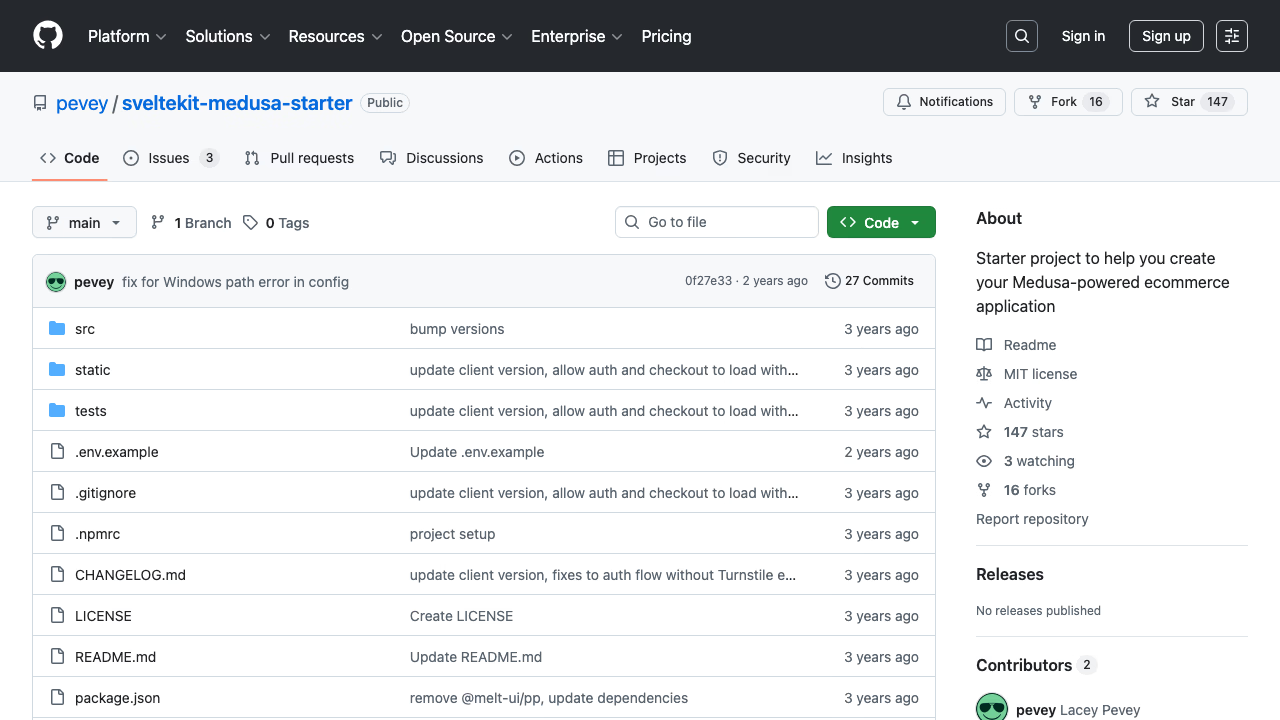
Why we like it: Pairs SvelteKit’s performance with Medusa’s powerful headless commerce engine — a serious alternative to Shopify for developers who want full control.
The Medusa SvelteKit Starter connects SvelteKit with Medusa.js, the open-source headless commerce platform with 32,000+ GitHub stars. While Vercel’s SvelteKit Commerce is tied to Shopify, this starter gives you a fully open-source commerce stack where you own the entire backend. Medusa provides product management, order processing, customer accounts, payment processing, and inventory management — all accessible through a clean API that the SvelteKit frontend consumes.
Built with TypeScript and Tailwind CSS, the starter includes product listing pages, individual product views, cart management, and checkout flows. It uses SvelteKit’s server-side rendering for SEO-friendly product pages and Playwright for end-to-end testing. The Medusa backend supports advanced features like multi-currency, multi-region, and marketplace setups — making this starter suitable for everything from simple stores to complex B2B platforms. If you want the flexibility of headless commerce without the monthly fees of Shopify or BigCommerce, this is your starting point.
You Might Also Like
Comments (No Comments)