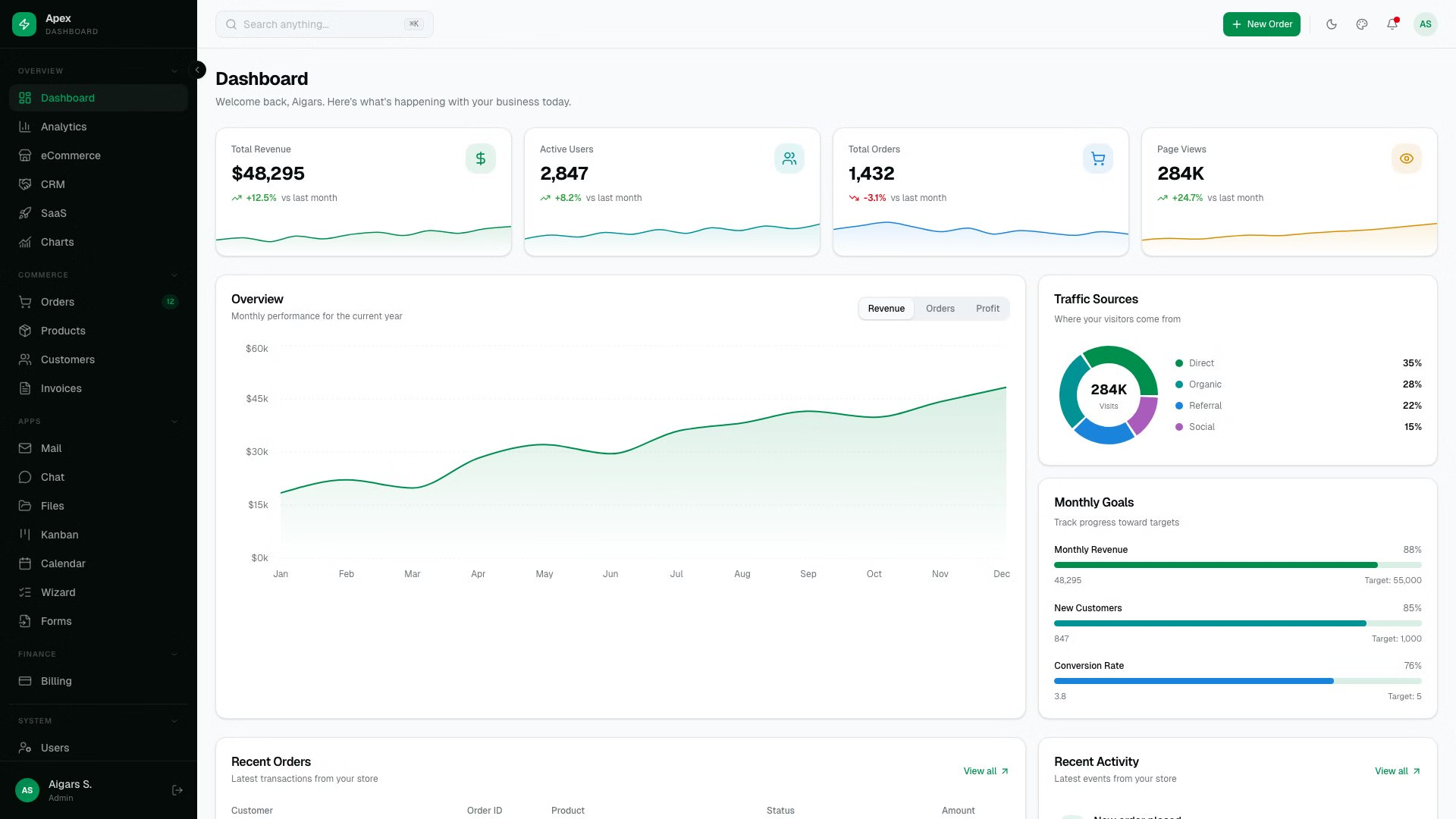
7 Best IoT Dashboard Templates 2026

Need an IoT dashboard for device management, telemetry, and visualization without paying for AWS IoT or Azure IoT Hub? These 7 picks cover ThingsBoard (the default open-source IoT platform), Magistrala (formerly Mainflux), the EMQX MQTT broker, Node-RED for visual flow programming, the Kuzzle IoT backend, Signal Dashboard for building custom frontends, and the GitHub iot-dashboard catalog. Every demo is re-checked before we republish this page.
A 2026-grade IoT dashboard solution typically combines four layers: a messaging layer (MQTT broker like EMQX or Mosquitto), a device management platform (ThingsBoard, Magistrala — provisioning, identity, telemetry storage), a visualization layer (built-in dashboards in the platform or a custom frontend like Signal), and a flow / automation layer (Node-RED, ThingsBoard rule chains). Some picks (ThingsBoard) cover most layers; others (EMQX, Kuzzle) focus on one well.
We’ve grouped the 7 picks below into two full IoT platforms (ThingsBoard for the all-in-one, Magistrala for microservices primitives), one MQTT broker (EMQX — high-scale messaging only), one visual flow tool (Node-RED for prototyping and integrations), one IoT-ready backend (Kuzzle for real-time + search + auth), one premium frontend template (Signal Dashboard for custom UI on top of any backend), and one catalog (GitHub topic). ThingsBoard is the right default; the other picks fit specific constraints.
Related reading: our analytics dashboard templates for the visualization layer if you bring your own platform, Next.js shadcn admin dashboards for shadcn-flavored frontend picks beyond Signal, SaaS admin dashboard templates for the multi-tenant management surface, Tailwind admin dashboards for Tailwind-flavored options, and our broader best admin dashboard templates pillar.
Quick Picks
- Best default open-source IoT platform: ThingsBoard — everything in one place
- Best microservices-style IoT primitives: Magistrala (formerly Mainflux)
- Best high-scale MQTT broker: EMQX — million-device scale
- Best visual flow programming: Node-RED — drag-and-drop integrations
- Best IoT-ready backend: Kuzzle — real-time + search + auth built in
- Best premium frontend template: Signal Dashboard — Next.js 16 + shadcn/ui
- Best discovery catalog: GitHub topic: iot-dashboard
1. ThingsBoard
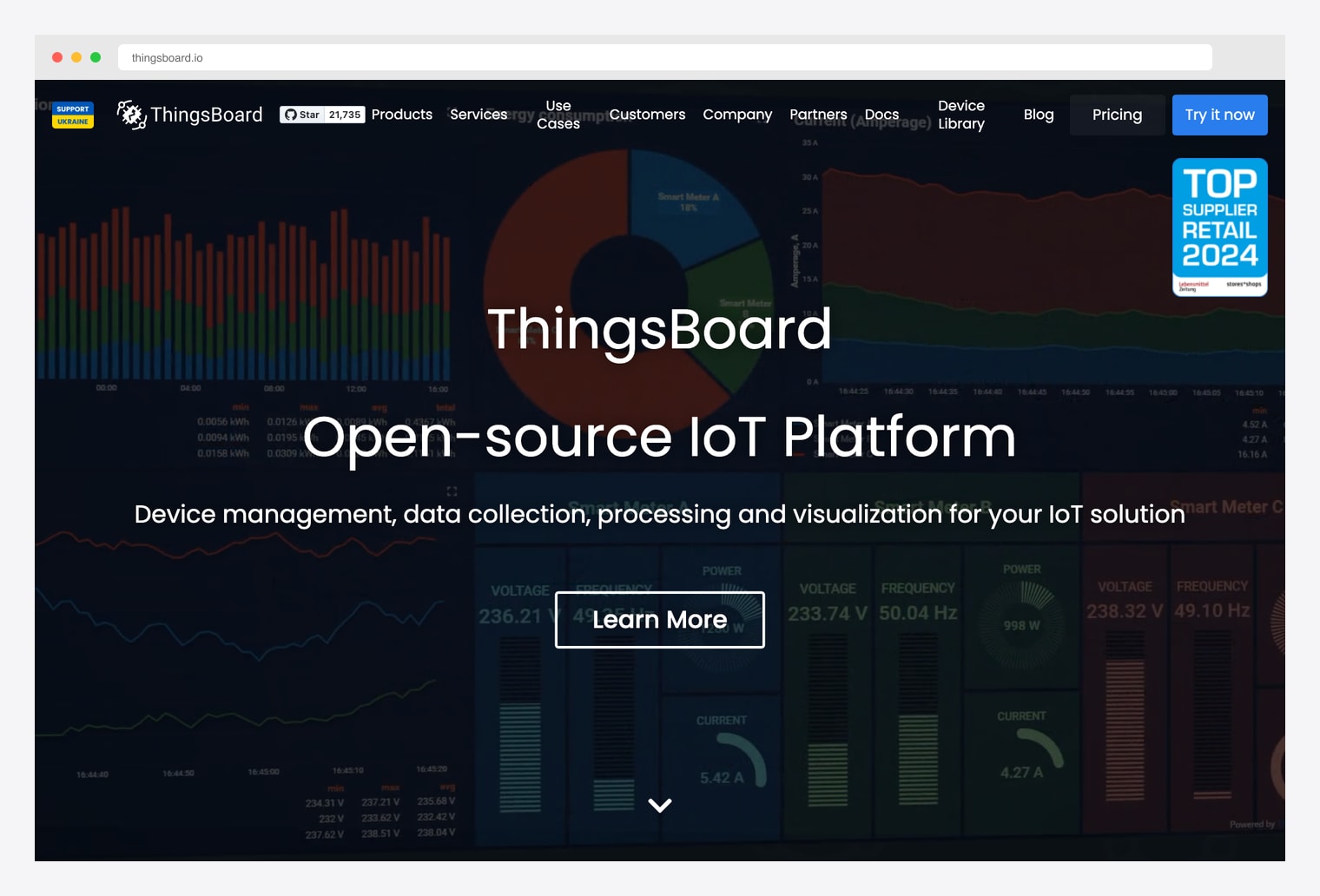
Why we like it: An open-source IoT platform covering device management, data collection, processing, and visualization — the canonical “everything in one place” IoT platform. Apache 2.0 Community Edition. Native MQTT, HTTP, CoAP support. PostgreSQL or Cassandra for time-series. Dashboards, rule chains, and alarm management built in. 21k+ GitHub stars.
Pick ThingsBoard as the default starting point unless you have a specific reason not to. The platform is opinionated about how IoT data should flow — devices → telemetry → rule chains → dashboards / alarms — and that opinion matches most real IoT workloads. Move to a lighter pick (EMQX, Magistrala) when you only need messaging without the full platform.
2. Magistrala (formerly Mainflux)
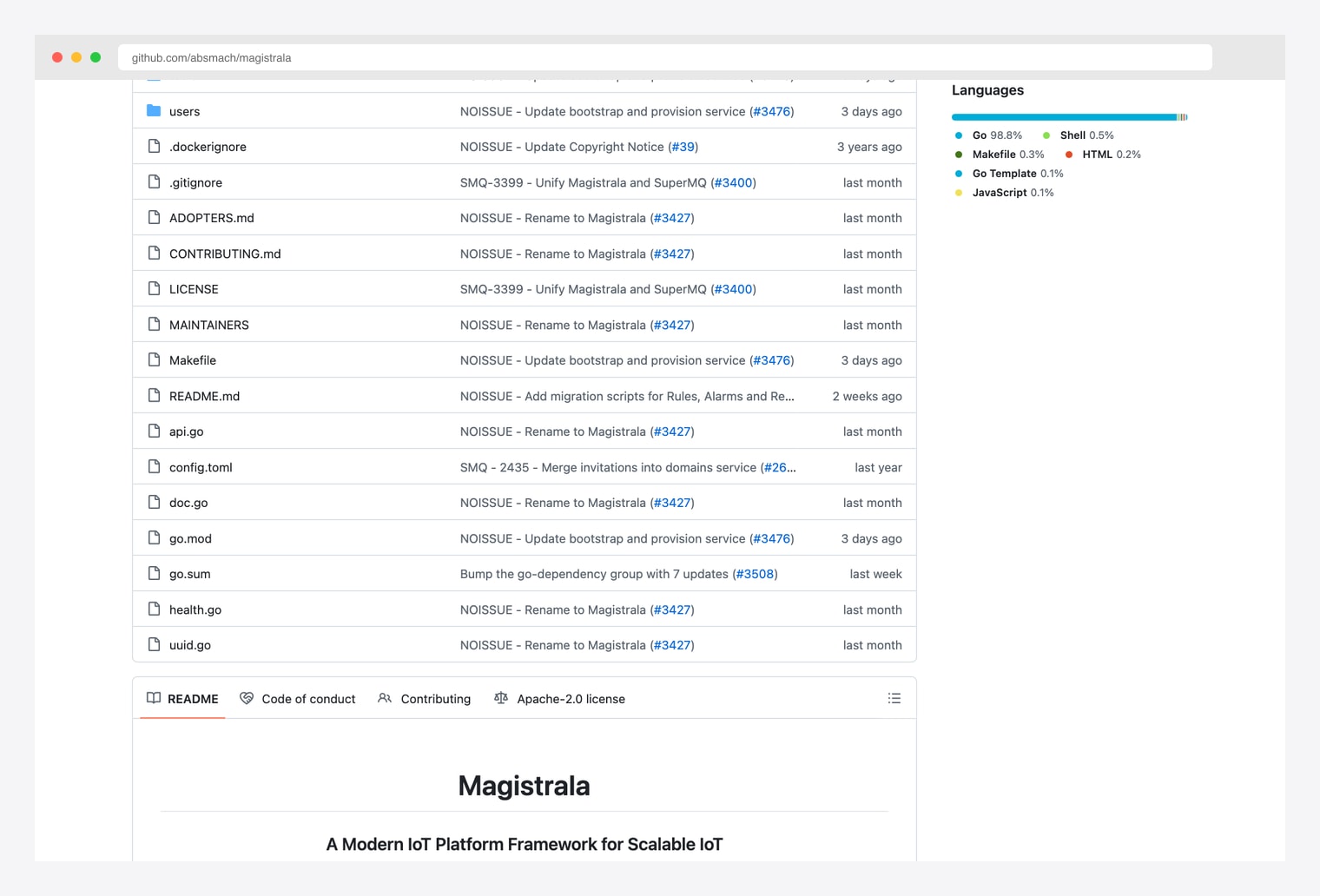
Why we like it: A Linux Foundation-recognized open-source IoT platform built as microservices in Go, containerized by Docker and orchestrated with Kubernetes. Focuses on clean primitives — messaging, identity, secure device connectivity — that you assemble into a platform. You still bring the dashboard and analytics layer on top. Formerly Mainflux; the repo is now under absmach.
Pick Magistrala when you want to assemble your own IoT platform from focused microservices rather than adopt ThingsBoard’s opinionated all-in-one. The trade-off: you build the dashboard / analytics layer yourself. Most teams that pick this also pair it with Grafana or a custom shadcn-based admin (see Signal Dashboard below).
3. EMQX
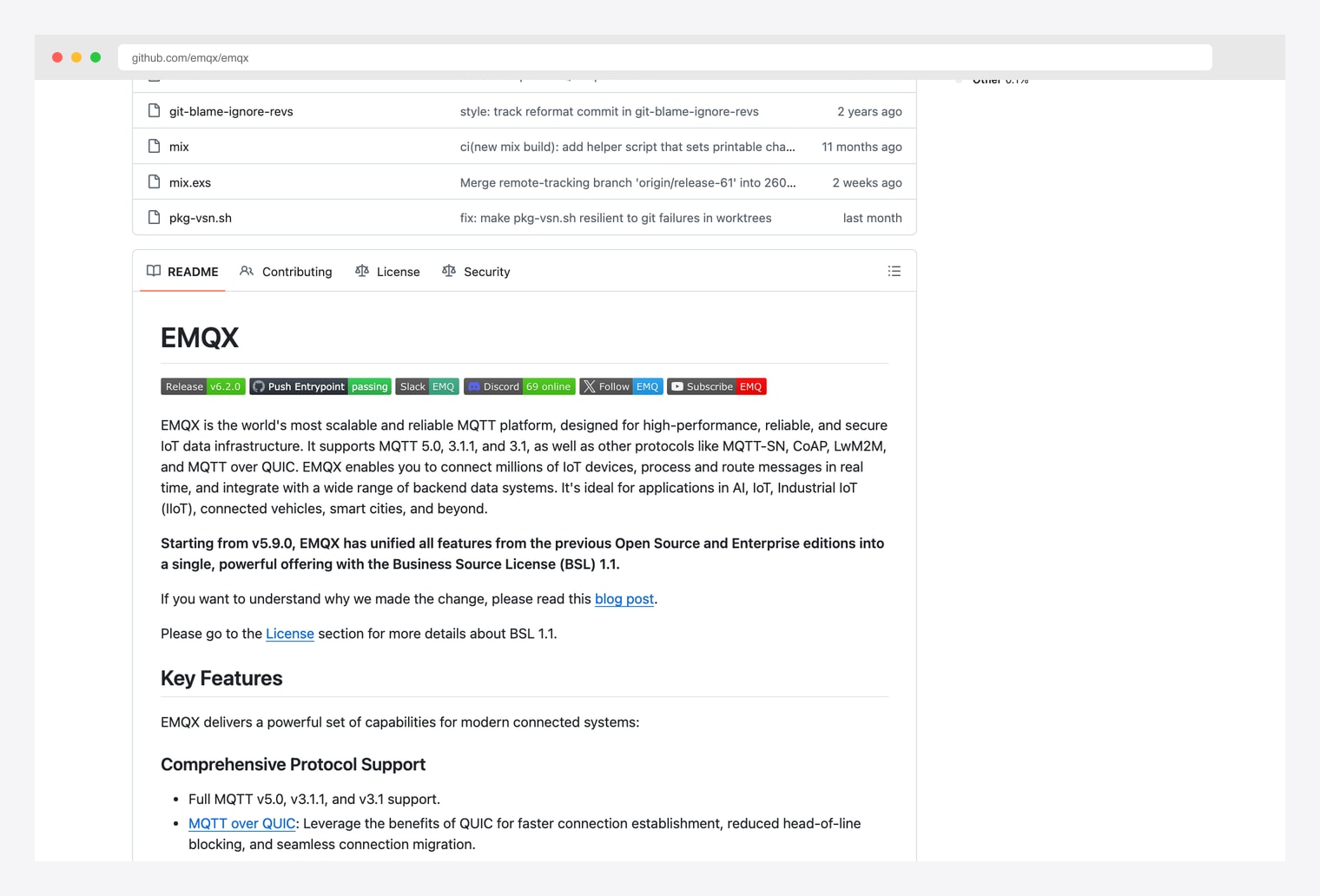
Why we like it: An open-source distributed MQTT broker designed for million-device-scale IoT messaging. MQTT 5.0 support, clustering, rule engine, multi-tenancy, and a connector ecosystem for downstream integrations. Apache 2.0 community edition; Enterprise tier adds high-availability and commercial support.
Pick EMQX when MQTT scale is the primary concern — you have hundreds of thousands or millions of devices and need a broker that won’t become the bottleneck. Pair it with ThingsBoard or your own dashboard on top — EMQX is the messaging layer, not the full platform.
4. Node-RED
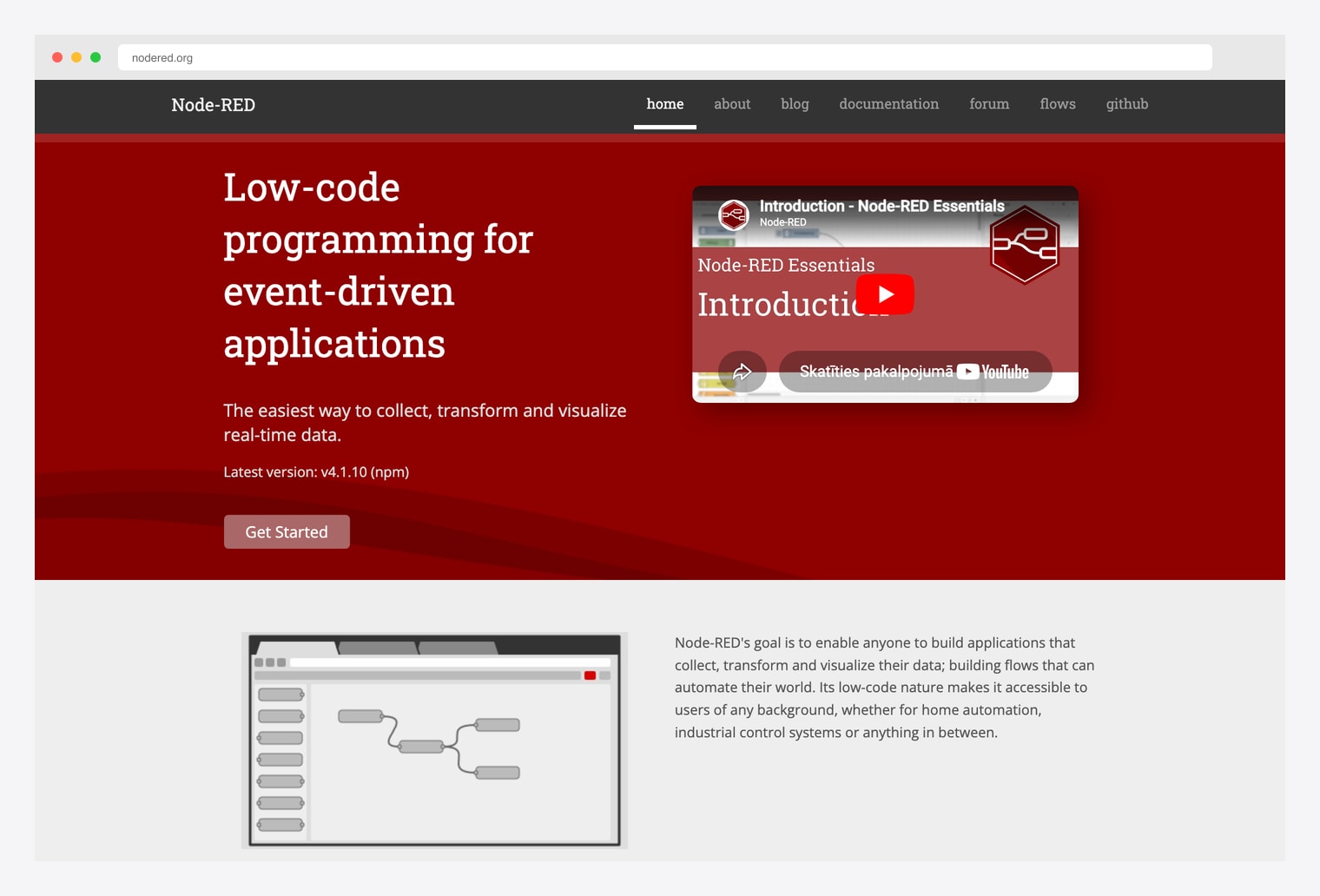
Why we like it: A flow-based programming tool for wiring together hardware devices, APIs, and online services through a visual node editor. Eclipse Foundation project, widely used for IoT prototyping, Raspberry Pi automation, and home / industrial integrations where drag-and-drop beats writing code.
Pick Node-RED when the audience is non-developers or when prototyping speed matters more than codebase maintainability. The drag-and-drop flow editor lets domain experts (engineers, technicians, makers) build integrations without writing code. Often paired with MQTT brokers like EMQX or Mosquitto on the back end.
5. Kuzzle
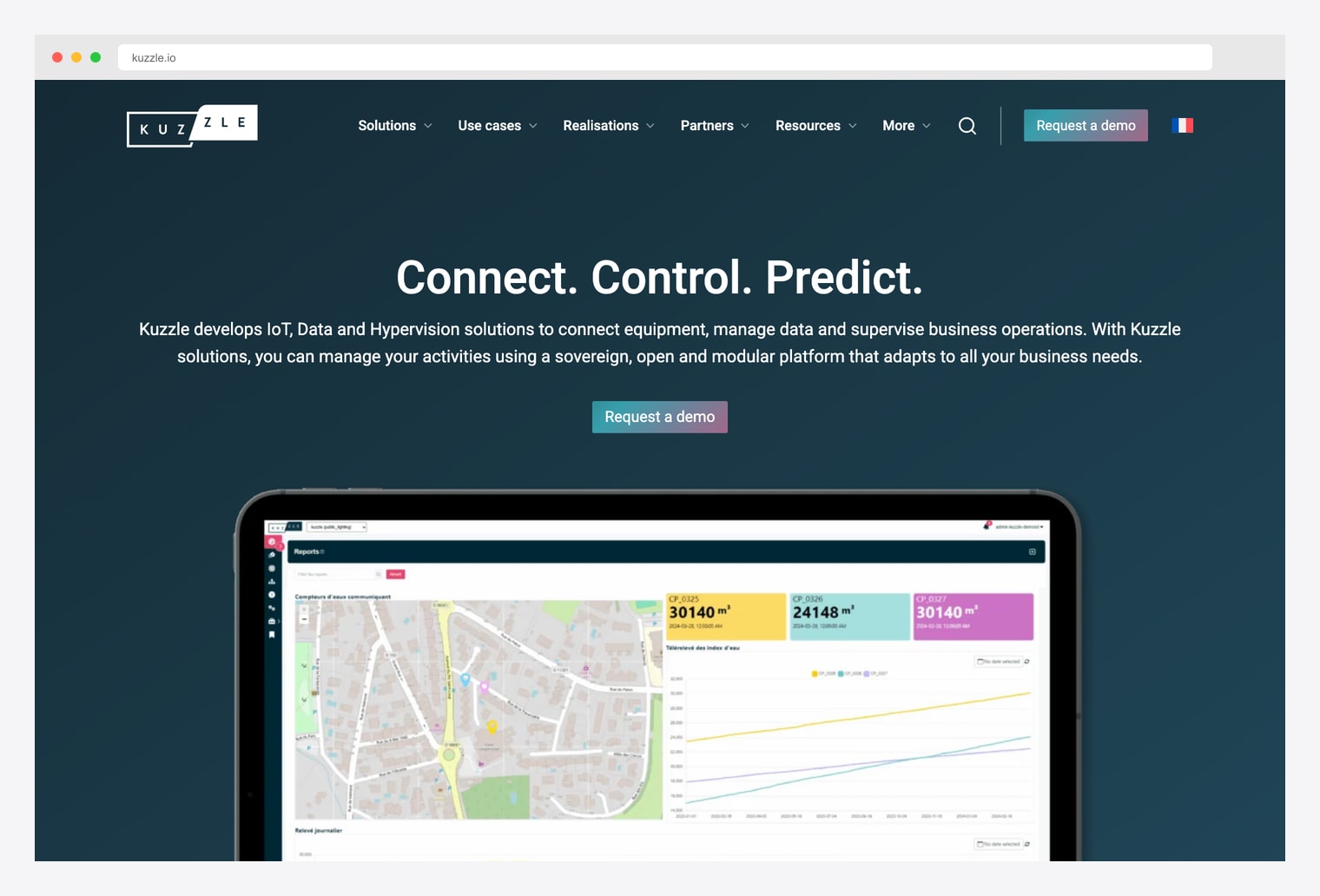
Why we like it: An open-source backend providing IoT-ready APIs out of the box — real-time pub/sub, search powered by Elasticsearch, authentication, and storage. Apache 2.0 core with paid Enterprise tier. Aims to be the backend layer for IoT applications without forcing you to assemble Express + Postgres + Redis + Elasticsearch yourself.
Pick Kuzzle when you want a higher-level backend abstraction than Magistrala but a more flexible one than ThingsBoard’s opinionated full platform. The built-in real-time pub/sub + Elasticsearch combination is the differentiator — most IoT projects re-implement both poorly when rolling their own backend.
6. Signal Dashboard
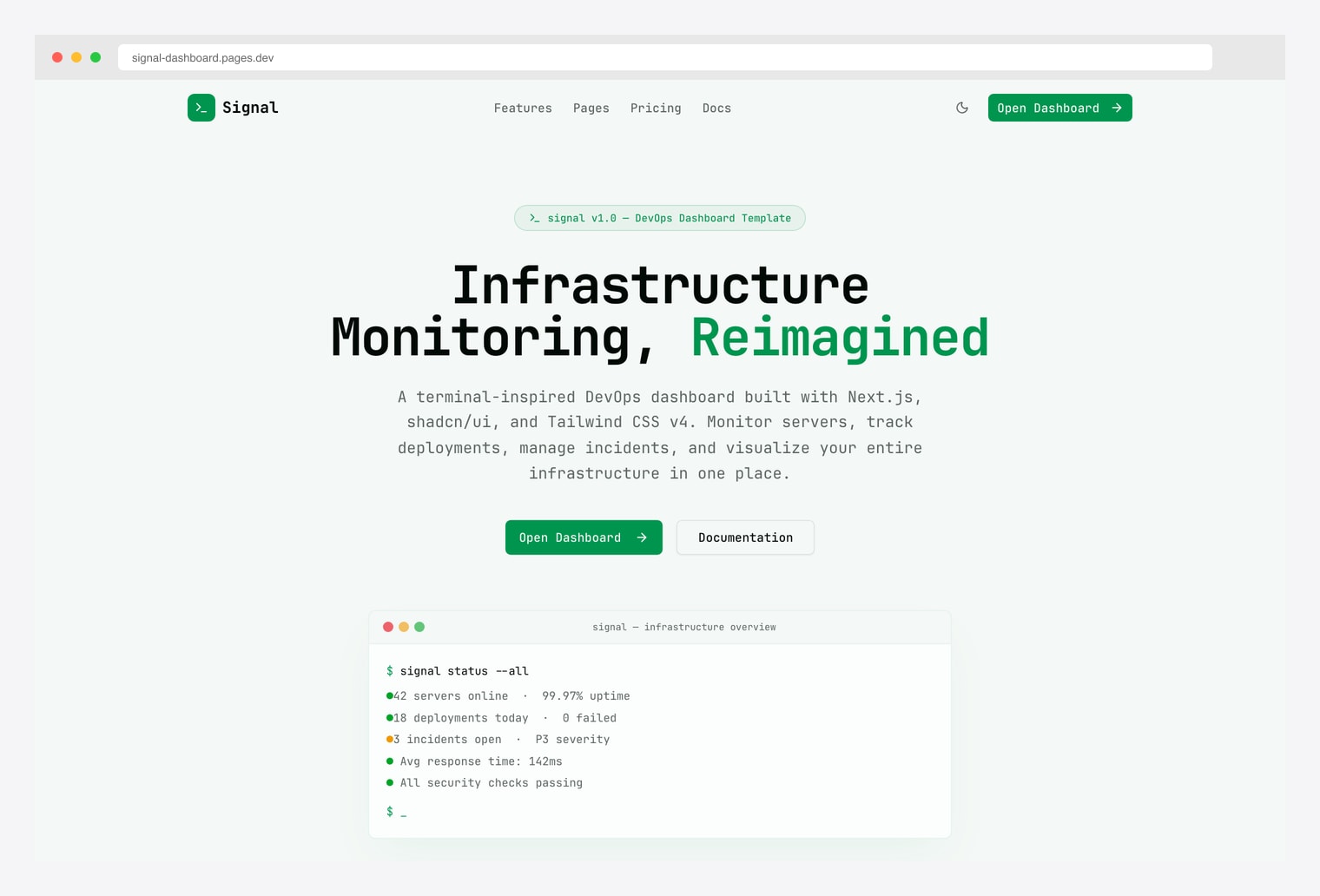
Why we like it: A terminal-inspired DevOps dashboard template built with Next.js 16, React 19, Tailwind CSS v4, and shadcn/ui. 13 domain-specific views (Server Fleet, Containers, Deployments, Incidents, Log Explorer, Uptime Monitor, CI/CD, Databases, Security Audit, API Monitoring, Kubernetes, Cloud Costs, Status Page) plus 44 additional pages. Mock data swappable with your APIs. Pick this when you want a custom IoT or infrastructure-monitoring frontend on top of ThingsBoard, Magistrala, or EMQX. We covered Signal in our Next.js shadcn admin dashboards roundup.
Pick Signal when none of the open-source IoT platforms above ship a frontend that matches your design language. The terminal-inspired DevOps style maps cleanly to industrial-IoT or infrastructure-monitoring use cases — server fleet becomes device fleet, deployments become firmware rollouts, incidents become alarm events.
7. GitHub Topic: iot-dashboard
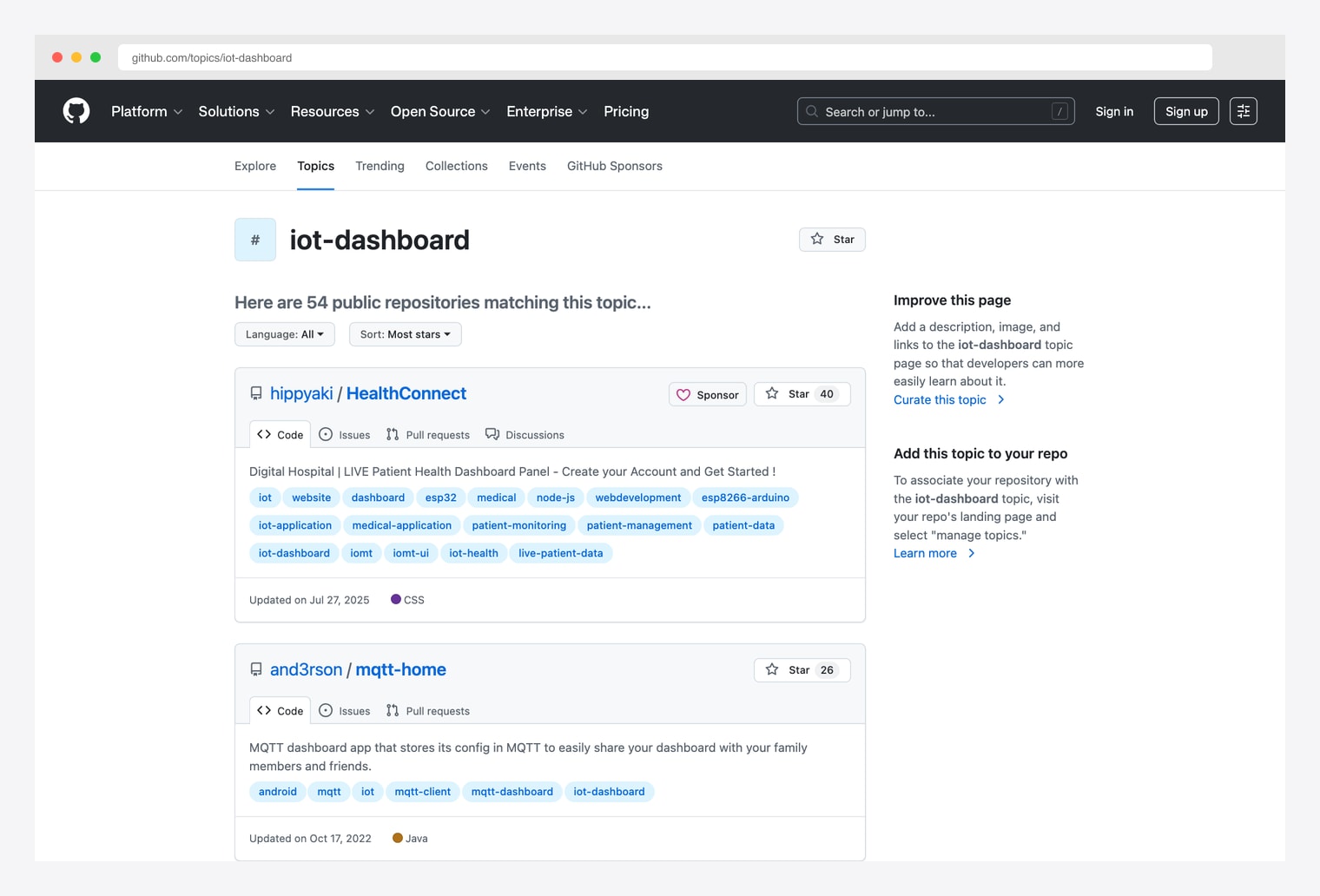
Why we like it: GitHub’s iot-dashboard topic catalog — public repositories tagged for IoT dashboards, sorted by stars. Sibling topics include iot-platform, mqtt, and iot-device. Useful for finding niche-specific picks (energy monitoring, building automation, fleet tracking, agriculture IoT) that aren’t in the curated picks above.
Pick the catalog as the “did I miss anything?” check after the picks above. New IoT dashboard projects land here as community developers ship them — particularly niche-specific variants (smart agriculture, marine IoT, energy management) that don’t make general-purpose roundups.
How to Choose the Right IoT Dashboard
The 7 picks split along three practical axes:
By layer
- Messaging only (MQTT broker): EMQX.
- Full IoT platform (messaging + device mgmt + dashboards + rules): ThingsBoard.
- Microservices primitives (assemble your own platform): Magistrala, Kuzzle.
- Flow / integration layer: Node-RED.
- Frontend / visualization only: Signal Dashboard.
By stack
- Java backend (Spring-ecosystem-friendly): ThingsBoard.
- Erlang (high-concurrency MQTT): EMQX.
- Go (microservices, fast deploy): Magistrala.
- Node.js: Node-RED, Kuzzle.
- Next.js + React + shadcn/ui frontend: Signal Dashboard.
By scale + complexity
- Prototype / Raspberry Pi / home automation: Node-RED.
- SME deployments (thousands of devices): ThingsBoard Community Edition.
- Enterprise (millions of devices, multi-tenant): ThingsBoard Pro + EMQX Enterprise.
- Custom platform assembly: Magistrala + Kuzzle + custom frontend like Signal.
A practical pattern in 2026: start with ThingsBoard Community Edition as the default — it covers messaging, device management, telemetry, dashboards, and rules in one platform with Docker-first setup. Add EMQX in front when MQTT scale becomes the bottleneck (hundreds of thousands of concurrent devices). Switch to Magistrala + Signal Dashboard when ThingsBoard’s built-in dashboards aren’t enough and you want to assemble a custom platform from primitives. Use Node-RED alongside any of the above for the visual-flow integration layer.

You Might Also Like