13 Best React Portfolio Templates for Developers 2026
Looking for a React portfolio template that ships in 2026 — not a 2022-era starter abandoned mid-upgrade? These 13 picks span the entire stack: Next.js 16 with React 19 and Tailwind v4 at the bleeding edge, Vite-based options for sub-second dev startup, premium Aceternity UI suites, and the classic Brittany Chiang and Simplefolio templates that defined the genre.
A 2026-grade developer portfolio template handles five surfaces well: a hero / intro section with personality, a project showcase with case-study depth, an about / work-experience block, a writing surface (blog or MDX posts), and a contact form that works without a backend. Add dark mode and Core Web Vitals on the green and you’ve covered every box hiring managers and freelance clients actually check.
We’ve grouped the 13 picks below into premium React portfolio templates (Aceternity UI) and free / open-source templates (Magic UI, mldangelo, Tailwind Next.js Starter Blog, Brittany Chiang v4, Lee Robinson, Nim, Chetan Verma, Simplefolio, Cleanfolio, Ryan Balieiro, Yuji Sato, Hanzla). Every GitHub repository and live demo is re-checked before we republish this page.
Related reading: React templates, React landing page templates, free React templates, and React admin dashboard templates roundups.
Quick Picks
- Best premium suite: Aceternity UI Portfolios — 4 portfolio layouts plus 100+ animated components, one All-Access price
- Best modern stack: mldangelo Personal Site — Next.js 16 + React 19 + Tailwind v4, AI-friendly, January 2026 release
- Best single-config setup: Magic UI Portfolio — edit one resume.tsx, deploy in under an hour
- Best blog-first portfolio: Tailwind Next.js Starter Blog — 10.5k stars, MDX + RSS + analytics built in
- Best iconic design: Brittany Chiang v4 — the most-forked developer portfolio on the internet (8.2k stars)
- Best Vercel-grade polish: Lee Robinson Personal Site — 7.6k stars, Next.js + MDX, by Vercel’s former head of DevRel
- Best minimal: Nim — one-page, Motion-Primitives animations, Next.js 15
- Best classic: Simplefolio — 14.2k stars, Bootstrap + Parcel, the OG React portfolio
- Best for restraint: Cleanfolio — no Three.js, no gradients, just typography and projects
- Best multi-language: Ryan Balieiro Multi-Language — Vite + Bootstrap 5 + i18n out of the box
- Best TypeScript-first: Yuji Sato — 69% TypeScript, React Router multi-page, no Next.js commitment
- Best config-driven: Hanzla Developer Portfolio — fill in portfolio.ts, Lottie + react-reveal animations included
- Best widely-forked starter: Chetan Verma React Portfolio — 1.7k stars, 696+ forks, GUI editor for content
1. Aceternity UI Portfolio Templates
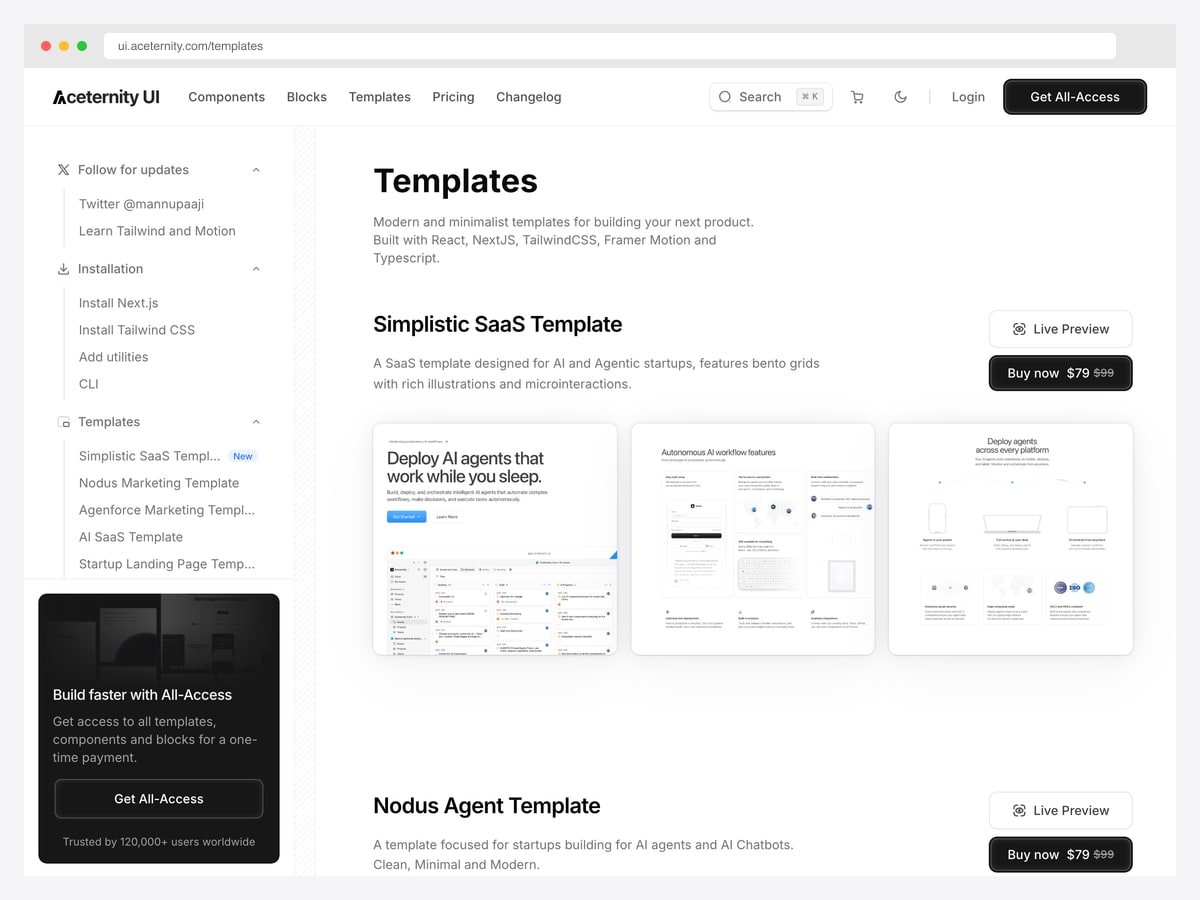
Why we like it: Four distinct portfolio templates — Minimal, Minimalist, DevPro, and Sidefolio — each taking a different layout philosophy. DevPro adds blog and event pages for developers; Sidefolio runs a persistent sidebar with toggleable mobile drawer; Minimal and Minimalist trim the chrome for designers. One license unlocks all four plus 30+ landing, SaaS, and AI templates.
The animation work is the value here — Aceternity’s library has become the de facto reference for premium-feeling React landing pages in 2026. Pair with our React landing page templates roundup for the marketing-site counterpart.
2. mldangelo Personal Site
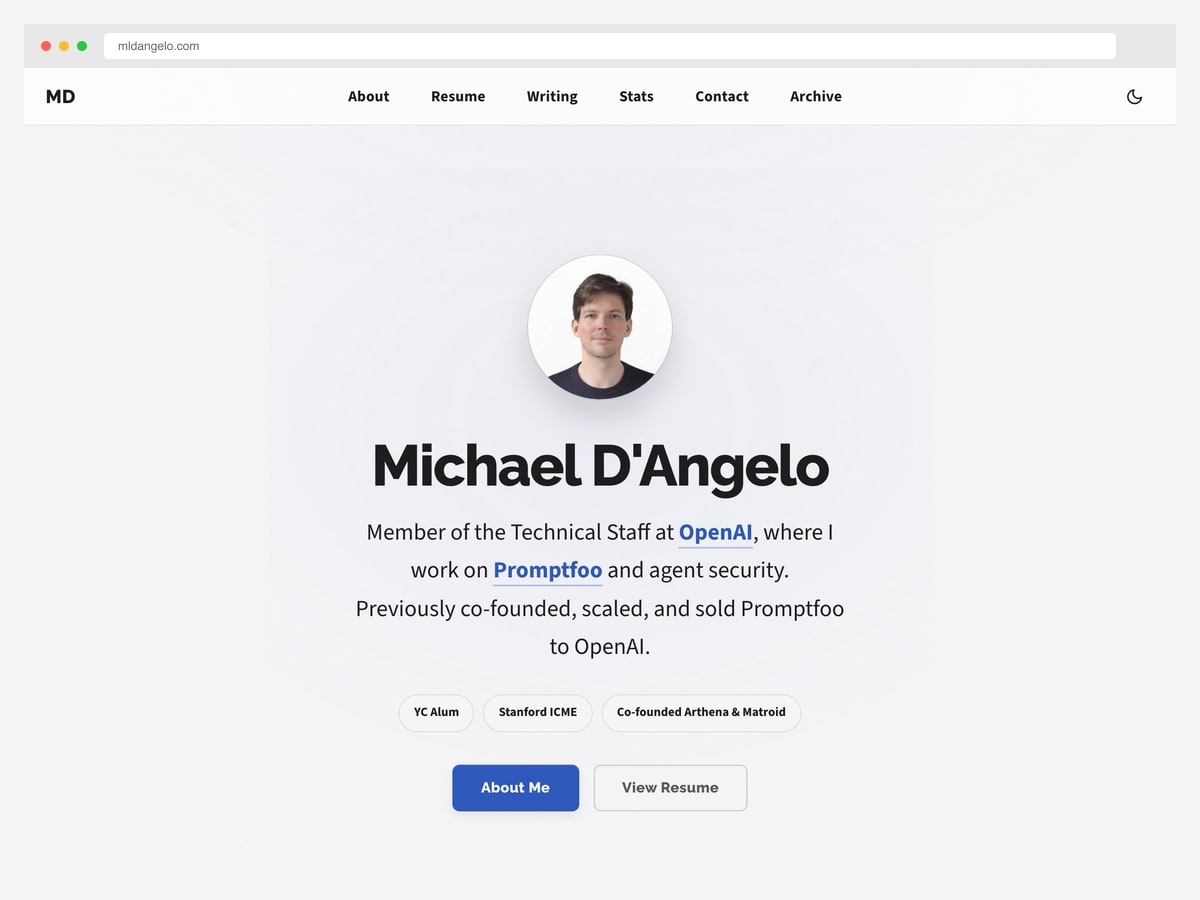
Why we like it: The most current personal-site template on this list — v4.1.0 released January 2026. Every dependency on the latest major. Dark mode with system preference detection, markdown blog with RSS, automatic GitHub Pages deployment, and explicit “AI-friendly” annotations so GitHub Copilot, Claude, and Cursor produce sensible diffs.
The deployment story is unusually polished for a free template — GitHub Actions deploy to Pages on every push, no Vercel account required. Best fit when you want to host on your own infrastructure rather than tie your portfolio to a specific PaaS.
3. Magic UI Portfolio (magicuidesign)
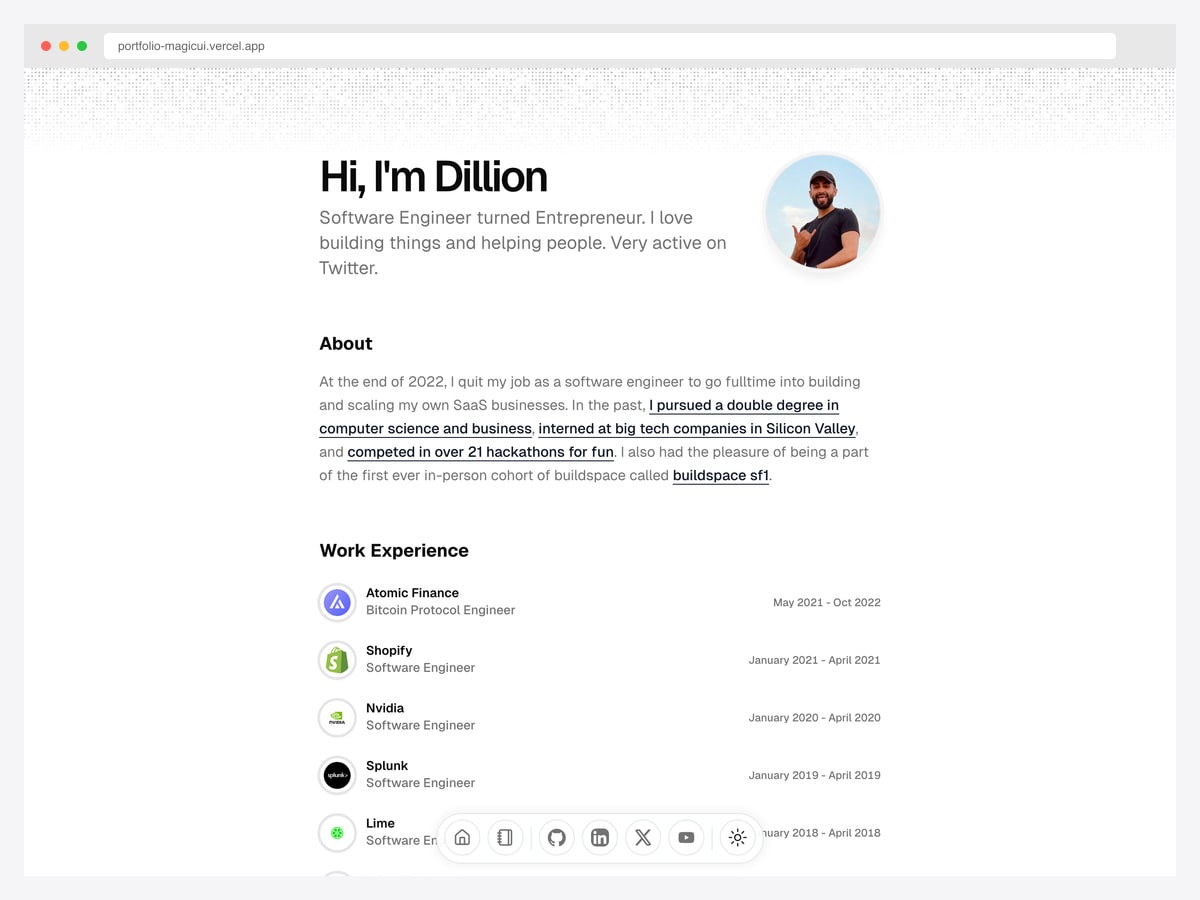
Why we like it: The cleanest “single config file” portfolio in the React ecosystem. Edit one resume.tsx file and your hero, work history, projects, hackathons, and blog all populate from typed data. Setup takes under an hour from clone to deployed Vercel URL.
The Magic UI design language itself has 19,000+ stars — pour-on polish in every component, particle effects, animated text, and interactive cards. Pair with the Magic UI Pro library ($199 lifetime) if you want to extend with 50+ premium blocks.
4. Tailwind Next.js Starter Blog
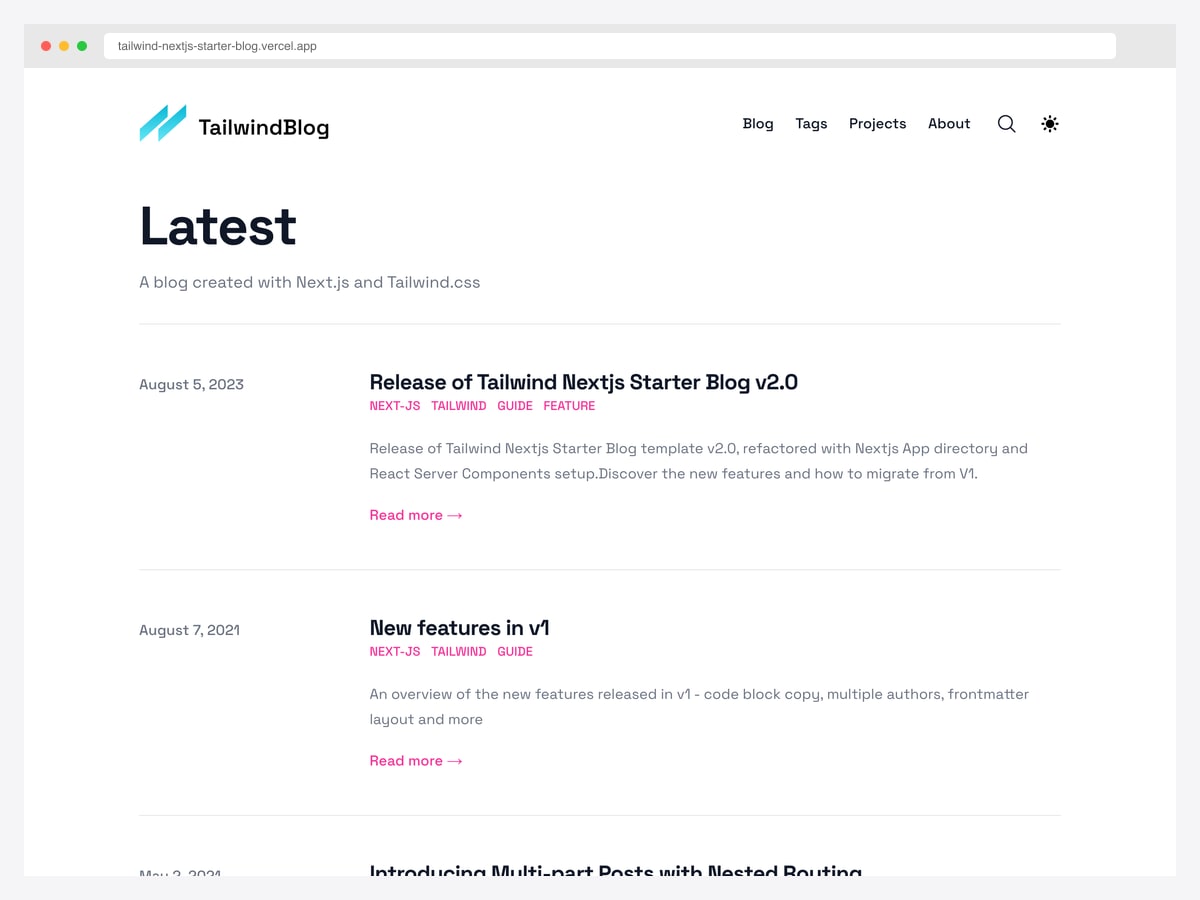
Why we like it: The de facto Next.js blogging starter. MDX content, server-side syntax highlighting with line numbers, RSS, sitemaps, KaTeX math support, and three optional comment systems (Giscus, Utterances, Disqus). Drop-in analytics for Umami, Plausible, and Google Analytics behind a single env var.
Originally aimed at technical writers replacing Jekyll or Hugo, but the about-page and projects sections make it a credible portfolio surface too. Best pick if your portfolio’s job is to convert “person reading my blog post” into “person about to email me”.
5. Brittany Chiang v4
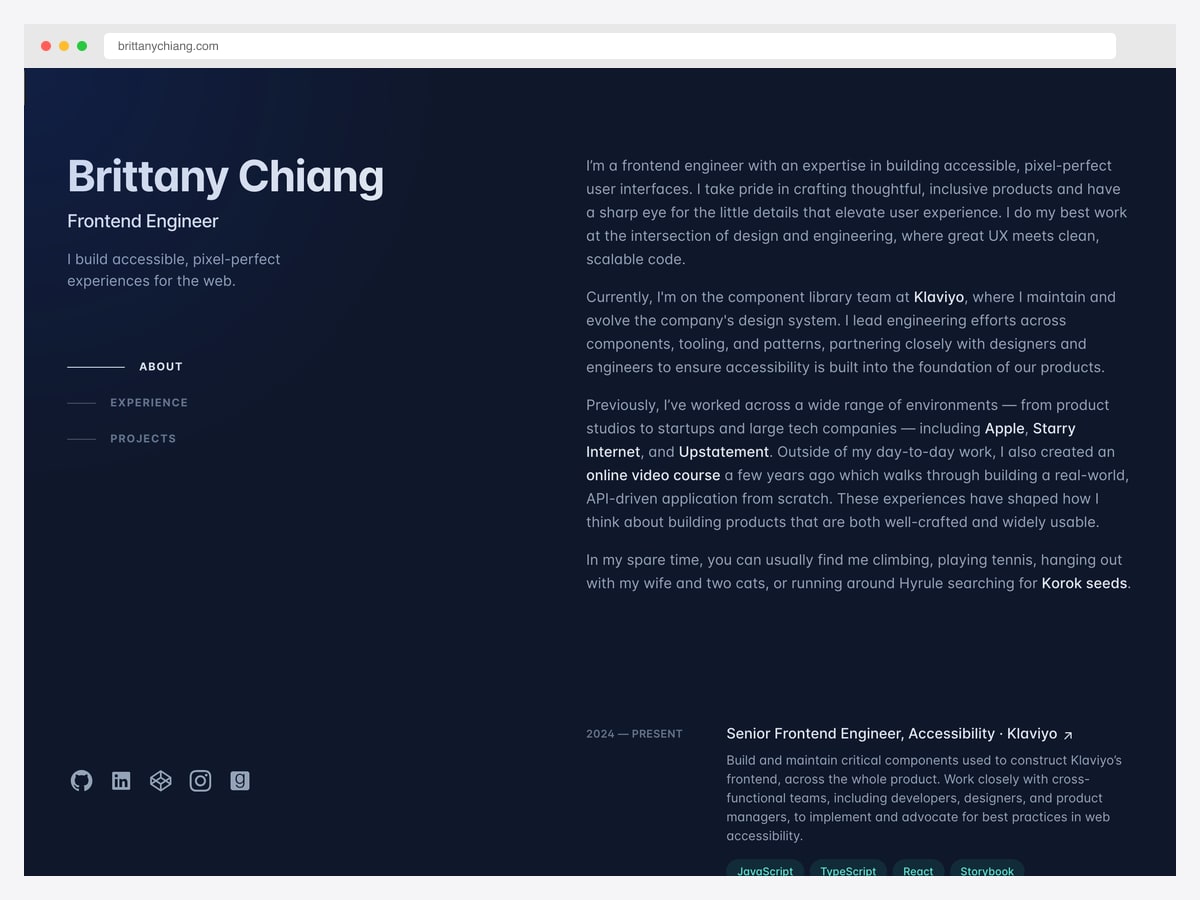
Why we like it: The most-imitated developer portfolio on the internet. Hand-tuned color palette, generous whitespace, and a side-rail social nav that became the genre’s defining feature. Forked into thousands of personal sites since 2020.
Brittany asks for attribution when forking — honour that, the design is the value here, not the boilerplate. Gatsby is slower-moving than Next.js in 2026 but build outputs are excellent for static portfolios. Best when you want a portfolio that signals “I know good design when I see it” without spending two weeks on a custom layout.
6. Lee Robinson Personal Site (next-blog-mdx)
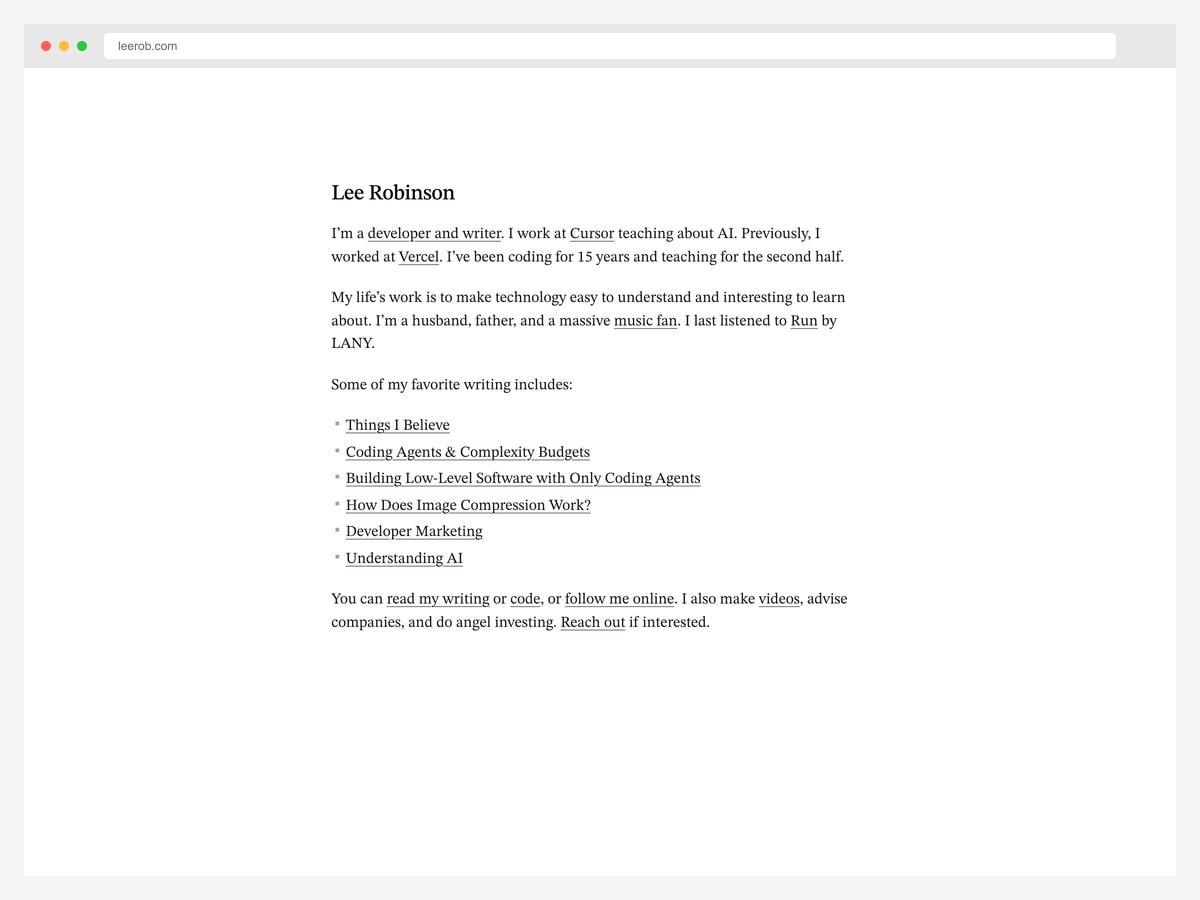
Why we like it: The personal site and template source from Lee Robinson — former head of DevRel at Vercel, now at Cursor. Next.js + MDX blog, Tailwind CSS, TypeScript, Vercel Analytics built in, and an optional Postgres database for managing redirects. Minimalist typography-first aesthetic that lets the writing do the talking.
Few portfolio templates carry this much real-world deployment credibility — Lee’s been iterating on this site for years and shipping every refinement back to the public template. Best pick when you want the most idiomatic Next.js portfolio reference available — fork it, swap in your content, deploy in 10 minutes.
7. Nim
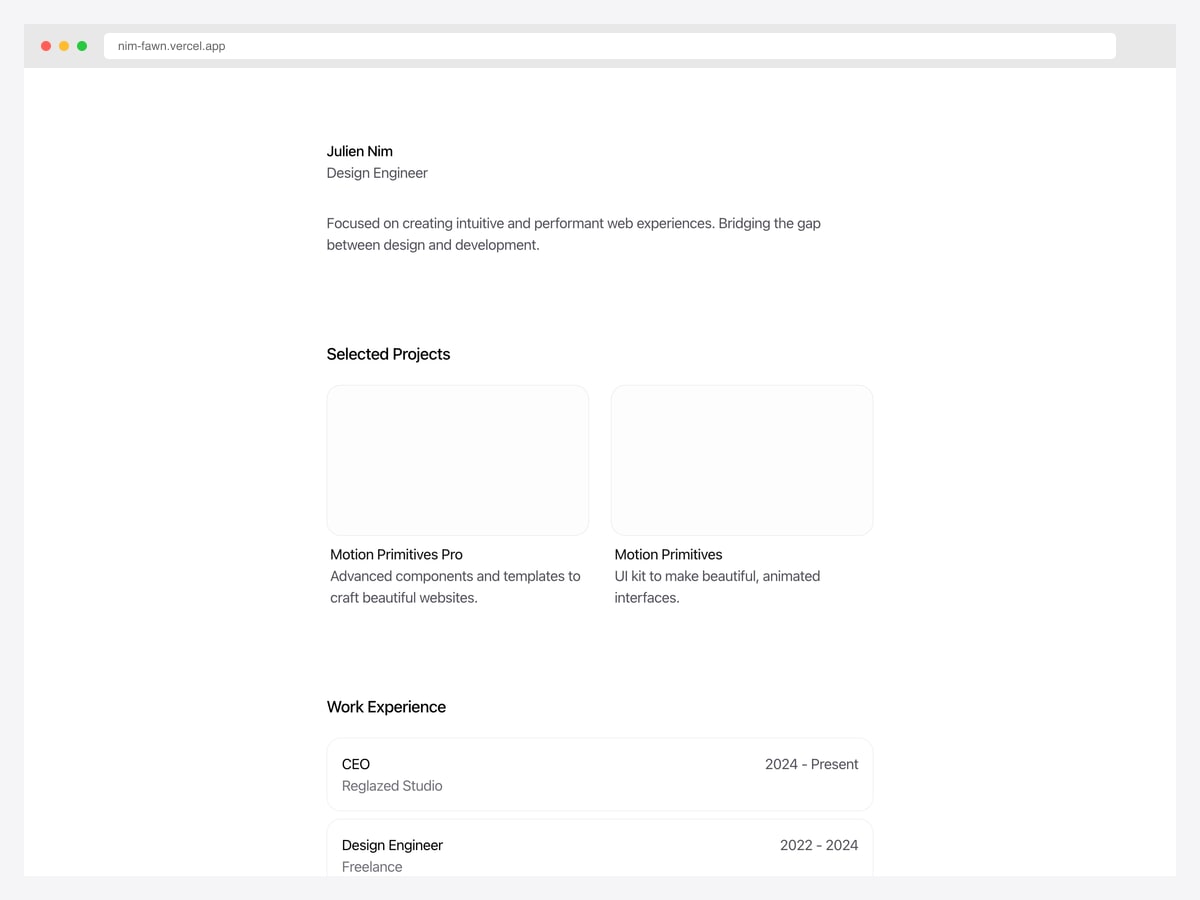
Why we like it: Minimal one-page portfolio by Julien Thibeaut. Accessible by default, dark mode included, MDX-based blog support. The whole site fits on one screen and reads more like a designed business card than a traditional portfolio.
Julien also maintains Motion-Primitives — a Framer-Motion-built animation library — so the animation work in Nim is the canonical reference for how to use that library well. Best fit for designer-developers, indie hackers, or anyone who wants signal over noise.
8. Chetan Verma React Portfolio Template
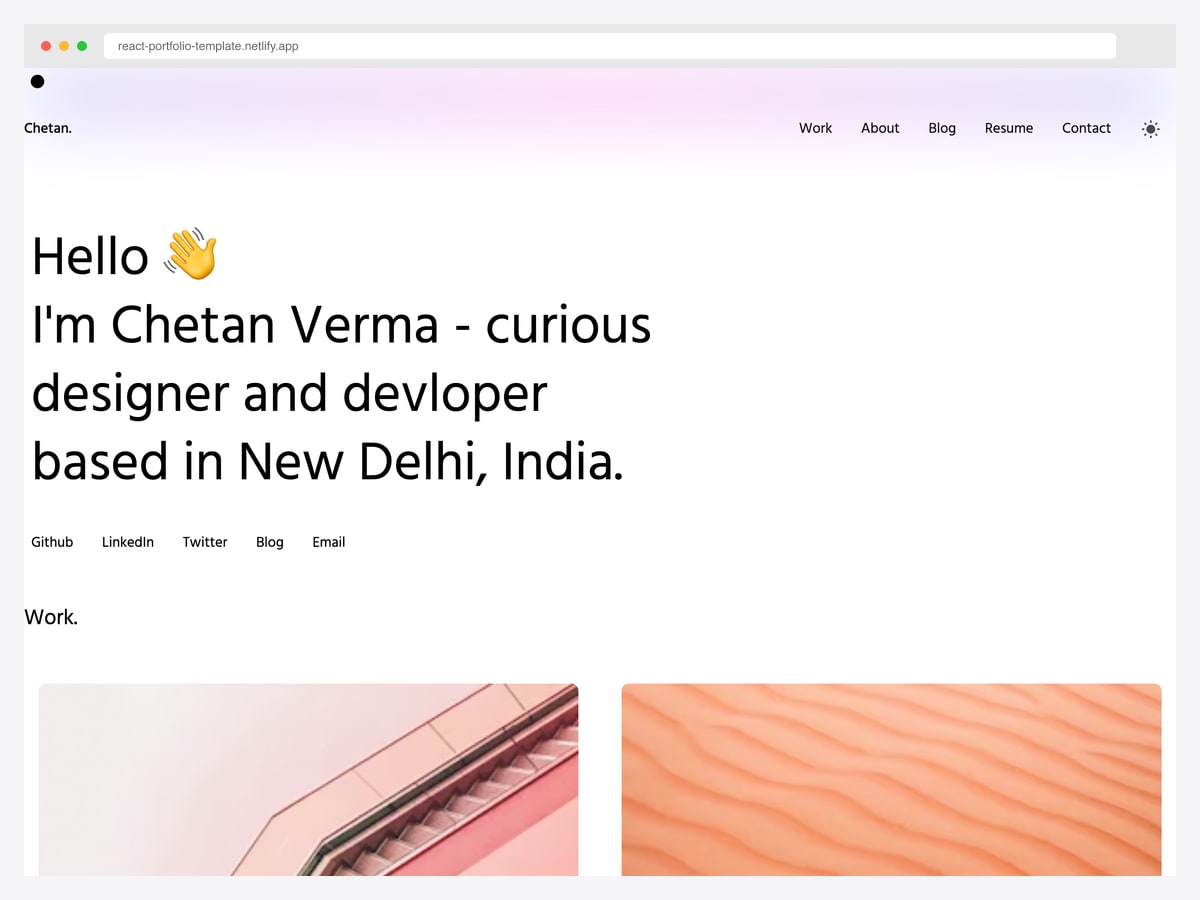
Why we like it: Dark mode, a GUI editor that lets non-developers personalize content without touching code, a markdown blog with CRUD operations, and pre-built sections for Header, Work, Services, About, and Contact.
Caveat: the v3.0 release shipped in July 2022, so dependencies are not on the latest majors. You’ll want to bump Next.js and Tailwind before going live. The design language is timeless enough that hundreds of developers still use it in 2026 — the bones are clean enough to be a strong starting point.
9. Simplefolio
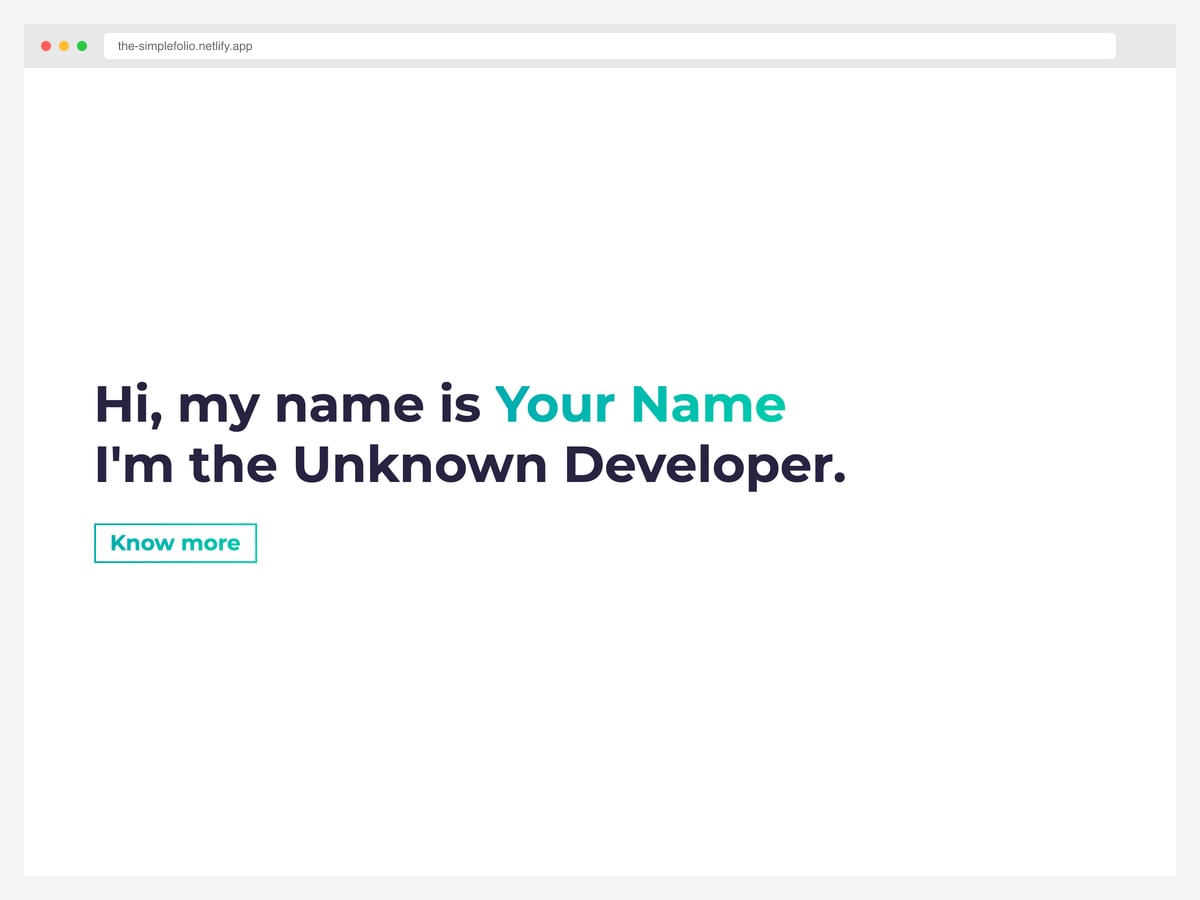
Why we like it: The most-forked React portfolio template ever published. One-page responsive layout, valid HTML5/CSS3, ScrollReveal entrance animations, and Tilt.js project-card hover effects. Stable, well-documented, and arguably the easiest “I just want to ship something” choice for developers new to React.
A relic in the best sense — built before Next.js dominated, when Parcel was the cool bundler choice and Bootstrap was still on v4. Hasn’t kept pace with the modern Tailwind + shadcn stack, but the thousands of reference forks make it the easiest template to learn from when you’re new to React.
10. Cleanfolio
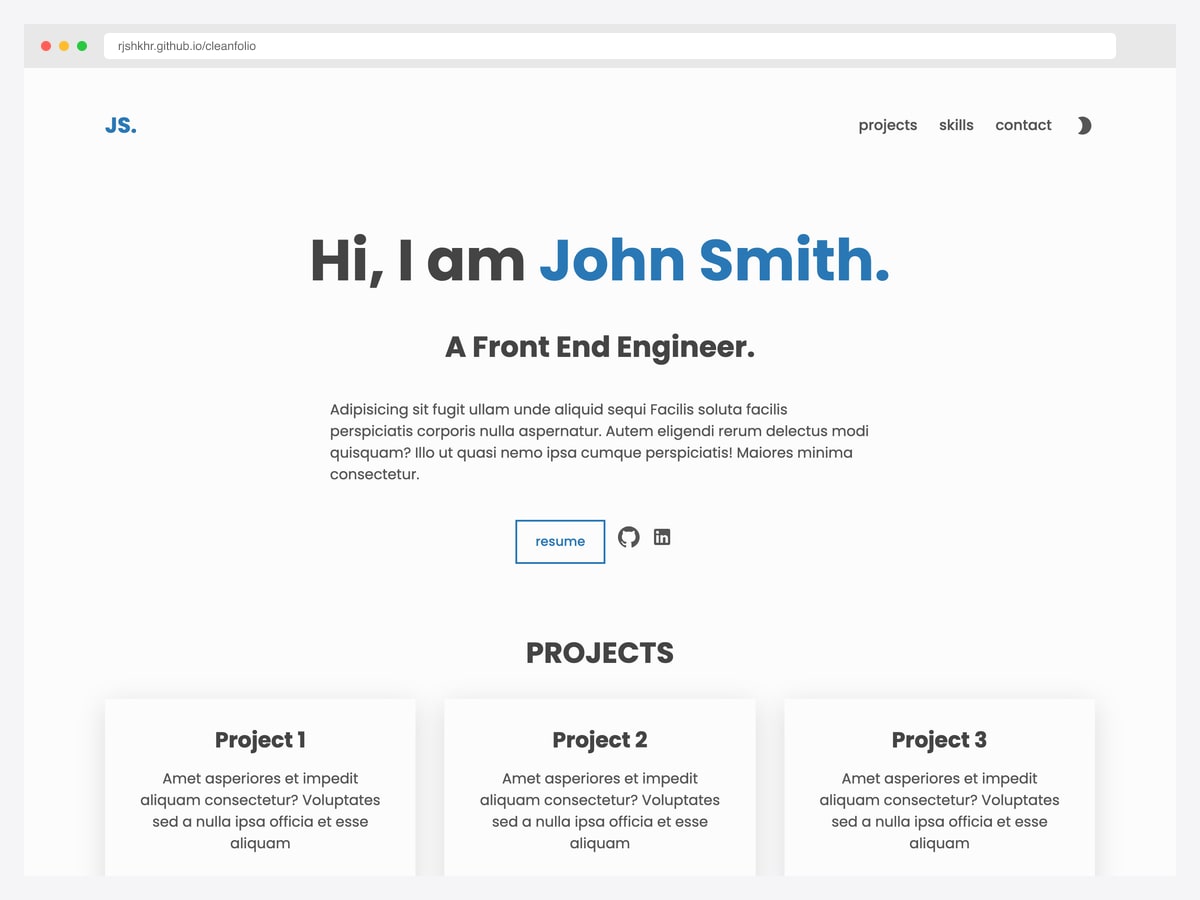
Why we like it: Restraint by design — no animations, no Three.js scenes, no gradient backgrounds — just typography, project cards, and a clear call to action. Customizable project showcase with local or web-hosted images, built-in deployment for GitHub Pages, and a separate Cleanfolio Minimal variant for developers who want even less chrome.
Plain JavaScript rather than TypeScript, which keeps the codebase tiny. Best for developers who want their work to do the talking and feel like animated portfolios are trying too hard.
11. Ryan Balieiro Multi-Language Portfolio
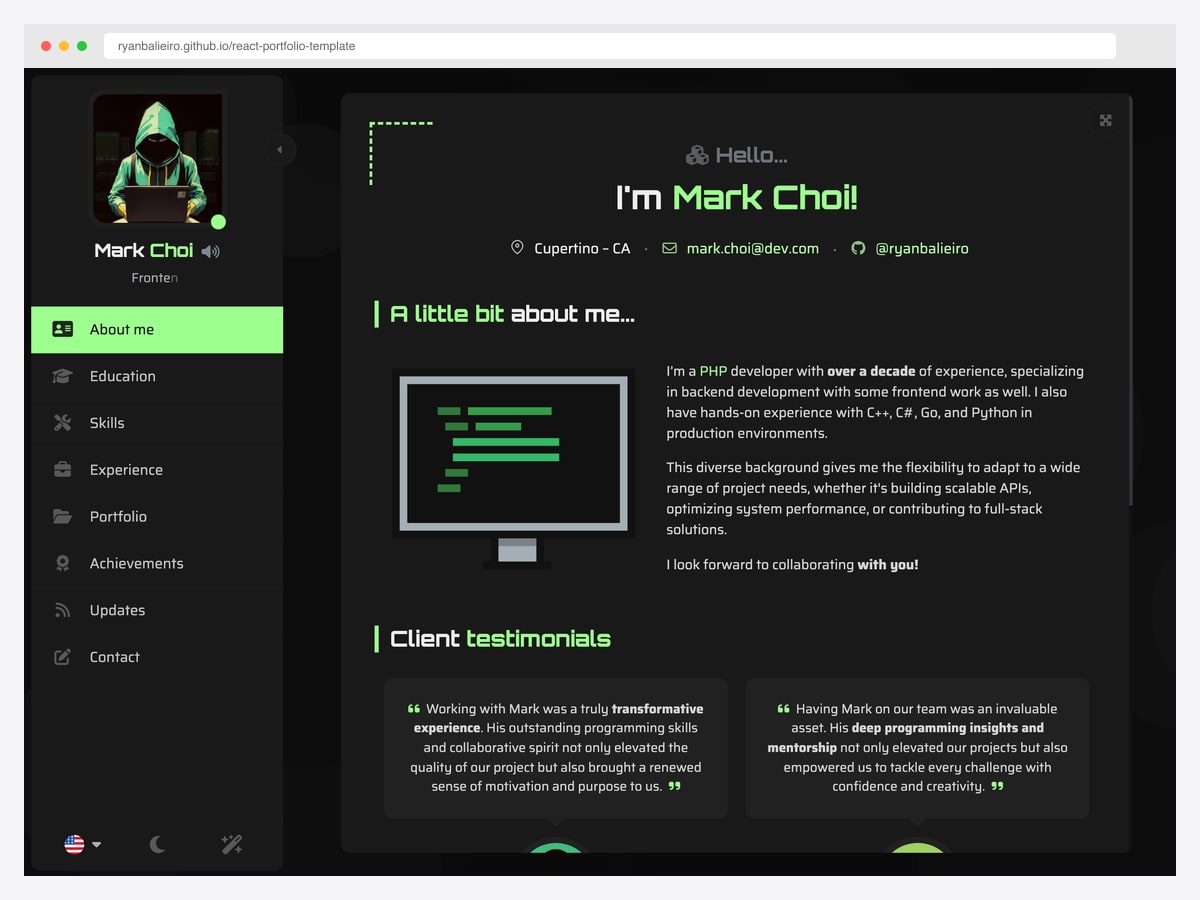
Why we like it: The most international-ready React portfolio template on this list — multi-language support out of the box (a rarity in this niche). Dark and light themes, EmailJS integration so contact forms work without a backend, and a tabbed mobile interface that adapts the layout for small screens.
Vite means sub-second dev startup compared to Next.js, which is welcome for a static portfolio that doesn’t need SSR. Best when applying to international roles, freelancing across regions, or hosting in your native language plus English.
12. Yuji Sato React Portfolio Template
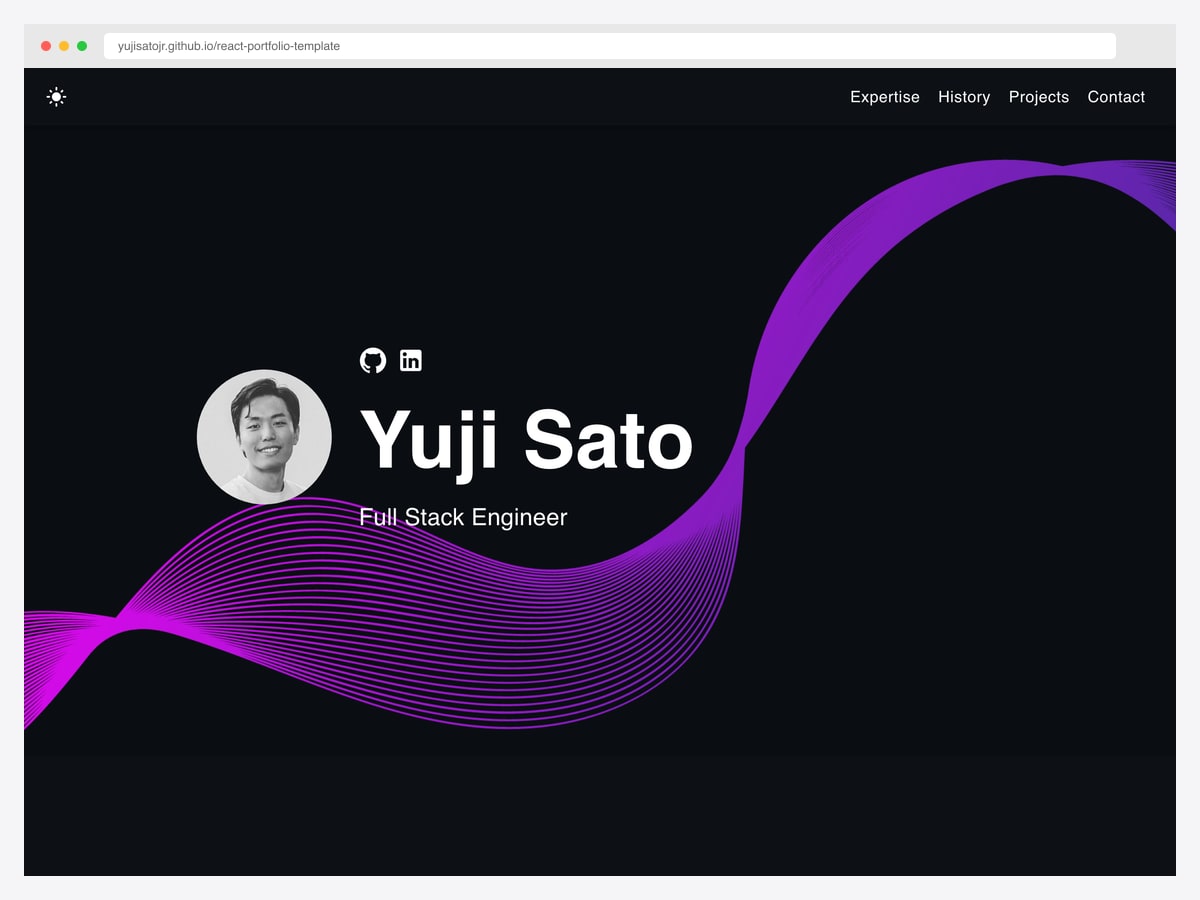
Why we like it: 69% TypeScript, 26% SCSS, no transpilation surprises. React Router for multi-page navigation rather than the now-default Next.js App Router, which keeps it framework-light and easy to host anywhere.
Explicit MIT-licensed with “free to use, no attribution required” language. Best pick if you want a TypeScript-native portfolio without committing to Next.js, or if you prefer a multi-page structure (about, projects, contact, blog as separate routes) rather than a long scroll.
13. Hanzla Developer Portfolio
Status: the repository was archived in 2024 and is no longer maintained. It still deploys as-is, but check its dependency versions before building on it.
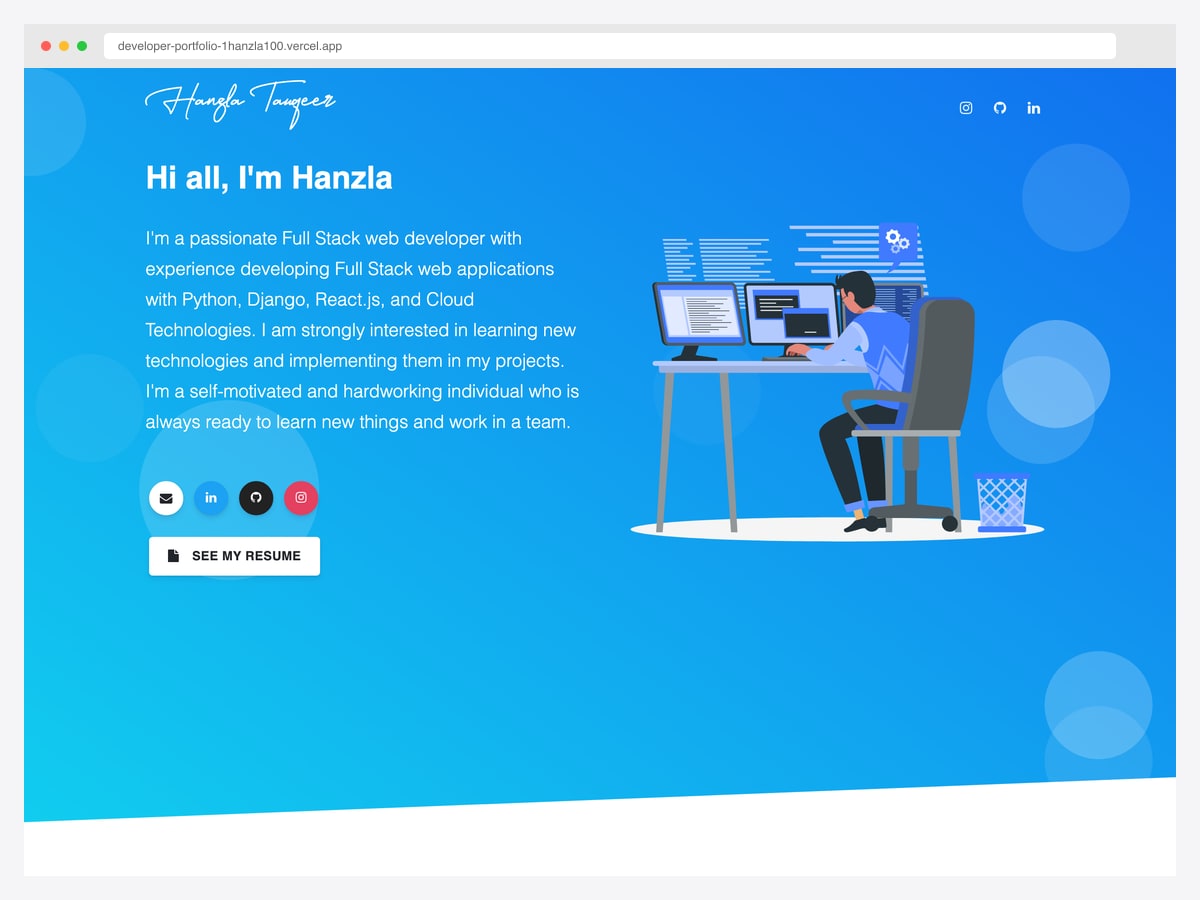
Why we like it: Everything customizes through a single portfolio.ts config file — summary, skills, education, work experience, client testimonials, and project cards. Lottie animations and react-reveal scroll triggers give it more motion than Cleanfolio or Yuji Sato without going Three.js-heavy.
Apache 2.0 license. Best for developers who want a balanced “configuration over coding” approach — fill in the data, the template handles layout and animations. Older release cadence means you’ll want to bump dependencies before deploying.
How to Choose a React Portfolio Template
The right pick depends on what your portfolio needs to do for you:
- Job hunting at a frontend-heavy team? Magic UI Portfolio or Lee Robinson’s site — both signal “I know modern Next.js patterns” loud and clear.
- Writing-first portfolio (blog, essays, technical writing)? Tailwind Next.js Starter Blog — MDX support and SEO plumbing are first-class.
- Want the latest React 19 + Next.js 16 + Tailwind v4 stack out of the box? mldangelo personal-site or Nim.
- Need multi-language support? Ryan Balieiro’s template — it’s the only one in this list that ships i18n.
- Designer-developer or indie hacker? Nim or Cleanfolio — restraint over flash.
- Have $200-300 and want premium polish? Aceternity UI All-Access — four portfolio layouts plus the rest of their library.
- Just want to ship something today? Simplefolio — battle-tested, 14k stars, well-documented.
React Portfolio Templates FAQ
Should I use Next.js or Vite for a React portfolio?
Next.js if you want a blog, SEO via Server Components, or might add API routes. Vite if you want sub-second dev startup and your portfolio is purely static. For most developers, Next.js is the safer 2026 default — but Ryan Balieiro and Simplefolio prove Vite and Parcel still ship great portfolios.
Do I need TypeScript for a portfolio template?
For a portfolio, no — but most modern templates ship in TypeScript anyway. Magic UI, Lee Robinson, mldangelo, and Aceternity are all TypeScript-first. If you’re not comfortable, Cleanfolio and Simplefolio are JavaScript-only, and Chetan Verma’s template is JS-heavy.
How do I host a React portfolio for free?
Vercel (best for Next.js), Netlify (best for any static React build), Cloudflare Pages, or GitHub Pages. All four have free tiers that handle portfolio-scale traffic without issue. mldangelo, Cleanfolio, and Yuji Sato all ship GitHub Pages deploy configs out of the box.
Is it OK to fork these templates for my own portfolio?
Yes — every template on this list has a permissive license (MIT, Apache 2.0, or similar). The one exception worth highlighting: Brittany Chiang’s v4 asks for attribution when forking. Honour that — the design is the value of her template, not the boilerplate.
Which template should I pick if I’m not a designer?
Pick a configuration-driven template so you don’t have to make design decisions: Magic UI Portfolio (edit resume.tsx), Hanzla Developer Portfolio (edit portfolio.ts), or Chetan Verma’s template (GUI editor). All three let you fill in data without touching the layout, and the designers behind them already made the visual choices for you.
Are these portfolios mobile-friendly?
All 13 templates are responsive. The strongest mobile experiences are in Aceternity Sidefolio (toggleable sidebar drawer), Lee Robinson (typography-first scales perfectly), and Ryan Balieiro (tabbed mobile interface). Three.js-heavy portfolios sometimes have performance issues on lower-end phones, so test on a real device if you pick an animation-heavy template.
How long does setup typically take?
The fastest setups are Magic UI Portfolio (~1 hour from clone to deployed site), mldangelo (~30 minutes via GitHub Codespaces), and Lee Robinson (~10 minutes with the Vercel deploy button). Templates with custom data files (Hanzla, Chetan Verma) take 1-2 hours including content writing. Animation-heavy templates (Aceternity premium variants) take longer if you want to customize beyond the default content.
For broader template categories beyond portfolios, see our roundups of React templates, React admin dashboards, React landing pages, and free React templates.

You Might Also Like